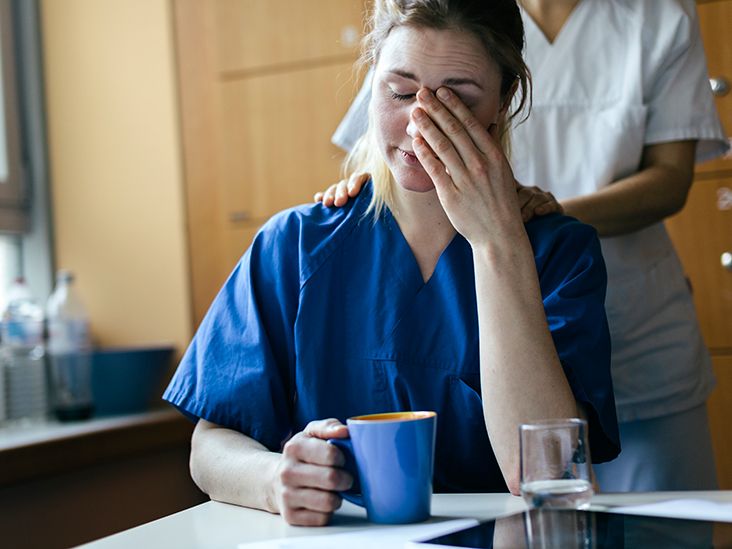

Hospitals love to describe residency as rigorous, transformative, and character-building. Fair enough. But there is a difference between rigorous training and a system that treats exhaustion like a rite of passage. Resident fatigue is often framed as a personal endurance problem, as though the solution is one more coffee, one more protein bar, or one more pep talk in a fluorescent hallway at 3:12 a.m. In reality, resident fatigue is a patient safety problem, a workforce problem, a mental health problem, and a community problem. In other words, it is public health with a pager.
No, resident fatigue has not been stamped with an official nationwide legal label reading public health emergency. But by any serious public health standard, it fits the profile: the risk is widespread, the harm is predictable, the exposure is built into the system, and the consequences ripple far beyond the individual resident. When doctors in training are chronically sleep-deprived, the people at risk are not just the residents. It is also the patient in the ICU, the mother in labor, the child in the emergency department, the driver in the lane next to a resident heading home after call, and the health system that keeps wondering why burnout, turnover, and distrust never seem to improve.
Why Resident Fatigue Is Not Just “Part of the Job”
Residency is supposed to prepare physicians for real-world clinical practice. That means long days, intense responsibility, and emotionally difficult decisions. It does not mean pretending the human brain becomes superhuman when someone hands it a white coat and a badge. Sleep deprivation impairs attention, memory, reaction time, mood, and judgment. Medicine, unfortunately, is one of the worst possible places to gamble with any of those functions.
Modern training rules acknowledge this. The ACGME caps clinical and educational work at an average of 80 hours per week over four weeks, requires at least one day in seven free of work and required education, allows no more than 24 hours of continuous scheduled clinical assignments with limited extra time for transitions and education, and requires programs to educate residents on fatigue recognition and mitigation. Programs are also expected to provide sleep facilities and safe transportation for residents too fatigued to get home safely. Those are not the rules of a system that thinks fatigue is harmless. Those are the rules of a system that knows fatigue is dangerous.
And yet the danger persists. Why? Because compliance on paper is not the same thing as rest in real life. Residents may still chart from home, respond to messages off the clock, bounce between days and nights, absorb emotional trauma, and carry workload compression that makes “shorter hours” feel like the same chaos packed into a smaller box. The box, naturally, still leaks.
The Science Is Not Subtle: Fatigue Raises the Risk of Harm
Patient safety takes the first hit
Research on resident fatigue has been arguing the point for years, and the point is not whispering. Landmark studies found that reducing interns’ extended shifts improved sleep and reduced serious medical errors in intensive care settings. Other research found that higher levels of fatigue and distress among internal medicine residents were independently associated with self-perceived medical errors. More recent work comparing traditional 24-hour call with float-style schedules found that longer call schedules were associated with poorer sleep, worse mood, reduced motivation, more sleepiness, and weaker cognitive performance. The science keeps delivering the same awkward message: exhausted doctors do not become safer just because they care deeply.
This matters because residency takes place in exactly the environments where precision matters most. Residents admit unstable patients, answer urgent pages, monitor evolving symptoms, place orders, adjust medications, perform procedures, and hand off complex cases. Fatigue does not have to cause a dramatic Hollywood-style collapse to be dangerous. Sometimes it just slows recognition by a few minutes, clouds a judgment call, shortens attention during a handoff, or makes an already complicated decision slightly worse. In a hospital, “slightly worse” can have a body count.
Resident safety is not separate from public safety
Fatigue also harms residents themselves. Studies have linked extended work shifts to higher risk of motor vehicle crashes and near misses during the commute home. Others have tied long work duration and night work to higher rates of percutaneous and sharps injuries. Put plainly, an exhausted resident is at greater risk of sticking themselves with a needle, dozing at the wheel, or making it home with only a foggy memory of the drive. That is not resilience. That is system-designed hazard exposure wearing scrubs.
The broader health risks are no joke either. Shift work and long work hours are associated with stress, circadian disruption, poor health behaviors, and downstream physical and psychological strain. Sleep loss does not politely stay in one box labeled “professional inconvenience.” It spills into depression risk, mood instability, relationships, recovery, immune function, and the ability to remain a thoughtful human being after repeated overnight duty. Coffee, for the record, is many things. A full replacement for REM sleep is not one of them.
Burnout turns fatigue into a systems problem
Fatigue rarely travels alone. It tends to bring distress, cynicism, disengagement, and burnout like uninvited conference guests who refuse to leave the buffet table. National data have shown that burnout remains common among resident physicians, even where some recent measures suggest modest improvement. Earlier national research found burnout symptoms in roughly 45% of second-year residents, and more recent reporting still places burnout in about one-third of residents. That is not a quirky morale issue. That is a structural warning light blinking hard enough to qualify as mood lighting.
Burnout matters because it is not just about feeling miserable at work. It has been associated with poorer quality of care, career choice regret, attrition, and lower organizational stability. When residents burn out, health systems lose continuity, patients lose trust, and the future physician workforce gets thinned by preventable damage. A training system that normalizes exhaustion may be manufacturing long-term shortages one sleep-deprived year at a time.
Why This Qualifies as a Public Health Emergency in Practice
Public health is not only about outbreaks and pathogens. It is also about conditions that expose large populations to predictable, preventable harm. Resident fatigue fits that definition uncomfortably well.
First, the exposure is widespread. Nearly every teaching hospital depends on residents to provide care across nights, weekends, holidays, and high-acuity settings. Second, the exposure is structural, not accidental. It is produced by scheduling models, staffing realities, documentation burden, training culture, and payment systems that lean on resident labor. Third, the harms are measurable: errors, injuries, burnout, crash risk, cognitive decline, and compromised well-being. Fourth, the harms spread outward. Patients, families, colleagues, and entire institutions absorb the consequences.
There is also an equity angle that deserves more attention. Residents are early-career physicians with limited power to redesign their schedules, question norms, or refuse unsafe expectations without fear of stigma. Some groups may face even greater strain because of discrimination, caregiving burden, financial stress, pregnancy, chronic illness, or lack of social support. When the system says, “Be well,” but quietly rewards self-erasure, the residents with the least flexibility often pay the highest price.
The Culture Problem: Medicine Still Flirts With Martyrdom
One of the most stubborn drivers of resident fatigue is culture. Medicine still carries a heroic mythology that confuses self-neglect with professionalism. The tired doctor who keeps going is praised as dedicated. The tired doctor who admits they are not safe may fear being seen as weak, dramatic, or not a team player. In that culture, fatigue stops being a biologic signal and becomes a character test.
That is a terrible deal. ACGME standards explicitly say programs should support fatigue mitigation without stigma or negative consequences. Residents must also be able to step away from work when fatigue makes them unable to provide safe care. Those expectations exist for good reason. If a resident feels safer hiding exhaustion than reporting it, the institution has already failed its safety culture test.
And let us be honest: “wellness” can become the glittery wrapping paper on a broken package. Yoga once a month, inspirational posters, and a tray of slightly tragic granola bars do not fix unsafe schedules, hidden after-hours work, understaffing, or a handoff process that depends on two people who are both running on fumes. Burnout does not need another slogan. It needs structural repair.
Duty-Hour Rules Help, but They Do Not Magically Cure Exhaustion
Duty-hour reform was important, but it was never a magic trick. Limiting hours reduces some risk, yet fatigue can remain severe when workload is compressed, staffing is thin, or documentation expands like a science-fiction blob. Residents may work fewer officially counted hours while still carrying the same emotional burden, the same cognitive overload, and the same expectation to finish everything no matter what.
There is also a legitimate tension in residency design: shorter shifts can mean more handoffs, and poor handoffs can threaten patient safety too. The answer is not to pretend that only one risk exists. The answer is to design smarter systems. That means better sign-out structure, better supervision, better team coverage, and schedules that reduce biologic strain instead of simply moving the chaos around like furniture before company comes over.
Recent evidence suggests that better-designed schedules can help. Float-based systems and strategically timed naps appear to improve sleep regularity, vigilance, and some well-being measures compared with traditional 24-hour call. That does not mean every program needs the same template. It does mean schedule design is a real intervention, not a clerical detail buried in a spreadsheet.
What Hospitals and Training Programs Should Do Right Now
1. Treat fatigue like a safety metric, not a personality trait
Hospitals should measure resident fatigue, burnout, night-float strain, near misses, commute risk, and after-hours EHR work. What gets measured gets managed. What gets romanticized gets repeated.
2. Redesign schedules using sleep science
Minimize abrupt day-night switching, reduce excessive consecutive shifts, build real recovery time, and expand scheduling models shown to improve sleep and cognition. A beautiful calendar that ignores circadian biology is just decorative suffering.
3. Build true fatigue-mitigation systems
That means on-call sleep rooms, protected nap opportunities when clinically appropriate, food access at night, backup coverage, and automatic safe rides home after prolonged duty. Residents should not have to negotiate for basic physiologic survival like it is a luxury upgrade.
4. Cut “work after work”
Programs should aggressively reduce documentation burden, duplicated administrative tasks, and electronic message creep. If work from home counts toward duty hours, the solution is not magical arithmetic. The solution is less work.
5. Protect confidential mental health care
Residents need rapid, affordable, confidential access to counseling and urgent mental health care without career fear. Early support is a patient safety intervention, not a side benefit.
6. Normalize speaking up about fatigue
Residents should be able to say, “I am too fatigued to drive,” or “I am not safe to continue,” without being punished socially or professionally. A real safety culture makes that statement easier, not braver.
What the Public Should Understand
This conversation is not an argument against resident physicians. It is an argument for them, and for everyone they care for. Patients generally assume that hospitals are designed to reduce preventable risk. That assumption should include the people making life-altering decisions at odd hours under crushing demand.
The public should care about resident fatigue for the same reason it cares about nurse staffing, surgical checklists, clean water, and vaccination rates: because preventable system failures are everyone’s business. If hospitals know fatigue impairs safety, and if safer alternatives exist, then inaction is not tradition. It is policy disguised as nostalgia.
Experiences From the Ward: What Exhaustion Looks Like Up Close
The following composite section reflects experiences commonly described by residents and trainees in discussions of overnight call, fatigue, and burnout. It is written as a realistic synthesis rather than a verbatim first-person account.
By the fourth night of a brutal stretch, the resident is no longer simply tired. Tired is what you feel after a bad night’s sleep. This is different. This is reading the same sodium value three times because the number looks familiar but refuses to become meaning. This is standing at a computer, fully aware that you are supposed to enter an order, and briefly forgetting why you opened the chart in the first place. It is hearing a pager go off and feeling your heart jump before your brain catches up. It is being so wired by adrenaline that you cannot fall asleep when you finally have a chance, then being so exhausted that you feel sick when morning rounds begin.
Residents often describe a strange split-screen existence. On one side, they are expected to be calm, precise, compassionate, and efficient. On the other, they are counting the hours since they last ate something that was not vending-machine adjacent, trying to remember whether they told the nurse about the potassium replacement, and wondering if the commute home will be one of those drives where they arrive with no memory of the last ten minutes. The work still matters deeply. In fact, that is part of what makes the fatigue so corrosive. These are not people who do not care. They care enough to keep going when their bodies are begging them not to.
Many residents talk about guilt as the background soundtrack of exhaustion. Guilt for needing help. Guilt for signing out a patient. Guilt for leaving work for the next team. Guilt for snapping at a loved one after getting home. Guilt for missing a detail. Guilt for being human in a system that often acts offended by biology. Some remember moments that were not dramatic enough to become formal incidents but still linger: almost prescribing the wrong dose, almost forgetting a lab follow-up, almost drifting over the lane line on the highway. Medicine tends to celebrate the save, but the near miss can haunt a person just as effectively.
There is also the emotional numbness that can creep in after repeated sleep loss. A resident may walk into a family meeting knowing the stakes are enormous and still feel oddly flattened, as though empathy is trying to move through wet cement. Later, when rest finally comes, the feelings crash in all at once. Residents describe crying in stairwells, eating dinner at 10 a.m., waking up disoriented on a day off, or realizing they have not had a nonclinical thought in a week. Some laugh about it because the alternative is alarming. Dark humor becomes the duct tape of the hospital: not elegant, not curative, but holding the cracks together for one more shift.
And yet residents keep showing up. They teach students, comfort families, catch subtle changes, restart crashing patients, and absorb the emotional weather of the hospital. That is exactly why fatigue is so dangerous. The people carrying this burden are often highly conscientious, deeply committed, and determined not to fail the patient in front of them. A safety strategy built on personal heroism will always ask too much and protect too little. The resident is not the weak link. The insistence that exhaustion is acceptable is.
Conclusion
Resident fatigue should be treated with the urgency of a public health threat because that is what it becomes in practice: widespread, predictable, preventable, and harmful to both clinicians and the communities they serve. The evidence is strong, the standards already acknowledge the danger, and the excuses are getting old. Training excellent physicians does not require normalizing impairment. The future of medicine should not depend on whether the person answering the page has had enough sleep to think clearly. Hospitals can do better. Patients deserve better. Residents, amazingly, are also people, and they deserve better too.