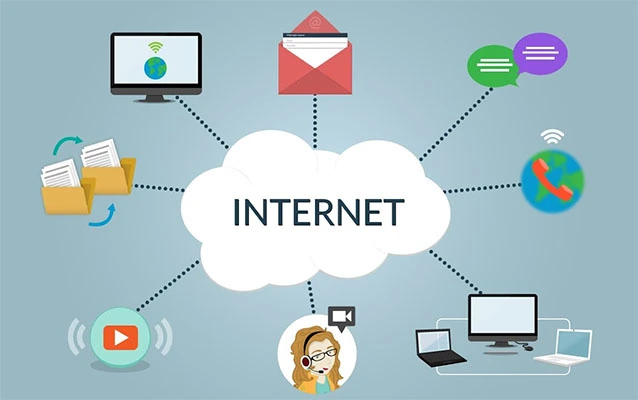

For years, the recipe for better wireless internet has been familiar: buy a newer router, move it away from the microwave, and politely ask everyone in the house to stop streaming at once. The next major upgrade, however, may come from an unexpected placethe ceiling. Researchers and technology companies are developing wireless systems that send data through rapidly modulated light, turning LEDs and invisible infrared emitters into miniature access points.
This approach is commonly called Li-Fi, short for light fidelity. It belongs to the broader field of optical wireless communication, which uses visible, infrared, or ultraviolet light instead of radio waves. Li-Fi will not make ordinary Wi-Fi vanish overnight. More realistically, it could become a powerful partner that handles high-speed, low-latency traffic in rooms where radio networks are crowded, restricted, unreliable, or simply too eager to share their signal with the neighbors.
Wi-Fi Without Radio: What Li-Fi Actually Is
Traditional Wi-Fi carries information over radio-frequency signals. A Li-Fi system carries digital information by changing the intensity of a light source extremely quickly. Those changes happen too fast for human eyes to notice, so the lamp appears steady while a photodetector in a laptop, phone, headset, sensor, or adapter interprets the pattern as data.
Think of it as an incredibly fast flashlight conversation. The ceiling fixture sends a stream of light pulses representing ones and zeros. A receiver converts those pulses into an electrical signal, and networking hardware turns the signal into web pages, video calls, cloud files, or the latest 4K documentary about people reorganizing garages. For two-way service, the user device also needs an optical uplink, often using infrared light so nobody has to browse the web while visibly blinking at the ceiling.
The term visible light communication is sometimes used interchangeably with Li-Fi, but they are not identical. A basic visible-light system may send information in one direction, such as a store lamp broadcasting location data. Li-Fi generally describes a networked, bidirectional connection that supports multiple users, mobility, access control, and familiar internet services.
The Standard That Made Li-Fi More Than a Clever Demo
A major milestone arrived with IEEE 802.11bb, approved in 2023. The standard added light communication to the 802.11 family used by Wi-Fi networks, providing common rules for compatible optical devices. It covers data rates from 10 megabits per second to 9.6 gigabits per second. That upper figure is a technical ceiling within the standard, not a promise that every future light bulb will immediately outrun a premium Wi-Fi router.
Standards matter because inventions do not become everyday infrastructure through laboratory speed records alone. Manufacturers need agreed methods for devices to connect, share the medium, handle security, and move between access points. IEEE 802.11bb gives the industry a common foundation rather than a collection of brilliant lamps that refuse to speak to one another.
Why Send Internet Data Through Light?
Light Offers an Enormous Communication Resource
Radio spectrum is precious and increasingly busy. Homes, offices, stadiums, factories, and apartment buildings can contain hundreds or thousands of competing devices. The optical spectrum provides a vast additional region for wireless communication. Using it does not magically eliminate every networking bottleneckthe internet connection feeding the room still mattersbut it creates more local capacity and more opportunities to reuse the same channel in nearby spaces.
A light-based access point can serve a small area, sometimes called an optical cell or “attocell.” Because the signal is spatially contained, another fixture a short distance away may reuse similar optical resources with less interference. In a crowded conference hall, that could be more useful than one heroic radio access point trying to referee a digital food fight.
Walls Become a Feature Instead of a Bug
Radio waves often pass through walls, which is convenient when walking from the kitchen to the bedroom. It also means signals can travel beyond the intended room. Light generally stays within an enclosed space unless it escapes through a doorway, window, or reflective path. This physical containment can reduce the area from which an outsider might attempt to intercept a connection.
That does not make Li-Fi “unhackable.” Security still requires strong encryption, authentication, software updates, and sensible network management. A malicious device placed inside the lighted area could still be a problem, and poorly designed systems can have vulnerabilities. Li-Fi adds a useful physical boundary; it does not replace cybersecurity with a lampshade.
Optical Networks Avoid Radio Interference
Li-Fi can operate in places where radio-frequency emissions are undesirable or tightly controlled. Hospitals, laboratories, industrial plants, aircraft cabins, and defense environments may contain sensitive equipment or face difficult electromagnetic conditions. Light-based links can provide local connectivity without adding another radio transmitter to the neighborhood.
This advantage also works in reverse: motors, machinery, and other electrical equipment that create radio noise do not disrupt an optical carrier in the same way. A properly designed Li-Fi link can therefore deliver predictable performance in environments where ordinary wireless networking behaves like a shopping cart with one rebellious wheel.
Latency and Consistency Could Matter More Than Headline Speed
Consumers naturally notice gigabit claims, but many future applications care just as much about delay, reliability, and consistency. Augmented-reality headsets, automated machines, telepresence tools, and interactive classrooms need data to arrive promptly rather than merely winning a speed test at 2:00 a.m. A short optical link serving a limited area can offer a controlled first hop with low interference and stable capacity.
Where Light-Based Internet May Appear First
Secure Offices and Government Facilities
Rooms used for confidential work are obvious candidates. Optical access points can keep wireless coverage closely aligned with a physical workspace. A meeting room could have its own high-capacity connection that fades at the walls, while conventional Wi-Fi remains available in hallways and shared areas. Defense organizations have also explored Li-Fi and free-space optical links because contained beams can reduce radio-frequency signatures and make communications harder to detect from outside the operating area.
Factories, Hospitals, and Radio-Sensitive Spaces
Industrial sites need reliable links for sensors, maintenance tablets, robots, and machine-vision systems. Hospitals need connectivity around diagnostic equipment, patient rooms, and clinical devices. Li-Fi may be especially valuable where radio congestion or electromagnetic compatibility complicates deployment. It is not a universal permission slipevery environment still requires engineering and safety reviewbut it gives network designers another tool when radio is not the ideal hammer.
Classrooms and High-Density Workplaces
A ceiling already contains lighting, power, and carefully planned coverage. Adding optical networking to that infrastructure could create dedicated zones for desks, lecture areas, studios, and collaborative spaces. Current commercial Li-Fi products have often used ceiling units paired with USB receivers or specialized client hardware. The long-term goal is less glamorous and more important: integrate optical transmitters and sensors directly into laptops, phones, headsets, and other devices.
Airplanes, Trains, and Passenger Cabins
Seat-level light communication could provide tightly controlled connectivity without filling a cabin with additional radio traffic. Small optical cells could also reduce interference between users, because a passenger’s reading light would not need to serve the entire aircraft. The practical hurdles include cost, device support, installation, certification, and maintaining connections when passengers move or block a receiver with the highly advanced networking accessory known as a blanket.
Underwater and Space Communications
Radio performs poorly underwater, while certain blue-green wavelengths can travel through water more effectively. That makes optical links interesting for divers, autonomous underwater vehicles, and subsea sensors, although water clarity, alignment, and distance remain serious constraints.
Space agencies are also demonstrating laser communications across enormous distances. NASA’s deep-space optical experiments use narrow infrared beams to transmit far more data than comparable radio systems may carry. This is not the same product as indoor Li-Fi: deep-space laser communication requires precise pointing, powerful optics, and specialized ground stations. Still, both technologies illustrate the same larger idealight can be a high-capacity wireless carrier, whether it crosses a room or millions of miles.
The Problems Li-Fi Still Has to Solve
A Hand, Backpack, or Door Can Block the Link
Light’s spatial confinement creates security and capacity, but it also creates fragility. A direct optical path can be interrupted by people, furniture, clothing, or the device itself. Reflections may keep some links working without perfect line of sight, and systems can use multiple ceiling units, wider fields of view, beam steering, or fast handoffs. Even so, coverage must be designed more carefully than “place router near shelf and hope.”
Every Room Needs Coverage
One Wi-Fi access point can sometimes cover an entire small home because radio travels through walls. A Li-Fi network may need an access point in each room or each important zone. That can improve capacity, but it also increases installation and backhaul requirements. Each optical unit still needs a connection to the broader network, typically through Ethernet, fiber, power-line networking, or another wireless link.
Devices Need Optical Hardware
Phones and laptops are designed primarily for radio networking. Some already contain infrared emitters, cameras, ambient-light sensors, and depth-sensing components, but those parts are not automatically suitable for standardized high-speed Li-Fi. Broad adoption depends on compact, efficient optical front ends that manufacturers can add without making devices thicker, hotter, or dramatically more expensive.
Sunlight and Lighting Conditions Complicate Engineering
Bright ambient light can raise noise at a receiver, while shadows and changing device angles affect signal strength. Engineers can address these issues with filters, coding, multiple detectors, automatic gain control, infrared operation, and intelligent handoffs. The challenge is not proving that optical networking works; it is making it work reliably while users rotate phones, dim lamps, open curtains, and generally refuse to behave like carefully positioned laboratory equipment.
Turning Off the Visible Lamp Must Not Turn Off the Internet
A modern Li-Fi fixture does not necessarily need to illuminate a room brightly to transmit data. It can operate with the visible output dimmed very low or use invisible infrared light. Separating communication from illumination is essential for bedrooms, theaters, overnight offices, and anyone who considers darkness a nonnegotiable feature rather than a temporary service outage.
Will Li-Fi Replace Wi-Fi?
Probably notand that is not a failure. Wi-Fi is inexpensive, mature, widely supported, and excellent at providing broad indoor coverage. Cellular networks cover movement over much larger areas. Ethernet and fiber remain unbeatable when a cable is practical. Li-Fi fits into this ecosystem as another access technology with a distinctive set of strengths.
The most plausible future is a hybrid wireless network. A phone could use conventional Wi-Fi while moving through a hallway, switch to a high-capacity infrared link at a desk, and fall back to radio when someone blocks the optical path. Network software would choose among radio and light links according to signal quality, congestion, security policy, battery use, and application needs. To the user, the best version would be almost invisiblewhich is convenient, because much of the light may be invisible too.
Experience Scenario: A Week in a Light-Connected Home
The following is a realistic future-use scenario based on how emerging Li-Fi systems are designed to operate, not a claim that every feature is available in a single consumer product today.
Installation day had been less magical than the advertising suggested. Each ceiling access point needed power, network backhaul, placement checks, and a brief calibration. Once configured, however, the equipment blended into the rooms more naturally than a collection of routers, antennas, and tangled cables.
On Monday morning, the first surprise is how ordinary everything looks. The ceiling fixtures are slightly smarter, but they do not resemble props from a science-fiction movie. When a laptop opens at the kitchen counter, a small optical indicator confirms that it has joined the room’s Li-Fi zone. A large cloud backup begins without slowing the video call happening two rooms away. The kitchen connection handles the laptop, while the office ceiling unit handles the call. Instead of every device shouting through one radio channel, each room gets a quieter conversation.
Tuesday introduces the first limitation. During a download, someone places a tall cereal box directly between the laptop’s receiver and the nearest fixture. Throughput drops for a moment. The laptop automatically shifts to a second optical unit, then briefly uses Wi-Fi while the link stabilizes. Nobody loses the file, but the incident reveals the basic trade: light delivers focused capacity, yet breakfast can become network infrastructure.
On Wednesday, the benefit becomes obvious during an online gaming session. The office optical link has little competition, and latency remains steady even while family members stream video elsewhere. The connection is not faster because photons are in a hurry; radio waves travel at essentially the same fundamental speed. It feels faster because the local channel is less congested and the access point serves a small, controlled area.
Thursday evening tests the “lights off” question. The visible lamp dims to darkness, but an infrared transmitter continues carrying data. The room looks normal, the movie keeps playing, and nobody has to sleep under the glow of a networking chandelier. A settings panel shows that the system can disable the optical link entirely, limit it to approved devices, or hand traffic back to Wi-Fi.
Friday brings a guest. Their older phone lacks a Li-Fi receiver, so it joins the home’s regular Wi-Fi network. That mixed experience is likely to define the transition period. Newer laptops, headsets, and work devices may gain optical hardware first, while older products continue using radio. The home does not choose one technology and exile the other; it layers them.
Over the weekend, room-by-room containment becomes unexpectedly useful. A work laptop connects only within the office’s optical zone under company policy. Moving it into the living room triggers a switch to a restricted radio profile. The arrangement is not perfect security, but it combines physical boundaries with encryption and access controls. By Sunday, the most memorable feature is not a spectacular speed-test number. It is that busy devices stop competing so aggressively. The network feels calmer, more local, and more deliberateexcept when the cat sits beneath the receiver, at which point the future politely reconnects over Wi-Fi.
Conclusion: The Future Internet May Be Overhead
Li-Fi turns a familiar object into a new kind of network access point. By modulating visible or infrared light, it can add wireless capacity, provide low-interference connections, and keep coverage closely contained within a room. The technology now has an IEEE standard, commercial systems, active research programs, and specialized deployments, which places it well beyond the “interesting light bulb trick” stage.
The path to everyday adoption is still demanding. Devices need integrated optical hardware, buildings need denser access points, and networks must handle shadows, movement, sunlight, and seamless switching between light and radio. For those reasons, the future is unlikely to be a dramatic replacement of Wi-Fi. It will be a partnership: radio for flexible coverage, light for focused performance, and software quietly deciding which one should carry each connection.
Research basis: IEEE 802.11bb and IEEE Spectrum documentation concerning standardized light communication, interoperability, and supported data-rate ranges. Research basis: University of Edinburgh and Cambridge Li-Fi research centers, DOE smart-lighting research, NSF-supported optical-networking studies, and NIST optical research. Research basis: Commercial and deployment information from Signify and pureLiFi, U.S. Army optical-wireless studies, FCC material on visible-light communication, and NASA/JPL optical-communications programs.