
A dented refrigerator can feel wildly unfair. You spend real money on a shiny kitchen centerpiece, then one delivery mishap, runaway chair, overconfident moving cart, or tiny child with a toy truck turns it inany refrigerator dents are cosmetic, not catastrophic. Your fridge can still keep milk cold, freeze pizza, and quietly judge your midnight snack choices. The trick is knowing when a dent is safe to live with, when it can be improved, and when attempting a DIY repair could turn one small dimple into a larger, more expensive drama.
This guide explains how to assess a dented refrigerator door, choose the safest repair option, protect the appliance finish, and decide when professional service or a replacement panel makes more sense than experimenting with suction cups and internet folklore.
First: Is the Refrigerator Dent Only Cosmetic?
Before focusing on appearance, make sure the dent has not affected the refrigerator’s function. A shallow dent in the middle of a door panel is usually cosmetic. A dent near a hinge, gasket, dispenser, edge seam, display panel, or door handle can be more serious because those areas affect door alignment, sealing, or electrical components.
Signs Your Refrigerator Dent Is Probably Cosmetic
- The refrigerator door opens and closes normally.
- The gasket seals evenly around the door.
- No cold air appears to escape around the edges.
- The water dispenser, ice maker, and control panel still work.
- The dent is on the flat center portion of the exterior door panel.
- There are no cracks, sharp creases, peeling finish, or exposed insulation.
Signs You Should Inspect More Closely
If the refrigerator door does not close flush, the gasket has gaps, frost appears in the freezer, or the fridge seems to run constantly, do not treat the issue as merely decorative. A damaged or dirty gasket can allow warm air into the refrigerator, reducing suction and contributing to moisture or frost problems. ok carefully at the rubber gasket around the door. It should sit flat, clean, and unbroken. Also check whether the dent has pushed the door edge inward, bent a hinge, or changed the alignment between French doors. A refrigerator that cannot seal properly is not just unattractive; it can become inefficient and put extra strain on the cooling system.
Inspect Delivery Damage Before Trying Any Repair
If your refrigerator was just delivered, pause before grabbing a plunger, hair dryer, or heroic amount of optimism. Photograph the dent from several angles, including a wider photo that shows the full appliance and close-ups that show the affected spot. Keep delivery paperwork, purchase receipts, and the model and serial number handy.
Cosmetic-damage policies vary by retailer and manufacturer, but many appliance warranties treat scratches, dents, chips, and finish damage as cosmetic issues unless the problem is reported shortly after delivery or is related to a manufacturing defect. Maytag warranty documents, for example, specify a limited reporting window for cosmetic damage caused by defects in materials or workmanship. at means the best dented refrigerator fix may be an exchange, replacement door, or delivery claim rather than a DIY repair. Do not sign away your options by aggressively modifying a brand-new appliance before contacting the seller.
Know Your Refrigerator Finish Before Attempting a Fix
Not all refrigerator doors are created equal. A repair method that behaves reasonably on painted steel can be a terrible idea for black stainless steel, textured finishes, coated panels, or a door with a built-in display.
Painted Metal Refrigerator Doors
Traditional white, black, bisque, or colored refrigerator doors often have painted metal surfaces. Small dents may be easier to disguise with appliance touch-up paint, magnets, or decorative panels. However, a deep crease can crack the paint, exposing metal beneath it. Once bare metal is exposed, moisture can encourage rust, so cover chips promptly with a finish-compatible repair product.
Stainless Steel Refrigerator Doors
Stainless steel looks sleek until a dent catches the morning sun and announces itself like a billboard. Many stainless refrigerator doors have a thin outer skin over insulation or an internal structure, which makes them difficult to reshape perfectly from the outside.
Use gentle cleaning methods before evaluating the dent. Fingerprints, streaks, and smudges can exaggerate the appearance of a shallow dent. Manufacturer guidance commonly recommends a soft cloth with water or mild detergent and warns against abrasive or harsh cleaners. lack Stainless Steel and Coated Finishes
Black stainless steel is usually not a simple solid sheet of dark metal. It may have a protective coating or colored finish that can scratch, peel, or discolor if treated with abrasive pads, strong chemicals, or aggressive dent-pulling tools. Treat it like a fancy jacket, not a bumper on a 1997 pickup truck.
For black stainless refrigerators, avoid sanding, scraping, drilling, or using adhesives that could lift the coating. A dent that is visually annoying is still better than a dent plus a peeled patch shaped like your regret.
Can You Pull a Dent Out of a Refrigerator Door?
Sometimes, but expectations matter. A shallow, broad, smooth dent in a flat painted-metal panel has the best chance of improving. A sharp crease, dent near an edge, dent around a dispenser, or dent in stainless steel is much less likely to return to factory-perfect condition.
Refrigerator doors are not car panels. Automotive paintless dent repair techniques often require access behind the panel, specialized lighting, carefully shaped tools, and trained hands. Refrigerator doors may contain insulation, wiring, water lines, electronics, or layered skins. Pushing too hard can create a larger bulge, separate the panel, crack the finish, or damage a dispenser assembly.
When a Gentle Suction Tool May Help
A small hand-held suction cup may improve a very shallow dent on a smooth, flat surface. It is not guaranteed, but it is one of the least invasive methods when used carefully.
- Clean and dry the dented area with a soft microfiber cloth.
- Check that the surface is flat enough for the suction cup to seal.
- Use light, controlled pulling pressure rather than one dramatic yank.
- Stop immediately if the panel flexes strangely, the finish begins to lift, or the dent worsens.
- Inspect the area in different lighting before deciding whether to make another attempt.
A suction cup may reduce the appearance of a gentle dent, but it will not usually erase a crease. Think “slightly better,” not “magically restored by a gadget that also claims to fix your windshield, posture, and relationship with your landlord.”
Why Hair Dryer and Dry Ice Tricks Are Risky
You may find viral advice suggesting heat from a hair dryer followed by rapid cooling with dry ice or compressed air. The theory is that temperature changes cause metal to expand and contract. In practice, refrigerator doors are layered assemblies, not bare automotive body panels. Heat can affect coatings, plastic trim, adhesives, electronic displays, and insulation, while rapid cooling can create condensation or finish stress.
For that reason, avoid extreme hot-and-cold methods on a refrigerator door unless the manufacturer specifically approves the technique for your model. A dent is frustrating. A warped door, damaged finish, or compromised dispenser is a full kitchen soap opera.
Safe Dented Refrigerator Fix Options
Option 1: Leave a Small Dent Alone
This is not surrender. It is strategic emotional maturity. If the dent is shallow, the refrigerator works normally, and it is located where you barely notice it, doing nothing may be the smartest and cheapest solution.
Many dents become less noticeable after you clean the surface, adjust lighting, and stop staring at them from three inches away like an appliance detective.
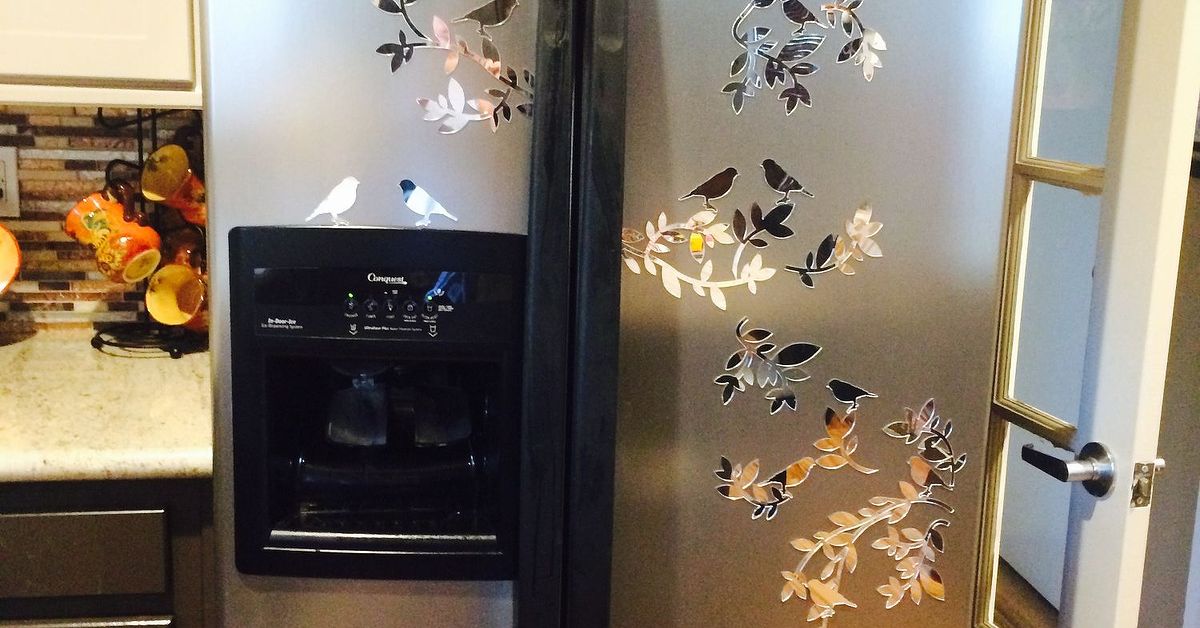
Option 2: Use a Decorative Cover-Up
Magnets, artwork, a calendar, a family photo strip, or a carefully placed magnetic organizer can hide a dent on magnetic surfaces. This is especially useful for painted steel doors. Before buying a magnetic accessory, test the surface with a lightweight magnet because some stainless steel refrigerator doors are not magnetic.
For a more polished look, consider a removable appliance decal, vinyl panel, or magnetic cover designed for refrigerator doors. Keep vents, controls, water dispensers, and manufacturer labels clear. Never cover an area that could interfere with door movement or heat dissipation.
Option 3: Touch Up Chips and Scratches Around the Dent
If the dent has chipped paint, touch-up paint can help prevent exposed metal from looking worse over time. Match the appliance color as closely as possible and use a product intended for appliances rather than random wall paint from the garage.
GE Appliances notes that painted appliance exteriors can often be touched up or repainted, while some specialty finishes have no approved cosmetic repair for visible surface damage. ply thin coats, let each coat dry fully, and avoid building a thick blob that makes the dent look like it grew a tiny volcano.
Option 4: Replace the Refrigerator Door Panel or Door Assembly
For a newer refrigerator with a highly visible dent, replacing the exterior door panel or full door assembly may be the cleanest solution. This option makes sense when the dent affects a premium stainless finish, built-in kitchen design, or resale value.
Before ordering anything, confirm the model number and exact finish. Stainless steel, fingerprint-resistant stainless, black stainless, slate, and other finishes may look similar in photos but differ in color and texture. Ordering the wrong door panel is an expensive way to create a refrigerator that looks like it attended a costume party.
Option 5: Hire an Appliance Technician or Paintless Dent Repair Specialist
Professional help is worthwhile when the dent is deep, creased, close to an edge, near the dispenser, or accompanied by alignment problems. An appliance technician can determine whether a door replacement is necessary and inspect hinges, gaskets, wiring, water lines, and door closure.
A paintless dent repair specialist may be able to improve a simple dent on certain refrigerator doors, but ask whether they have experience with appliances rather than only vehicles. Refrigerator doors have different internal construction, and confidence is not the same thing as competence.
When a Dented Refrigerator Needs Professional Attention
Call a qualified technician or contact the manufacturer if you notice any of the following:
- The refrigerator door will not close or stay closed.
- The gasket is torn, warped, loose, or visibly unable to seal.
- The door is misaligned or rubbing another door or cabinet.
- The dent affects the ice maker, water dispenser, touch display, or control panel.
- There is a crack, exposed wiring, water leak, or unusual electrical behavior.
- The refrigerator is running constantly, frosting excessively, or failing to maintain temperature.
- The dent occurred during delivery and the appliance is still within the retailer’s claim window.
Door sealing matters more than aesthetics. Whirlpool notes that even small gasket gaps can allow warm air into the appliance and reduce the normal suction that helps keep the door closed. ow to Make a Dented Refrigerator Look Better Without Repairing It
Not every dent needs surgery. Sometimes the goal is visual camouflage, not perfection.
Clean in the Direction of the Grain
On brushed stainless steel, wipe with the grain rather than across it. Cleaning against the grain can make streaks and scratches more visible, which may emphasize the dent. Bob Vila recommends wiping or polishing stainless steel in the direction of its visible grain. mprove Kitchen Lighting
Harsh side lighting can make even a tiny dent look enormous. Under-cabinet lights, bright window glare, and pendant lights aimed directly at the refrigerator can create dramatic shadows. Softer, more evenly distributed lighting may make the dent less obvious without touching the appliance.
Use Strategic Refrigerator Decor
A magnetic grocery list, a framed menu board, or a slim organizer can cover a dent without making the refrigerator look like a college dorm room. Keep it intentional. One clean decorative feature looks stylish. Twenty-seven pizza coupons and a mystery magnet from 2009 look like a cry for help.
How to Prevent Future Refrigerator Dents
Refrigerator dents often happen during delivery, moving, remodeling, or kitchen traffic jams. Prevention is much easier than trying to make a dent disappear after the fact.
- Inspect the appliance before delivery workers leave.
- Take photos of all sides immediately after installation.
- Use furniture pads or moving blankets when relocating a refrigerator.
- Keep carts, stools, and rolling kitchen islands from slamming into the door.
- Open French doors carefully around nearby cabinets and walls.
- Do not lean heavy objects against the refrigerator exterior.
- Clean the door gently with a soft cloth and mild cleaner.
Manufacturers commonly recommend soft cloths and mild cleaning products for refrigerator exteriors. Abrasive pads and harsh cleaners can create scratches that make a dented area look worse than the dent itself. ented Refrigerator Fix: The Bottom Line
A dented refrigerator is usually more annoying than dangerous, especially when the damage is small and located on the center of the door. Start by checking the door seal, alignment, controls, and dispenser functions. If everything works normally, decide whether the dent deserves a gentle cosmetic attempt, a cover-up, a replacement panel, or simply your refusal to let a piece of metal ruin your day.
For a brand-new refrigerator, document the damage immediately and contact the retailer before attempting repairs. For an older appliance, avoid aggressive heat, ice, drilling, sanding, or glue-pulling experiments unless you understand the door construction and accept the risk. A careful, low-risk approach almost always beats a dramatic DIY stunt.
Real-World Experiences With Dented Refrigerator Fixes
Most people discover a refrigerator dent in one of three ways: during delivery, after moving day, or while standing in the kitchen with coffee and wondering why the appliance suddenly looks like it lost a boxing match.
One common experience involves a new stainless steel refrigerator arriving with a dent that was hidden beneath protective film. The delivery team may have already connected the appliance, removed packaging, and started rolling toward the truck before the homeowner spots the issue. This is why a slow inspection matters. Open every door, remove protective film carefully, check the sides, inspect the top edge, and look at the refrigerator under normal room lighting. A dent that disappears in a dim warehouse can become surprisingly obvious under bright kitchen lights.
Another common situation is the “I can fix this in five minutes” attempt. Someone sees a shallow dent, grabs a suction cup, gets a little movement, and feels like a household genius. Then they try a second pull, a third pull, and suddenly the dent has become a lumpy landscape. The lesson is not that suction cups never work. The lesson is that improvement should be enough. If the dent becomes less noticeable, stop while you are ahead.
Homeowners with black stainless steel refrigerators often learn a harder lesson: surface finishes can be more fragile than they appear. A scratch, peel, or cloudy patch may be more distracting than the original dent. When the finish is coated or specialty-colored, a cover-up or door replacement is often safer than trying to reshape the metal.
Parents frequently solve refrigerator dents with humor. A family photo, a child’s drawing, a magnetic chore chart, or a souvenir magnet can turn an annoying dent into something invisible. It may not be a museum-quality repair, but it is surprisingly effective. After a few weeks, the dent becomes background scenery, like the one cabinet hinge that squeaks only when guests are visiting.
Some dents genuinely need professional attention. A refrigerator door that no longer seals, droops slightly, rubs against another door, or develops frost around the gasket is not just a cosmetic issue. In those cases, the repair conversation shifts from “How do I hide this?” to “How do I protect food storage and prevent a larger appliance problem?”
The most successful dented refrigerator fixes usually share the same pattern: inspect first, avoid panic, protect the finish, and choose the least invasive solution that gives an acceptable result. Perfection is nice, but a quiet fridge that seals properly and keeps groceries cold is still winning the most important contest in the kitchen.
SEO Tags
Note: Always review your refrigerator’s model-specific care instructions and warranty terms before attempting a cosmetic repair.