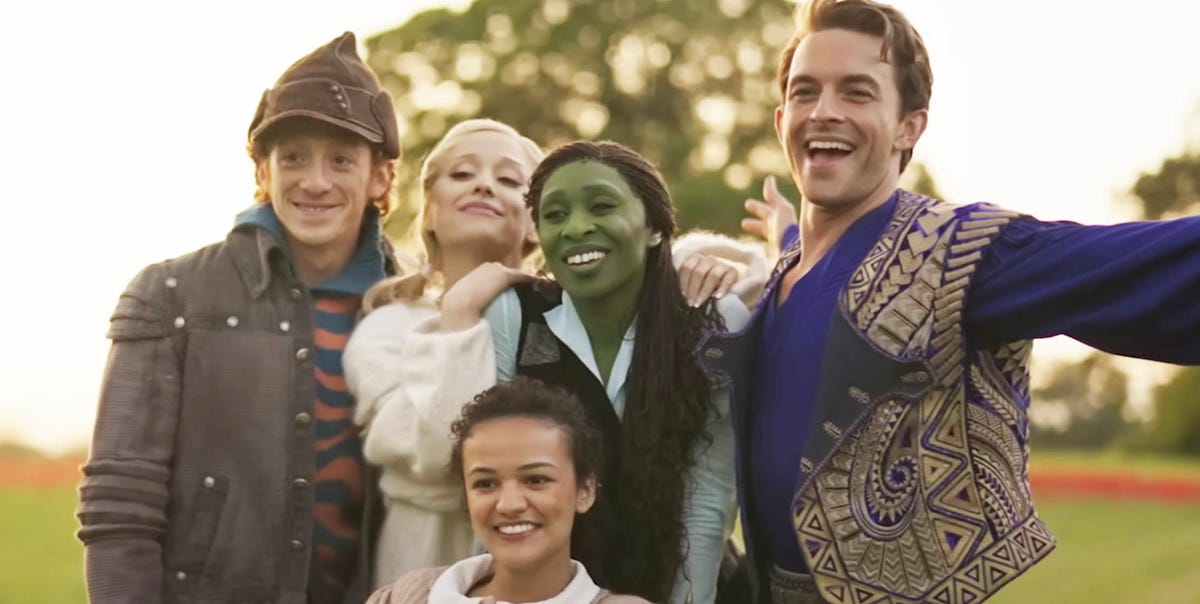

Warning: This article contains spoilers for Wicked: Part One.
Some movies hide Easter eggs like a nervous bunny in a tulip patch. Wicked does not. Jon M. Chu’s big-screen adaptation of the beloved Broadway musical practically builds an entire Emerald City out of secret nods, visual clues, musical callbacks, and tiny “did you catch that?” moments. The result is a movie that rewards everyone: longtime Broadway fans, casual moviegoers, die-hard Wizard of Oz lovers, and people who simply came for Cynthia Erivo and Ariana Grande singing as if rent in Oz depends on it.
The fun of Wicked is that it works as both a prequel and a remix. On the surface, it tells the story of Elphaba, a misunderstood young woman with green skin and extraordinary magical ability, and Glinda, a popular student whose sparkle hides a surprisingly complicated heart. Underneath that, the movie is constantly winking at the audience. Every shoe, hat, flower, melody, road, curtain, and monkey seems to know more than it is letting on.
Below, we break down the top Wicked movie Easter eggs we caught, from the obvious crowd-pleasers to the tiny details hiding in plain sight. Grab your broom, check your bubble vehicle, and try not to shout “I knew it!” too loudly.
Why the Wicked Movie Is Packed With Easter Eggs
Wicked is based on the Broadway musical by Stephen Schwartz and Winnie Holzman, which itself was inspired by Gregory Maguire’s novel and the larger world of L. Frank Baum’s The Wonderful Wizard of Oz. That means the movie has several layers of source material to honor: the original Oz books, the classic 1939 film, the stage musical, and two decades of fan culture around Elphaba and Glinda.
Instead of treating those references like homework, the movie folds them into the story. The best Easter eggs do not stop the plot. They deepen it. A pair of shoes points toward destiny. A field of flowers becomes a clue. A famous melody quietly sneaks into another song. A curtain is not just a curtain; it is a flashing neon sign that says, “Never trust a man who performs leadership from behind fabric.”
1. The Title Card Nods to The Wizard of Oz
One of the first Easter eggs appears before the story even gets going. The Wicked: Part One title card uses a whimsical, old-fashioned style that recalls the title design of the 1939 Wizard of Oz film. It is a small but elegant signal: this is not just a new movie musical. It is entering one of Hollywood’s most recognizable fantasy worlds.
That opening design tells viewers to watch carefully. The movie is going to speak in visual echoes, and some of them arrive faster than a flying monkey with a calendar invite.
2. Dorothy and Her Friends Are Already on the Road
Near the beginning, the movie places us in a version of Oz where Dorothy’s famous journey is already part of the larger timeline. Sharp-eyed viewers can spot visual reminders of the yellow brick road adventure, including the familiar group connected to Dorothy’s story: the Scarecrow, the Tin Man, and the Cowardly Lion.
This is one of the cleverest things about Wicked. The movie is not simply asking, “How did the Wicked Witch become wicked?” It is also asking, “What was happening behind the legend while everyone else was following the yellow bricks?” Suddenly, the old story feels less like a simple fairy tale and more like a public-relations campaign with extremely catchy songs.
3. Nessarose’s Silver Shoes Are More Than Pretty Footwear
Nessarose’s shoes are one of the biggest Wicked Easter eggs because they connect the movie to both the Oz books and the Broadway show. In Baum’s original story, Dorothy’s magical shoes are silver, not ruby. The 1939 film changed them to ruby slippers, partly because red looked spectacular in Technicolor.
In the Wicked movie, Nessarose receives silver shoes, and the design is loaded with meaning. The shoes are tied to her future as the Wicked Witch of the East, the character whose house-crushed fate becomes one of the most famous moments in The Wizard of Oz. Even the shoe design reportedly includes a tornado-inspired detail, a sly reference to the storm that eventually brings Dorothy to Oz.
It is fashion as foreshadowing. Somewhere, a costume designer deserves a standing ovation and possibly a tiny emerald crown.
4. Nessarose’s Striped Socks Quietly Point to Oz History
As if the shoes were not enough, Nessarose’s striped socks offer another visual nod to the Wicked Witch of the East. In The Wizard of Oz, the audience sees the witch’s legs sticking out from under Dorothy’s fallen house, complete with striped stockings. The Wicked movie does not shout this connection. It simply places the detail on screen and lets fans do the math.
That restraint is what makes the Easter egg satisfying. The movie trusts viewers to connect the dots, even if those dots happen to be attached to extremely important footwear.
5. Elphaba’s Hat Has a Mean-Girl Origin Story
Elphaba’s pointed black hat is one of the most iconic witch images in pop culture. In Wicked, the hat begins not as a symbol of power, but as a cruel joke. Glinda gives it to Elphaba as part of a social prank, expecting her to be embarrassed at the Ozdust Ballroom.
Instead, the hat becomes part of Elphaba’s identity. That is the genius of the detail: something meant to humiliate her eventually becomes inseparable from her legend. The Easter egg works because it explains how an image we already know gets emotionally rewritten. The hat is not just “witchy.” It is evidence of how Elphaba turns rejection into self-possession.
6. The Poppies Are a Sleepy Little Warning Sign
The poppies are one of the movie’s most elegant Wizard of Oz references. In the 1939 film, poppies are used to put Dorothy and her companions to sleep before they can reach the Wizard. In Wicked, Dr. Dillamond mentions his fondness for poppies, and Elphaba later brings him a bouquet. When emotions surge, the flowers become part of a magical incident that sends the classroom into a drowsy stupor.
It is a perfect example of how the movie turns a familiar image into character-driven storytelling. The poppies are not just planted for nostalgia. They show Elphaba’s power reacting to grief, anger, and injustice. Pretty flowers, yes. Emotional chaos confetti, also yes.
7. The Lion Cub Sets Up the Cowardly Lion
The classroom scene involving the lion cub is another major piece of Oz foreshadowing. Elphaba and Fiyero help free the cub after it is brought into class as part of a disturbing lesson about controlling animals. Fans of the musical know that this moment has long been connected to the origin of the Cowardly Lion.
The Easter egg matters because it adds moral complexity. Elphaba tries to save a frightened creature, but Oz later remembers her as a villain. The movie keeps asking the same deliciously uncomfortable question: who gets to tell the official story?
8. Fiyero’s Poses Hint at His Future
Fiyero enters the movie with maximum charm and minimum academic urgency. He dances, lounges, flips, leans, and generally behaves like gravity is something that happens to other people. But some of his physical poses carry a deeper meaning. His stretched-out stance and playful “brainless” energy subtly hint at his future connection to the Scarecrow.
The movie has fun with Fiyero’s carefree image, but it also uses his body language as foreshadowing. On a first watch, he may seem like a handsome distraction with excellent hair. On a second watch, he looks like a walking spoiler wearing boots.
9. Boq’s Story Plants the Seeds for the Tin Man
Boq’s longing for Glinda and his complicated connection to Nessarose carry heavy emotional foreshadowing for viewers who know where the story is headed. While Wicked: Part One does not complete his transformation, the movie positions Boq as a character whose heart is constantly pulled in the wrong direction.
That is what makes his arc so interesting. The Tin Man is famous for wanting a heart, but Wicked reframes that idea through romantic confusion, social pressure, and misplaced devotion. It is not just a mechanical origin story. It is a warning about what happens when people confuse pity, pressure, and love.
10. The Wizard’s Model City Teases the Yellow Brick Road
One of the movie’s smartest additions is the Wizard showing Elphaba and Glinda a model of his future vision for Oz. During the scene, they experiment with the color of the main road before landing on yellow. Yes, that yellow.
This is a delightfully cheeky Easter egg because it makes the yellow brick road feel like a branding decision. Before it becomes Dorothy’s famous path, it is part of the Wizard’s carefully designed public image. Oz, apparently, has always understood the importance of infrastructure and visual marketing.
11. The Curtain Is Not Just Decorative
The Wizard’s curtain is another obvious but effective nod to The Wizard of Oz. In the classic story, the Wizard’s power is exposed when the curtain is pulled back, revealing an ordinary man using spectacle to seem mighty. In Wicked, the curtain imagery appears during the Wizard’s performance of power and charm.
It works because the movie is deeply interested in propaganda. The Wizard does not need real magic if he can control perception. The curtain reminds us that Oz is full of performances, and not all of them come with choreography.
12. The Hot Air Balloon Points to the Wizard’s Escape
When Elphaba and Glinda end up near the Wizard’s hot air balloon, the movie drops another classic Oz reference. In The Wizard of Oz, the Wizard uses a balloon as his planned way out of Oz. Here, the balloon appears earlier in the timeline, connecting his future exit to his present-day machinery and theatrical flair.
The balloon is funny because it is both whimsical and suspicious. In Oz, apparently, nothing says “trustworthy ruler” like keeping an emergency floating escape pod nearby.
13. The Flying Monkeys Get an Origin Story
The flying monkeys are among the most famous images associated with the Wicked Witch of the West. The movie gives them a tragic origin. When Elphaba reads from the Grimmerie, the Wizard’s monkeys grow wings against her intentions. The moment is visually spectacular, but it is also upsetting because Elphaba realizes her gift has been manipulated.
This Easter egg does more than explain a famous detail. It flips the audience’s assumptions. The monkeys are not proof of Elphaba’s cruelty. They are proof that powerful people can twist someone else’s abilities into a weapon. That is a much sharper idea than “green witch has scary pets.”
14. The Grimmerie Gets Extra Mythology
The Grimmerie, the ancient spell book central to Wicked, receives expanded backstory in the movie. During the Emerald City sequence, the film explains more about the magical language and the prophecy surrounding someone who can read it. This adds weight to Elphaba’s power and makes the Wizard’s fraud more obvious.
The book is not just a magical object. It is a political object. Whoever controls the Grimmerie controls the story of power in Oz. Elphaba’s ability to read it makes her valuable, dangerous, and impossible for the Wizard to fully control.
15. Idina Menzel and Kristin Chenoweth Pass the Torch
The biggest Broadway Easter egg in the movie is the appearance of Idina Menzel and Kristin Chenoweth, the original Elphaba and Glinda from the 2003 Broadway production. Their cameos during “One Short Day” are more than fan service. They feel like a ceremonial passing of the wand, broom, bubble, and emotional damage.
The scene works because it honors the stage musical without pulling focus away from Cynthia Erivo and Ariana Grande. Menzel and Chenoweth appear as part of the Emerald City performance, helping explain the Grimmerie mythology while giving longtime fans a joyful full-circle moment. It is the kind of cameo that makes a theater audience gasp, clap, and immediately elbow the person next to them.
16. Stephen Schwartz and Winnie Holzman Sneak Into Oz
The movie also includes appearances from two of the creative minds behind the original musical: composer and lyricist Stephen Schwartz and book writer Winnie Holzman. Their cameos are delightful because they place the people who helped build Wicked inside the world they shaped.
For casual viewers, these moments may pass quickly. For Broadway fans, they are tiny fireworks. It is Oz saying thank you to the people who gave Elphaba and Glinda their modern voices.
17. “Somewhere Over the Rainbow” Echoes Through the Music
One of the most meaningful musical Easter eggs involves the famous “Somewhere Over the Rainbow” melody. Stephen Schwartz has discussed how the “Unlimited” theme in Wicked echoes the first notes of the classic Oz song, but changes the rhythm. That motif appears in key Elphaba songs such as “The Wizard and I” and “Defying Gravity.”
This is not a random musical wink. It connects Dorothy’s dream of somewhere better to Elphaba’s dream of becoming more than Oz allows her to be. Both characters are reaching beyond the world they know. One sings about the rainbow. The other tries to become unlimited. Same longing, different witch hat.
18. Rainbows Appear in the Visual Design
The movie also uses rainbow imagery in its production design, from colorful fields to visual arrangements that echo the world of Oz. These references naturally call back to “Somewhere Over the Rainbow,” but they also fit Wicked as a story about identity, difference, and longing.
Rainbows are not treated like simple decoration. They become part of the film’s emotional language. In a world where Elphaba is judged for being visibly different, color is never just color. It is status, fear, beauty, branding, and power all at once.
19. “A Slight Gulch” Is a Deep-Cut Name Drop
One small line references Almira Gulch, Dorothy’s unpleasant neighbor in the 1939 film. When a character in Wicked says “a slight gulch,” it sounds like casual wordplay, but Oz fans will hear the wink immediately.
This is the kind of Easter egg that rewards people who have watched The Wizard of Oz enough times to recognize not only Dorothy and Toto, but also the human-world figures who echo Oz characters. It is tiny, nerdy, and absolutely welcome.
20. Glinda’s Bubble Gets a Movie-Star Upgrade
Glinda’s bubble is one of her signature images, and the movie leans into its theatrical grandeur. Her arrival feels less like transportation and more like a press conference designed by a fairy godmother with an unlimited glitter budget.
The bubble connects the movie to the classic image of Glinda as a floating, sparkling figure of goodness. But in Wicked, it also says something about public image. Glinda is not simply “good”; she is presented as good. Her visual language is carefully polished, and the movie knows it.
Why These Easter Eggs Actually Matter
The best Easter eggs in Wicked are not just references for references’ sake. They support the movie’s main themes: reputation, power, friendship, prejudice, and the danger of believing the first version of a story you hear.
That is why the movie feels so rewatchable. The first time, you may focus on the songs, performances, and spectacle. The second time, you start noticing how every object seems to carry a future. The shoes are not just shoes. The road is not just a road. The hat is not just a hat. Even a bouquet of poppies is basically a spoiler wearing petals.
Our Rewatch Experience: Catching the Magic the Second Time Around
Watching Wicked once is fun. Watching it again is where the Easter egg hunt really begins. On the first viewing, the movie sweeps you up with scale: the Shiz University sets, the Emerald City sequence, the emotional thunderstorm of “Defying Gravity,” and the chemistry between Elphaba and Glinda. It is easy to miss tiny details when your brain is busy processing that Cynthia Erivo can sing one note and rearrange your personality.
On a rewatch, the movie becomes a different experience. You start scanning the frame. You notice the colors of costumes more carefully. You pay closer attention to who stands where, which props appear in the background, and how often the film points toward the story we already know from The Wizard of Oz. The fun is not just spotting a reference. It is realizing how early the movie begins building emotional consequences.
For example, Nessarose’s shoes feel different the second time. At first, they are a beautiful gift. Later, they feel heavy with destiny. Fiyero’s playful poses become less random. The poppies stop being pretty classroom decoration and start waving tiny red flags. Even the Wizard’s charming performance feels more alarming because you already know how much of Oz is built on theater, fear, and control.
The theater experience also matters. Wicked is the kind of movie where audience reactions become part of the fun. When Idina Menzel and Kristin Chenoweth appear, you can practically feel Broadway fans levitating in their seats. When “Defying Gravity” arrives, the room gets quiet in that special way movie theaters do when everyone silently agrees not to ruin the moment. Even people who do not know every lyric can sense that the film is building toward something iconic.
At home, the experience changes again. Pausing and rewinding makes the Easter eggs easier to catch. You can freeze the title card, study the shoes, rewatch the Emerald City cameos, and listen for musical motifs without worrying that someone behind you is silently judging your popcorn technique. The movie benefits from both types of viewing: the communal thrill of the theater and the detective work of a couch rewatch.
The most rewarding part is how the Easter eggs deepen the friendship at the center of the story. Wicked is not memorable only because it connects to The Wizard of Oz. It works because every familiar symbol gets tied to Elphaba and Glinda’s emotional journey. We are not just watching a witch get a hat. We are watching a young woman claim an identity that others tried to weaponize against her. We are not just watching Glinda sparkle. We are watching someone learn that popularity and goodness are not always the same thing.
That is why the movie keeps sticking in the mind after the credits. The Easter eggs are fun, yes, but they also ask us to reconsider the stories we inherit. Who was called wicked? Who benefited from that label? Who got the prettier costume and the better headline? Wicked turns those questions into musical spectacle, which is honestly much more enjoyable than a lecture and comes with better belts.
Conclusion
Wicked is packed with Easter eggs because it understands the power of legacy. The movie does not simply borrow from The Wizard of Oz; it talks back to it, dances with it, and occasionally side-eyes it from behind a very dramatic curtain. From Nessarose’s silver shoes to the poppies, the Grimmerie, the yellow brick road, the flying monkeys, and the Broadway cameos, every hidden detail adds another layer to the story.
What makes these Wicked movie Easter eggs so effective is that they are not empty nostalgia. They help explain how myths are made, how villains are invented, and how friendship can change the meaning of a symbol. The movie invites us to look closer, listen harder, and question the official version of events. In other words, it does exactly what a great adaptation should do: it makes an old story feel brand new without forgetting why people loved it in the first place.