
Note: This article is written for web publication and synthesizes current public information about Chrysler’s lineup, the 2027 Pacifica refresh, the Halcyon-inspired design direction, and Stellantis’ evolving North American product strategy.
For a brand that once helped define American family transportation, Chrysler’s recent showroom presence has looked almost comically thin. Walk into a Chrysler store and, depending on the model year, the choice has mostly been a minivan, a slightly different minivan, or the emotional support of remembering the Chrysler 300. That is not exactly a wall-to-wall product offensive.
Yet here is the twist: Chrysler may be down, but it is not quietly folding the lawn chairs and leaving the picnic. The brand is trying to turn its most awkward moment into a reset. After years of shrinking from sedans, crossovers, and big American personality into a minivan-first identity, Chrysler is now preparing a comeback built around a refreshed Pacifica, a cleaner lineup, a new crossover, and a future vehicle inspired by the dramatic Halcyon concept.
In other words, Chrysler is attempting the automotive equivalent of showing up to a reunion after a long absence with a new haircut, a gym membership, and a suspiciously confident smile.
How Chrysler Got Down to One Minivan
Chrysler’s current situation did not happen overnight. The brand spent decades as one of Detroit’s most recognizable names, selling everything from elegant sedans to family haulers and bold, near-luxury cruisers. The Chrysler 300, especially after its 2005 return, gave the company a muscular rear-wheel-drive sedan with attitude. But the final 2023 Chrysler 300 marked the end of that chapter, leaving the brand without its big sedan halo.
Meanwhile, the broader market changed. American buyers moved toward SUVs and crossovers. Sedans became harder to justify. Parent-company priorities shifted. Stellantis, formed from the merger of Fiat Chrysler Automobiles and PSA Group, had to manage a giant portfolio of brands, including Jeep, Ram, Dodge, Alfa Romeo, Peugeot, Fiat, Citroën, Maserati, and more. In that crowded house, Chrysler sometimes looked like the quiet cousin sitting in the corner, holding a casserole and waiting to be asked a question.
The irony is that Chrysler still had one genuinely important product: the Pacifica. The minivan may not be the internet’s favorite performance fantasy, but the Pacifica remained one of the most practical family vehicles in America. It offered clever seating, real cargo space, available all-wheel drive, strong safety features, and the kind of everyday usefulness that makes parents say things like, “Actually, this is pretty great,” before pretending they were never anti-minivan.
The Pacifica Is Not Just a Placeholder
Calling the Pacifica “just a minivan” misses the point. Chrysler invented the modern minivan formula more than four decades ago, and the Pacifica is the direct descendant of that idea. Sliding doors, flexible seating, low load floors, kid-friendly access, and cargo space are not glamorous in the way a two-seat sports car is glamorous, but they solve actual human problems. Try loading a stroller, two backpacks, a science fair volcano, and a sleepy child into a low-slung coupe. Suddenly, sliding doors feel like advanced civilization.
The 2027 Chrysler Pacifica refresh is important because it signals that Chrysler is not abandoning the segment it helped create. Orders opened for the new 2027 Pacifica with a refreshed exterior design, updated wheel options, new colors, an illuminated grille and badge on higher trims, upgraded safety technology, and more flexible packaging. The Voyager name is being folded into the Pacifica lineup as the new Pacifica LX, giving Chrysler a cleaner single-minivan structure with a budget-friendlier entry point.
That may sound like a small change, but brand clarity matters. Chrysler no longer needs to explain why it sells two vans that are closely related. Instead, Pacifica becomes the anchor: one name, several trims, and a clearer story for families shopping against the Toyota Sienna, Honda Odyssey, Kia Carnival, and Volkswagen ID. Buzz.
The Radical Part: Chrysler Wants to Look Forward Again
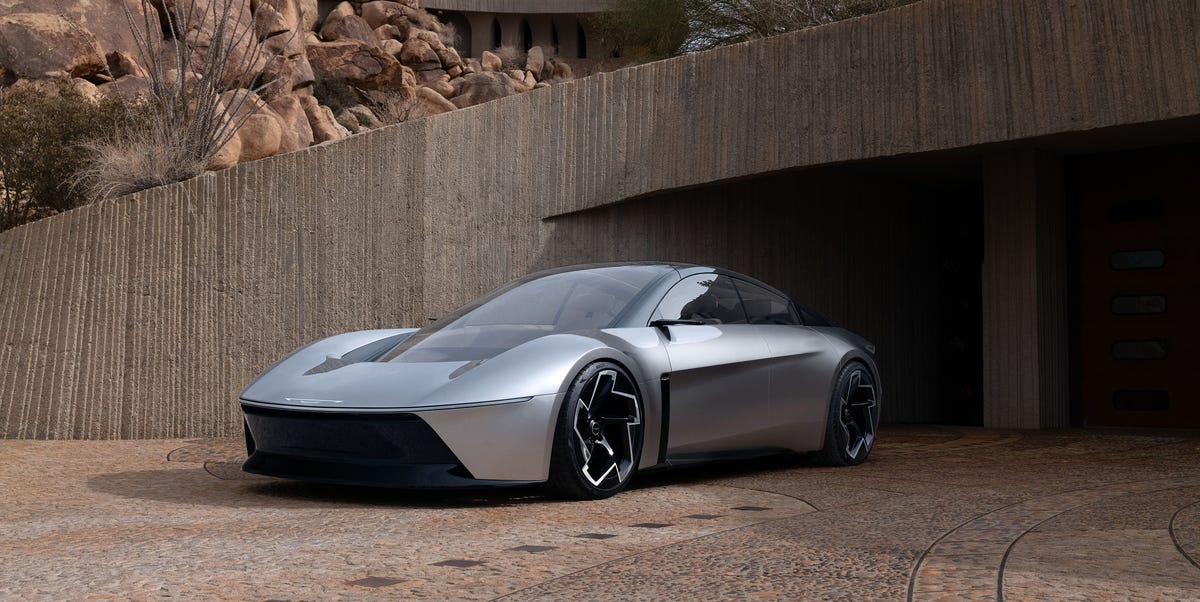
The comeback becomes more interesting when Chrysler moves beyond the minivan. The brand’s 100th-anniversary messaging pointed toward three major pieces: a refreshed Pacifica, a new crossover, and a third product inspired by the Halcyon concept. That last part matters because Halcyon is not a beige appliance with wheels. It is a low, futuristic electric concept with a dramatic silhouette, glassy cabin, active aerodynamic ideas, sustainable-material ambitions, and a design language that feels far removed from the “rental counter special” jokes that have haunted some legacy American brands.
Concept cars are easy to overhype. Automakers love building something that looks like it escaped from a sci-fi film and then selling you a production model with normal doors, normal mirrors, and a glovebox where the laser projector used to be. Still, the Halcyon concept gives Chrysler something it has needed badly: a visual flag. It says the brand wants to be modern, sleek, tech-forward, and emotionally interesting again.
The key question is whether that energy can survive the trip from concept studio to dealership lot. A radical comeback is not built with press photos alone. Chrysler needs production vehicles with competitive pricing, strong reliability, intuitive technology, and enough personality to make shoppers choose the winged badge over more familiar SUV names.
A New Crossover Could Be the Real Test
The new Chrysler crossover may be the most important piece of the plan. Minivans are practical, but the American market is dominated by crossovers and SUVs. If Chrysler wants to become more than a one-product brand, it needs a vehicle that meets shoppers where they already are. A well-executed crossover could bring younger families, empty nesters, commuters, and former sedan owners back into the Chrysler conversation.
For that to work, Chrysler cannot simply build another anonymous rounded rectangle. The market is packed with competent crossovers. Competence is not enough. A new Chrysler crossover needs a clear identity: comfortable, quiet, stylish, tech-friendly, and more premium than bargain-basement without drifting into luxury-brand pricing. Think of it as the sweet spot between “I made a sensible purchase” and “I did not punish myself for needing cargo space.”
Chrysler also has to decide how bold its powertrain strategy should be. Stellantis has shifted away from traditional plug-in hybrids in North America, including the Pacifica Plug-in Hybrid, and is now emphasizing other electrified solutions, conventional hybrids, range-extended systems, and battery-electric vehicles where they make sense. That creates both risk and opportunity. Chrysler once had a strong talking point with the Pacifica Plug-in Hybrid. Losing that option means future models need a fresh efficiency story.
The EV Promise Has Become More Complicated
A few years ago, Chrysler’s future sounded straightforward: launch an electric vehicle, then move toward an all-electric lineup. The market has since become messier. EV demand is still growing in some areas, but not evenly. Charging access remains a concern for many families. Interest rates, vehicle prices, federal incentives, and changing regulations have all made automakers rethink their timelines.
That does not mean Chrysler should abandon electrification. It means the brand needs to be smarter and more flexible. A future electric Pacifica could be a fantastic idea if it delivers real range, fast charging, useful packaging, and a price that does not require parents to sell the family kayak. A sleek Halcyon-inspired car could also help Chrysler rebuild aspiration. But the brand cannot rely on futuristic language alone. Buyers want confidence, not just concept-car poetry.
The challenge is especially sharp because Chrysler’s customer base includes practical people. Families care about monthly payments, warranty coverage, dealer service, winter range, car seats, and whether the infotainment system will freeze while someone in row three is demanding cartoons. Any Chrysler comeback must blend vision with usefulness. The future can glow, but it still needs cup holders.
Why the 2027 Pacifica Refresh Matters More Than It Looks
On paper, the 2027 Pacifica refresh is not a full redesign. The basic minivan formula remains familiar. But the update still matters because Chrysler needed a public sign of movement. The new front-end design, illuminated details, updated badge, new colors, and revised packages help the Pacifica look less like a model waiting for retirement and more like a product Chrysler intends to keep fighting for.
The Pacifica’s core strengths remain its biggest advantage. Stow ’n Go seating is still one of the best packaging ideas in family vehicles. The ability to fold seats into the floor without hauling them into a garage is the kind of feature that sounds boring until you use it once and become mildly evangelical about it. Available all-wheel drive also gives Chrysler a practical answer for families in snowy states who might otherwise default to SUVs.
Safety and convenience updates are equally important. Minivan buyers may enjoy style, but they buy on trust. Features like upgraded camera activation, driver-assistance packages, adjustable liftgates, power sliding doors, and better tech packaging help keep Pacifica relevant in a segment where every competitor has a strong argument.
Chrysler’s Brand Problem: What Does It Stand For?
Product plans are only half the comeback. Chrysler also needs a clear brand identity. Jeep stands for off-road adventure. Ram stands for trucks. Dodge stands for performance attitude. Chrysler has historically stood for attainable American comfort, family innovation, and sometimes near-luxury design. The comeback should not try to turn Chrysler into Jeep Lite, Dodge Soft, or Generic Crossover Company Number 47.
The strongest version of modern Chrysler would be calm, clever, elegant, and human-centered. It should make vehicles for people who want comfort without shouting, technology without confusion, and style without pretending the school drop-off lane is a racetrack. Chrysler can win by being warmer and more thoughtful than the average mainstream brand.
That may sound modest, but modesty can be powerful when done well. Not every vehicle needs fake vents and “track mode.” Some people want quiet cabins, comfortable seats, useful screens, clever storage, and design that looks good in the driveway after the novelty wears off. Chrysler’s opportunity is to make practicality feel polished.
The Comeback Risks Are Real
There is no guarantee this works. Chrysler has a narrow lineup, and narrow lineups are vulnerable. If the Pacifica slips, the entire brand feels the impact. If the new crossover is delayed, too expensive, underpowered, or visually timid, Chrysler risks remaining stuck in comeback-preview mode. Automotive history is full of brands that announced exciting futures and then delivered a brochure.
Competition will not wait politely. Toyota has the hybrid-only Sienna. Kia has turned the Carnival into a stylish multi-purpose vehicle with SUV-like swagger. Honda’s Odyssey continues to attract loyal families. In crossovers, nearly every major automaker has multiple entries, many with hybrid options and aggressive pricing. Chrysler has to re-enter this fight with products that feel fully baked from day one.
Dealer confidence also matters. Dealers need fresh inventory, clear timelines, and marketing that gives customers a reason to visit. A brand can have heritage, but heritage does not move metal by itself. Chrysler must turn nostalgia into momentum, and momentum into vehicles people can actually buy.
Why Chrysler Still Has a Shot
Despite all the risks, Chrysler has assets that should not be dismissed. The name still means something. Its minivan history is real. The Pacifica remains a respected family vehicle. The brand has room to reinvent itself without confusing buyers because, frankly, there is not much lineup baggage left. That emptiness can be a weakness, but it can also be a blank canvas.
Chrysler also benefits from timing. Many buyers are tired of vehicles that feel overstyled, overpriced, and overcomplicated. A Chrysler comeback built around elegant design, useful innovation, comfortable interiors, and sensible electrification could land well. The brand does not need to chase every trend. It needs to own a lane that feels modern and trustworthy.
The smartest path is not to pretend Chrysler is suddenly a technology startup. It is to blend the brand’s best old instincts with new execution. Chrysler has always been strongest when it made advanced ideas feel usable for normal households. The minivan did that. Stow ’n Go did that. A truly modern crossover or electric family vehicle could do that again.
Experience Notes: What Chrysler’s Comeback Feels Like From the Real World
To understand why Chrysler’s comeback matters, imagine the experience of shopping for a family vehicle today. You start with a spreadsheet because, apparently, adulthood is mostly spreadsheets with cup holders. You compare cargo space, safety scores, fuel economy, monthly payments, warranties, and whether the third row can hold actual humans instead of decorative throw pillows. Then you visit dealerships and discover that many vehicles described as “family-friendly” require Olympic-level flexibility to install a child seat.
This is where Chrysler still has a lived-experience advantage. A Pacifica does not need to explain itself for very long. Slide open the doors, fold the seats, toss in luggage, sports gear, groceries, a dog crate, or an entire weekend’s worth of “just in case” bags, and the appeal becomes obvious. The minivan’s reputation problem has never been usefulness. It has been image. People joke about minivans until they borrow one. Then they return it with the stunned look of someone who has discovered indoor plumbing.
The most memorable thing about a good minivan is not speed. It is the reduction of friction. Doors open wide in tight parking lots. Kids can climb in without acrobatics. Grandparents do not have to scale a mountain. The cargo area swallows awkward objects. The cabin feels more like a mobile living room than a cramped command bunker. That kind of experience creates loyalty because it improves ordinary days, not just dramatic road trips.
Chrysler’s comeback should lean into that emotional truth. The company does not need to apologize for being practical. It needs to make practicality feel desirable again. A refreshed Pacifica with sharper styling helps because buyers want to feel good about what they drive. A future crossover can build on the same idea by offering comfort, smart storage, clean design, and technology that supports the driver instead of turning every trip into a software tutorial.
There is also a nostalgia factor, but it is not just sentimental. Many Americans grew up around Chrysler, Dodge, or Plymouth minivans. They remember road trips, sliding-door chaos, fast-food wrappers, vacation maps, and the strange childhood thrill of controlling the rear climate vents. Chrysler’s comeback can tap into that memory without getting stuck in the past. The goal is not to recreate 1994. The goal is to capture the same sense of family mobility for a world of smartphones, charging stops, driver assists, and rising vehicle prices.
From a driver’s perspective, the best comeback Chrysler could deliver would be refreshingly simple: vehicles that are easy to live with, comfortable on long drives, handsome enough to feel proud of, and clever enough to justify choosing them over a default SUV. If Chrysler can make buyers say, “I did not expect to like this this much,” the brand will be back in the conversation. That sentence may be more valuable than any slogan.
Conclusion: A Comeback Built One Sliding Door at a Time
Chrysler’s comeback is radical not because the first step is wild, but because the brand is trying to rebuild from such a narrow foundation. A refreshed Pacifica alone will not solve everything. A new crossover must arrive with purpose. A Halcyon-inspired vehicle must translate concept-car drama into something credible. Electrification must be practical, not performative. And Chrysler must rediscover a voice that fits modern buyers.
Still, the ingredients are there. Chrysler has heritage, a strong minivan legacy, a recognizable badge, and a chance to reposition itself around intelligent American comfort. If the company delivers vehicles that are stylish, useful, efficient, and emotionally warmer than the average appliance-like crossover, its comeback could be more than a corporate talking point.
For now, Chrysler’s story is a little funny and a little dramatic: an iconic brand down to a minivan, trying to turn the vehicle everyone jokes about into the launchpad for renewal. But if the next products are good, the joke may age badly. After all, the minivan was once a radical idea too.