
Some mornings, your body wakes up like a folding chair from a garage sale: technically functional, but making noises nobody asked for. That is where a smart stretching routine comes in. Daily full body stretches can help you move more freely, feel less stiff, improve posture, and make everyday tasksreaching the top shelf, tying your shoes, turning around to back out of the drivewayfeel less like Olympic events.
Stretching is not magic, and it will not turn you into a circus performer by Friday. But done consistently and safely, it can improve flexibility, support joint range of motion, reduce muscle tension, and help your body handle workouts and daily life with less drama. The key is not doing the fanciest stretch on the internet. The key is choosing simple stretches, doing them regularly, breathing like a calm human, and never treating pain as a badge of honor.
This guide explains how to build a practical daily stretching routine, when to use dynamic versus static stretching, which full body stretches deserve a spot in your day, and how to adjust the routine for mornings, workouts, desk jobs, and beginners.
Why a Daily Stretching Routine Matters
Flexibility is the ability of your muscles and connective tissues to allow joints to move through a comfortable range of motion. When your muscles are flexible and healthy, your body can move with better control. When they are tight, movement can become restricted, posture can suffer, and other areas may compensate. Translation: your tight hips may be writing checks your lower back has to cash.
A consistent stretching routine may help improve mobility, support better posture, increase blood flow to muscles, and make physical activity feel smoother. Stretching can also be a useful reset after long periods of sitting, standing, driving, or staring at a laptop like it personally offended you.
Stretching Is About Consistency, Not Intensity
The biggest mistake people make is turning stretching into a battle. They pull hard, bounce aggressively, hold their breath, and then wonder why their hamstring files a complaint. Effective stretching should feel like gentle tension, not sharp pain. Think “comfortable challenge,” not “medieval punishment.”
For most healthy adults, holding static stretches for about 15 to 30 seconds is a practical starting point. Many flexibility guidelines suggest repeating stretches until you reach roughly 60 seconds total per stretch. Older adults or people who feel very stiff may benefit from longer, gentler holds, such as 30 to 60 seconds, as long as the stretch remains comfortable.
Dynamic vs. Static Stretching: What Is the Difference?
Not all stretching is the same. The two styles most people need to understand are dynamic stretching and static stretching.
Dynamic Stretching
Dynamic stretching uses controlled movement to take joints and muscles through a range of motion. Examples include arm circles, leg swings, walking lunges, hip circles, and gentle torso rotations. Dynamic stretches are especially useful before workouts because they help warm the body, increase circulation, and prepare muscles for activity.
Before exercise, think movement. You are waking the body up, not forcing it into a sleepy pretzel.
Static Stretching
Static stretching means moving into a stretch and holding it. Examples include a standing quad stretch, seated hamstring stretch, child’s pose, and doorway chest stretch. Static stretches are usually best after a workout, during a cooldown, or as a separate flexibility session after the body has warmed up.
Static stretching before high-intensity activity may temporarily reduce power or explosiveness for some people, so save long static holds for after training unless a healthcare or fitness professional recommends otherwise.
How to Stretch Safely
A good stretching routine should leave you feeling looser, not limping toward the couch with regret. Follow these safety rules before beginning any full body stretching routine.
Warm Up First
Stretching cold muscles is like trying to bend dry spaghetti. Before static stretching, warm up with five minutes of light movement, such as walking, marching in place, easy cycling, or gentle mobility drills.
Do Not Bounce
Bouncing during a stretch can increase strain and reduce control. Move slowly into the position, hold steady, breathe, and let the muscle relax gradually.
Stretch to Tension, Not Pain
You should feel mild to moderate tension. You should not feel sharp pain, numbness, tingling, or joint pinching. If you do, back off immediately.
Breathe Normally
Holding your breath makes stretching harder and turns your face into a tomato. Inhale gently, then exhale as you settle into the stretch. Breathing helps your nervous system relax, which helps your muscles cooperate.
Respect Injuries and Medical Conditions
If you have recent surgery, chronic pain, joint instability, nerve symptoms, osteoporosis, balance issues, or a medical condition that affects movement, talk with a healthcare professional or physical therapist before starting a new stretching program.
Daily Full Body Stretching Routine
This routine takes about 10 to 15 minutes. It targets the neck, shoulders, chest, back, hips, hamstrings, quadriceps, calves, and ankles. Do it in the morning, after work, after a workout, or whenever your body starts behaving like it was assembled with rusty hinges.
1. Neck Side Stretch
Sit or stand tall. Drop your right ear gently toward your right shoulder. Keep both shoulders relaxed. Hold for 15 to 30 seconds, then switch sides.
Best for: Neck tension, desk posture, shoulder tightness.
Tip: Do not pull hard on your head. Your neck is not a stubborn jar lid.
2. Shoulder Rolls
Lift your shoulders toward your ears, roll them back, and lower them down. Repeat 8 to 10 times, then reverse the direction.
Best for: Upper back stiffness and shoulder mobility.
Tip: Move slowly and make the circles smooth.
3. Doorway Chest Stretch
Stand in a doorway with your forearms on the doorframe and elbows around shoulder height. Step one foot forward until you feel a stretch across your chest. Hold for 20 to 30 seconds.
Best for: Rounded shoulders, tight chest muscles, computer posture.
Tip: Keep your ribs down and avoid arching your lower back.
4. Cat-Cow Stretch
Start on your hands and knees. Inhale as you drop your belly slightly and lift your chest. Exhale as you round your spine and tuck your chin. Repeat 6 to 10 times.
Best for: Spinal mobility, morning stiffness, gentle back movement.
Tip: Move one vertebra at a time, or at least pretend you know what that feels like.
5. Child’s Pose
Kneel on the floor, sit your hips back toward your heels, and reach your arms forward. Let your chest relax toward the floor. Hold for 30 seconds.
Best for: Lower back, shoulders, hips, and relaxation.
Modification: Place a pillow under your chest or hips if needed.
6. Thread-the-Needle Stretch
Begin on hands and knees. Slide your right arm under your left arm, lowering your right shoulder toward the floor. Hold for 20 to 30 seconds, then switch sides.
Best for: Upper back, shoulders, and thoracic spine mobility.
Tip: Keep the movement slow and controlled.
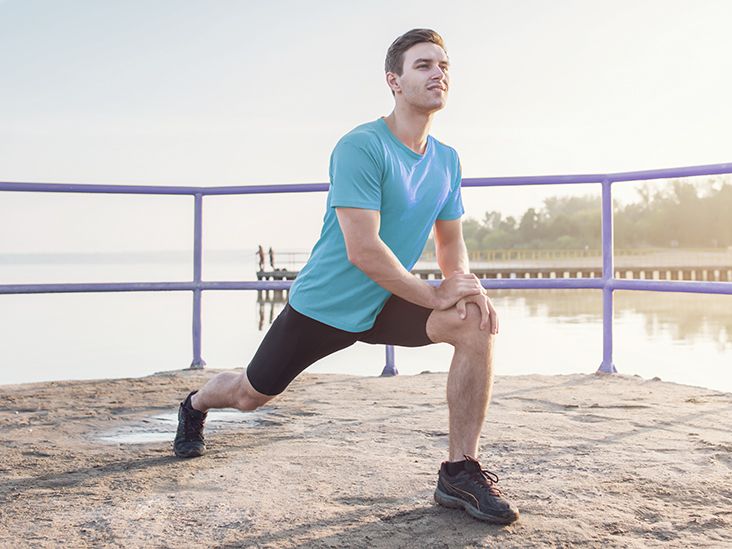
7. Kneeling Hip Flexor Stretch
Kneel with your right knee on the floor and left foot forward. Gently shift your hips forward until you feel a stretch in the front of your right hip. Hold for 20 to 30 seconds, then switch sides.
Best for: Tight hips from sitting, walking, running, or driving.
Tip: Squeeze the glute of the back leg lightly to avoid over-arching your lower back.
8. Figure-Four Glute Stretch
Lie on your back with knees bent. Cross your right ankle over your left thigh. Pull the left thigh toward your chest until you feel a stretch in the right glute. Hold for 20 to 30 seconds, then switch sides.
Best for: Glutes, hips, and lower back comfort.
Modification: Keep the bottom foot on the floor if the stretch feels intense.
9. Seated Hamstring Stretch
Sit with one leg extended and the other bent. Keep your back long and hinge forward from your hips until you feel a stretch behind the extended thigh. Hold for 20 to 30 seconds, then switch sides.
Best for: Hamstrings, posterior chain flexibility, lower body mobility.
Tip: Do not round your back aggressively. Your goal is a hamstring stretch, not a dramatic reenactment of folding laundry.
10. Standing Quad Stretch
Stand tall and hold a wall or chair for balance. Bend your right knee and bring your heel toward your glute. Hold your ankle or foot, keeping knees close together. Hold for 20 to 30 seconds, then switch sides.
Best for: Front thighs, hip flexors, and post-walk or post-run cooldowns.
Tip: Keep your pelvis neutral and avoid pulling your knee backward forcefully.
11. Calf Stretch
Stand facing a wall. Step one foot back, keeping the back heel down and back leg straight. Lean forward slightly until you feel a stretch in the calf. Hold for 20 to 30 seconds, then switch sides.
Best for: Calves, ankles, walking comfort, and runners.
Variation: Slightly bend the back knee to target the deeper soleus muscle.
12. Ankle Circles
Lift one foot and slowly circle the ankle 8 to 10 times in each direction. Switch sides.
Best for: Ankle mobility, balance, and lower body warmups.
Tip: Move through your comfortable range of motion, not your “I saw this on social media” range.
Best Morning Stretching Routine
A morning stretching routine should be gentle. After sleeping, your muscles and joints may feel stiff, so this is not the moment to attack your hamstrings like they owe you money.
Try this five-minute morning flow:
- Cat-cow stretch: 6 slow reps
- Child’s pose: 30 seconds
- Neck side stretch: 20 seconds per side
- Standing side reach: 20 seconds per side
- Hip circles: 8 reps per direction
- Calf stretch: 20 seconds per side
This routine helps wake up the spine, hips, shoulders, and lower legs without asking too much from a body that has not yet received coffee.
Best Stretching Routine After a Workout
After exercise, your muscles are warmer, making it a good time for static stretching. A cooldown stretching routine can help improve flexibility and reduce post-workout stiffness, although stretching alone may not completely prevent soreness.
Try this post-workout routine:
- Doorway chest stretch: 30 seconds
- Kneeling hip flexor stretch: 30 seconds per side
- Seated hamstring stretch: 30 seconds per side
- Standing quad stretch: 30 seconds per side
- Calf stretch: 30 seconds per side
- Figure-four glute stretch: 30 seconds per side
Move slowly, breathe deeply, and use the cooldown as a signal that the workout is complete. Your nervous system appreciates closure, too.
Best Stretching Routine for Desk Workers
Sitting for long periods can tighten the hip flexors, round the shoulders, and make the neck feel like it has been holding a committee meeting all day. A desk-friendly stretch break can help restore movement and reduce stiffness.
Three-Minute Desk Stretch Break
- Shoulder rolls: 10 reps
- Neck side stretch: 20 seconds per side
- Seated spinal twist: 20 seconds per side
- Standing hip flexor stretch: 20 seconds per side
- Standing calf raises: 10 slow reps
Set a reminder every 60 to 90 minutes if you tend to get trapped in work mode. Your body was designed to move, not become a decorative office plant.
How Often Should You Stretch?
A realistic stretching schedule is better than a heroic one you abandon after three days. For general flexibility, aim for full body stretches at least two to three times per week. For tight areas, daily gentle stretching may be helpful, especially if the stretches are comfortable and not forced.
If you are new to stretching, start with 5 to 10 minutes per day. Once the habit feels easy, increase to 10 to 15 minutes. The goal is to make stretching feel like brushing your teeth: simple, repeatable, and not something you need a motivational speech to begin.
Common Stretching Mistakes to Avoid
Stretching Too Hard
More intensity does not mean better results. Stretching too aggressively can irritate muscles, tendons, or joints. Keep it gentle and consistent.
Skipping the Warmup
Cold muscles are less ready for deep static stretching. Warm up first with light movement.
Holding Your Breath
Breathing helps you relax into the stretch. If you cannot breathe comfortably, you may be pushing too hard.
Only Stretching What Feels Tight
Tightness can be sneaky. A stiff lower back may relate to tight hips, hamstrings, or weak core muscles. A balanced full body stretching routine works better than chasing one tight spot forever.
Expecting Instant Results
Flexibility improves gradually. You may feel better after one session, but lasting change comes from repetition over weeks and months.
Who Should Be Extra Careful With Stretching?
Most people can benefit from gentle flexibility work, but some situations require caution. If you have a recent muscle strain, joint injury, severe back pain, nerve pain, dizziness, balance problems, or a condition that affects bones or joints, ask a healthcare provider or physical therapist for guidance.
Stretching should support your body, not test its warranty. When in doubt, choose smaller movements and professional advice.
Sample Weekly Stretching Plan
Here is a simple weekly plan for beginners and busy adults.
Monday: Full Body Stretch
Do the 10- to 15-minute full body routine after work or after exercise.
Tuesday: Desk Mobility
Take two short stretch breaks during the day, focusing on neck, shoulders, spine, and hips.
Wednesday: Lower Body Flexibility
Focus on hip flexors, hamstrings, quads, calves, glutes, and ankles.
Thursday: Recovery Stretch
Use gentle stretches like child’s pose, cat-cow, figure-four stretch, and chest opening.
Friday: Post-Workout Cooldown
After training, hold static stretches for the muscles you used most.
Saturday: Yoga or Mobility Flow
Try a slow yoga flow, tai chi-inspired mobility, or a full body stretch session.
Sunday: Easy Reset
Spend five minutes stretching while watching TV, listening to music, or pretending you are not thinking about Monday.
Experience-Based Tips: What a Daily Stretching Routine Feels Like in Real Life
The first thing people often notice when starting a stretching routine is not dramatic flexibility. Nobody wakes up after three days and casually drops into the splits while making breakfast. The first real change is usually awareness. You begin noticing which areas feel tight, which movements feel smooth, and which muscles have apparently been living rent-free in a state of tension since 2017.
For many people, the hips are the loudest complainers. After long hours sitting at a desk, driving, or scrolling on the couch, the hip flexors can feel short and stubborn. Adding a kneeling hip flexor stretch every day may make walking feel lighter and standing posture feel more natural. It is not instant, but after a week or two, you may notice that your lower back does not feel as cranky when you stand up from a chair.
The shoulders and chest are another common surprise. A doorway chest stretch can feel shockingly intense for people who work at computers. That tightness is often connected to rounded posture. Practicing chest stretches, shoulder rolls, and upper back mobility can make the upper body feel more open. It may even remind you to stop wearing your shoulders as earrings during stressful emails.
Morning stretching has its own personality. It should be slow and forgiving. The best morning routine is not the most ambitious one; it is the one you will actually do when you are half-awake and negotiating emotionally with your alarm clock. A few cat-cows, a child’s pose, a gentle neck stretch, and some ankle circles can be enough to make the body feel less stiff and more ready for the day.
Evening stretching feels different. After a full day of movement, stress, sitting, or workouts, static stretches can become a calming ritual. Holding a hamstring stretch or figure-four stretch while breathing slowly can help shift the mind out of productivity mode. It gives the body a clear message: the workday is over, the laptop is closed, and no, we are not checking one more email.
One useful experience-based strategy is habit stacking. Stretch after brushing your teeth, after your shower, after a walk, or before bed. Pairing stretching with an existing routine makes it easier to remember. Motivation is unreliable; routines are much better employees.
Another practical tip is to keep the routine short at first. A five-minute daily stretching routine beats a 45-minute masterpiece you only do once. Start with four or five stretches: neck, chest, hips, hamstrings, and calves. Once that feels natural, add more full body stretches.
Finally, track how you feel, not just how far you can reach. Flexibility is useful because it improves life, not because your nose can touch your knee. Notice whether stairs feel easier, whether your posture improves, whether workouts feel smoother, or whether you feel less stiff after sitting. Those small wins are the real reason to stretch daily.
Conclusion
A daily stretching routine does not need to be complicated. In fact, the best routine is usually simple, balanced, and repeatable. Focus on full body stretches that target the neck, shoulders, chest, spine, hips, hamstrings, quads, calves, and ankles. Use dynamic stretching before workouts and static stretching after workouts or during dedicated flexibility sessions. Warm up first, breathe steadily, avoid bouncing, and stretch to gentle tensionnot pain.
With consistency, stretching can help you move better, feel less stiff, support posture, and make daily activities more comfortable. It is not about becoming the bendiest person in the room. It is about helping your body feel capable, mobile, and less likely to groan every time you stand up.