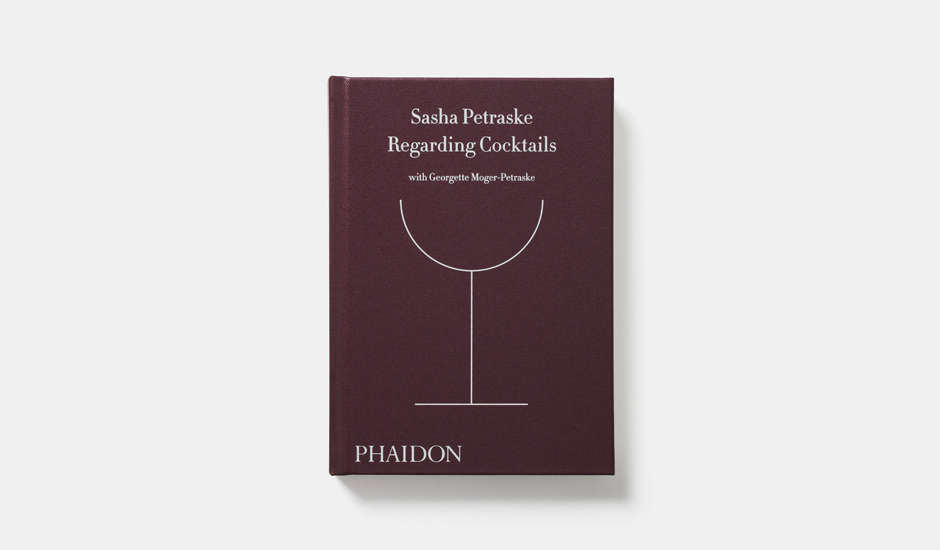

Some cocktail books teach you how to shake, stir, strain, garnish, and look mysteriously competent while holding a jigger. Regarding Cocktails by Sasha Petraske does something quieter and more lasting: it teaches you how to think about a drink. It is not merely a recipe collection. It is a small philosophy of hospitality, precision, restraint, and respect, served cold in a coupe glass with no unnecessary umbrella poking out of the top.
Sasha Petraske, the influential founder of Milk & Honey in New York City, helped reshape American cocktail culture at a time when many bars were still trapped in a neon swamp of sour mix, oversized martini glasses, and drinks named like bad spring-break decisions. His approach was almost radical in its simplicity: use good ingredients, measure carefully, respect classic formulas, control the atmosphere, and make the guest feel cared for without turning the bartender into the star of a magic show.
Regarding Cocktails, completed with the help of his wife, Georgette Moger-Petraske, after his passing in 2015, preserves that worldview. The book gathers 85 recipes, stories from bartenders he trained, practical advice for the home bar, and reflections on the art of serving drinks well. For readers interested in craft cocktails, modern classics, Milk & Honey, or the deeper meaning of hospitality, this book is not just usefulit is quietly essential.
Who Was Sasha Petraske?
Sasha Petraske was not the loudest figure in the cocktail world, which may be exactly why his influence became so loud. Born in New York, he opened Milk & Honey on the Lower East Side on New Year’s Eve in 1999. The timing feels almost cinematic: one century ending, another beginning, and behind a discreet door a new idea of the American cocktail bar was taking shape.
Milk & Honey was small, dim, controlled, and focused. It served carefully made drinks in an environment that valued conversation over chaos. At a moment when nightlife often meant volume, status, and velvet-rope theater, Petraske offered something different: civility. The room had rules. No shouting. No fighting. No rude behavior. No treating the bar like a stage for one’s worst personality traits. Revolutionary? In theory, no. In practice, absolutely.
Petraske’s style helped inspire a wave of modern speakeasy-style bars across the United States and beyond. But the real legacy was not the hidden door or the candlelight. It was the discipline behind the bar: fresh citrus, proper ice, balanced recipes, thoughtful service, and the belief that a cocktail should be delicious before it tries to be clever.
What Is Regarding Cocktails About?
Regarding Cocktails is a cocktail book, but calling it only that is like calling a tuxedo “pants with ambition.” Yes, it contains recipes. Yes, it explains how to make drinks. But its deeper value lies in its tone. The book captures Petraske’s habits, preferences, techniques, and standards through recipes and memories from people who worked with him.
Rather than presenting cocktail culture as a competition for the strangest ingredient or most dramatic garnish, the book returns to fundamentals. It asks: Is the drink balanced? Is the ice right? Is the glass cold? Is the guest comfortable? Are we making a better evening, or just a louder one?
That question is what separates Petraske’s approach from trend-chasing mixology. He was not against creativity. In fact, Milk & Honey helped produce and popularize modern classics. But creativity, in his world, had to earn its seat at the bar. A drink should be simple enough to understand, precise enough to repeat, and pleasurable enough that nobody needs a lecture before taking a sip.
Why Milk & Honey Changed Cocktail Culture
A Return to Serious Drinks
Before the modern craft cocktail revival became a national movement, many classic drinks were treated like museum pieces or, worse, were made badly enough to deserve protective custody. Old Fashioneds were muddled into fruit salad. Daiquiris were frozen into candy slush. Martinis became giant glasses of cold vodka with an olive looking lonely at the bottom.
Milk & Honey helped restore respect for classic structure. A Daiquiri was rum, lime, and sugar in balance. A Whiskey Sour was not a powdered mix wearing a lemon wedge as a disguise. A Manhattan deserved proper whiskey, quality vermouth, and careful dilution. Petraske’s world was not about making drinks complicated; it was about making simple drinks correctly.
The Power of Ice, Measurement, and Restraint
One of Petraske’s lasting contributions was his attention to ice. Today, large clear cubes and elegant ice spears are common in serious cocktail bars. At the time, treating ice as a core ingredient rather than frozen filler was a major shift. Good ice controls dilution, temperature, texture, and presentation. Bad ice turns a great drink into a sad puddle with garnish.
Measurement mattered, too. Petraske’s approach rejected the “free pour and pray” school of bartending. A balanced cocktail depends on proportion. A quarter ounce can change the entire personality of a drink. In this sense, cocktail making resembles cooking, but with fewer chances to hide mistakes behind melted cheese.
Hospitality as a Form of Design
Milk & Honey’s house rules are often remembered as strict, but their purpose was not snobbery. They were a design tool. The rules protected the mood of the room and the comfort of guests. They made the bar feel less like a marketplace for attention and more like a temporary refuge from the city.
This is one of the most important lessons in Regarding Cocktails: hospitality is not only what is handed across the bar. It is the lighting, the music, the pace, the posture, the greeting, the goodbye, the way a guest feels after the second sip. A good cocktail bar is engineered emotionally as much as physically.
Notable Cocktails and Ideas Connected to Petraske
The Gold Rush
The Gold Rush is one of the best-known drinks associated with the Milk & Honey universe. A bourbon sour sweetened with honey syrup instead of simple syrup, it proves that a modern classic does not need a fog machine or a garnish clipped on with office supplies. Bourbon, lemon, honey: that is the whole conversation. The magic is in the balance.
The drink’s appeal lies in its clarity. Honey adds body and warmth, lemon brings brightness, and bourbon supplies structure. It feels familiar and new at the same time, which is the secret handshake of many great modern cocktails.
The Gordon’s Cup
The Gordon’s Cup is another drink often linked with Petraske’s influence. Built around gin, lime, cucumber, and simple seasoning, it captures the Milk & Honey preference for freshness without clutter. It is crisp, green, and directthe sort of drink that makes a hot day feel slightly less like a personal attack.
The Daiquiri as a Test of Skill
Petraske had a deep respect for the Daiquiri, and for good reason. The drink is brutally honest. With only rum, lime, and sugar, there is nowhere for poor technique to hide. Too much sugar and it becomes sticky. Too much lime and it becomes punishment. Too much dilution and it waves goodbye from a watery distance.
A properly made Daiquiri is a bartender’s handshake. It says: I understand balance. I respect simplicity. I am not here to bury your palate under blue liqueur.
Lessons Home Bartenders Can Learn from Regarding Cocktails
Start With Fewer Bottles, Not More
One of the best lessons from Petraske’s philosophy is that a home bar does not need to look like a liquor store after an earthquake. Start with core spirits: gin, rye or bourbon, rum, tequila, vermouth, bitters, citrus, sugar, and good ice. With those basics, you can make an impressive range of classics.
The beginner’s mistake is buying novelty bottles before learning structure. That is how people end up owning three dusty liqueurs, no fresh lemons, and a shaker that has seen more hope than success.
Use Fresh Citrus
Fresh citrus is non-negotiable. Bottled lime juice tastes like someone described a lime to a cleaning product. Fresh juice gives cocktails brightness, aroma, and life. If you want better drinks instantly, squeeze citrus right before mixing. It is the simplest upgrade with the biggest payoff.
Make Simple Syrup and Honey Syrup Properly
Sweeteners should mix smoothly into cold drinks. Granulated sugar does not always dissolve well in a shaker, which can leave a cocktail uneven. Simple syrup solves that problem. Honey syrup, made by loosening honey with warm water, makes honey easier to incorporate while preserving its flavor.
Respect Dilution
Dilution is not the enemy. It is part of the recipe. Shaking and stirring do more than chill a drink; they add water in a controlled way, softening alcohol and integrating flavors. Under-diluted cocktails taste hot and jagged. Over-diluted drinks taste like regret in a glass.
Why Regarding Cocktails Still Matters Today
The cocktail world has changed dramatically since Milk & Honey opened. Today, craft cocktail bars exist in nearly every major American city. Many grocery stores sell bitters. Clear ice has become a hobby. People argue online about Martini ratios with the seriousness of constitutional scholars.
Yet Regarding Cocktails still matters because trends keep changing while fundamentals do not. A well-made drink still depends on balance, temperature, texture, aroma, and hospitality. The book reminds readers that technique should serve pleasure, not ego. It also reminds bartenders and hosts that the guest is the pointnot the bartender’s suspenders, not the rare amaro, not the paragraph-long menu description.
Petraske’s influence can be seen in the best modern bars: focused menus, precise builds, thoughtful ice, strong service standards, and a renewed respect for classics. Even when bars reject the speakeasy aesthetic, many still operate with ideas he helped popularize. His legacy is not a costume. It is a standard.
How to Read the Book
The best way to read Regarding Cocktails is not to rush through it like a manual. Treat it like a conversation with a very particular host. Read a recipe, make the drink, notice what the proportions do, and then read the surrounding story. The book rewards slow attention.
Beginners can use it to learn classic technique and build confidence. Experienced cocktail fans can use it to reconnect with simplicity. Professionals can use it as a reminder that hospitality is not an accessory to the drink; it is part of the drink’s meaning.
Experience Section: Living With the Petraske Approach at Home
The most useful experience I have had with the ideas behind Regarding Cocktails is discovering how dramatically small details change the mood of a drink. At home, it is tempting to think a cocktail succeeds because of the bottle. Buy the impressive bourbon, the small-batch gin, the vermouth with the elegant label, and surely greatness will follow. Sometimes it does. Sometimes you simply create an expensive mistake and serve it with confidence.
Petraske’s philosophy suggests a better path: control the basics first. Chill the glass. Measure the ingredients. Use fresh juice. Taste the syrup. Pay attention to the ice. Put the phone away. Serve the drink before the conversation grows thirsty. These details sound tiny, but together they create the difference between “I mixed alcohol with citrus” and “I made you a cocktail.”
One practical example is the Daiquiri. The first time many home bartenders make one, they expect it to be easy because the recipe is short. Then the drink comes out too sharp, too sweet, too warm, or too thin. That is when the Daiquiri reveals its personality: simple does not mean careless. Adjusting the sugar by a small amount, shaking hard with enough ice, and straining into a properly chilled glass can transform the drink completely.
Another example is the Gold Rush. On paper, it looks almost too simple: bourbon, lemon, honey syrup. But the honey syrup must be fluid enough to mix. The lemon must be fresh. The bourbon should have enough character to stand up to the honey. Shake it well, and the result is rich, bright, and comforting. Shake it lazily, and it tastes like the ingredients are standing in different corners refusing to speak.
Petraske’s influence also changes how a person hosts. A good cocktail gathering is not about turning your kitchen into a crowded nightclub with olives. It is about pacing. Prepare syrups ahead of time. Juice citrus shortly before guests arrive. Choose two or three drinks instead of offering a menu so large it requires its own zip code. Have water available. Offer something nonalcoholic with the same care as everything else. The goal is not to impress people into silence; it is to make them comfortable enough to enjoy themselves.
That may be the most enduring lesson of Regarding Cocktails. The drink matters, but the experience around the drink matters just as much. A perfect cocktail served with arrogance becomes smaller. A simple cocktail served with warmth becomes memorable. Petraske understood that the bar is a human space first. The tools, bottles, ice, and recipes are there to support the evening, not dominate it.
For anyone building a home bar, reading this book can feel like receiving permission to stop chasing every trend. You do not need smoke, foam, glitter, or a garnish that looks like it required a building permit. You need care. You need balance. You need a sense of when enough is enough. That restraint is harder than excess, and far more elegant.
Conclusion
Regarding Cocktails – Sasha Petraske is more than a tribute to a legendary bartender. It is a guide to a way of thinking that changed how America drinks. Through Milk & Honey, Petraske helped restore dignity to classic cocktails and brought a new seriousness to hospitality, technique, ice, balance, and atmosphere. Through this book, his standards continue to teach bartenders, home enthusiasts, and curious readers that great cocktails are not built on noise. They are built on attention.
The book’s lasting charm is that it never confuses refinement with fussiness. Its best lessons are refreshingly direct: measure carefully, use good ingredients, keep the room civilized, and remember that the guest’s experience matters most. In an age of ever-louder food and drink trends, Petraske’s quiet confidence feels not old-fashioned, but necessary.