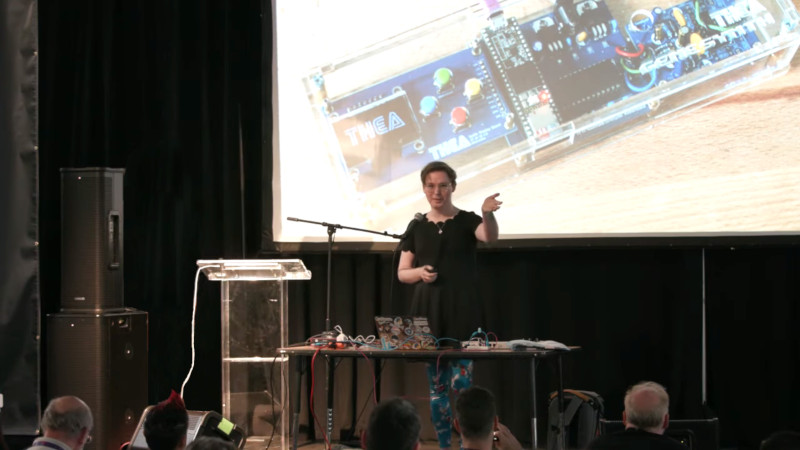

Some people hear the Sega Genesis and think, “Ah yes, childhood.” Others hear it and think, “What if I turned that crunchy, glorious FM sound into a real musical instrument I could play today?” Thea Flowers very much belongs to the second camp. Her project, Genesynth, is not just a retro tribute with a fresh coat of acrylic. It is a serious, lovingly engineered hardware synthesizer built around the same Yamaha YM2612 chip that gave the Sega Genesis its unmistakable voice.
That alone would be enough to earn the project a standing ovation from retro-gaming musicians, synth nerds, and the kind of people who can identify a console by the sound of its boot-up buzz. But what makes this story especially compelling is how Flowers built it: from scarce documentation, salvaged chips, timing headaches, analog audio problems, MIDI integration, PCB design, and a lot of stubborn curiosity. In other words, the synth did not descend from the heavens on a cloud of perfectly labeled schematics. It had to be wrestled into existence.
This is what makes Thea Flowers’ Sega-inspired hardware synthesizer more than a cool maker project. It is a case study in creative engineering, open-source hardware, and the art of turning nostalgia into a fully playable instrument. It is also a reminder that sometimes the best way to honor old technology is not to put it in a glass case, but to make it sing again.
Why the Sega Genesis Sound Still Hits So Hard
To understand why Genesynth matters, you have to start with the Sega Genesis itself. The console landed in a very specific technological sweet spot. It came after the era of ultra-simple bleeps and bloops, but before sample playback and CD audio became the dominant way games sounded. That gave the Genesis a rare identity: it sounded synthetic on purpose. It did not try to imitate “real” instruments as neatly as later systems. Instead, it embraced the glassy bells, growling basses, metallic leads, and oddly emotional electric pianos that FM synthesis does so well.
At the heart of that sound was Yamaha’s YM2612, a six-voice FM synthesis chip that helped define the Genesis audio aesthetic. The console also used a PSG chip for additional square-wave-style sounds, but the YM2612 was the star of the show. It is the chip responsible for much of that instantly recognizable Sega texture: bright, edgy, a little gritty, and somehow both futuristic and nostalgic at the same time. If the Super Nintendo sounded like a tiny studio sampler, the Genesis sounded like a synth with attitude and maybe a leather jacket.
That is exactly what drew Flowers in. She has written that the Genesis left a lasting impression on her, especially because its soundtracks were tied to some of her earliest gaming memories. That personal connection matters. Genesynth was not built because retro was trendy or because “vintage-inspired” is an easy marketing phrase. It was built because the sound itself had emotional weight, and because the hardware behind that sound was fascinating enough to deserve a second life.
The Birth of Genesynth: A Beautifully Terrible Idea
Every great hardware story begins with one sentence that sounds brilliant in hindsight and mildly unhinged at the time. For Flowers, that sentence was basically: I’m going to build a hardware synthesizer using the same chips as the Sega Genesis. On paper, it was a questionable plan. Software emulations and plugins already existed. If the goal were simply to make Sega-style music, a VST would have been faster, cheaper, and dramatically less likely to cause an electronics-induced identity crisis.
But practical and interesting are not always the same thing. Flowers was not just chasing the end sound. She was chasing the full experience of understanding the original hardware, interfacing with it directly, and building a modern instrument around it. That changed the mission entirely. The goal became not “How do I fake Genesis audio?” but “How do I design a usable synthesizer around real Genesis-era silicon?” Suddenly, the project stopped being a nostalgia exercise and started becoming a full-stack hardware design problem.
That distinction is important for SEO folks, musicians, and engineers alike: Genesynth is a hardware synthesizer from the ground up, not a novelty box that happens to make retro noises. It required a real architecture, real firmware, real audio design, and a real user experience. Flowers had to think like a musician, an embedded developer, an analog troubleshooter, and a product designer all at once. Casual weekend project? Not quite. “Terrible idea that became excellent” feels more accurate.
Research First, Heroics Later
One of the hardest parts of working with older chips is that the internet likes to pretend documentation exists right up until the moment you need it. Flowers quickly discovered that while plenty of people loved the YM2612, fewer had documented how to use it in a modern standalone synth project. There were emulator references, scattered hardware notes, and related documentation for chips like the YM3438, but there was no magical “Build Your Own Sega Synth in 12 Easy Steps” manual waiting on a shelf.
So the early stage of Genesynth became a detective story. Flowers gathered official and unofficial documentation, leaned on community research, studied VGM players, examined related hardware references, and used whatever scraps were available to understand how the chip behaved. This is one of the most instructive parts of the project: before you can build cool things, you often have to become a librarian, archaeologist, and occasional conspiracy theorist. Why does this timing value work? Why does that register behave oddly? Why does old hardware always act like it knows something you do not?
The answer, more often than not, is experimentation. Flowers has described manually adjusting write timing and learning through trial and error. That is the unglamorous truth behind many successful hardware builds. The final result may look sleek and inevitable, but the path there often involves a lot of “Well, that definitely did not work” and “Interesting, I have accidentally made silence again.”
Talking to Old Silicon With Modern Tools
One of the smartest design choices in Genesynth was using a Teensy 3.5 as the bridge between the old FM chip and modern musical control. The Teensy interfaces with the YM2612 and handles USB MIDI, making the synth usable with contemporary workflows rather than trapping it in museum mode. That means the project is not just about resurrecting the chip; it is about making the chip practical for real musicians today.
Once that bridge was in place, Genesynth could expose the YM2612’s parameters in real time, support patch loading, and implement multiple playing modes, including polyphony and unison. That is a huge leap from “I made the chip beep” to “I built an actual instrument.” The difference between a cool demo and a real synthesizer is usability. Can you control it? Can you shape sound intentionally? Can it fit into a modern setup without requiring a ritual sacrifice to the serial-port gods? Flowers designed Genesynth so the answer was yes.
She also used VGM playback during development, which was a clever move. A VGM player made it possible to test the hardware and audio path without needing the full MIDI feature set finished first. That is good engineering discipline: isolate parts of the problem, solve one at a time, and avoid trying to debug everything simultaneously unless you enjoy emotional damage.
Building the Audio Path: Because “Retro” Should Not Mean “Terrible”
Old chips have old quirks, and one of the nastiest is audio output that is technically sound but not yet musically useful. Flowers found that the YM2612’s raw output needed proper buffering and amplification before it could be treated like line-level audio. In other words, if you simply wire the chip straight to an output and hope for the best, the best may not arrive.
To keep the Genesynth faithful to the Genesis character while improving sound quality, Flowers researched the well-known Mega Amp approach from the console-modding community. That design uses a TL074 op-amp arrangement to mix signals, buffer the output, and preserve the overall filter behavior associated with the original console. It was a practical and musically informed choice. The goal was not to sterilize the YM2612 into something clinically clean. The goal was to keep the charm while removing the garbage.
That audio work eventually led to custom PCBs and a more carefully separated analog and digital layout. Flowers documented the effort to reduce noise by giving the analog side cleaner power and preventing digital return paths from stomping through the audio section like a toddler in tap shoes. The result was an amplifier that ran quietly when idle while still preserving the characteristic distortion and “ladder effect” associated with the YM2612’s 9-bit DAC. That balance is key. A Sega-inspired synth should sound intentional, not accidentally broken.
From Breadboards to a Real Instrument
Genesynth did not appear fully formed as a polished boutique synth. It evolved. The project began on breadboards, moved through protoboards, and eventually landed on custom PCBs with a laser-cut acrylic case. That progression mirrors the journey many makers dream about but do not always document so clearly. Flowers did document it, and that transparency is part of what makes the project so valuable to the wider open-source hardware community.
By the time the later versions were complete, Genesynth looked less like a test bench accident and more like a proper instrument. It featured a display, dedicated boards for major subsystems, and a layout designed for better signal integrity and cleaner assembly. The GitHub repository even provides what builders need to create their own version, including hardware files, firmware, and notes about parts, power, and board assembly. That open-source approach turns the project from a one-off flex into a genuine learning resource.
And that may be Flowers’ secret weapon as an engineer: she does not just build things; she explains them. Her writing consistently lowers the barrier to entry without dumbing the work down. That is a rare combination. Plenty of people can make interesting hardware. Fewer can document it in a way that helps the next builder feel capable instead of hopelessly outclassed. Genesynth became more than a synthesizer because Flowers made the journey legible.
Why Genesynth Matters Beyond Retro Gaming
It would be easy to file this project under “cool retro gadget” and move on. That would be a mistake. Genesynth matters because it sits at the crossroads of several important ideas: FM synthesis, open-source hardware, creative reuse of old silicon, and musician-centered engineering. It shows that vintage hardware can still be relevant when paired with modern interfaces and thoughtful design. It also proves that nostalgia does not have to be passive. You can rebuild the thing you love, understand it more deeply, and make something new with it.
Flowers’ later work with Winterbloom also helps contextualize Genesynth. She went on to build an open-source synthesizer company and became known for beginner-friendly, hackable music hardware. In that sense, Genesynth feels like an origin story. You can see the pattern already forming: approachable documentation, strong design sense, openness, and a clear belief that musical technology should invite people in rather than intimidate them out of the room.
That is why this story resonates so widely. Musicians see an expressive instrument. Hardware people see a brave reverse-engineering challenge. Open-source fans see knowledge shared generously. And anyone who grew up with a Sega Genesis hears one very specific message: yes, that sound was cool, and yes, it deserved this kind of love.
Experiences From the Bench: The Emotional Side of Building a Sega-Inspired Synth
Building a project like Genesynth is not just an engineering process; it is an emotional roller coaster disguised as a pile of components. One day you feel like a genius because the chip finally responds to a register write. The next day you are staring at a noisy output stage wondering whether electrons personally dislike you. That tension is part of the experience, and it is one of the reasons Thea Flowers’ story feels so relatable even if you have never touched a YM2612 in your life.
The first experience many builders recognize is the romance of the idea. A Sega-inspired hardware synthesizer sounds amazing in your head. You imagine neon-colored LEDs, sharp FM bass, and the smug joy of telling people, “Yes, this really uses old console silicon.” Then the actual work begins, and suddenly you are spending hours tracing timing diagrams, comparing community notes, and ordering chips from online marketplaces that feel equal parts electronics supplier and treasure hunt. The dream is still there, but now it has paperwork.
Then comes the thrill of first sound. This is the moment that keeps people building ridiculous things. It does not matter if the first output is thin, noisy, or only slightly less alarming than a fax machine falling down stairs. If the chip makes sound because of something you built, your brain lights up like a holiday display. Flowers’ development logs capture that energy beautifully. Each breakthrough is small in isolation, but emotionally it feels huge. First communication. First playback. First audio path that sounds decent. First prototype that starts to feel less like a science experiment and more like an instrument.
After that comes the phase hardware people know all too well: the humbling part. Analog design does not care how smart you are in software. Noise shows up. Grounding gets weird. A bad capacitor ruins your day. Layout decisions that seemed fine at first suddenly become the reason your synth sounds like it is haunted by fluorescent lighting. Flowers’ work on separating analog and digital power paths is such a good example of the lessons that only become obvious after the hardware teaches them to you, often with a tiny bit of cruelty.
There is also the identity shift that happens during a project like this. At the beginning, you are a person making a synth. By the end, you have accidentally become a researcher, firmware developer, PCB designer, audio troubleshooter, technical writer, and supply-chain improviser. That is part of what makes a ground-up build so satisfying. You do not just end up with an object. You end up with a larger version of your own skill set.
And finally, there is the joy of sharing it. Open-source hardware changes the emotional ending of a project. Instead of concluding with “Look what I made,” it continues with “Here’s how you can make it too.” That turns private obsession into community momentum. In the case of Genesynth, that openness feels especially fitting. The Sega Genesis sound was always social. It lived in bedrooms, living rooms, after-school hangouts, and memories traded between friends. Flowers’ project brings that sound back into the world in the same spirit: not sealed away, but playable, studyable, and gloriously hackable.
Conclusion
Thea Flowers – Creating A Sega-Inspired Hardware Synthesizer From The Ground Up is the kind of story that sticks because it is about more than one synth. It is about what happens when technical curiosity meets aesthetic obsession and refuses to let go. By building Genesynth around the Yamaha YM2612, Flowers did not merely recreate Sega Genesis sound. She translated it into a modern, playable, open-source instrument with MIDI control, thoughtful audio design, and a documented path others can learn from.
That is what separates the project from simple retro fan service. Genesynth respects the original hardware enough to keep its character, but it also improves the experience enough to make the old chip musically useful today. It celebrates limitations without being limited by them. And maybe that is the real lesson here: old technology is not interesting because it is old. It is interesting because, in the right hands, it still has new songs left in it.