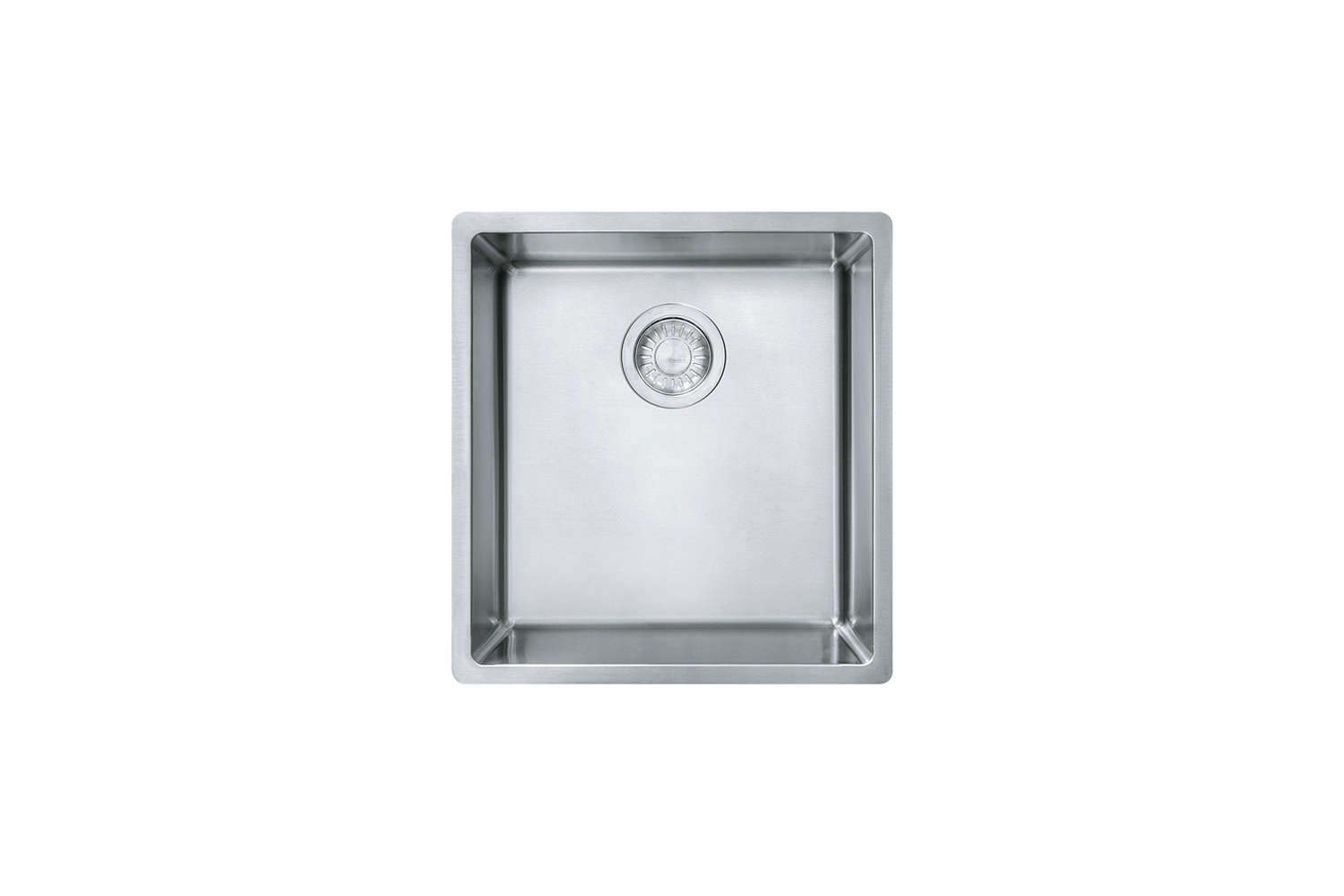

A secondary sink should make life easier, not occupy half the room whif a royal procession. The Franke Cube Undermount Bar Sink, commonly identified as model CUX11015, takes a more sensible approach. It combines a compact footprint with a surprisingly deep stainless steel bowl, making it suitable for wet bars, kitchen islands, butler’s pantries, coffee stations, and dedicated food-preparation zones.
Its squared profile, pearl-finish stainless steel, and concealed undermount rim give it a polished contemporary appearance. More importantly, the design is practical. You can rinse produce, fill an ice bucket, wash cocktail tools, or soak a saucepan without turning a small counter into a splash-themed amusement park.
What Is the Franke Cube Undermount Bar Sink?
The Franke Cube CUX11015 is a compact, single-bowl stainless steel sink designed for installation beneath a countertop. Although retailers sometimes describe it as a kitchen sink, prep sink, or bar sink, its dimensions make it particularly useful as a secondary washing station.
The manufacturer lists an overall size of approximately 16.5 inches from side to side, 17.756 inches from front to back, and 9.016 inches deep. The interior bowl measures about 15 by 16.142 inches. Retail listings often round those figures to 16.5 by 17.75 by 9 inches, so do not be alarmed if you encounter slightly different-looking numbers. Your countertop fabricator should work from the current Franke technical drawing rather than a rounded product description.
The sink requires a minimum 21-inch base cabinet. It has one bowl, no faucet ledge, no overflow, and no predrilled faucet hole. Its standard 3.5-inch drain opening accepts commonly used kitchen sink fittings, although the manufacturer currently lists the strainer assembly as a separate purchase.
Product specifications verified against Franke USA and current U.S. retail listings. /section>
Franke Cube CUX11015 Specifications at a Glance
| Installation type | Undermount |
|---|---|
| Bowl configuration | Single bowl |
| Material | Stainless steel |
| Steel thickness | 18 gauge |
| Surface finish | Pearl or satin-style finish |
| Overall dimensions | Approximately 16.5 x 17.756 inches |
| Bowl dimensions | Approximately 15 x 16.142 x 9.016 inches |
| Minimum cabinet width | 21 inches |
| Drain opening | 3.5 inches |
| Faucet holes | None |
| Included strainer | No, according to the current manufacturer listing |
| Certification | IAPMO |
Why the Compact Design Works So Well
A Small Footprint That Preserves Counter Space
A conventional kitchen sink can dominate a compact island or wet bar. The Franke Cube undermount sink occupies less space while still providing a functional washing area. That leaves more countertop available for cutting boards, glassware, serving trays, coffee equipment, or the bowl of decorative lemons that nobody is allowed to eat.
Because the sink installs below the counter, there is no exposed rim competing for surface area. Crumbs and small spills can be wiped directly into the bowl, which is especially convenient on a food-preparation island.
A Nine-Inch Bowl Is Deeper Than It Looks
Many bar sinks are shallow. They are fine for rinsing one lime and considerably less charming when asked to hold a cocktail shaker, a stack of glasses, or a saucepan. The approximately nine-inch depth of the CUX11015 gives it more practical capacity than its compact exterior suggests.
The deeper bowl also helps contain splashing. That matters when the faucet has a tall spout or when an enthusiastic guest decides every glass requires maximum water pressure.
Clean, Contemporary Geometry
The Cube collection favors straight lines and gently softened corners rather than a traditional rounded bowl. The CUX11015 is commonly listed with a 12-millimeter corner radius, creating a modern squared appearance without making the corners impossibly sharp to clean.
This shape coordinates naturally with quartz countertops, slab-front cabinets, modern faucets, and minimalist hardware. It can also provide a crisp visual contrast in transitional kitchens that combine traditional cabinetry with updated fixtures.
Understanding the 18-Gauge Stainless Steel
The Franke Cube CUX11015 is made from 18-gauge stainless steel. With stainless steel, a lower gauge number indicates thicker material. An 18-gauge sink offers a practical balance of rigidity, manageable weight, and cost. It is widely used in quality residential sinks and is substantial enough for normal prep, beverage, and cleanup duties.
Stainless steel is a logical material for a secondary sink because it tolerates heat, moisture, food residue, and frequent cleaning. It also coordinates with nearly any appliance or faucet finish. You do not have to redesign the room because your sink and refrigerator have entered a color dispute.
The pearl finish helps soften the highly reflective appearance associated with polished stainless steel. It will still develop fine marks through ordinary use, but the textured appearance generally makes everyday wear less visually aggressive than it would be on a mirror-like surface.
Sound-dampening pads are another useful feature. They reduce some of the ringing and vibration created by running water, metal utensils, and glassware. A compact stainless sink will never sound like a padded recording studio, but proper dampening makes it noticeably more civilized.
Material, finish, gauge, radius, and sound-dampening details synthesized from Franke and authorized U.S. product listings. /section>
Where This Franke Bar Sink Makes the Most Sense
Kitchen Island Prep Station
Installed in an island, the sink can create a dedicated zone for rinsing vegetables, draining pasta ingredients, filling pots, or washing hands during meal preparation. It reduces traffic around the main sink, which is useful when more than one person is cooking.
Wet Bar or Entertainment Area
The CUX11015 is well suited to washing bar tools, rinsing glasses, filling ice buckets, and disposing of melted ice. Its nine-inch depth is particularly helpful because delicate stemware can sit lower in the bowl rather than balancing nervously near the rim.
Butler’s Pantry
A butler’s pantry often needs a sink capable of supporting beverage preparation and light cleanup without consuming an entire cabinet run. The compact Cube sink provides enough capacity for those duties while leaving room for storage and counter appliances.
Coffee and Beverage Station
Pairing the sink with a filtered-water faucet can turn an unused corner into a practical coffee station. It provides a place to fill kettles, rinse reusable filters, empty drip trays, and clean milk pitchers without transporting everything across the kitchen.
Small Apartment Kitchen
Although designed naturally as a secondary sink, the Franke Cube may work as the primary basin in a very small kitchen. The buyer must be realistic, however. It can handle daily dishes for one person, but a large roasting pan may need creative angling and a positive attitude.
Typical bar and prep sink uses are consistent with major U.S. kitchen-sink buying guides. /section>
Benefits of the Undermount Installation
An undermount sink is attached beneath the countertop, leaving the counter edge visible around the bowl. This creates a smooth, integrated appearance and removes the raised rim found on a drop-in sink.
The practical advantage is easy countertop cleanup. Water, chopped herbs, and crumbs can be swept directly into the basin. There is no upper flange where grime can collect, although the narrow seam beneath the counter edge still needs periodic cleaning.
Undermount installation is generally best suited to quartz, granite, solid-surface material, and other countertops with finished, moisture-resistant cutout edges. Traditional particleboard-core laminate is usually a poor candidate because the exposed cutout can absorb water and because the substrate may not provide reliable support for the mounting system.
The reveal must also be selected before fabrication. A positive reveal exposes a narrow strip of the sink rim, a zero reveal aligns the counter edge with the bowl, and a negative reveal lets the countertop extend slightly over the sink. Each option changes the appearance and cleaning behavior, so “whatever the fabricator feels like doing that morning” is not an ideal design specification.
General undermount compatibility and cleanup guidance checked against Kohler and Lowe’s installation resources. /section>
Installation Details to Plan Before Ordering
Confirm the Cabinet, Not Just the Countertop
The published minimum cabinet size is 21 inches, but nominal cabinet width does not equal usable interior width. Cabinet walls, face frames, drawer supports, plumbing, and adjacent hardware reduce the available space. Measure the interior and share the technical drawing with the cabinetmaker and countertop fabricator.
Choose the Faucet Location Early
The sink has no integrated faucet deck or faucet hole. The faucet must therefore be installed through the countertop or positioned separately. Check the distance between the bowl, backsplash, faucet handle, and any window trim. Make sure the handle can move through its full range without striking the wall.
Allow Space for the Deep Bowl
A nine-inch bowl extends farther into the cabinet than many compact bar sinks. Add the drain body, trap, supply lines, and optional disposal before deciding what can be stored below. A pull-out trash bin may compete for the same space, and neither product is likely to negotiate politely.
Use Mechanical Support
Sealant creates a watertight joint, but the sink should also be supported by an appropriate bracket, clip, rail, or cradle system compatible with the countertop. Professional installers commonly use silicone between the rim and counter, position the bowl carefully, secure the hardware, and allow the sealant to cure before reconnecting the plumbing.
Use the Actual Template
Do not create the countertop opening from retail dimensions alone. Use the current manufacturer template or technical drawing for the exact product number. Once a stone countertop is cut, the “undo” button becomes remarkably expensive.
Accessories Worth Considering
The current Franke product page lists the drain strainer and sink grid as related accessories rather than standard included components. Confirm the package contents with the seller before ordering, because older listings and promotional bundles may differ.
A compatible bottom grid can protect the bowl from direct contact with heavy cookware and keep glasses elevated above the drain area. Franke identifies the CU15-36S as a matching grid for this sink. It is useful, but it should be removed regularly so the sink can be cleaned and dried underneath.
Other useful additions include a basket strainer, disposal flange if compatible with the planned equipment, soap dispenser, filtered-water faucet, and compact drying mat. Select accessories according to how the sink will be used rather than attempting to equip a small basin like a commercial submarine galley.
How to Clean and Maintain the Franke Cube Sink
Routine care is simple. Wash the basin with a soft cloth or non-scratching sponge and mild dish detergent, rinse it thoroughly, and wipe it dry. Drying is especially useful in hard-water areas because it reduces mineral spots.
Clean in the direction of the visible grain whenever possible. Avoid steel wool, wire brushes, harsh scouring pads, and prolonged exposure to products containing chlorine or chlorides. Do not leave wet sponges, rubber mats, metal cans, or cleaning tools sitting in the bowl for extended periods.
Fine scratches are normal in a working stainless steel sink. Over time, they usually blend into a more uniform patina. A fitted grid reduces direct impact, but no residential stainless sink remains factory-perfect forever unless nobody uses itwhich is an expensive way to display a drain hole.
If brown marks appear, do not immediately assume the stainless steel itself is rusting. Metal particles from tools, water lines, construction debris, or steel-wool fragments can settle on the surface and oxidize. Clean the area with an approved stainless steel product, rinse carefully, and dry it. Persistent problems may justify checking the faucet aerator and water supply for debris.
Care guidance based on Franke’s current stainless steel cleaning instructions and supporting U.S. manufacturer resources. /section>
Potential Drawbacks to Consider
The CUX11015 is versatile, but it is not the correct sink for every project. Its compact width limits room for oversized cookware. The squared corners require more deliberate wiping than a fully rounded basin. Stainless steel can scratch, show mineral deposits, and produce more noise than heavy composite materials, even with dampening pads.
Undermount installation also increases project complexity. Countertop fabrication, support hardware, sealing, and accurate alignment matter. Replacing an existing sink can be difficult when the new cutout does not match the old one.
Finally, accessories may increase the total price. Buyers should budget for the drain assembly, grid, faucet, mounting solution, plumbing parts, countertop cutting, and professional labor rather than comparing only the bare-sink price.
Who Should Buy the Franke Cube Undermount Bar Sink?
This Franke Cube sink is a strong candidate for homeowners who want a refined secondary basin without sacrificing much counter space. It is particularly appealing when the design calls for a deep bowl, concealed rim, durable stainless steel, and clean geometric lines.
It may be less suitable for buyers who need a large primary kitchen sink, prefer a maintenance-free appearance, have an incompatible laminate counter, or want a complete kit with every accessory included. In those cases, a larger single bowl, a top-mount prep sink, or an all-in-one bar sink package may be more convenient.
Real-World Experience With a Franke Cube Undermount Bar Sink
The most noticeable benefit in everyday use is not the stainless steel or even the modern shape. It is the separation of tasks. A secondary sink changes how people move through a kitchen. One person can wash produce at the island while another handles dishes at the main basin. During a party, guests can refill water glasses or empty ice without stepping into the cooking zone. The sink becomes a small traffic controller, except it does not whistle or wear a reflective vest.
The bowl depth is another practical advantage. Compact sinks often feel toy-like because their shallow basins allow water to rebound onto the counter. A nine-inch bowl behaves more like a proper kitchen sink. It can hold a medium saucepan, several drinking glasses, a blender jar, or a pile of utensils without immediately overflowing into visual chaos.
That depth requires thoughtful faucet selection. A tall faucet looks attractive and creates useful clearance, but excessive water pressure from a high spout can still produce splashing. A moderate-flow faucet with an aerated stream is usually more comfortable in a compact bowl. The spout should reach toward the drain area rather than landing close to the front wall, where water is more likely to bounce toward the user.
The undermount edge makes daily cleanup pleasantly direct. After slicing fruit or preparing drinks, loose seeds, herb fragments, and droplets can be wiped from the counter into the sink. The experience feels cleaner than working around the lip of a drop-in model. However, the underside of the countertop edge should not be ignored. A quick wipe around the reveal prevents residue from accumulating where the sink meets the counter.
The pearl-finish stainless steel is forgiving, but it is not magic armor. The first noticeable scratch may feel tragic for approximately eleven minutes. After regular use, additional fine marks soften the appearance and become part of the finish. Using the matching grid helps protect the bottom from heavy cookware, although the grid introduces its own cleaning routine. Food particles can collect around its feet, so lifting it out and cleaning underneath should become a regular habit.
Hard water has a greater visual effect than most cookware. Droplets left to evaporate may create pale mineral outlines, particularly near the drain and along the sidewalls. Keeping a microfiber cloth nearby makes an enormous difference. A fast wipe after the final use of the evening takes less than a minute and preserves the satin appearance far better than occasional aggressive scrubbing.
Storage below the sink can be the one genuine surprise. The bowl may look compact from above, but its nine-inch depth, drain fitting, and trap occupy meaningful cabinet space. A careful plumbing layout can preserve room for a few cleaning supplies, but expecting a full-size trash system beneath a 21-inch cabinet may be optimistic. Planning the cabinet interior before countertop fabrication prevents a later game of plumbing Tetris.
Overall, the Franke Cube CUX11015 performs best when it is treated as a serious compact sink rather than a decorative bar accessory. It has enough depth for useful washing, a shape that complements modern interiors, and an undermount design that improves counter cleanup. Installed with the right faucet, drain components, and support system, it can become one of those kitchen upgrades that quietly saves time every day. It does not demand attention, flash colored lights, or connect to an app. It simply holds water and makes the room work betterwhich, for a sink, is a refreshingly solid résumé.
Note: Product specifications, included components, pricing, and availability may change. Confirm the exact model number, current technical drawing, cutout template, cabinet clearance, accessory compatibility, and package contents with Franke and the seller before countertop fabrication or installation.