
Some toys are remembered with warm nostalgia: teddy bears, wooden blocks, board games, and that one action figure your sibling absolutely “borrowed forever.” Others are remembered because regulators, doctors, parents, and sometimes entire fast-food chains had to say, “Actually, let’s remove that from children’s hands immediately.” Welcome to the strange museum of incredibly dangerous banned toys, where bright packaging, clever marketing, and a dash of poor judgment created playthings that were recalled, withdrawn, restricted, or made illegal to sell.
To be precise, not every item on this list was “banned” by the same legal mechanism. Some were federally banned, some were recalled, some were pulled from shelves, and others became examples that shaped modern toy safety standards. But all of them earned their place in toy history for the same reason: they turned playtime into a safety meeting with better lighting.
This list focuses on real toys and toy-like products that caused serious concern in the United States. The goal is not to panic parents or ruin childhood nostalgia. It is to show how toy safety has evolved, why age labels matter, and how something that looks harmless can become dangerous when design, materials, and real-world kid behavior collide.
Why Dangerous Toys Make It to Store Shelves
The most dangerous toys usually do not look dangerous. That is the tricky part. A pointed lawn dart looks questionable, sure. But colorful beads, magnetic building sets, dolls, and promotional meal toys? Those arrive wrapped in fun. Many unsafe toys pass initial assumptions because adults imagine children will use them exactly as shown in the commercial. Children, however, are professional chaos engineers. They taste things, drop things, throw things, pull things apart, and test physics with the confidence of tiny lab assistants who have never read a warning label.
Modern toy safety rules are much stronger than they used to be, but recalls still happen. Design flaws, toxic substances, detachable small parts, strong magnets, expanding materials, cords, heat, and projectile pieces can all create hazards. The following ten toys show how “fun idea” can become “national recall” very quickly.
1. Lawn Darts: The Backyard Game That Went Way Too Far
Why It Was Dangerous
Lawn darts, often called Jarts, were once marketed as an outdoor family game. The concept sounded simple: toss oversized darts toward a target on the grass. The problem was also simple: these darts had weighted, pointed metal tips. In other words, someone looked at a miniature spear and thought, “Perfect for a picnic.”
The U.S. Consumer Product Safety Commission eventually banned the sale of certain lawn darts because they presented an unreasonable risk of severe injury. The toys became one of the most famous examples of a product that was too dangerous for casual recreation. Unlike a foam ball or plastic ring toss, lawn darts had the ability to fall with force and precision. That is great for medieval warfare, less great for a Saturday barbecue.
The Safety Lesson
Lawn darts remind us that “outdoor toy” does not automatically mean “safe toy.” Weight, sharpness, height, and velocity matter. Any toy that flies through the air should be judged not just by how fun it is, but by what happens when it lands somewhere unexpected.
2. Aqua Dots: Colorful Beads With a Chemical Nightmare
Why It Was Dangerous
Aqua Dots looked like a dream craft kit. Kids arranged tiny colored beads into designs, sprayed them with water, and watched the beads stick together. It was creative, tidy, and magical in that “finally, no glitter in the carpet” kind of way.
Then came the alarming discovery: the beads were associated with a chemical hazard if swallowed. Reports connected ingestion with serious medical symptoms, and millions of Aqua Dots sets were recalled. The toy became a major case study in how a product can appear gentle and educational while hiding a serious material-safety problem.
The scary part was not the concept of bead art itself. It was the chemical substitution and the fact that tiny, candy-colored pieces are exactly the kind of objects young children may put in their mouths. A toy does not need blades, heat, or projectiles to be dangerous. Sometimes all it needs is a bad ingredient and a shape that looks snack-adjacent.
The Safety Lesson
Small craft materials require extra caution. If a toy has tiny parts, bright colors, and chemical coatings, the safety standard must be exceptionally high. “Do not swallow” is not enough when the user group includes children who think crayons are a food group.
3. Sky Dancers: Flying Dolls With Terrible Aim
Why It Was Dangerous
Sky Dancers were fairy-like dolls launched into the air from a base. The idea was enchanting: pull a cord, and the doll twirls upward like a magical ballerina helicopter. Unfortunately, gravity and aerodynamics had other plans. The dolls did not always fly gracefully away from people. Sometimes they flew directly at them.
The recall followed numerous reports of the dolls striking children and adults. The toy’s charm came from its unpredictable flight, but that same unpredictability became the problem. A flying doll may sound adorable until it behaves like a plastic hummingbird with unresolved anger issues.
The Safety Lesson
Projectile toys do not have to look like rockets to create risk. If a toy launches, spins, shoots, flies, or ricochets, it needs careful testing in real rooms, with real children, at real distances. A beautiful launch is not enough; the landing matters too.
4. Burger King Pokémon Balls: A Happy Meal-Style Hazard
Why It Was Dangerous
During the Pokémon craze of the late 1990s, Burger King distributed plastic Poké Ball containers with kids’ meals. The promotion was massive, colorful, and perfectly timed. Unfortunately, the plastic ball halves posed a suffocation hazard for very young children because a half could cover a child’s nose and mouth.
More than 25 million Pokémon Ball containers were recalled. The case became one of the most memorable fast-food toy recalls in U.S. history. It also showed that packaging can be just as dangerous as the toy itself. The little Pokémon figure inside was not the main issue; the container was.
The Safety Lesson
Parents often inspect the toy and ignore the container. This recall showed why that is a mistake. Plastic cases, caps, domes, wrappers, and display pieces can create hazards, especially for toddlers. In toy safety, the “extra stuff” counts.
5. Magnetix Magnetic Building Sets: Tiny Magnets, Huge Risk
Why It Was Dangerous
Magnetix building sets were clever construction toys made with plastic pieces and magnets. Kids could build shapes, structures, and futuristic objects that looked like they belonged in a science classroom. The danger came when small powerful magnets loosened from the pieces.
If more than one strong magnet is swallowed, they can attract each other inside the body through tissue. That hazard led to serious injuries and a major expanded recall involving millions of units. Magnet toys remain a major safety focus today because magnets are small, shiny, and easy to lose under furniture, in couch cushions, or anywhere else children later discover treasure.
The Safety Lesson
Magnets are not ordinary small parts. Their force creates a special category of danger when swallowed. Magnetic toys should be checked often for cracks, loose pieces, or missing components. If a magnet can come free, the toy should not be treated as harmless.
6. Cabbage Patch Kids Snacktime Kids: The Doll That Would Not Stop Chewing
Why It Was Dangerous
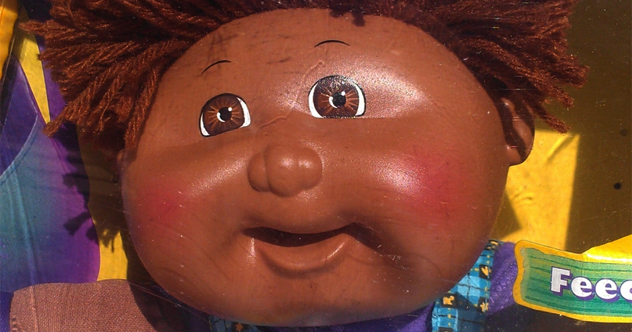
The Cabbage Patch Kids Snacktime Kids dolls were designed with motorized mouths that could “eat” plastic snacks. On paper, that sounds like a cute interactive feature. In practice, the doll did not have an easy off switch in the mouth mechanism, and reports emerged of hair and fingers getting caught.
Mattel announced a refund program and withdrew the dolls from retail shelves. The toy became infamous because it took a beloved doll brand and added a feature that behaved less like a child’s companion and more like a tiny plastic goat with batteries.
The Safety Lesson
Interactive toys need fail-safe design. If a toy pulls, spins, bites, grips, heats, or moves automatically, it must release quickly and predictably. A fun mechanical feature should never overpower the child using it.
7. Easy-Bake Oven Recall: When Pretend Cooking Got Too Real
Why It Was Dangerous
The Easy-Bake Oven is one of the most iconic toys in America. For generations, it gave children the thrill of baking tiny cakes that tasted like victory, sugar, and maybe a little cardboard. But one version of the toy oven was recalled after children could get their hands or fingers caught in the front opening, creating entrapment and burn hazards.
This recall was especially notable because the Easy-Bake Oven was not a strange fringe product. It was a mainstream classic from a major brand. The case showed that even beloved toys can have dangerous design versions and that nostalgia is not a safety certification.
The Safety Lesson
Heat-based toys require serious caution. Children may understand “hot” in theory, but excitement can make them forget. Openings, doors, trays, and moving parts must be designed so small hands cannot get trapped where heat is present.
8. Ker-Bangers and Clacker Balls: The Shatterproof Toy That Shattered
Why It Was Dangerous
Clacker balls, also known under names like Ker-Bangers, were simple toys: two hard balls connected by a cord that knocked together when moved up and down. They made noise, required rhythm, and probably tested the patience of every adult within hearing distance.
The danger came when the balls cracked, shattered, or broke apart. Despite claims that some versions were “shatterproof,” testing showed that certain products could fail. When hard pieces break during fast motion, the result is not just an annoying toy; it is a flying-fragment problem.
The Safety Lesson
Durability claims matter. A toy that depends on repeated impact must survive repeated impact. If the entire point of the toy is “bang these hard objects together,” the material cannot be brittle, poorly tested, or wishfully labeled.
9. Battlestar Galactica Missile Toys: Small Parts With Big Consequences
Why It Was Dangerous
In the late 1970s, Mattel produced Battlestar Galactica toys with small launching missiles. Space toys were everywhere, and missile-firing features were exciting. But small projectiles created a serious choking and aspiration hazard, particularly when children put them in their mouths.
Mattel created a missile mail-in program and redesigned the toys so missiles could no longer launch from the body. This was an important moment in action-figure history because it influenced how toy companies approached spring-loaded accessories and small removable projectiles.
The Safety Lesson
Small parts are not only dangerous when they break off. Sometimes they are dangerous because they were designed to detach, launch, or be handled separately. Toy weapons, rockets, missiles, darts, and pellets deserve extra scrutiny, especially around younger siblings.
10. Water Beads: Tiny Sensory Toys That Grow Into Trouble
Why It Was Dangerous
Water beads are small, colorful, superabsorbent polymer balls that expand when placed in liquid. They became popular in sensory bins, crafts, decorations, stress toys, and children’s activity kits. They look harmless, almost like candy from a planet with excellent graphic design.
The danger is expansion. If swallowed, inhaled, or inserted into the ear or nose, water beads can grow and cause serious medical problems. Because they can scatter easily and hide in carpets or under furniture, a caregiver may not even realize one is missing. In 2026, a new federal safety standard for water beads took effect in the United States, setting stricter performance, labeling, and testing requirements.
The Safety Lesson
Expanding toys create delayed hazards. The object that starts tiny may not stay tiny. For homes with toddlers, babies, or pets, water beads deserve extreme caution, and safer sensory alternatives are often the better choice.
What These Dangerous Toys Have in Common
At first glance, these toys seem wildly different. Lawn darts belong outside. Aqua Dots belong at a craft table. Sky Dancers belong in the air. Water beads belong in a sensory bin. The Snacktime Kid belongs in a toy box, preferably after a stern conversation about personal boundaries. Yet they share several patterns.
They Underestimated Real Children
Many unsafe toys assume children will follow intended use perfectly. Real children do not. They explore with their mouths, test limits, play near younger siblings, and invent uses no designer imagined. A safe toy must survive predictable misuse, not just perfect commercial-demo behavior.
They Hid Danger Behind Friendly Design
Bright colors, cute characters, and familiar brands can make adults relax. But a trusted brand or adorable face does not eliminate risks from magnets, chemicals, heat, cords, projectiles, or expanding materials.
They Proved Recalls Matter
Recalls are not just corporate embarrassment events. They are a public safety tool. When a toy is recalled, the safest response is to stop using it, check the official remedy, and keep it away from children. Keeping a recalled toy “just for nostalgia” may feel harmless, but nostalgia is terrible at risk assessment.
How Parents Can Spot Risky Toys Before Buying
You do not need to become a full-time toy detective with a magnifying glass and dramatic theme music. A few habits can reduce risk. Check age labels, especially if younger siblings are in the home. Look for small detachable parts, magnets, button batteries, cords, sharp points, brittle plastic, heat sources, and liquids or gels with unclear ingredients. Read recall notices for secondhand toys, because yard sales and online marketplaces sometimes resurrect products that should have stayed retired.
Also, inspect toys over time. A toy that was safe on day one may become unsafe after cracking, rusting, swelling, leaking, or losing parts. Children are not gentle product testers. They are tiny stress machines with snack breaks.
Experience-Based Reflections: What Dangerous Toys Teach Us About Real Homes
The story of incredibly dangerous banned toys feels funny from a distance because some examples sound almost unbelievable. Radioactive science kits? Metal lawn darts? Dolls that chew? Flying fairies with questionable navigation? It is easy to laugh and say, “What were they thinking?” But the more useful question is, “What can we learn before the next trendy toy arrives?”
In real homes, toy safety is rarely neat. A parent may buy a toy for an eight-year-old, but a two-year-old sibling finds it under the couch. A craft kit may be used correctly at the table, but a few beads roll into a corner. A magnetic building set may seem complete until one cracked piece releases a tiny magnet. A fast-food toy may be exciting for an older child but dangerous in the hands of a toddler. The home does not separate products into perfect age zones. Everything migrates. Toys travel from bedrooms to cars, backpacks, bathrooms, kitchens, and grandparents’ houses with the mysterious speed of missing socks.
One practical experience many caregivers share is that the riskiest toys are not always the loudest or most dramatic. The toy that looks obviously wild gets attention. Adults notice a dart, a launcher, or a heating element. But small, quiet hazards can be easier to miss. A bead, magnet, plastic cap, or broken fragment does not announce itself. It waits under a rug like a villain in a very tiny movie.
Another lesson is that children’s excitement changes supervision. A calm child using a toy at 10 a.m. may become a completely different creature during a birthday party, sleepover, holiday gathering, or sugar-powered family event. More kids mean more movement, more swapping, more “watch this,” and more chances for a toy to be used in a way the instructions never imagined. That does not mean children should play in bubble wrap. It means high-risk toys need extra boundaries, and some products simply do not deserve a place in the home.
Secondhand toys deserve special mention. Many dangerous toys survive in garages, attics, thrift shops, online listings, and “vintage collectible” boxes. Older relatives may remember a toy fondly and not know it was recalled. A classic toy can be charming, but age can make plastic brittle, magnets loose, paint questionable, and instructions disappear. Before giving a vintage toy to a child, search for recall history and inspect it carefully. Some items are better displayed on a shelf than handed to a kindergartner with big ideas.
The biggest experience-based takeaway is simple: trust curiosity, but respect design. Kids learn by touching, building, pretending, and experimenting. Good toys support that curiosity without adding hidden dangers. The best playthings do not need to be complicated. Blocks, art supplies used with supervision, plush toys, sports balls, puzzles, safe science kits, and age-appropriate construction sets can still create memorable childhoods. Nobody needs a backyard spear tournament to build character.
Dangerous banned toys are not just strange stories from the past. They are reminders that safety rules are written after real problems, and that smart design matters. They also prove that parents, regulators, doctors, and consumers can push the market toward safer products. Every recall tells the toy industry: fun is welcome, but physics, chemistry, and toddlers must be taken seriously.
Conclusion
The history of dangerous banned toys is equal parts fascinating, alarming, and accidentally hilarious. These products show how a fun idea can fail when safety testing does not match real-world play. Lawn darts were too sharp for the backyard. Aqua Dots hid a chemical danger inside a craft kit. Sky Dancers turned graceful flight into unpredictable impact. Pokémon Balls proved packaging can be hazardous. Magnetix showed why powerful magnets require strict rules. Snacktime Kids made mechanical chewing a little too enthusiastic. Easy-Bake Ovens reminded everyone that heat and small hands need careful design. Ker-Bangers demonstrated the problem with brittle impact toys. Battlestar Galactica missile toys changed how companies viewed small projectiles. Water beads continue to shape modern safety standards.
The good news is that toy safety has improved dramatically. The better news is that parents and caregivers do not need to memorize every recall ever issued. They only need to stay alert to common risk categories: small parts, strong magnets, toxic materials, cords, heat, projectiles, sharp points, expanding objects, and toys that break easily. The safest toy is not the one with the flashiest box. It is the one designed with real children in mind.