
Golf has always been a game of angles, rhythm, patience, and the occasional emotional collapse over a three-foot putt. For golfers with limb loss or limb difference, it can also become a game of engineering. That is where 3D printing enters the picture like the smartest person in the workshop, carrying a laptop, a caliper, and a very healthy disrespect for the phrase “good enough.”
A prosthetic-compatible golf club is not just a club with a different handle. It is a system. It must connect safely to a prosthetic setup, allow controlled swing motion, reduce strain, survive repeated impact, and still feel like a golf club instead of a medieval farming tool. The beauty of 3D printing is that it makes customization easier, faster, and far more realistic for one-off builds. That matters because no two golfers, prosthetic setups, swing paths, or comfort thresholds are exactly alike.
In other words, this is not merely a story about printing plastic parts. It is a story about access, design, and giving someone a reason to look down a fairway and think, “Yep, I’m back.”
Why This Project Matters More Than It First Appears
Adaptive golf is not a niche curiosity anymore. It is a growing part of the sport, backed by clinics, competitive events, adaptive organizations, and rules that recognize golfers with disabilities. That growth matters because participation changes what people expect from equipment. Once adaptive golfers are on ranges, in lessons, and in tournaments, they need gear that is not improvised in a garage five minutes before the first tee.
That is exactly why a prosthetic-compatible golf club deserves serious attention. General-use prostheses help with daily tasks, but sport-specific devices often need different mechanics. A golf swing asks for rotation, timing, stability, shock management, and repeatability. The interface has to help the golfer hold the club securely without turning the motion into a stiff, awkward chop that feels like splitting firewood.
There is also a human side to this. Sport-specific prosthetic attachments can support confidence, fitness, and social participation. They help people return to hobbies they loved before limb loss, or try new activities without feeling like they are entering the course with one hand tied behind their back. Well, metaphorically. This article is trying very hard not to overuse limb metaphors, but golf makes that difficult.
What “Prosthetic-Compatible” Really Means
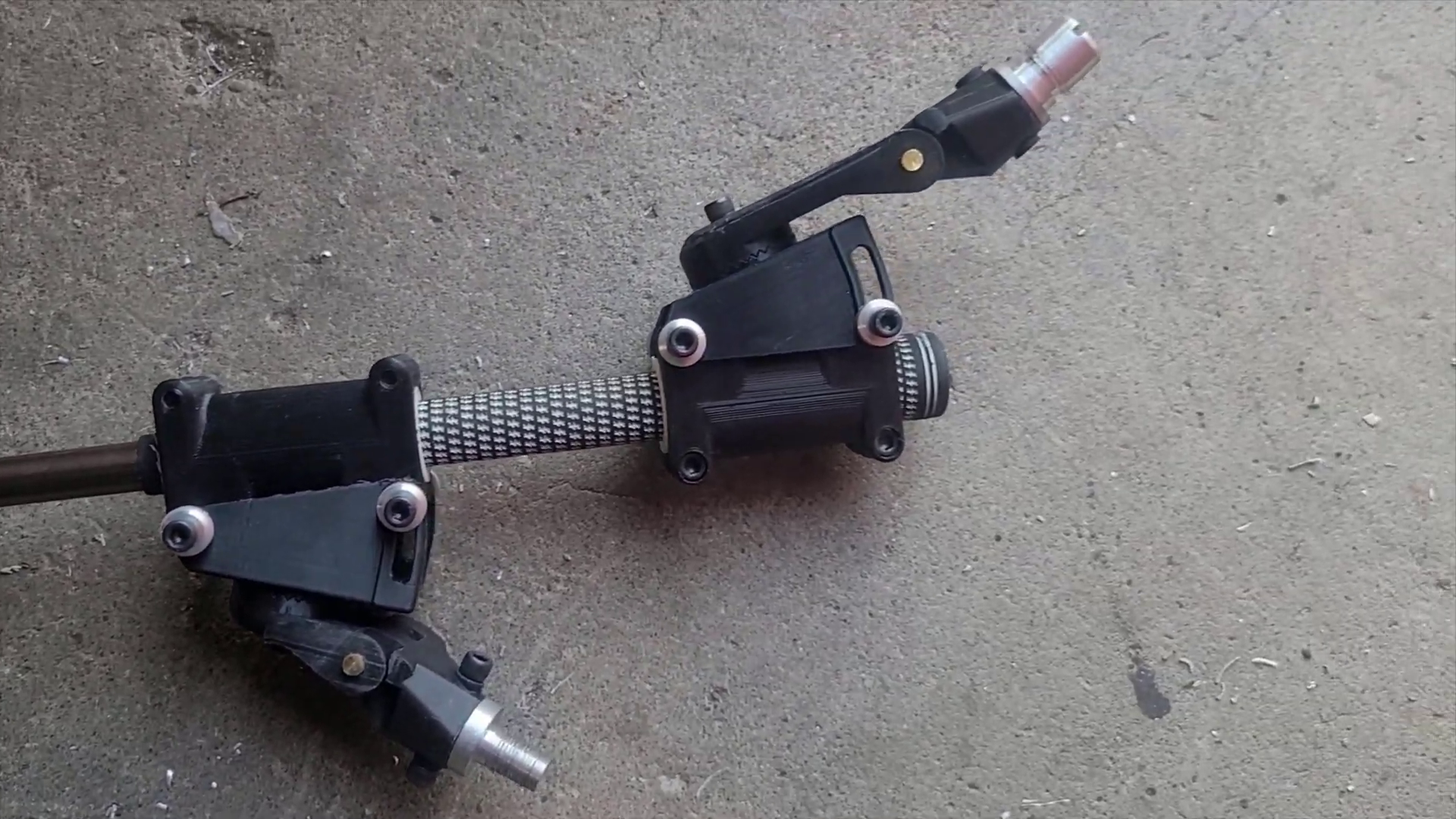
Let’s clear up a common misunderstanding. A prosthetic-compatible golf club is not always a fully printed club from grip to clubhead. In many practical builds, the real innovation is the interface between the golfer’s prosthetic system and a standard or semi-standard club. That interface may include a clamp, a printed holder, a custom socket connector, an adjustable hinge, or a rotational joint that mimics some wrist motion.
The word compatible does a lot of heavy lifting here. The club has to work with the golfer’s anatomy, residual limb, prosthetic forearm or terminal device, strength, swing speed, and goals. One golfer may need a quick-connect solution for switching clubs. Another may need more controlled resistance through the downswing. Someone else may need a holder that keeps the shaft stable while still allowing a bit of natural release.
That is why customization beats off-the-shelf guessing. A mass-produced solution can help some players, but adaptive golf often demands a design that starts with the person, not the product catalog.
The Interface Is the Real Star
If you strip away the marketing glitter, the key engineering problem is simple: how do you let a golfer connect to the club in a way that is secure, comfortable, adjustable, and repeatable? Everything else branches from that question.
A good interface usually needs:
- a dependable attachment point to the prosthetic system,
- controlled freedom of movement rather than floppy chaos,
- fast adjustments for angle and alignment,
- durable materials at high-stress points,
- and a geometry that keeps the golfer from fighting the device every swing.
Put differently, if the clubhead is the celebrity, the interface is the stage crew doing the real work.
Why 3D Printing Is So Useful for Adaptive Golf
3D printing shines when you need one specialized object for one specific person. Traditional manufacturing loves volume. Adaptive sports equipment usually laughs at volume and says, “I need exactly one, but it has to fit perfectly.” That is where additive manufacturing earns its paycheck.
With digital design tools, a maker or prosthetist can tweak dimensions, adjust offsets, change angles, and reprint prototypes without rebuilding the whole project from scratch. That kind of iteration matters because fit is everything. A connector that is two degrees off can feel minor on screen and terrible in a real swing.
3D printing also supports complex internal geometry and lightweight structures that would be more annoying or expensive to fabricate by conventional means. In the broader golf world, commercial 3D-printed clubs have already shown how additive manufacturing can create intricate lattice structures and redistribute mass in ways older methods struggle to match. For adaptive builds, the same principle applies: print only what is needed, lighten what can be lightened, and reinforce what must survive impact.
And then there is the prototype advantage. Before a final device is dialed in, a golfer can test shape, angle, and motion with lower-cost printed iterations instead of commissioning a fully machined part every time someone says, “Could we rotate this just a little?”
But 3D Printing Is Not Magic Fairy Dust
It is tempting to imagine a printer solving every problem with a heroic humming sound. Real life is less cinematic. Research on 3D-printed prostheses shows promise in customization, comfort, function, and satisfaction, but it also keeps waving a sensible caution flag about durability and performance limitations. Some 3D-printed prosthetic hands still underperform commercial devices in certain grasp tests. That does not make 3D printing a bad choice. It means the smartest builds respect the limits of the material and the loads involved.
For a prosthetic-compatible golf club, that usually means mixing printed parts with hardware that can take abuse: bolts, bushings, pins, machined connectors, reinforced inserts, or metal clamping elements. The winning design is often hybrid, not purely printed.
Designing the Club: From CAD Screen to Driving Range
A practical design process starts with the golfer, not the printer. First comes evaluation: what level of limb loss or limb difference is involved, what prosthetic components are already in use, what kind of swing is realistic, and what is the actual goal? Casual range sessions? Nine-hole recreation? Tournament play? Quick club changes? Maximum comfort? Maximum power? You cannot design intelligently until those answers are on the table.
Next comes digital modeling. A custom holder or terminal device is designed around the golfer’s interface needs. In some successful real-world projects, makers have used quick-connect sockets, printed holders that clamp a standard golf club, and hinge systems that allow a wrist-like motion. That last part is important because a completely rigid setup can produce a swing that feels mechanical, harsh, and exhausting. Controlled articulation tends to be more useful than brute stiffness.
Once the geometry is modeled, the first printed prototype can be tested for fit. This is the stage where almost everyone discovers that their “perfect” design still needs changes. That is normal. A little more clearance here. A little less rotation there. Slightly different offset. Softer edge. Better bolt access. More secure shaft retention. Better alignment at address. The printer becomes a fast, practical way to chase comfort and function without starting from zero each time.
After the basic fit works, the build enters the less glamorous but absolutely vital phase: reinforcement, fastener selection, load testing, and repeated swing trials. Golf is repetitive. The device must survive not just one good swing, but hundreds of them. A part that works beautifully for twenty swings and then develops play in the joint is not a success story. It is a future lesson in humility.
Material Choices Matter
Material choice depends on the role of each part. Some components can be printed in rugged polymer for shape, comfort, or low-load structure. Other areas, especially joints and connection points, may need metal hardware or higher-strength materials. That is why many adaptive sports devices use a blended approach: printed customization where shape matters most, metal where punishment lives.
This is also why post-processing matters. Sanding, smoothing, inserting threaded hardware, and checking stress points are not optional chores. They are part of responsible design. A rough edge can create discomfort. A poorly supported bolt hole can become a failure point. A connector that seems fine indoors can loosen after a bucket of balls and a heroic attempt to outdrive your cousin.
Rules, Safety, and “Please Check Before Tournament Day”
Adaptive golf equipment exists inside a real rules framework. The USGA allows attachments to the grip or shaft to help a player with an artificial arm hold the club, but the device cannot create an undue advantage. In plain English, helpful is allowed; superpowers are not. Golf remains golf, even when the engineering gets interesting.
That means a prosthetic-compatible club should be built with both function and compliance in mind. If a golfer plans to compete, the device should be reviewed with the relevant committee before the event. Waiting until the first tee to ask whether your custom attachment is legal is a bold strategy, but not a wise one.
Safety matters just as much as conformity. A strong swing generates meaningful force, and any custom attachment must be tested carefully. Ideally, the process includes input from a prosthetist, therapist, coach, or adaptive sports professional. Good engineering is important. Good clinical judgment is important. Good judgment in general is nice to have too.
What Real-World Examples Teach Us
One of the clearest lessons from real builds is that modest-looking devices can solve big problems. A widely discussed example involved a custom prosthetic golf club system built for a quadruple amputee using printed club holders, quick connections to prosthetic forearms, and a four-plate hinge mechanism to mimic wrist motion. It also included two-axis adjustability so the user could fine-tune the fit instead of settling for whatever angle the hardware happened to provide. That is a strong blueprint for adaptive design: keep the concept focused, make the adjustment practical, and preserve the ability to use standard clubs where possible.
There is also historical context here. Golf-specific prosthetic attachments are not new. Earlier literature described holders that fit a standard prosthetic arm and allow upper-extremity amputees to use a golf club. What has changed is the toolset. Today’s digital modeling and additive manufacturing make it easier to iterate, personalize, and refine without relying entirely on expensive custom fabrication.
Research on activity-specific prostheses adds another important insight: specialized devices can improve satisfaction and function when they are tailored to real tasks people care about. That may sound obvious, but it matters. A prosthetic design for golf should be designed for golf, not lazily borrowed from a general-purpose setup and forced to pretend.
Why the Future Looks Promising
The larger golf equipment industry is already proving that 3D printing is not just a lab trick. Commercial 3D-printed clubs are on the market, and additive manufacturing is influencing how brands think about weight, structure, and one-off development. That momentum helps adaptive design too, because it normalizes the idea that golf equipment can be digitally modeled, rapidly prototyped, and purpose-built.
At the same time, the prosthetics field is moving past the early hype phase. The best current thinking is more practical: use 3D printing where it genuinely improves fit, customization, and access, but do not pretend it automatically replaces every conventional method. That is a healthy shift. The future of prosthetic-compatible golf clubs probably belongs to hybrid systems that combine printed customization, smarter interfaces, strong hardware, and close collaboration with users.
That future may also include easier scanning workflows, more refined joint design, better simulation of swing loads, and faster production in clinics or specialized labs. The real win is not flashy technology for its own sake. It is a device that lets someone tee up, swing naturally, and keep coming back to the course.
Experience Notes: What Using One Can Actually Feel Like
The experience of using a 3D-printed prosthetic-compatible golf club is often less about the big reveal and more about small moments stacking up. The first moment is usually visual. You look at the device and think, “That’s it?” It may not look dramatic. It may look like a bracket, a clamp, a hinge, a connector, and a few bolts doing their best impression of ordinary hardware. Then you attach it, address the ball, and suddenly that plain-looking piece of engineering becomes deeply personal.
The first few swings are rarely elegant. They are exploratory. You are learning where the club sits, how much rotation feels natural, whether the angle at address looks square, and whether your body trusts the connection. There is usually a lot of noticing. You notice if the joint feels too stiff. You notice whether impact sends too much vibration through the prosthetic. You notice whether the club wants to stay on plane or wander like it has its own tee time on another hole.
Then comes the first solid strike. Not perfect. Not cinematic. Just solid. The kind of contact that tells your brain, “Oh, this is real.” That single shot does a lot of emotional work. It converts the device from concept to possibility.
Practice sessions after that tend to become a conversation between golfer and gear. A little more angle here. Slightly less resistance there. Maybe the attachment point needs to sit a touch higher. Maybe the club should release sooner. Maybe the grip position is fine, but the transition feels cramped at the top of the backswing. This is where 3D printing becomes more than a manufacturing method. It becomes a way to learn through iteration without treating each adjustment like a financial emergency.
There is also a social experience that matters. Golf is not only a mechanics game; it is a shared ritual. It is range chatter, bad jokes, friendly trash talk, and the deeply human need to tell everyone about your one good shot on the back nine. A prosthetic-compatible club can help someone re-enter that world with less self-consciousness and more freedom. Instead of fielding constant questions about what cannot be done, the golfer gets to focus on the universal golf conversation: why the driver behaved like a raccoon on espresso.
Over time, the device can start to feel less like equipment and more like part of the routine. That is the real marker of success. Not novelty. Not applause. Familiarity. When the club connection becomes just another part of getting ready to play, the design has done something important. It has moved out of the spotlight and given the golfer the spotlight back.
Conclusion
3D printing a prosthetic-compatible golf club is not about making golf easier than it should be. It is about making golf possible, comfortable, and genuinely playable for more people. The smartest builds focus on the interface, the adjustability, the safety, and the lived experience of the golfer using it. They do not worship the printer. They use it as one tool in a thoughtful design process.
The most exciting part is not the technology alone. It is what the technology makes room for: more swings, more rounds, more adaptive participation, more confidence, and more people getting back into a sport they love. In a game built on repetition, that kind of return matters. A lot.