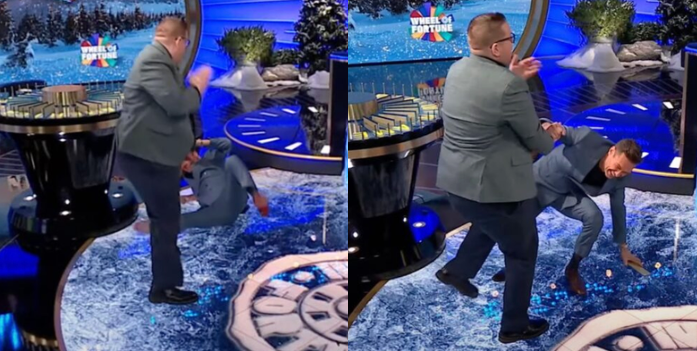

Ryan Seacrest has hosted enough live television to know one important rule: when the unexpected happens, keep smiling, keep breathing, and absolutely do not let the wheel stop spinning. That rule was tested in a very literal way on Wheel of Fortune when contestant Daniel Thomas solved a tricky Bonus Round puzzle, exploded with joy, rushed toward Seacrest for a celebratory hug, and accidentally sent the host tumbling to the studio floor.
It could have been awkward. It could have been replayed forever as a “yikes” moment. Instead, Seacrest turned it into the kind of wholesome, blink-and-you-laugh game-show clip that reminds viewers why Wheel of Fortune still works after decades on the air. The fall was surprising, the recovery was quick, and the mood stayed cheerful. In other words, Ryan Seacrest handled falling on Wheel of Fortune like a pro.
The moment became a fan-favorite example of Seacrest’s on-camera instincts: quick humor, zero ego, and a willingness to let contestants have their big moment even when that moment briefly involves the host becoming part of the flooring.
What Happened When Ryan Seacrest Fell on Wheel of Fortune?
The memorable fall happened during the January 21, 2025 episode of Wheel of Fortune. Contestant Daniel Thomas had already earned an impressive prize package, including cash and a trip to Alaska, before advancing to the Bonus Round. His category was “Living Things,” and the puzzle looked nearly impossible with only a few letters visible.
With the clock ticking down, Thomas guessed “Guppies” in the final seconds. The answer was correct, and the studio erupted. Solving a Bonus Round puzzle under pressure is already a heart-racing achievement. Solving it at the last second for an additional $40,000? That is the kind of television moment that makes people forget how legs work.
Thomas ran toward Seacrest in celebration and gave him a hug with enough enthusiasm to qualify as light cardio. Seacrest lost his footing and fell backward onto the stage. The contestant immediately looked concerned, asking if the host was okay. Seacrest laughed it off, reassured him, and quickly got back up.
That reaction mattered. A less experienced host might have frozen, looked irritated, or turned the moment into a distraction. Seacrest did the opposite. He protected the contestant’s joy, kept the tone playful, and made sure the focus stayed on the win. Daniel Thomas finished with a total of $71,950, which is a pretty good reason to celebrate with a hug that accidentally becomes a tackle.
Why Fans Loved Ryan Seacrest’s Reaction
Viewers did not just laugh because someone fell. They laughed because the whole exchange felt human. Seacrest’s response was light, generous, and fast. He joked that being thrown or tackled was totally fine, which gave the contestant permission to stop worrying and enjoy the victory.
That is a small thing, but on television, small things become big signals. Fans saw a host who did not take himself too seriously. They saw a contestant who was genuinely overwhelmed with happiness. They saw a classic game show produce an unscripted moment without turning mean or messy. In the world of viral TV clips, that is basically a unicorn wearing sensible shoes.
Social media reactions praised Seacrest for handling the stumble “like a champ.” Others called the moment wholesome, funny, and surprisingly endearing. The clip worked because everyone involved seemed okay, and because Seacrest’s instinct was not to scold or steal attention. He simply laughed, stood up, and let the celebration continue.
Ryan Seacrest’s Hosting Style Fits the New Era of Wheel of Fortune
When Seacrest took over Wheel of Fortune from longtime host Pat Sajak, he stepped into one of the most visible jobs in American television. Sajak had hosted the show for more than four decades, making him not just a host but a nightly ritual for generations of viewers. Replacing him was never going to be as simple as walking onto the set and saying, “Good evening.”
Seacrest understood the assignment. Before his debut, he repeatedly emphasized that the show did not need reinvention. The wheel, the puzzles, the contestants, Vanna White, the familiar rhythmthose were the stars. His job was to keep things moving, respect the format, and bring his own warmth without making the show feel like a completely different program.
That philosophy showed up in the fall clip. The old Wheel of Fortune charm has always depended on a delicate balance: excitement without chaos, humor without humiliation, and suspense without cruelty. Seacrest’s response checked all three boxes. He made the moment funny, but not at the contestant’s expense. He acknowledged the tumble, but did not let it derail the show.
Vanna White’s Role in Keeping the Show Grounded
No discussion of Wheel of Fortune is complete without Vanna White. Her presence provides continuity, especially during the transition from Pat Sajak to Ryan Seacrest. White has worked with both hosts and has made it clear that comparing them is not especially useful because each has his own style.
That matters because Wheel of Fortune is not a show built around dramatic reinvention. It is comfort television. Viewers tune in because they want the familiar click of the wheel, the suspense of the Bonus Round, and the friendly chemistry between the people onstage. White’s steady presence helps maintain that atmosphere while Seacrest brings a slightly different pace and energy.
In later playful moments, including other onstage stumbles and physical comedy bits, White has often served as the calm counterweight. When Seacrest ends up chasing a prop, diving into a joke, or landing somewhere other than upright, White’s relaxed reactions help turn the moment into part of the show’s charm. She is basically the emotional seat belt of the Wheel stage.
The Fall Was Funny Because It Was Safe, Sweet, and Spontaneous
Television comedy often works best when it is unplanned but harmless. The Ryan Seacrest fall became memorable because it had all the right ingredients. First, the stakes were joyful. A contestant had just won a huge prize. Second, the accident was brief. Seacrest got up quickly and reassured everyone. Third, the reaction was kind. The contestant immediately checked on him, and Seacrest responded with humor.
That combination prevented the clip from feeling uncomfortable. Nobody was mocked. Nobody appeared hurt. The audience was invited to laugh with the moment, not at someone’s embarrassment. That difference is crucial, especially for a family-friendly show.
It also highlighted why game shows remain powerful in the streaming era. A scripted series may spend millions trying to create a perfect emotional beat. A game show can accidentally create one with a puzzle, a countdown clock, a happy contestant, and a host who knows how to fall without losing the room.
What the Moment Says About Ryan Seacrest as a Broadcaster
Ryan Seacrest has built his career on high-pressure hosting. From American Idol to radio, red carpet specials, New Year’s Eve broadcasts, and now Wheel of Fortune, he has spent years working in formats where anything can happen. That experience showed in the way he handled the fall.
Great hosts do not control every moment. They guide the energy after the moment happens. Seacrest did exactly that. He read the room, saw that the contestant felt bad, and instantly reframed the tumble as a funny side effect of a big win. That kind of recovery is not an accident. It is a skill.
In live and live-to-tape entertainment, the host is often the safety net. If a contestant gets nervous, the host steadies them. If a joke lands strangely, the host moves on. If a celebration gets so enthusiastic that gravity joins the cast, the host gets up and keeps smiling. Seacrest’s fall showed that his polish is not just about perfect delivery. It is about staying relaxed when perfection disappears.
How This Viral Moment Helped Fans Warm Up to Seacrest
Any new host of a beloved show faces skepticism. Fans are protective of routines. Pat Sajak’s departure marked the end of an era, and many viewers naturally wondered whether Seacrest could maintain the show’s easygoing magic.
Moments like the Daniel Thomas celebration help answer that question better than a press release ever could. Viewers do not only judge a host by opening lines or polished interviews. They judge how the host behaves when something weird happens. Seacrest’s response felt authentic, and authenticity is priceless on a show where contestants are ordinary people having extraordinary nights.
The fall also gave Seacrest a little underdog charm. He may be one of the most recognizable broadcasters in the country, but there he was, flat on the stage because a contestant was too happy to walk calmly. That is funny. It is also relatable. Everyone has had a moment where life knocked them sideways, although most of us are lucky enough not to have studio lighting involved.
Why Wheel of Fortune Still Creates Shareable TV Moments
Wheel of Fortune has survived because its format is simple, durable, and emotionally satisfying. Contestants spin, guess, solve, win, and occasionally react as if they have been launched from a confetti cannon. The show gives viewers a clean structure, but inside that structure, anything can happen.
That is why clips from the show continue to travel online. A wild puzzle solve, a surprising wrong answer, a huge Bonus Round win, or a host taking an unexpected tumble can become instantly shareable. The format is easy to understand even for someone who only sees a 30-second clip. You do not need to know every contestant’s backstory. You see the board, hear the answer, watch the reaction, and get the payoff.
In this case, the payoff was both a $40,000 win and a reminder that Ryan Seacrest can take a hit from pure happiness. That is a very specific skill, but apparently a useful one.
Other Playful Seacrest Moments on the Wheel Stage
The Daniel Thomas hug was not the only time Seacrest’s physical comedy became part of his Wheel of Fortune story. In another memorable segment, he took a tumble while demonstrating a cheese-rolling-inspired bit, chasing a wheel of cheese across the stage. During a “Margaritaville”-themed episode, he also managed to turn a pool-float gag into another comic spill, with Vanna White offering the sort of calm advice only someone with decades of studio experience could deliver.
These moments are not the main reason people watch Wheel of Fortune, but they help define Seacrest’s version of the show. He is not trying to imitate Pat Sajak line for line. He is bringing a more kinetic, occasionally accident-prone energy while preserving the friendly pace of the game.
That approach gives the show fresh social media life without undermining the core format. The puzzles still matter. The contestants still matter most. But Seacrest’s willingness to play along gives producers more opportunities for light, viral moments that feel organic rather than forced.
Lessons From Ryan Seacrest’s Fall: How to Recover Like a Pro
There is a surprisingly practical lesson inside this funny TV moment: recovery often matters more than the stumble. Everyone falls, literally or professionally. The difference is what happens next.
Seacrest did three things right. First, he reassured everyone immediately. That removed tension from the room. Second, he used humor without blaming anyone. That protected the contestant from embarrassment. Third, he redirected attention back to the win. That kept the story positive.
Those same principles apply far beyond television. If a presentation goes wrong, acknowledge it and continue. If a meeting takes an awkward turn, use calm humor and reset. If a celebration gets messy, make sure everyone is okay and keep the mood generous. You may not be hosting Wheel of Fortune, but you can still borrow the Seacrest method: laugh, stand up, and do not let one wobble define the whole show.
Experience Section: What This Moment Feels Like for Viewers, Hosts, and Anyone Who Has Ever Fallen in Public
There is something oddly comforting about watching a polished television professional have a very human moment. Ryan Seacrest is usually the picture of control. His timing is sharp, his smile is camera-ready, and his job is to make chaos look organized. So when he suddenly hits the floor because a contestant’s happiness arrives at full speed, the moment becomes more than a blooper. It becomes a tiny reminder that even professionals are still people with ankles, balance issues, and occasional surprise meetings with gravity.
For viewers, the scene works because it feels familiar. Most people have experienced some version of public embarrassment. Maybe you tripped walking into a restaurant, waved back at someone who was not waving at you, or tried to push a door clearly labeled “pull.” These little mishaps stick in our memories because they interrupt the performance we are all trying to maintain. We want to look composed. Then life tosses a banana peel into the script.
Seacrest’s reaction offers a useful model. He did not overexplain. He did not act wounded. He did not make the contestant feel like he had ruined the moment. Instead, he accepted the absurdity and moved forward. That is why people responded so warmly. Confidence is not never falling. Confidence is being able to get up while making everyone else feel okay too.
For hosts, teachers, speakers, managers, performers, or anyone who has to lead a room, this is a master class in emotional control. The leader’s reaction sets the temperature. If Seacrest had looked annoyed, the contestant’s joy would have turned into guilt. If he had ignored the concern, the audience might have felt uncomfortable. But by laughing and reassuring everyone, he transformed a potential awkward pause into a shared joke.
That is also why game shows remain such effective comfort viewing. They give audiences real reactions in a safe container. Contestants are nervous, hopeful, stunned, and sometimes wildly physical in their celebrations. Hosts are there to guide those emotions without flattening them. Seacrest let Daniel Thomas be thrilled. He did not punish the enthusiasm. He simply became, for one brief second, the world’s most famous celebration cushion.
The experience also says something about how audiences judge authenticity. Viewers can sense when a host is performing kindness versus practicing it. In this clip, Seacrest’s response looked immediate and instinctive. He seemed more interested in making sure the contestant felt good than in protecting his own image. Ironically, that protected his image better than any perfectly managed moment could have.
Anyone publishing, presenting, performing, or simply trying to survive Monday morning can learn from that. Mistakes are not always reputation killers. Sometimes they become reputation builders, especially when handled with humor and grace. The secret is to keep the focus on people, not pride. Check that everyone is okay. Smile if the situation allows it. Move forward before embarrassment has time to unpack a suitcase.
Ryan Seacrest’s Wheel of Fortune fall was funny because it was real, sweet, and harmless. But it lasted online because it revealed character. It showed a host who could protect the contestant, entertain the audience, and keep the game moving. That is professionalism. Also, balance training probably would not hurt.
Conclusion
Ryan Seacrest’s fall on Wheel of Fortune was more than a viral blooper. It was a perfect little snapshot of what makes good hosting look easy. Daniel Thomas solved “Guppies” in the final seconds, won big, celebrated with full-body enthusiasm, and accidentally knocked the host to the ground. Seacrest laughed, reassured him, and kept the energy joyful.
That quick recovery helped fans see why he fits the new era of Wheel of Fortune. He respects the show’s legacy, works naturally with Vanna White, and knows how to turn an unscripted stumble into warm television. The wheel keeps spinning, the contestants keep celebrating, and Seacrest has proven that even when he falls, he can still land the moment.
Note: This article is written from synthesized, publicly reported entertainment coverage and official show context, rewritten in original language for web publication.