
Editorial note: This article is commentary on comedy, celebrity, politics, and public reactions. It does not predict or claim that a pardon will occur.
In the current American news cycle, a presidential pardon can feel less like a legal process and more like a surprise guest appearance nobody asked for. One minute, the country is discussing court filings, sentencing guidelines, and constitutional powers. The next, someone is wondering whether a famous defendant might receive clemency because politics has become a reality show with a very large Oval Office set.
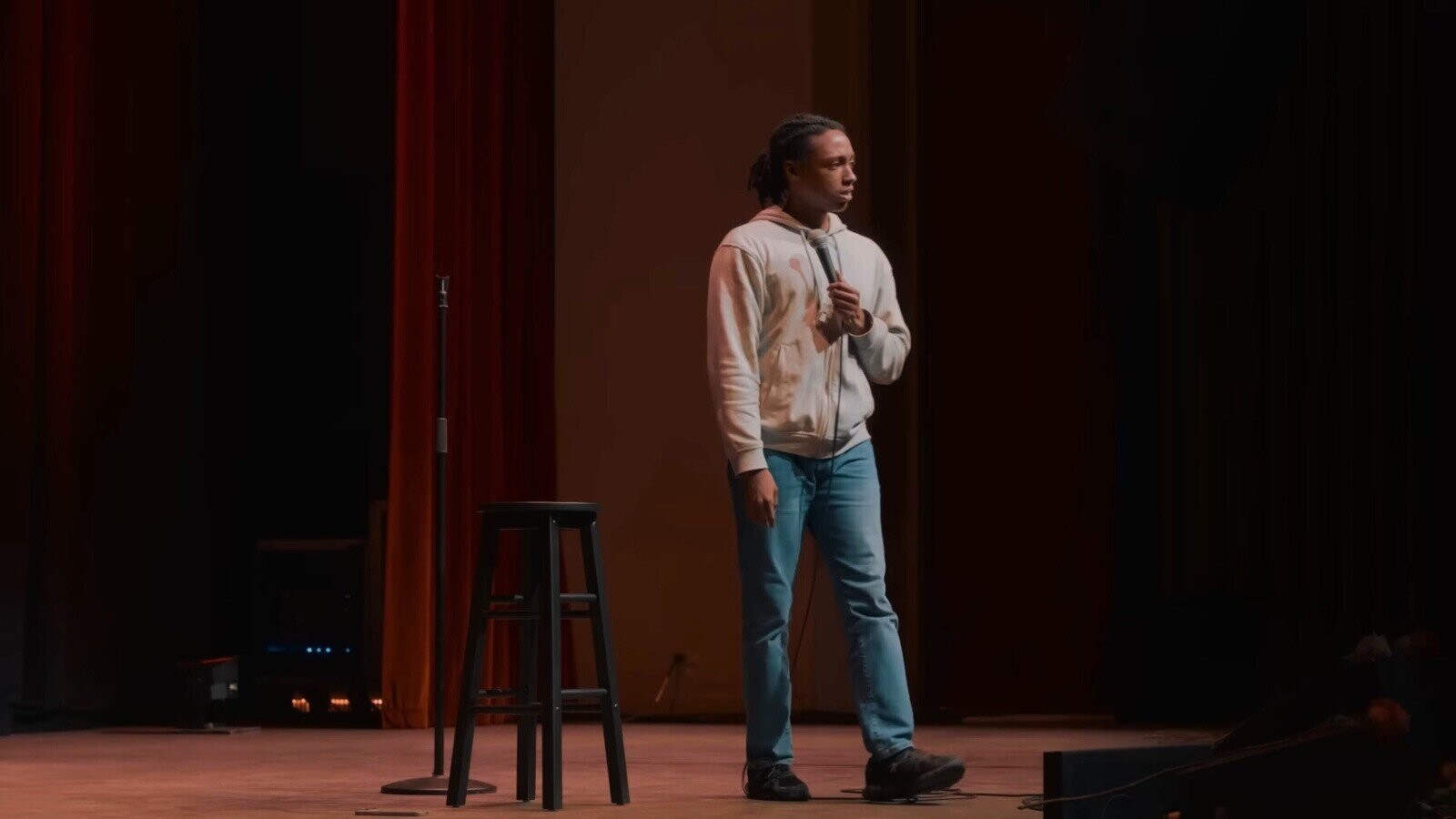
That is the uneasy comic territory Josh Johnson explored when he suggested that Donald Trump could pardon Sean “Diddy” Combs. Johnson’s bit was not a courtroom forecast dressed up as a joke. It was a cultural observation: Americans have watched enough political plot twists, celebrity scandals, and headline-grabbing pardons to believe almost anything is possible before breakfast.
The humor works because it starts with a bizarre premise and then quietly asks whether the premise is really all that bizarre anymore. In a calmer era, the possibility of a president being publicly asked about pardoning one of the entertainment industry’s biggest fallen stars might have sounded like something invented by a writers’ room after three cups of coffee. In the modern news environment, it became a real public conversation.
Why Josh Johnson’s Pardon Joke Landed
Johnson’s comedy often works by noticing the moment when public outrage has become so routine that it loses its ability to surprise people. Instead of saying, “Can you believe this?” he tends to ask a more unsettling question: “Why are we pretending this would be impossible?”
That approach is especially effective when the subject involves Trump, celebrity influence, and pardons. Trump has long treated public attention as both a political tool and a personal language. He understands that a headline can be currency, a television moment can become a campaign message, and a famous name can pull millions of people into a conversation that might otherwise be about legal procedure.
Johnson’s premise that Trump might pardon Diddy was therefore not really about predicting a specific legal outcome. It was about the atmosphere surrounding modern power. The joke pointed to a country in which politics, celebrity, criminal justice, social media, and entertainment reporting increasingly occupy the same crowded elevator.
And in that elevator, someone is always pressing every button.
The Legal Reality Behind the Headlines
Comedy can exaggerate a possibility, but the real legal context matters. Sean Combs was convicted in 2025 on two federal counts involving transportation to engage in prostitution. A jury acquitted him on more serious racketeering and sex-trafficking counts. He was later sentenced to 50 months in federal prison.
Combs has appealed his conviction and sentence. The appeal raised questions about how the trial judge considered allegations tied to charges for which the jury did not convict him. That legal dispute is important because an appeal is not the same thing as a pardon. An appeal asks a court to review whether legal mistakes affected the conviction or sentence. A pardon is an act of executive clemency issued by the president.
Those are very different roads, even though they may appear next to each other in the same news headline.
A Pardon Is Not a Court Reversal
A presidential pardon applies to federal offenses. It does not erase every public consequence surrounding a case, settle civil lawsuits, or rewrite how people interpret the facts. It also does not mean a judge made a mistake. In basic terms, a pardon is an exercise of executive power, while an appeal is a legal challenge inside the judicial system.
This distinction gets lost whenever celebrity news and political news collide. A court ruling often arrives through lengthy filings, technical arguments, and legal standards. A possible pardon, meanwhile, is easy to reduce to one dramatic question: “Will the president do it?” That question may be simple, but the implications are not.
As of the most recent reporting, Trump confirmed that Combs sought a pardon but said he was not considering granting one. That does not prove what might happen years from now, because presidents can change their minds, politics can change its mood, and the news cycle has the attention span of a golden retriever near a tennis ball. Still, it means Johnson’s original thought remains commentary rather than a confirmed prediction.
Why the Diddy Pardon Discussion Became So Big
The possibility of clemency gained traction because it combined several powerful American ingredients: a famous music executive, a high-profile federal case, a president known for unconventional decisions, and a public that has become accustomed to receiving major political developments as push notifications.
Combs was not an obscure defendant. For decades, he occupied a major place in hip-hop, fashion, business, television, and celebrity culture. His career helped shape the public image of modern music entrepreneurship. That history meant his criminal case was never going to remain inside a courthouse alone. It carried a huge cultural shadow.
Trump’s past public relationship with Combs also added another layer. The two moved in overlapping celebrity circles years before Trump entered politics. Their later political differences became part of the pardon discussion because Trump himself suggested that Combs’s past criticism of him made clemency harder to consider.
That statement made the issue feel even more personal. People were no longer discussing only sentencing, rehabilitation, or legal standards. They were also discussing loyalty, public criticism, celebrity relationships, and the uncomfortable question of whether political access can shape who receives mercy.
The Strange American Tradition of Celebrity Clemency
Presidential pardons are serious legal actions, but celebrity culture has changed how the public talks about them. A pardon involving an unknown person may be treated as a legal footnote. A pardon involving a musician, actor, athlete, or media personality can become an entire week of debate, memes, podcasts, reaction videos, and people confidently explaining constitutional law after reading one headline.
That does not mean every high-profile pardon is improper. Presidents have broad constitutional authority to grant clemency for federal offenses. But celebrity cases create a special kind of public scrutiny because the audience can see the person’s fame, connections, supporters, critics, and media strategy in real time.
When Johnson joked about a possible Diddy pardon, he was tapping into this tension. The public knows that pardons are legal. The public also knows that some pardon decisions can feel political, personal, strategic, sentimental, or designed for maximum television impact.
In other words, a pardon can be both constitutional and controversial. Those two things are not opposites.
Satire Works Best When It Does Not Pretend the Story Is Simple
The strongest political comedy does more than make fun of a politician or a celebrity. It reveals how strange the system looks when viewed from a slight distance. Johnson’s commentary did not need to prove that Trump would pardon Combs. The point was that the possibility could be imagined without anyone immediately dismissing it as absurd.
That is a revealing cultural moment.
In traditional satire, the comedian creates an exaggerated version of reality. In the current political climate, comedians often face a different challenge: reality sometimes arrives already exaggerated. A public figure makes a statement so unusual that the joke becomes less about inventing madness and more about organizing it into a sentence.
Johnson’s style works because he does not rely entirely on shouting or disbelief. He lets the audience recognize the pattern. The audience laughs because it sees the logic behind the absurdity: power attracts attention, attention attracts celebrities, celebrities attract headlines, and headlines attract people who are convinced they can predict the ending.
What a Trump Pardon for Diddy Would Mean Politically
A pardon for Combs would likely become one of the most debated clemency decisions in recent memory. Supporters might frame it as an act of mercy, a recognition of the lesser counts on which he was convicted, or a response to concerns about his sentence. Critics would likely argue that it reflected celebrity privilege or political favoritism.
It would also reopen the broader debate about how presidents use clemency. Should pardons focus mainly on rehabilitation, disproportionate sentencing, wrongful convictions, and humanitarian concerns? Or is clemency inevitably shaped by public relationships, political pressure, and the ability to capture national attention?
Those questions do not belong to one party. Every administration faces scrutiny over pardons. The difference is that some presidents make the process feel like a quiet legal decision, while others make it feel like a season finale.
For Trump, a Diddy pardon would not be interpreted in a vacuum. It would be measured against his prior use of clemency, his personal comments about Combs, and the political environment surrounding his administration. The reaction would likely be immediate, intense, and divided along cultural as well as political lines.
What a Refusal to Pardon Diddy Would Mean
A refusal would not end public debate. It would simply shift the conversation back toward the appeal, the federal sentence, and the long-term consequences of the case. It could also reinforce the idea that celebrity and past social connections do not automatically produce clemency.
Trump’s reported comments that he was not considering a pardon already suggest that the issue may be politically complicated. A president may have the authority to grant clemency, but authority and incentive are not the same thing. Every pardon comes with a public cost, especially when the recipient is globally famous and the case involves serious allegations, a federal conviction, and years of media coverage.
That is why Johnson’s joke remains sharp even if a pardon never happens. The comedy was never dependent on the outcome. It was about the fact that the question could dominate headlines at all.
Why This Story Is Bigger Than Trump and Diddy
The Trump-Diddy pardon discussion reflects a larger change in how Americans experience public events. Court cases are no longer followed only through legal reporting. They are consumed through clips, reposts, celebrity commentary, short-form videos, late-night jokes, and social-media arguments that somehow become more confident as the available facts become less clear.
In that environment, people can confuse a joke with a forecast, a rumor with a legal filing, or a celebrity’s opinion with a decision from a court. The healthiest response is not to stop paying attention. It is to pay attention with better filters.
A useful filter asks three questions: What has actually happened? What is still unresolved? Who benefits from making this story feel more dramatic than it may be?
Those questions are not as exciting as a viral headline. They also tend to age better.
Related Experiences: What It Feels Like to Watch a Pardon Story Become Entertainment
There is a familiar experience many people have when following a huge celebrity legal story: the details arrive faster than the brain can organize them. A court filing appears. A cable-news panel reacts. A comedian turns it into a joke. A social-media post claims somebody is “definitely getting pardoned.” By lunchtime, the public is discussing a hypothetical outcome as though it were already printed on official stationery.
The Diddy pardon conversation captures that experience perfectly. It shows how quickly a serious legal question can become a cultural event. People do not simply ask whether a pardon is legally possible. They ask what it would say about Trump, celebrity power, the justice system, media influence, and whether anyone in America still gets to have a quiet scandal.
For viewers, the experience can feel like standing in front of ten television screens at once. One screen shows legal analysis. Another shows political commentary. A third shows a comedian making the audience laugh because the truth has become too strange to process without a joke. Somewhere in the corner, an influencer is saying, “Here is what they are not telling you,” usually followed by information that should have remained untold.
Johnson’s comedy gives audiences a way to acknowledge that overload. Instead of pretending that every headline is normal, he highlights the strange emotional logic of watching public institutions operate inside a celebrity ecosystem. The audience laughs not because the legal issues are trivial, but because the public performance surrounding them can be so surreal.
There is also an uncomfortable lesson in watching these stories unfold. Fame can make a person impossible to ignore, but it can also make every development feel like content. Victims, witnesses, families, lawyers, judges, and even ordinary court procedures can become background characters in a spectacle built around the most recognizable name.
That is why responsible commentary matters. A good comedian can point out absurdity without minimizing harm. A good reporter can explain the legal process without turning every document into a cliffhanger. A thoughtful audience can enjoy the satire while still remembering that court cases involve real people and real consequences.
The best experience of political comedy is not merely laughing at chaos. It is leaving with a clearer sense of why the chaos feels familiar. Johnson’s joke about Trump and Diddy works because it captures a public mood: people have become so used to extraordinary headlines that they no longer know whether they are watching history, entertainment, or both.
Often, the answer is both. That is exactly the problem.
Conclusion
Josh Johnson’s suggestion that Trump could pardon Diddy was not a crystal-ball prediction. It was a sharp piece of political comedy built on a recognizable truth: modern American power often moves through the same channels as celebrity, media spectacle, and personal loyalty.
As of now, Trump has indicated that he is not considering a pardon for Sean Combs, while Combs continues to pursue an appeal. But the cultural meaning of Johnson’s joke remains intact. The fact that a potential pardon could become a mainstream discussion says plenty about the moment America is living through.
Sometimes the funniest observation is not that something might happen. It is that everyone can imagine it happening without blinking.