Pitching Taylor Swift on ‘Three Sad Virgins’ Was Like a Dream for ‘SNL’s Please Don’t Destroy

Some comedy pitches sound risky on paper. Others sound like the kind of sentence that makes a room go quiet, a producer blink twice, and a writer wonder whether updating a résumé is the responsible next step. For Please Don’t Destroy, the idea behind “Three Sad Virgins” belonged proudly in that second category: ask Taylor Swift, one of the biggest pop stars on the planet, to appear in a digital short where she and Pete Davidson roast three young comedy writers on national television.
And somehow, beautifully, absurdly, wonderfully, she said yes.
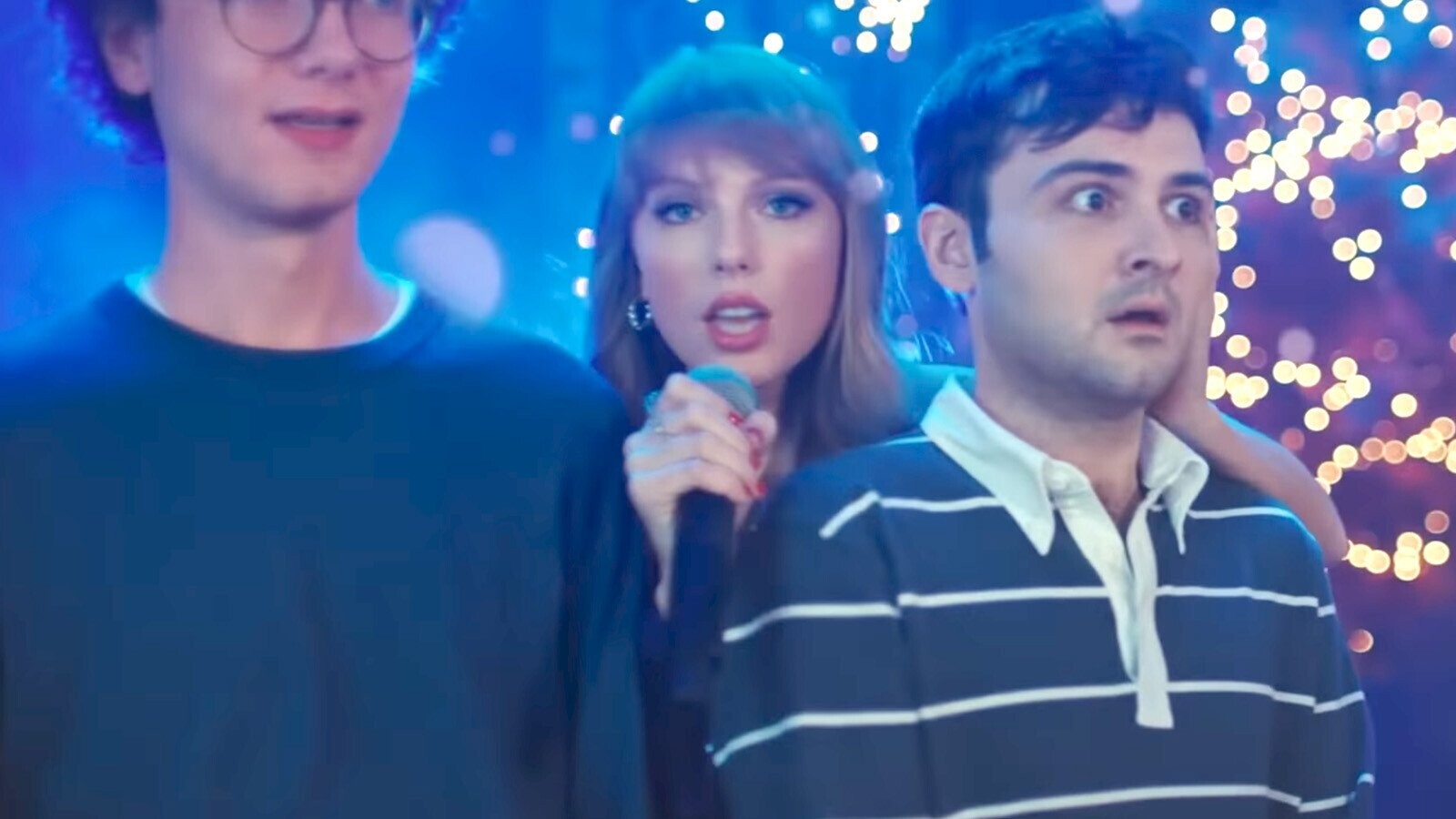
The Please Don’t Destroy trioBen Marshall, John Higgins, and Martin Herlihyhas built a comedy identity around nervous energy, fast-paced absurdity, and the specific embarrassment of being young men who look like they just apologized to a vending machine. Their 2021 Saturday Night Live sketch “Three Sad Virgins” became one of their breakout moments, partly because it combined their self-deprecating style with Pete Davidson’s relaxed swagger and Taylor Swift’s surprise cameo.
Years later, the group still talks about that pitch with disbelief. Higgins described pitching Swift the idea as almost unreal, the sort of dreamlike moment that makes the bright lights of SNL feel even brighter. The result was not just a funny sketch; it was a perfect pop-culture collisiondigital comedy, celebrity self-awareness, music-video parody, and a superstar willing to be in on the joke.
Why “Three Sad Virgins” Hit the Internet Like a Confetti Cannon
“Three Sad Virgins” aired during Taylor Swift’s November 2021 appearance as musical guest on Saturday Night Live, in an episode hosted by Jonathan Majors. Swift was there during a major career moment, performing the extended version of “All Too Well” from Red (Taylor’s Version). In other words, she already had plenty on her plate. Then Please Don’t Destroy handed her a comedy plate, tooand, naturally, it came with a side of public humiliation for them.
The sketch begins with Pete Davidson entering the Please Don’t Destroy office and suggesting they make a music video together. The trio thinks they are about to be presented as cool collaborators. Instead, the video becomes a full roast of their awkwardness. That bait-and-switch is the engine of the sketch: three comedy writers think they are being invited into Pete Davidson’s glamorous orbit, only to discover they are the punchline wearing human pants.
Then Taylor Swift appears. Her cameo works because it escalates the joke in the cleanest possible way. Davidson teasing the trio is funny. Taylor Swift joining in makes the humiliation feel hilariously official, as if the Library of Congress just archived their awkwardness.
The Dreamlike Pitch: Why Taylor Swift Saying Yes Mattered
For many performers, a pitch like this would be a polite “no,” followed by a very professional smile and perhaps a sudden need to “check with the team.” Taylor Swift’s brand is carefully managed, but it has also always included sharp comedic instincts. Her past SNL appearances showed she understood timing, self-awareness, and the value of committing fully to a bit.
That is why her immediate enthusiasm matters. According to interviews with the group, they did not expect Swift to agree so quickly. The pitch was simple but strange: the sketch would be called “Three Sad Virgins,” and she and Pete Davidson would make fun of Please Don’t Destroy. Swift understood the assignment, highlighted it, underlined it, and apparently turned it in early.
Comedy often depends on trust. The performer has to trust the writers, the writers have to trust the performer, and everyone has to trust that the final joke will land as playful rather than mean-spirited. Swift’s involvement showed she understood the tone. She was not punching down at three unknown writers; she was joining a self-roast that the trio had built around their own public personas.
Who Are Please Don’t Destroy?
Please Don’t Destroy is a New York-based comedy trio made up of Ben Marshall, John Higgins, and Martin Herlihy. The group formed after the three met through the New York comedy scene and NYU circles, eventually developing a style built on friendship, panic, and jokes that arrive as if they are being chased by a goose.
Before SNL, they made short videos online, especially during the pandemic era, when low-budget digital comedy became a survival tool for both creators and audiences. Their videos were quick, strange, and highly shareable. They often felt like three roommates trapped in a single thought bubble and losing the argument to themselves.
They joined Saturday Night Live in 2021 as writers and digital-short creators. Their arrival invited comparisons to other SNL digital teams, especially The Lonely Island, but Please Don’t Destroy brought a different flavor. Where The Lonely Island often leaned into musical absurdity and big comic bravado, Please Don’t Destroy specialized in anti-bravado. Their characters were rarely the coolest people in the room. Usually, they were the reason the room needed a new emergency exit.
How “Three Sad Virgins” Fits the Please Don’t Destroy Formula
The sketch works because it understands the group’s central joke: they are funniest when they look like they are barely surviving the sketch they wrote. Their best comedy often puts them in situations where someone more famous, more confident, or more emotionally stable enters their space and detonates their fragile little ecosystem.
In “Three Sad Virgins,” Pete Davidson represents effortless cool. He strolls in with the energy of someone who has never once asked, “Was that email too enthusiastic?” The Please Don’t Destroy guys, by contrast, radiate the energy of people who would send a thank-you note to a parking meter.
That imbalance is the joke. The trio wants approval. Davidson offers collaboration. Then the collaboration becomes a roast. When Taylor Swift arrives, the joke levels up from office embarrassment to pop-star-certified catastrophe. It is not merely that they are being mocked; it is that someone with stadium-level charisma has arrived to help do the mocking.
Taylor Swift’s Comedy Timing: The Secret Ingredient
Taylor Swift’s cameo succeeds because she does not treat it like a tiny celebrity favor. She commits. Good comedy cameos require more than showing up and smiling. The celebrity has to enter the world of the sketch and play by its rules. Swift does exactly that.
Her role is brief, but it has the confidence of a performer who knows how rhythm, surprise, and persona work. That should not be shocking. Songwriting is built on timing. A chorus lands because of setup. A bridge works because it changes the emotional temperature. Comedy uses similar machinery, except instead of making people cry in the car, it makes them spit coffee onto a laptop.
Swift’s appearance also has a meta-comedy advantage. Audiences know she is a global superstar. Seeing her participate in such a silly, oddly specific sketch creates instant contrast. The bigger the celebrity aura, the funnier it becomes when that celebrity uses the aura to roast three nervous comedy writers.
Pete Davidson’s Role: The Cool Friend Who Turns Into the Villain
Pete Davidson is crucial to the sketch because he bridges two worlds: SNL cast-member familiarity and celebrity chaos. In the sketch, he appears friendly at first, proposing a music video that sounds flattering. Then the music begins, and the trio realizes they have walked directly into a comedy trap.
Davidson’s laid-back delivery keeps the sketch from feeling too aggressive. He plays the insult as casual, almost affectionate. That tone matters. The comedy is not built on cruelty; it is built on the trio’s exaggerated insecurity and the absurdity of having famous people participate in their self-destruction.
He also gives the sketch its music-video structure. The parody format allows the jokes to move fast, and fast is essential for Please Don’t Destroy. Their comedy rarely lingers. It sprints, trips, gets up, apologizes, and sprints again.
Why the Sketch Became a Breakout Moment
“Three Sad Virgins” arrived early in Please Don’t Destroy’s SNL run, which made its success especially important. The trio was still being introduced to a national audience. Many viewers were learning their names, their style, and their office-based world. A Taylor Swift cameo acted like a giant neon arrow pointing at them, flashing: “Pay attention to these anxious men.”
The sketch also gave viewers a clear entry point into their comedy. You did not need to know their online work. You did not need to understand their origin story. The premise was immediately readable: three awkward writers get roasted by cooler people. That is universal. Most people have, at some point, felt like the least cool person in a room. Please Don’t Destroy simply turned that feeling into a music video and invited Taylor Swift to bring a shovel.
The Pop-Culture Power of a Well-Placed Cameo
Celebrity cameos on SNL can be hit or miss. Sometimes they feel like applause breaks wearing shoes. But the best cameos serve the joke rather than interrupting it. Swift’s appearance in “Three Sad Virgins” works because it is not random decoration. She is the escalation.
The audience reaction depends on surprise, but the sketch still functions after the surprise is gone. That is the mark of strong writing. Even once viewers know Swift is coming, the rhythm still works because the cameo is structurally useful. It raises the stakes, sharpens the embarrassment, and gives the sketch a memorable final burst of energy.
In SEO terms, it was also a perfect storm: Taylor Swift, SNL, Pete Davidson, Please Don’t Destroy, and a title weird enough to make people click just to confirm they read it correctly. The internet loves a strange headline. This one practically arrived wearing tap shoes.
What the Sketch Reveals About Modern SNL Comedy
Please Don’t Destroy represents a newer SNL pathway: online comedy to late-night institution. Their rise reflects how sketch comedy has changed. A generation ago, comics often built reputations through live shows, improv theaters, and writing rooms. Those still matter, but now a one-minute video can travel faster than a rumor at a family reunion.
The trio brought internet pacing to SNL. Their shorts often use quick cuts, escalating premises, and jokes that stack rapidly. Yet their work also depends on old-fashioned chemistry. The reason their panic feels funny is that the friendship underneath it feels real. They can roast each other because the audience senses affection beneath the chaos.
“Three Sad Virgins” sits at the intersection of those worlds. It is an SNL digital short with internet-friendly speed, a celebrity cameo built for sharing, and a self-deprecating premise that makes the writers themselves the target.
Why Self-Roast Comedy Works So Well
Self-roast comedy gives performers permission to control their own embarrassment. Instead of waiting for critics, commenters, or random people on the street to define them, comedians exaggerate their flaws first. Please Don’t Destroy has turned that into an art form.
The trio’s comedy often says, “Yes, we know exactly how we look, and we have made it worse on purpose.” That honesty makes the jokes feel inviting. Viewers are not laughing at real humiliation; they are laughing at a carefully constructed cartoon version of insecurity.
That is why Swift’s role does not feel out of place. She is not exposing something hidden. She is joining a game the trio already started. The sketch is a comedy snowball, and she gives it a glamorous push down the hill.
From Viral Sketch to Bigger Career
After “Three Sad Virgins,” Please Don’t Destroy continued building a recognizable SNL identity. They collaborated with hosts and musical guests, toured live, and expanded into feature-length comedy with Please Don’t Destroy: The Treasure of Foggy Mountain, which streamed on Peacock. Their work has continued to blend friendship, absurdity, and the oddly heroic act of looking extremely uncool with confidence.
The group’s later career also shows that the Swift sketch was not a one-time lucky bounce. It was a signal. Please Don’t Destroy could write for major celebrities while keeping their own comic voice intact. That is harder than it looks. Many young comedy acts get swallowed by the machinery of a big show. Please Don’t Destroy managed to make the machinery look like it had wandered into their office and asked for a LaCroix.
Experiences and Takeaways Related to Pitching Taylor Swift on “Three Sad Virgins”
The most fascinating experience behind “Three Sad Virgins” is not just that Taylor Swift agreed to the sketch. It is what that agreement says about creative courage. In any writers’ room, especially one as famous and pressure-filled as Saturday Night Live, a pitch has to survive fear. Fear that the celebrity will hate it. Fear that the audience will misunderstand it. Fear that the idea sounds funny at 2 a.m. but will look like a group project gone feral by Saturday.
For Please Don’t Destroy, the pitch required a very specific kind of bravery: they had to make themselves the joke first. That is a useful lesson for anyone creating comedy, content, or even a simple presentation at school or work. When you are willing to be the target, people often relax. The room understands that you are not attacking from a distance; you are standing under the falling piano with everyone else.
Another experience worth noticing is the importance of clarity. The pitch to Swift was not complicated. It did not require a 47-slide deck, mood lighting, or someone saying “synergy” while holding cold brew. The concept was direct: you and Pete make fun of us in a music video. That kind of clarity helps performers say yes because they can immediately picture the joke.
There is also a lesson in collaboration. Taylor Swift’s participation worked because the sketch gave her something fun to do. A cameo should not feel like a celebrity has been taped onto the sketch like a shiny sticker. It should give the guest a real comic function. Swift was not there only to wave at the audience. She delivered the final escalation, making the roast feel bigger, sharper, and more surprising.
For fans, the sketch is a reminder that pop stars are often funniest when they are allowed to step outside the polished machinery of pop stardom. Swift’s public image includes control, precision, and massive emotional storytelling. In “Three Sad Virgins,” she uses that same precision for silliness. That contrast makes the cameo memorable.
For young writers, the story is encouraging. A strange idea can become a defining moment if it has a clear comic engine and the right collaborators. Please Don’t Destroy did not try to look cooler than they were. They leaned into their awkwardness until it became the product. That is not just a comedy strategy; it is a creative philosophy. Use what makes you different. Exaggerate it. Shape it. Then, if fate is feeling generous, maybe Taylor Swift will show up and sing the punchline.
Conclusion: A Dream Pitch That Became SNL Gold
“Three Sad Virgins” remains one of the most memorable early Please Don’t Destroy sketches because it captured everything the trio does well: awkward self-awareness, fast escalation, celebrity collaboration, and a willingness to look ridiculous for the joke. Pitching Taylor Swift may have felt like a dream, but the sketch worked because the writing was awake, alert, and smartly constructed.
Taylor Swift’s cameo did not simply add star power. It completed the comic equation. Pete Davidson set the trap, Please Don’t Destroy fell into it, and Swift arrived to make sure the internet would remember the landing. For a young comedy trio finding its place at SNL, that is more than a viral moment. That is the kind of sketch that tells viewers, “These guys know exactly what they are doingeven when what they are doing is being professionally embarrassed.”
Note: This article is written in original language for web publication, synthesizing publicly reported entertainment information without copied source text or unnecessary citation placeholders.