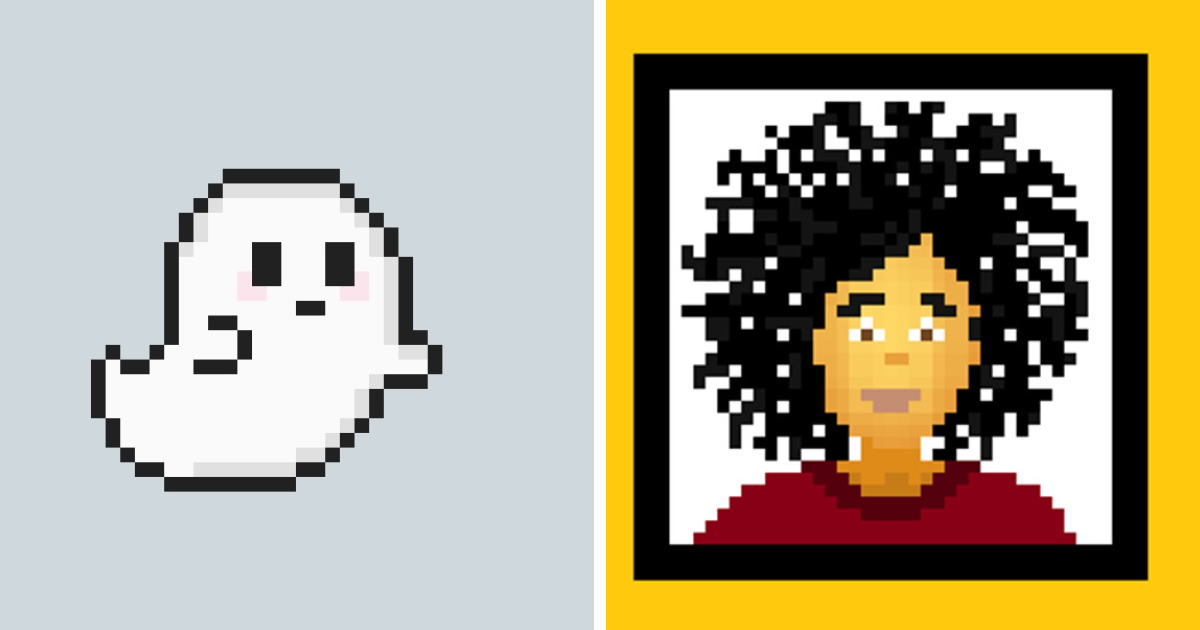

Some art makes you pause because it is enormous, dramatic, and probably hanging in a gallery with a security guard who looks like they have never laughed at a joke. Pixel art does the opposite. It can fit inside a tiny square, use only a handful of colors, and still make you stare at it for five minutes wondering how a few little blocks became a whole world.
That is the magic of pixel art. A single bright square can become a window. Two dark pixels can become a pair of worried eyes. A tiny wobble in a character’s outline can make them feel like they are nervously waiting for the bus in a rainstorm. Pixel art may look simple at first glance, but it is really visual storytelling with an extremely strict budget.
So, Hey Pandas, post your best pixel artor any pixel art you have created. It does not need to be perfect, polished, animated, framed, commercially successful, or blessed by a mysterious council of retro-game wizards. A first attempt counts. A tiny mushroom counts. A cat made from 18 questionable squares absolutely counts.
Why Pixel Art Still Feels So Special
Pixel art has a charm that modern ultra-detailed graphics cannot always replace. When an image is built square by square, every choice becomes visible. The artist has to decide where a highlight belongs, how much shadow is enough, whether a face needs one pixel for a smile or two pixels for a look of pure existential dread.
That limitation is not a weakness. It is the fun part. A limited grid encourages clever decisions. A small color palette makes every shade work harder. A character with a 16-by-16 pixel face cannot rely on perfectly painted eyelashes, so expression comes from posture, contrast, and tiny shifts in shape.
Pixel art also feels wonderfully approachable. You do not need a giant screen, a studio full of expensive equipment, or a dramatic artist scarf that flutters in the wind despite the windows being closed. You can start with a simple drawing program, a pixel editor, a tablet app, or even graph paper. The main ingredient is patience, followed closely by the willingness to zoom in until one square suddenly feels like the most important square in human history.
Your “Best” Pixel Art Does Not Have to Be Your Most Complicated
When people hear “post your best work,” they often imagine that only polished masterpieces belong in the comments. That is how a lot of great art stays hidden in folders named things like “new final FINAL version 7” or “do not look at this yet.”
Your best piece may be a detailed cyberpunk alley with glowing signs and reflective puddles. It may also be a tiny sleeping frog you made during a slow afternoon. Both can be worth sharing because “best” does not always mean “most difficult.” Sometimes it means the piece that made you laugh. Sometimes it means the first time you finally understood shading. Sometimes it means the art you created after a long break, when opening a blank canvas felt like trying to make small talk with a dragon.
Posting any pixel art is valuable because it shows progress. Artists often see every rough edge in their own work, while viewers notice the mood, the idea, and the personality. A slightly uneven tree can still feel cozy. A tiny spaceship can still look ready to blast into trouble. A homemade game sprite can still make somebody think, “I would absolutely play that game.”
What Makes Pixel Art Look Good?
There is no single formula for great pixel art, but several practical choices can make a small image feel clearer, stronger, and more intentional.
Start With a Readable Silhouette
Before worrying about texture, tiny details, or whether your character’s sword needs a sparkle effect, check the silhouette. Can you tell what the subject is from its outer shape? A knight, a cat, a potion bottle, a tree, and a toaster should not all become the same mysterious blob once they are viewed at a smaller size.
Strong silhouettes make pixel art easier to read quickly. This matters especially for game sprites, profile icons, stickers, and small illustrations shared on social media. If the basic shape works, the details have something sturdy to stand on.
Use a Focused Color Palette
New pixel artists sometimes discover the color picker and immediately decide that every color in the universe deserves a role. The result can look like a rainbow accidentally fell into a box of confetti.
A smaller color palette usually creates a stronger image. Choose a few base colors, then add darker and lighter shades where they help explain form. You do not need ten versions of blue to make a night sky. Sometimes three carefully chosen blues do more than a hundred indecisive ones.
Limited palettes also help create a recognizable mood. Warm oranges and muted browns can make a scene feel nostalgic. Cool greens and deep purples can suggest mystery. Bright neon colors can make a tiny city street feel like it is hosting a robot dance party at 2:00 a.m.
Shade With Purpose
Shading is not just about adding dark pixels wherever there is empty space. It helps explain where the light comes from and what the object is made of. A shiny metal helmet needs sharper contrast than a soft wool sweater. A glowing lantern should brighten nearby pixels. A cave wall can use uneven shadows to feel rough and ancient.
Try to choose one main light source before adding highlights. Is the sun coming from the upper left? Is the room lit by a fireplace? Is your tiny wizard holding a glowing orb that is clearly violating several local safety codes? Once you decide, let the lighting guide the image.
Keep Edges Deliberate
Pixel art looks strongest when the edges feel intentional. Random stair-step patterns can make curves look awkward, while carefully placed pixels can make circles, faces, clouds, and clothing folds feel surprisingly smooth.
Zoom in and inspect the outlines. Look for single pixels that stick out with no purpose, strange bumps in a curve, or accidental gaps that make your character look like they have misplaced a shoulder. Small edits can have a huge effect because every pixel carries visual weight.
Easy Pixel Art Ideas to Share With the Community
Not sure what to create? The best way to beat a blank canvas is to make the assignment smaller. You do not need to build an entire fantasy kingdom before dinner. Pick one object, one scene, or one feeling.
- A tiny bedroom with a rainy window and a glowing computer screen.
- Your pet reimagined as a pixel-art game character.
- A favorite snack turned into a magical item with suspiciously powerful stats.
- A fantasy shopkeeper, complete with a sign that says “No Refunds After Summoning.”
- A 16-by-16 pixel self-portrait.
- A small animated campfire, waterfall, ghost, potion, or bouncing slime.
- A peaceful landscape from a real place you remember.
- A retro-style version of a modern object, such as a smartphone, coffee machine, or electric scooter.
These prompts are simple enough to begin quickly but flexible enough to become surprisingly personal. Two people can draw the same “pixel-art frog” prompt and end up with one cozy forest guardian and one tiny crime boss wearing sunglasses.
How to Post Pixel Art So People Can Appreciate It
Sharing your work is part of the creative experience. A good post does not need a long explanation, but a little context can help people notice what made the project meaningful.
Start with a clear image. Avoid uploading a blurry screenshot or a version that has been stretched until the pixels look like they are trying to escape the screen. Pixel art should usually be displayed at an enlarged size using crisp scaling, so the square edges remain clean instead of turning fuzzy.
Add a short caption. Tell people what the piece is, what inspired it, or what you enjoyed most while making it. You might write, “I made this little wizard after trying to learn better lighting,” or “This is my cat, but in a game where she controls the weather and demands tuna.” A simple caption invites conversation without making the artwork explain itself like it is presenting a quarterly report.
It also helps to share the size of the artwork, especially for tiny pieces. Readers may be amazed to learn that an image was created on a 32-by-32 or 64-by-64 canvas. Small dimensions make careful composition even more impressive.
Give Credit Where It Belongs
If you worked from a reference photo, collaborated with another artist, used a base with permission, or created fan art, mention it clearly. Good credit is not a boring legal footnote; it is part of being a respectful member of a creative community.
And when you comment on someone else’s pixel art, try to be specific. Instead of only saying “Nice,” point out something you genuinely noticed. Maybe the lighting makes the scene feel calm. Maybe the animation has a great rhythm. Maybe the tiny bread loaf has more personality than several people you met this week.
Pixel Art Is a Conversation, Not a Competition
Creative communities become more interesting when people feel safe sharing unfinished work, experiments, mistakes, and victories. A finished pixel-art cityscape may inspire someone to try background design. A rough character sprite may encourage another beginner to post their own first attempt. A weird little dancing potato may remind everyone that art is allowed to be silly.
There is room for every level of skill. Some artists build elaborate scenes with animated rain, layered parallax backgrounds, and lighting that could make a movie director jealous. Others are still figuring out why their circles keep looking like lumpy potatoes. Both belong in the conversation.
The point is not to prove that you are the greatest pixel artist in the universe. That job sounds exhausting, and the universe is very large. The point is to make something, share it, learn from the process, and enjoy seeing how many different worlds can emerge from tiny colored squares.
Creator Experiences: What It Feels Like to Make and Share Pixel Art
One of the most memorable pixel-art experiences is finishing a tiny piece that seemed impossible at the beginning. Imagine starting with a blank 24-by-24 canvas and deciding to draw a strawberry. That sounds easy until you realize the strawberry needs leaves, seeds, highlights, shadow, shape, and some vague suggestion that it is not a red traffic cone. At first, every attempt may look odd. The leaves become a green hat. The seeds become freckles. The highlight makes it look suspiciously wet. Then, after a few adjustments, the image suddenly reads as a strawberry. It is a tiny victory, but it feels enormous because you taught a few squares how to communicate.
Another familiar experience is making a pixel-art version of a pet. A dog’s floppy ears, a cat’s judgmental posture, or a bird’s permanently surprised expression can become a surprisingly emotional challenge. The goal is not realistic fur or perfect anatomy. It is capturing the personality. Maybe your cat needs one raised eyebrow pixel. Maybe your dog needs a tongue that sticks out at a ridiculous angle. When you share that piece, people often respond because they recognize the feeling behind it. A pixel pet can become a small digital portrait of a creature who has supervised your life, stolen your chair, and ignored your personal boundaries with great confidence.
Animation creates another kind of magic. A still image is satisfying, but adding two or three frames can make the artwork feel alive. A candle flickers. A robot blinks. A tiny ghost floats up and down like it has nowhere urgent to be. The first time an animation loops smoothly, it can feel like you have invented electricity. Of course, the process may involve a great deal of staring at one pixel and asking whether it should move left, right, up, down, or simply apologize for its behavior. But once the motion works, the effort is worth it.
Many artists also remember the first constructive comment that helped them improve. Someone might point out that a character’s outline disappears against the background or suggest adding a darker shade beneath a roof. That kind of feedback can be more useful than endless praise because it gives you something concrete to try. The best creative communities understand that critique does not need to be harsh to be honest. A thoughtful suggestion can help a beginner see a new possibility without making them feel like they should throw their tablet into the ocean.
Finally, sharing pixel art often reminds people that creativity does not need to be serious to matter. A detailed landscape can be meaningful, but so can a tiny pixel-art sandwich with a crown. A dramatic warrior may look impressive, but a dancing mushroom can make strangers smile. The experience of posting art is not only about receiving approval. It is about contributing a small piece of your imagination to a larger collection of ideas. Your artwork may inspire someone, amuse someone, challenge someone, or simply give them a moment of visual joy. That is a pretty good return on a few carefully placed squares.
Final Thoughts: Post the Pixels
Pixel art proves that creativity does not need unlimited space to make an impact. A tiny canvas can hold a whole story: a cozy room, a haunted forest, a futuristic city, a brave little adventurer, or a slice of pizza that looks more emotionally stable than most of us.
So, Hey Pandas, post your best pixel artor post the piece you made while learning, experimenting, relaxing, or avoiding your laundry. Share the tiny sprite, the animated flame, the dramatic sunset, the weird frog, the pixel sandwich, and the character who may or may not be based on your neighbor.
The world has enough empty folders full of hidden art. Let the pixels out.
Note: Share artwork you created yourself or have permission to post, and credit collaborators, references, or original creators whenever appropriate.
SEO Tags