
Note: This is body-only HTML, cleaned for easy web publishing and copying.
There are garden centers, there are cafes, and then there are places that make you wonder why the rest of the world has been trying so hard. In the mountains of Okayama, Japan, one such place turns the simple act of buying a watering can into something closer to a small pilgrimage. It is called Nap, and it is the kind of destination that makes modern retail look a little overdressed and slightly overcaffeinated.
Set deep in the forest and far from Tokyo’s usual hurry, Nap is more than a gardening shop plus cafe. It is a mountain retreat built around the idea that people do not always want to rush in, grab a bag of potting mix, and flee under fluorescent lighting. Sometimes they want to linger. They want to look at stone steps, touch canvas bags, admire boots lined up like loyal garden soldiers, sip something warm, and remember that nature is not a productivity hack. It is, very inconveniently for our calendars, a way of life.
That is what makes this place so compelling. A gardening shop plus cafe in the mountains of Japan is not just a charming concept. It is a smart, beautifully grounded answer to a question many lifestyle brands, garden stores, and hospitality spaces keep asking: how do you create a place people actually want to stay in? Nap’s answer is simple. Start with nature, add craftsmanship, resist clutter, and make the coffee good enough that nobody checks the time.
The Real Place Behind the Daydream
Nap is located in the mountains of Okayama, on Japan’s main island of Honshu, next to the workshops of owner and designer Makoto Kawai. The setting matters. This is not a decorative “mountain vibe” pasted onto a city block. It is the real thing: forest, quiet, weather, stone, and that rare kind of air that makes you feel as if your lungs have filed a formal complaint about your usual lifestyle.
Kawai’s background helps explain why the space feels so specific. Before becoming known for his craft-driven design work, he worked as a mechanic, a vintage clothing buyer, and a pet supplies store manager. That is not a standard fairy-tale résumé, but it is a wonderfully practical one. It suggests a mind trained by tools, materials, workwear, function, repair, and the beauty of things that earn their keep. In other words, exactly the right instincts for a place where gardening gear, handmade goods, and cafe culture can comfortably sit at the same table.
Nap’s broader business identity reinforces that feeling. The company has been operating since the early 2000s and is rooted in production, retail, and store design. This is important because the shop does not feel like an influencer fantasy assembled by algorithm. It feels like a place made by people who understand how objects are used, how spaces are inhabited, and why good design should never be allergic to dirt.
Why a Gardening Shop and Cafe Belong Together
At first glance, a gardening shop plus cafe might sound like a trendy mash-up, the kind of idea brainstormed on a mood board somewhere between “artisan apron” and “heritage mug.” But the pairing makes excellent sense. Gardening asks people to slow down, pay attention, and observe small changes. So does a good cafe. Both reward patience. Both create rituals. Both depend on environment. And both are better when nobody is shouting.
In Japanese garden traditions, the purpose of a garden is not just decoration. It is contemplation. Better Homes & Gardens notes that Japanese gardens commonly combine water, plants, rocks, and clean lines to create peaceful retreats. Sunset similarly describes the Japanese garden as a smaller-scale way of reproducing the humbling, peaceful feeling of being in nature. Put those ideas next to a cafe, and the connection becomes obvious. Coffee or tea is not merely a beverage here. It is part of the pacing device. It gives the visitor permission to stay still long enough for the place to work on them.
That is the genius of Nap. The cafe is not a side hustle with a pastry case. It is part of the architecture of the experience. It turns a shop into a pause. It lets the customer become a guest. It makes buying gardening accessories feel less like an errand and more like a chapter in a day worth remembering.
The Design Language: Quiet, Craft, and the Beauty of Restraint
One of the most appealing things about Nap is that it does not seem interested in showing off. It leans into a design vocabulary that feels deeply Japanese and increasingly influential around the world: natural materials, uncluttered spaces, intentional objects, and an embrace of imperfection. The Spruce describes wabi-sabi as the Japanese philosophy of finding beauty in imperfection and accepting the transient nature of things. Architectural Digest adds that Japanese-inspired interiors and Japandi spaces often revolve around simplicity, natural materials, craftsmanship, greenery, and a calm connection between indoors and out.
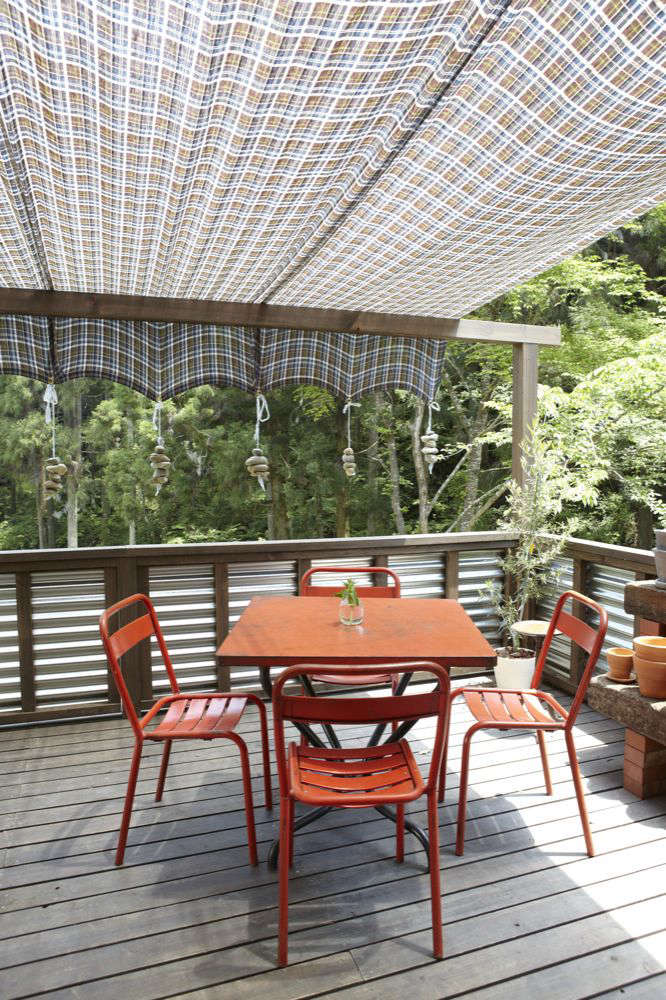
Nap appears to understand this intuitively. The details reported from the shop are wonderfully unflashy: stones collected from a nearby river are used to secure the shade above the outdoor deck; the entrance includes stone steps gathered by Kawai from that same river; inside, the store and cafe rely on texture, openness, and practical objects rather than visual noise. There is style, yes, but it is the kind of style that whispers. Nobody here is trying to win a duel against neon signage.
House Beautiful’s take on biophilic design also helps explain the appeal. Spaces that use wood, stone, woven textures, and organic materials create a tactile connection to nature. Veranda’s writing on indoor-outdoor retreats echoes the same principle: people feel calmer in spaces that blur the line between shelter and landscape. That is exactly why a mountain shop and cafe can be so magnetic. You are not cut off from the setting; you are gently framed by it.
What You Might Actually Find on the Shelves
The merchandise at Nap is part of the story, too. Gardenista’s reporting paints a vivid picture: colorful gardening boots, boot removers, watering cans, English gardening baskets, denim aprons, home goods, and handmade leather and cotton bags. That mix says a lot. This is not a place interested only in plants as products. It is interested in the full life around plants: the tools, the clothing, the carryall, the ritual, the mud, the usefulness, and the little pieces of beauty that make daily work feel richer.
There is also something delightful about the refusal to draw hard borders between categories. A person may arrive for garden inspiration and leave wanting a canvas tote. Another might come for the cafe and suddenly become emotionally attached to a watering can. A third might start by admiring an apron and end up rethinking the entire porch back home. Good retail, like good gardening, often works by seduction rather than instruction.
Even the workshop story adds depth. Some of the handmade goods connected to Nap come from a small factory that was once an old schoolhouse. That detail alone could carry half an interior design article and at least one very wistful social media caption. More importantly, it reflects a larger value: reuse instead of waste, character instead of polish, history instead of blankness. In a world full of mass-produced sameness, that kind of backstory matters.
Why the Mountain Setting Is the Whole Point
Take this same concept and drop it in a generic shopping strip, and it would lose half its magic. The mountain setting is not a backdrop. It is the main ingredient. Kawai’s stated goal for Nap was to create a low-key mountain retreat where people could come and experience nature. That intention is what separates this place from a cute retail concept. The environment is not being used to decorate the brand; the brand is being shaped around the environment.
That philosophy also connects with older Japanese spatial traditions. Dwell notes that the classic chashitsu, or tearoom, was historically designed as a place for tea ceremonies, contemplation, and meditation. Smithsonian’s coverage of Japanese tea practice highlights how guests enter intimate spaces often surrounded by gardens, where attention, seasonality, and carefully chosen utensils shape the entire experience. Nap is not a formal tearoom, but it benefits from that same cultural logic: a drink tastes better when the room, the garden, the weather, and the object in your hand all seem to be in conversation.
In plain English, it means the mountain air is doing some of the design work. So are the trees. So is the quiet. So is the feeling that nobody expects you to power-walk through the space like you are late for a conference call titled “Circle Back on Mulch.”
What American Garden Retail Can Learn From It
For American readers, the biggest takeaway may be that Nap sells an experience before it sells a product. That does not mean it is impractical. In fact, it is very practical. People remember places that make them feel something. They return to places that offer atmosphere, rhythm, and identity. A gardening shop plus cafe works because it transforms shopping from transaction into visit.
There is a lesson here for independent nurseries, lifestyle shops, and hospitality businesses alike. The future may belong less to spaces that offer more stuff and more to spaces that offer better context. A few strong objects, beautiful materials, useful tools, honest food and drink, and a memorable setting can outperform a warehouse of clutter. Architectural Digest has noted growing interest in softer, more natural, low-maintenance landscapes shaped by wabi-sabi rather than rigid perfection. That same preference is showing up in retail and travel. People increasingly want calm. They want authenticity. They want places that feel lived in rather than stage-managed.
Nap seems to understand something many brands forget: aspiration is not always about luxury. Sometimes it is about relief. Sometimes the dream is not a penthouse. Sometimes it is a good coffee, a river stone step, a garden basket, and a little more silence than usual.
The Experience: From Arrival to the Last Sip
What does a place like this feel like in practice? Start with the approach. A mountain destination changes your speed before you even arrive. Roads narrow, scenery opens, and the ordinary commercial noise begins to fall away. By the time you reach a shop like Nap, you are already in a different mood. That matters. The experience is designed as much by the journey as by the shelves.
Then comes the first visual impression: a shop and cafe that seem to belong to the land rather than interrupt it. There are stones, wood, useful objects, and the kind of outdoor deck that makes you consider whether every drink you have ever had indoors has been a strategic error. Gardenista’s details do a lot of heavy lifting here. River stones hold the awning in place above the deck. Stone steps gathered nearby lead you in. These are modest gestures, but they tell you everything about the space. Nature is not framed from a distance. It is literally built into the threshold.
Once inside, the mood becomes even more persuasive. You are not hit with a wall of merchandise screaming for attention. Instead, the objects seem curated around daily life: boots ready for wet soil, boot removers for practical comfort, watering cans that are functional enough to use and handsome enough to leave in view, aprons that suggest actual work, and bags sturdy enough to age gracefully. The result is that rare retail feeling where browsing does not drain you. It steadies you.
The cafe shifts the scene from admiration to participation. You stop being a viewer and become part of the rhythm of the place. You sit. You warm your hands around a cup. You notice how the light behaves. You listen to nothing dramatic happening, which is exactly the point. Smithsonian’s discussion of Japanese tea practice emphasizes ritual, seasonality, and attention. Even in a casual cafe setting, some of that spirit lingers. A drink is not just consumption. It is punctuation. It turns the visit into a sequence of moments rather than a blur.
And then there is the mountain itself, quietly stealing the show. The weather can shift. The air feels cleaner. The trees do what trees do best, which is stand there looking ancient and correct. In a place like this, even shopping becomes sensory. You notice texture more. Canvas feels sturdier. leather looks warmer. Metal tools seem more honest. A basket is not just a basket; it becomes part of a fantasy in which you are the sort of person who harvests herbs, trims branches with confidence, and owns exactly one excellent pair of muddy boots.
That is why the experience lingers after you leave. You are not remembering a checkout counter. You are remembering a mood. You are remembering the soft transition between outdoors and indoors, the low-key confidence of the design, the way craftsmanship replaced clutter, and the subtle but unmistakable invitation to live more slowly. In a world that keeps trying to sell speed as sophistication, a gardening shop plus cafe in the mountains of Japan offers a lovelier idea: maybe the most modern luxury is having nowhere urgent to be for an hour or two.
For travelers, designers, gardeners, and anyone tired of sterile shopping experiences, that idea has real power. Nap is appealing not because it is loud or trendy, but because it is coherent. Everything belongs to the same story: the tools, the deck, the boots, the cafe, the old-schoolhouse production history, the nearby workshops, the mountain quiet. When a place aligns its products, setting, and pace that well, it stops feeling like retail and starts feeling like culture. That is a much harder thing to build, and a much more satisfying thing to visit.
Conclusion
A gardening shop plus cafe in the mountains of Japan sounds charming on paper, but Nap makes it feel almost inevitable. Of course a garden store should include a place to sit. Of course craftsmanship belongs beside nature. Of course a mountain setting can teach a shop how to be quieter, smarter, and more memorable. This is what happens when design is driven not by trends but by values: utility, beauty, patience, and a real respect for place.
For anyone dreaming about Japanese garden style, slow travel, or more thoughtful retail spaces, Nap offers a compelling model. It proves that the best destinations do not always overwhelm you. Sometimes they simply make room for you to breathe. And honestly, that may be the finest luxury item on the shelf.