
Indoor plants rarely file formal complaints, but they are excellent at passive-aggressive communication. Crispy tips, curled leaves, and stalled growth may be their way of saying, “This room feels like a toaster.” Heated and air-conditioned rooms can become especially dry, causing tropical plants to lose moisture faster than their roots can replace it.
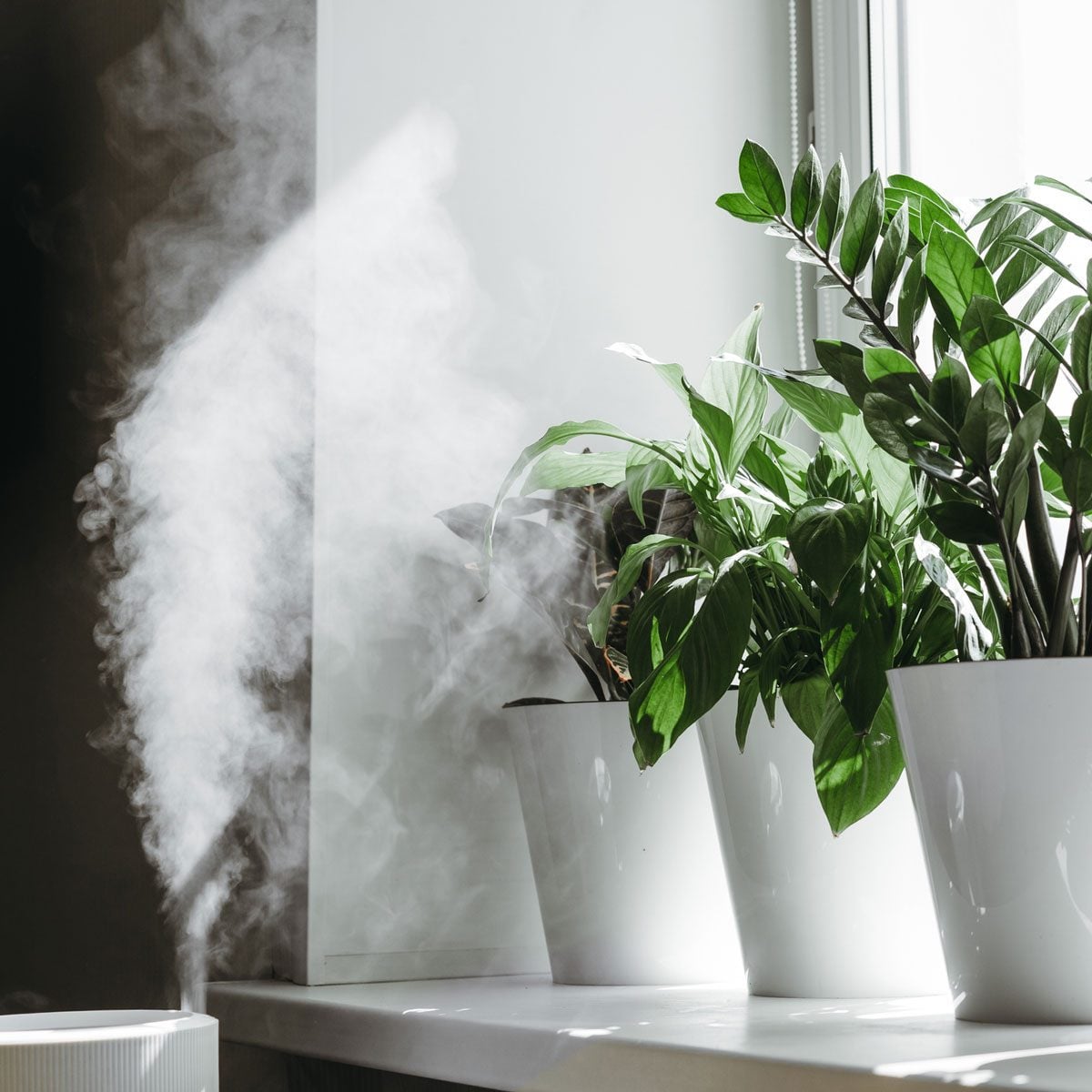
Plant humidifiers and misters can help, but they are not interchangeable. A humidifier raises relative humidity across a growing area for hours. A mister wets foliage and briefly moistens the surrounding air. Used correctly, either can support healthier growth. Used carelessly, they can produce mineral dust, leaf spots, mold, or a tiny indoor swamp nobody ordered.
Why Humidity Matters to Houseplants
Relative humidity is the amount of water vapor in the air compared with the maximum it could hold at the same temperature. Indoor heating often drives humidity down in winter, while air conditioning can dry rooms during summer.
Humidity Affects Water Loss Through Leaves
Plants release water vapor through pores called stomata. When the air is extremely dry, moisture can leave thin foliage rapidly, increasing stress when roots cannot keep pace. Symptoms may include brown edges, crispy tips, curling, reduced vigor, and potting mix that dries unusually fast.
Ferns and many tropical foliage plants usually react before drought-tolerant species. Snake plants, ZZ plants, succulents, and desert cacti generally need little extra humidity.
A Practical Target
Many common tropical houseplants grow comfortably around 40% to 50% relative humidity. Some ferns, orchids, bromeliads, and prayer plants appreciate more, but whole-home humidity should generally remain below 60% to reduce condensation and mold risk. For a mixed collection, a measured range near 40% to 50% is a sensible compromise. Your philodendron may enjoy rainforest air; your drywall will not.
Plant Humidifier vs. Plant Mister
| Feature | Humidifier | Mister |
|---|---|---|
| Main effect | Raises humidity across a room or plant zone | Temporarily wets leaves and nearby air |
| Best use | Dry rooms and humidity-sensitive plant groups | Propagation, air plants, terrariums, and cleaning |
| Duration | Continuous while operating | Usually brief |
| Main risk | Excess moisture, dirty mist, mineral dust | Leaf spots and disease |
The key difference is simple: a humidifier changes the environment; a mister changes the leaf surface. Misting looks productive because the plant becomes shiny and damp, but in an open room the humidity boost often disappears within minutes.
How to Choose the Best Humidifier for Plants
Ultrasonic Models
Ultrasonic humidifiers are quiet, compact, and energy-efficient. They create a cool visible mist, making them popular for plant shelves. Hard tap water can produce scale and airborne white dust, so distilled or demineralized water is preferable.
Evaporative Models
These units pull air through a wet wick or filter. They often produce less visible mineral dust, although fan noise and replacement filters add inconvenience and cost.
Warm-Mist Models
Warm-mist units heat water before releasing steam. They work, but hot water creates a burn hazard around children, pets, and crowded plant stands. A cool-mist unit is usually more practical for plants.
Features That Matter
- Humidistat: Cycles the unit off at the selected humidity.
- Easy cleaning: Wide openings and removable parts reduce maintenance misery.
- Adjustable output: Helps prevent wet walls, leaves, and furniture.
- Correct capacity: Match the unit to the size of the room or plant zone.
- Automatic shutoff: Stops operation safely when the tank empties.
How to Use a Plant Humidifier Safely
Measure First
Place a digital hygrometer near the plants but outside the direct mist stream. Check it at different times because heating, cooking, showers, sunlight, and ventilation can change humidity throughout the day. Without a meter, you are gardening by vibes.
Position the Unit Carefully
Set the humidifier on a stable, water-resistant surface a few feet from the plants. Aim mist into open air rather than directly at foliage, walls, cold windows, wood furniture, or electronics. Gentle room airflow helps prevent damp, stagnant pockets.
Keep Water and Equipment Clean
Empty and refill portable units with fresh water daily when practical. Remove film and scale, and clean the machine according to its manual; federal guidance recommends thoroughly cleaning portable humidifiers at least every third day. Distilled or low-mineral water is especially useful in ultrasonic units.
Do not add fertilizer, essential oils, pesticide, or homemade plant tonic unless the machine was specifically designed for it. A humidifier is not a diffuser or botanical soup kettle.
Watch the Room
Reduce output if windows fog, surfaces remain damp, or fabrics feel clammy. Sustained indoor humidity above 60% can support mold and bacteria and may damage the building.
Does Misting Plants Actually Work?
Misting has useful applications, but it is often oversold as a replacement for a humidifier. A few sprays briefly increase moisture around a leaf, yet the effect fades quickly in an open room.
Good Uses for a Mister
- Air plants and bromeliads: Helpful as supplemental care, not necessarily a replacement for soaking or proper watering.
- Seeds and cuttings: Fine droplets moisten delicate media without washing it away.
- Terrariums: Provides better control than pouring water into a small enclosure.
- Leaf cleaning: Dampens sturdy foliage before gentle wiping.
- Selected ferns: Occasional misting may help when leaves can dry promptly.
When Not to Mist
Avoid routinely spraying fuzzy foliage, flowers, crowded canopies, or plants with leaf-spot problems. Do not mist late at night in a cool, poorly ventilated room. Wet leaves and stagnant air are less “tropical retreat” and more “open casting call for pathogens.”
Plants That Often Benefit From Higher Humidity
Ferns: Maidenhair, bird’s nest, rabbit’s foot, and Boston ferns often respond well to stable humidity, although constantly wet fronds may invite disease.
Prayer plant relatives: Calatheas, marantas, ctenanthes, and stromanthes are famous for decorative foliage and crispy edges. Humidity helps, but unsuitable water, harsh sun, or soggy soil can cause similar damage.
Orchids and bromeliads: Many epiphytic species appreciate humid air plus excellent circulation. Their roots still need oxygen, so high humidity should never mean waterlogged growing media.
Other tropicals: Fittonias, selaginellas, palms, alocasias, and some anthuriums often prefer moderate, consistent humidity.
Most succulents, snake plants, ZZ plants, and desert cacti do not require a humidifier. Holiday cacti are notable exceptions because they come from more humid habitats than desert cacti.
Other Ways to Raise Humidity
Group compatible plants: Transpiration can create a slightly more humid microclimate. Leave enough space for airflow and pest checks.
Use pebble trays correctly: Keep the pot above the waterline so the roots do not sit in water. The effect is modest and localized, but it can help a small plant zone.
Choose humid rooms: A bright bathroom or kitchen may suit tropical plants. A dark bathroom is still dark; steam cannot photosynthesize for them.
Try enclosed spaces: Terrariums, glass cabinets, and propagation domes hold humidity efficiently but require sanitation and ventilation.
Common Humidity Mistakes
- Confusing humidity with watering: Moist air does not mean the roots have enough water.
- Skipping the hygrometer: Guessing can lead to condensation and mold.
- Keeping leaves wet: Constant dampness may encourage spotting or rot.
- Using dirty equipment: A neglected tank may disperse microorganisms.
- Using hard water in ultrasonic units: Minerals can create scale and white dust.
- Ignoring airflow: High humidity and still air are a risky partnership.
- Treating every species alike: A maidenhair fern and an aloe do not need the same climate.
A Simple Setup for Most Homes
Start with a digital hygrometer, a clean cool-mist humidifier with adjustable output, and a waterproof tray. Group humidity-loving plants in suitable light and begin near 45% relative humidity. Observe for a week before making small adjustments.
Judge results by healthy new growth, not by old damage that will never reverse. Yellow leaves, mushy stems, fungus gnats, and wet potting mix usually point toward watering or drainage trouble rather than a need for more mist.
Experience Notes: What a Realistic Humidity Routine Looks Like
My most useful lesson from managing a mixed indoor plant corner is that humidity works best as background support, not emergency medicine. I once responded to every brown leaf tip by spraying the plant. The fern got misted. The calathea got misted. A perfectly innocent pothos got misted because it happened to be standing nearby. The leaves looked refreshed for about ten minutes, which felt like success. By afternoon, the hygrometer showed that the room humidity had barely moved.
The better approach began with measurement. On a winter morning, the plant shelf read roughly 28% relative humidity while the heat was running. The bathroom reached nearly 50% after a shower, but the number dropped again when the exhaust fan cleared the room. That simple observation explained why occasional misting could not provide stable conditions. Moisture spikes are not the same as a consistent growing environment.
I moved the ferns, prayer plants, and a small fittonia into one group and placed a cool-mist humidifier several feet away. The snake plant and haworthia stayed on a separate shelf, where they could continue enjoying their low-maintenance desert philosophy. I set the humidifier to maintain the mid-40% range and aimed the output into open space rather than at the foliage. A quiet fan on low speed kept air moving across the room.
The first improvement was not miraculous new growth. It was slower deterioration. Fresh calathea leaves opened without immediately developing papery margins. The fern’s newest fronds remained flexible longer, and the fittonia stopped performing its daily fainting routine. Older damaged edges did not repair themselvesplants are living organisms, not photo-editing softwarebut healthier new growth made the benefit clear.
The second lesson involved water quality. Using hard tap water in an ultrasonic humidifier produced a pale dust on the shelf and nearby leaves. Switching to distilled water sharply reduced the residue. Cleaning also became nonnegotiable. Emptying the tank every day sounded fussy until a slippery film appeared after several lazy refills. After that, the routine became simple: empty, rinse, wipe, refill, and complete a deeper cleaning every few days according to the manual.
Misting still remained useful, just for narrower jobs. I used a fine mister on seed-starting mix, lightly sprayed air plants between soakings, and dampened large rubber-plant leaves before wiping away dust. I stopped spraying fuzzy leaves and avoided misting at night. The mister went from being the star of the show to a supporting actor, which is exactly the role it deserved.
The final lesson was to troubleshoot the whole plant. One calathea continued browning despite improved humidity. The actual cause was inconsistent watering and compacted potting mix. Another plant developed yellow leaves because its roots stayed wet too long. Humidity can reduce water stress, but it cannot correct poor drainage, weak light, pests, fertilizer buildup, or root rot. The healthiest routine combines moderate humidity with species-appropriate watering, good light, clean equipment, and enough airflow to let leaves dry.
Conclusion
Plant humidifiers and misters can both enhance plant health, but they solve different problems. A humidifier is better for maintaining stable relative humidity around tropical plants. A mister is best for propagation, air plants, terrariums, leaf cleaning, and limited species-specific care.
The goal is not maximum humidity. It is a clean, measured, well-ventilated environment that suits both the plants and the home. Use a hygrometer, keep the humidifier spotless, and remember that no amount of mist can compensate for soggy roots or inadequate light.