
Closets are basically tiny, dark theaters where socks perform disappearing acts and sweaters pile up like they’re
auditioning for “Sweater Avalanche: The Musical.” The good news: you don’t need a celebrity-sized walk-in closet
to get a calm, clutter-free space. You need a plan that matches real lifebusy mornings, laundry days, and that one
jacket you swear you’ll wear again the moment you find it.
This guide walks you through smart, doable closet organization ideas that work in reach-ins, walk-ins, shared closets,
and “I can’t even turn around in here” closets. You’ll get quick wins (hello, slim hangers), practical upgrades (double rods),
and systems that stay organized longer than a weekend.
Quick Closet Game Plan (So You Don’t Quit Midway)
1) Empty it like you mean it
Take everything out. Yes, even the mystery scarf knot that’s been living in the corner since 2019. An empty closet gives you
a clean slate and reveals what storage you actually needhanging space, shelves, drawers, or all three.
2) Measure before you buy anything
Measure the closet width, depth, and height, plus rod length and shelf spacing. This saves you from buying bins that don’t fit
and shoe racks that block the doorcloset organization’s most expensive hobby.
3) Sort by category, not by guilt
Make piles by type (tops, pants, dresses, workout gear, shoes, accessories). Category sorting shows duplicates fastlike the
moment you realize you own 11 black tees that look “slightly different.”
4) Decide what you’re keeping with a simple rule
If it doesn’t fit, is damaged beyond repair, or you haven’t worn it in a year (exceptions: formalwear and true seasonal gear),
it’s a strong candidate for donation or resale. Your closet should serve your life, not your “someday” fantasy.
Space-Making Moves (Big Impact, Not Big Drama)
5) Switch to matching slim hangers
Bulky hangers waste space and create visual chaos. Slim, uniform hangers instantly make your closet look neater and can free up
roomespecially in small closets. Bonus: fewer shoulder bumps on sweaters and fewer items sliding to the floor.
6) Put your “most worn” at eye level
Reserve the easiest-to-reach area for daily staples: work shirts, favorite jeans, school uniforms, or whatever you grab constantly.
Less-used items can go higher or farther back.
7) Add a second hanging rod (double-hang zone)
If you’re hanging mostly shirts and pants, a double rod is a cheat code. Top rod for shirts/jackets; bottom rod for pants/skirts.
It’s one of the fastest ways to double hanging space without expanding the closet.
8) Create one “long-hang” lane
Keep a dedicated section for dresses, coats, and robes so they don’t drag across shoes or crumple behind shorter items. Even a small
long-hang strip prevents wrinkles and closet chaos.
9) Use vertical space above the rod
The top shelf is prime real estate for off-season items, extra bedding, or travel gear. Use lidded bins so dust doesn’t move in and
start paying rent.
10) Install shelf dividers to stop “folded stack collapse”
Shelf dividers keep sweaters, jeans, and tees from tipping into a messy pile. They’re especially helpful for shared closets where one
person’s “quick grab” becomes everyone’s problem.
11) Add under-shelf baskets for bonus storage
Slide-in baskets or hanging wire bins create extra layers under shelves for small itemstanks, scarves, workout gear, or rolled tees.
It’s like adding a secret shelf without remodeling.
12) Keep a small “landing zone” basket
Set a basket or tray for watch, keys, sunglasses, or hair accessories. This prevents tiny items from migrating into sweater pockets and
vanishing until the next dimension opens.
Smart Storage Add-Ons (Tools That Do the Heavy Lifting)
13) Use clear bins for categories you forget you own
Clear bins are perfect for seasonal accessories, swimwear, scarves, or craft supplies in a multipurpose closet. Seeing what’s inside reduces
“rebuying the same thing” syndrome.
14) Label bins on the front (and the side if they’re tight together)
Labels make it easy to put things away and keep systems from drifting into “miscellaneous” territory. Side labels help when bins sit under shelves
or next to walls.
15) Store seasonal clothing in breathable bags or lidded containers
Rotate bulky coats, heavy sweaters, or summer-only items out of daily zones. Keep them protected (and preferably together) so seasonal swaps take
minutes, not a full existential crisis.
16) Add a hanging shelf organizer for folded basics
Hanging shelves create instant cubbies for tees, pajamas, gym clothes, or linensgreat for closets that lack built-in shelving.
Assign each cubby a category and you’ve basically created a mini dresser in midair.
17) Use drawer dividers for underwear, socks, and small chaos
Drawer organizers turn “everything everywhere” into visible sections. Try compartments for socks, underwear, bras, and accessories so you can find
what you need without digging like an archaeologist.
18) Try small open-top boxes for everyday accessories
Belts, ties, scarves, and headbands behave better in small bins. Group by type and keep the bins on a reachable shelf so you can grab-and-go without
pulling a tangled accessory monster into the light.
19) Add hooks for scarves, belts, and bags
Hooks use awkward wall space and keep long, thin items visible. Put hooks near the closet opening for frequently used pieces, and use deeper areas for
less-used extras.
20) Use an over-the-door organizer (not just for shoes)
Over-the-door pockets can hold shoes, yesbut also hair tools, rolled tees, cleaning supplies (linen closet), or kids’ accessories. It’s a stealth storage
solution that doesn’t steal shelf space.
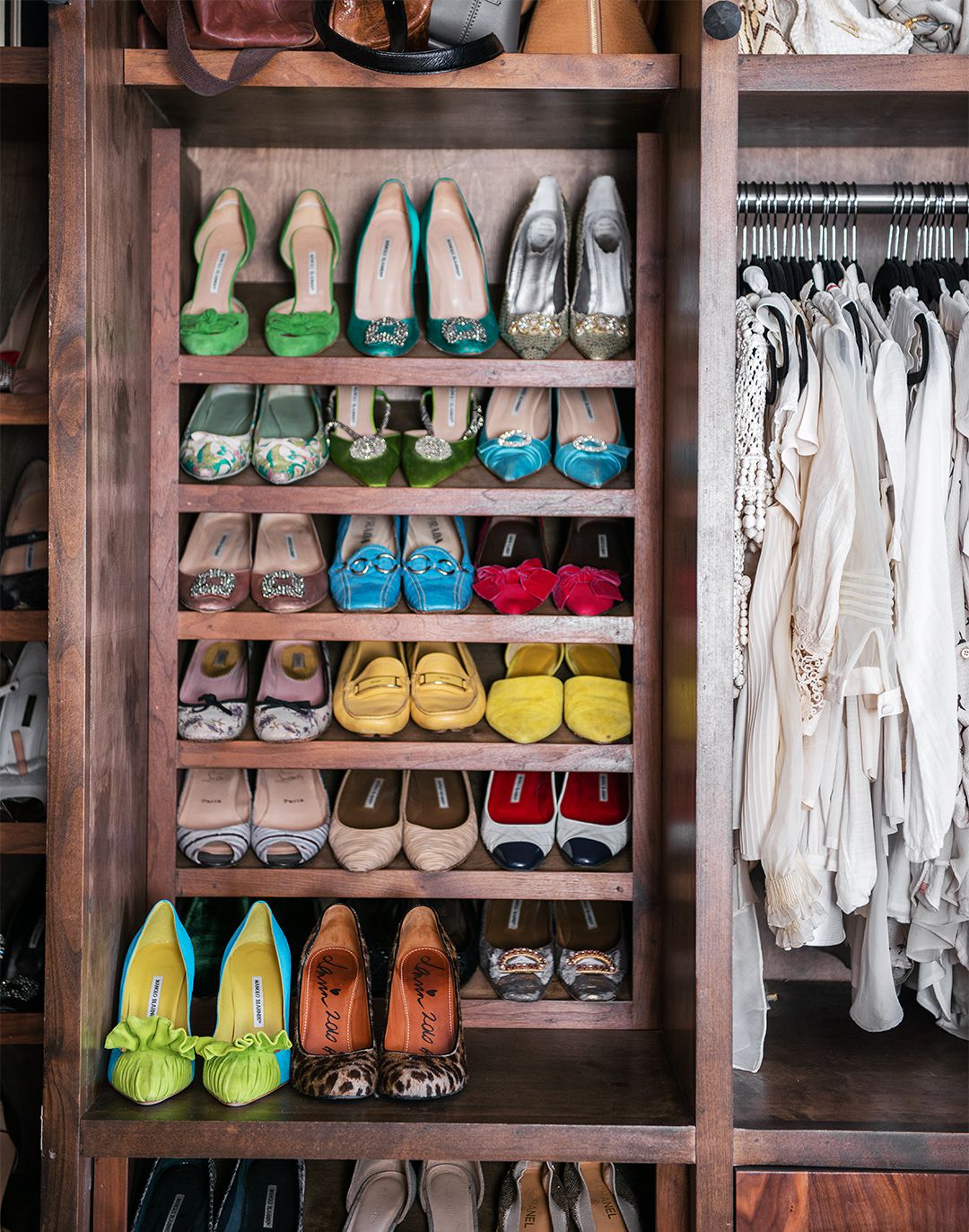
21) Create a “shoe strategy” instead of a shoe pile
Choose one: shelf cubbies, a vertical rack, clear boxes, or an over-the-door shoe organizer. The best shoe storage is the one that matches how you actually
wear shoesdaily pairs front and center, special-occasion shoes up higher.
22) Give boots structure (so they don’t flop into a sad heap)
Boot shapers, rolled magazines, or inexpensive inserts keep tall boots upright and protect the shafts from creasing. Store them where they won’t be crushed
by heavier items.
23) Stand handbags upright with shelf dividers or inserts
Bags collapse when stacked like pancakes. Use dividers to separate them, or add soft inserts to help keep their shape. Keep a “daily bag” spot so you’re not
rotating purses like a game show prize wheel.
24) Use multi-tier hangers for pants or accessories
Tiered or cascading hangers can hold multiple pairs of pants or accessories in one vertical footprint. They’re especially useful if you’re short on rod space
and long on “how did I end up with this many trousers?”
25) Add a valet hook or pull-out rod for outfit planning
A pull-out valet rod (or even a sturdy hook) lets you hang tomorrow’s outfit or set aside dry cleaning. It’s a small touch that makes mornings smoother and keeps
“in-progress outfits” off the floor.
26) Put a hamper in the closet (if space allows)
A lidded hamper keeps laundry contained and prevents “the chair” from becoming a second closet. If space is tight, choose a slim hamper or a hanging laundry bag.
27) Use a dedicated bin for returns, repairs, and donations
Create one spot for items leaving your life: returns, tailoring, donations. When the bin is full, it’s your cue to take actionotherwise it becomes a museum of
good intentions.
28) Try a simple color system after categories
Organize by type first, then color within each type. It looks great and speeds up getting dressed because your brain can scan quickly. (Color-coding the entire
closet without categories often turns into “Where are my black jeans?!”)
29) Store “backstock” items separately
Extra hangers, travel pouches, gift wrap, spare buttonsthese don’t belong in prime clothing space. Keep them in one labeled bin on the top shelf so they’re available
but not in the way.
30) Upgrade lighting so you can actually see your clothes
Stick-on LED puck lights or strip lighting can transform a dark closet. Better visibility means fewer accidental outfit grabs and fewer “I swear this looked navy in there”
moments.
31) Use a rolling cart in a walk-in closet for flexible storage
If you have floor space, a slim rolling cart can hold accessories, folded tees, or hair tools. It’s easy to reconfigure and makes seasonal swaps or reorganizing far less annoying.
32) Add drawer inserts for jewelry and small valuables
Compartment inserts keep jewelry from tangling and make it easy to find everyday pieces. If you don’t have drawers, a small divided tray on a shelf works, too.
33) Keep fabrics fresh with smart materials
Breathable storage, cedar accents, and moisture control (especially in humid climates) help prevent odors and protect clothing. If your closet is prone to dampness, airflow and
dry storage matter as much as bins and shelves.
34) Build a “maintenance routine” that takes five minutes
The secret to a clutter-free closet isn’t a perfect setupit’s a tiny habit. Once a day (or a few times a week), rehang what fell, return stray items to their zones, and keep the
floor clear. Five minutes beats five hours.
How to Keep Your Closet Organized (Even When Life Gets Messy)
- Use the “one in, one out” approach for categories that overflow fast (tees, workout gear, shoes).
- Schedule a seasonal reset (4 times a year) to rotate clothing and donate what you didn’t wear.
- Keep “like with like” so you don’t create random micro-piles that become permanent residents.
- Make the easy choice the right choice: daily items at eye level, occasional items up high.
- Stop buying organizers before you declutter. Storage is not a magic trick; it’s a container for decisions you’ve already made.
Experiences That Make These Closet Organization Ideas Actually Stick (About )
In real homes, closet organization usually doesn’t fail because people “did it wrong.” It fails because the system doesn’t match how the household behaves. One of the most common
experiences: someone organizes the closet like a magazine photoperfect stacks, matching bins, a single sweater folded as if it’s never met a human body. Then Monday morning hits,
and the closet meets the reality of rushing, laundry backlog, and a jacket being grabbed with one hand while a coffee is balanced with the other.
The closets that stay clutter-free tend to share a few lived-in truths. First: the fastest path back to messy is unclear categories. If everything is “miscellaneous,”
you’ll never put things away correctly because “away” is not defined. People who succeed usually label even simple zones“Workout,” “Work Tops,” “Denim,” “Scarves”so the brain can
file items without thinking. It feels almost silly until you notice you’re no longer creating piles because you can’t decide where something belongs.
Second: the best upgrades are the ones you feel immediately. Switching to slim hangers and adding a second rod are popular because the payoff is instant: more space,
fewer items sliding off, easier scanning. That immediate win creates momentum. Many people also report that once their daily favorites are placed at eye level, the “closet frustration”
drops fastbecause getting dressed stops feeling like a scavenger hunt.
Third: the floor is not a storage plan. In many closet makeovers, the “after” moment happens when the floor becomes empty. It’s not just aesthetics; it’s function.
Floors invite doom pilesshoes, bags, “wear again” clothes, laundry, and that one sweater that’s neither clean nor dirty (the Swiss Army sweater). Closets that stay tidy usually include
a hamper, a “wear again” hook, or a small basket specifically for in-between items. When there’s a designated landing spot, clutter doesn’t spread.
Fourth: maintenance beats perfection. People who keep closets organized often treat it like brushing teethquick, routine, not heroic. The five-minute reset works because
it prevents small disorder from becoming a weekend project. One common experience is setting a recurring “seasonal swap” ritual: when temperatures shift, off-season pieces move up high or
out of the closet, and a donation bag gets filled. The closet stays aligned with the season, which keeps it from feeling overstuffed.
Finally: the most successful closets reflect real identity. Not fantasy identity. If you mostly wear athleisure, give it prime space. If you rarely wear heels, they
don’t need the best shelf. When the closet matches actual habits, organization stops feeling like work and starts feeling like relieflike your home is quietly helping you instead of
judging you from behind a sliding door.