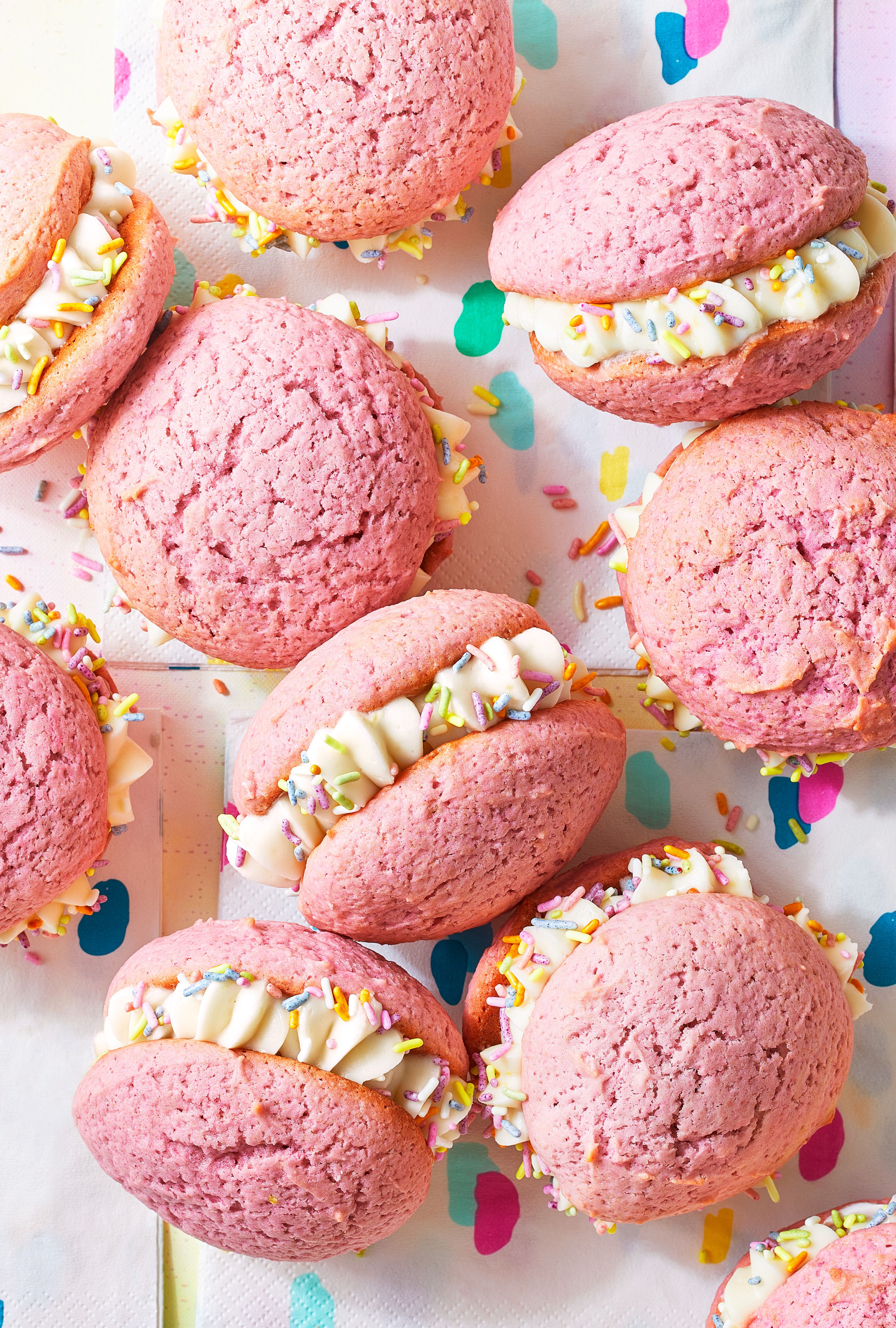

Some desserts walk into a room quietly. Raspberry-lemon whoopie pies do not. They show up looking cute, smelling like sunshine, and acting like they own the dessert table. Honestly, they kind of do. With their soft cake-like shells, bright citrus filling, and berry flavor that keeps everything from becoming too sweet, these treats hit that rare sweet spot between nostalgic comfort food and polished bakery case drama.
If you have never made whoopie pies before, do not let the name fool you. There is no pie pan, no lattice crust, and no need to behave like you are auditioning for a tense baking competition. A whoopie pie is basically a sandwich cookie that thinks it is a tiny cake. Two tender rounds are baked until just set, then filled with something creamy and dreamy. In this version, raspberries bring freshness and color, while lemon adds the sharp little wink that keeps every bite lively.
That combination is exactly why raspberry-lemon whoopie pies feel so irresistible. Raspberry brings jammy sweetness and a little tartness. Lemon brings aroma, brightness, and that clean finish that makes you reach for a second pie while pretending you are only “cutting one in half to taste.” Sure. We all know how that story ends.
Why Raspberry-Lemon Whoopie Pies Work So Well
Great desserts are usually about contrast, and this one understands the assignment. The shells are soft and tender instead of crisp, which makes them feel more like handheld snack cakes than cookies. The filling is creamy, usually cream cheese- or butter-based, and the lemon keeps it from tasting heavy. Then the raspberry element cuts through the richness and gives the whole dessert a fresh, fruity personality.
That balance matters. When bakers talk about a dessert being “too sweet,” what they often mean is that it lacks tension. Raspberry and lemon fix that fast. Lemon zest delivers concentrated citrus aroma without watering down the batter. Lemon juice adds brightness in the filling. Raspberry can appear as mashed fresh berries, strained puree, seedless jam, or preserves, depending on whether you want a rustic look or a smoother finish.
In other words, raspberry-lemon whoopie pies are not just pretty pink desserts for spring photos. They are strategically delicious.
What Makes a Good Whoopie Pie Texture?
The best whoopie pies are soft, moist, and fluffy enough to feel cake-like, but sturdy enough to hold filling without sliding into a glorious but messy collapse. That texture usually comes from a batter that behaves more like cake batter than cookie dough. Ingredients such as buttermilk, milk, sour cream, butter, shortening, or oil are often used to create tenderness and moisture.
This is where beginners sometimes go rogue. They think, “It looks like a cookie, so I should bake it like a cookie.” But whoopie pies are not aiming for crispy edges and chewy centers. They should stay pillowy. Overbaking is the fastest way to lose that soft texture. Once the tops are set and spring back lightly, they are done. If you wait for deep browning, your whoopie pies may still be edible, but they will have the emotional depth of cardboard.
The Role of Buttermilk, Baking Soda, and Fruit
Many successful whoopie pie recipes use buttermilk or another tangy dairy ingredient because it contributes tenderness and works well with baking soda. That combination helps create a gentle lift and a soft crumb. Raspberry adds moisture too, but it needs a little respect. Too much wet fruit can loosen the batter and throw off the structure. That is why many bakers either use a small amount of mashed berries in the cakes or save most of the raspberry flavor for the filling.
If you want a smoother, more bakery-style finish, raspberry jam or seedless preserves are your friend. If you want a more homemade look with visible berry flavor, fresh raspberries can be wonderful. Both approaches work. One says “professional pastry case,” and the other says “my kitchen smells amazing and I regret nothing.”
The Best Filling for Raspberry-Lemon Whoopie Pies
The filling is where the lemon really gets to show off. A cream cheese filling is especially popular because it adds tang, body, and a slightly cheesecake-like flavor that pairs beautifully with raspberry. Butter helps make the texture smooth and pipeable, while powdered sugar adds sweetness and structure. Lemon zest is what makes the filling smell incredible; lemon juice is what makes it taste alive.
You can go in a few directions here:
1. Lemon Cream Cheese Filling
This is the classic move. It is tangy, rich, and balanced. It also firms up nicely if chilled for a bit before assembly, which is helpful if your kitchen is warm or your patience is not.
2. Raspberry Buttercream with Lemon in the Cakes
This flips the script. The cakes carry the citrus, while the filling leans more berry-forward. It is a smart choice if you want a pink filling that looks dramatic without needing food coloring.
3. Marshmallow-Style Filling with Raspberry Accents
If you love classic whoopie pie nostalgia, a fluffier marshmallow-style filling can work too. A swipe of raspberry jam adds fruitiness, while lemon can be layered in lightly so the result stays playful rather than overly sharp.
Whichever route you choose, the filling should be thick enough to hold its shape. If it is too loose, the pies slide. If it is too stiff, you lose that soft, creamy bite. Dessert should be fun, not a hand-strength competition.
How to Make Raspberry-Lemon Whoopie Pies Taste Bakery-Level Good
Anyone can make a decent batch. The real magic is in the small decisions that take them from “nice” to “where did you buy these?” Here is what matters most.
Use Lemon Zest Generously
Lemon juice is bright, but zest is where the fragrance lives. Rub the zest into sugar before mixing if you want even bigger citrus aroma. That little move wakes up the whole dessert.
Keep the Cakes Uniform
Use a cookie scoop or piping bag so the rounds are similar in size. Matching tops and bottoms makes assembly easier and gives the finished whoopie pies a polished look. It also prevents that awkward moment when one pie looks elegant and the next looks like it lost a fight.
Do Not Overmix
Once the dry ingredients go in, mix only until combined. Overmixing can make the cakes tougher than they need to be. You want tender little cake rounds, not edible hockey pucks.
Let Them Cool Completely
This sounds obvious until someone gets impatient and pipes filling onto warm cakes. Then the filling melts, the pies slide, and everyone suddenly learns a life lesson. Cool them fully before assembly.
Chill the Filling if Needed
If your lemon filling feels too soft, refrigerate it for 15 to 30 minutes before piping. A slightly chilled filling is easier to control and gives a cleaner sandwich.
Serving Ideas and When to Make Them
Raspberry-lemon whoopie pies are one of those desserts that fit almost anywhere. They work for baby showers, spring brunches, Easter dessert tables, Valentine’s Day, bridal showers, tea parties, summer picnics, and bake sales. They also work for standing in your kitchen in socks at 10:43 p.m. asking yourself whether having dessert before bed counts as self-care. I vote yes.
Because they are individually portioned, they are easier to serve than layer cake and less fussy than tarts. They travel well when chilled, and they look festive without requiring advanced decorating skills. A light roll in sprinkles, a dusting of powdered sugar, or a few freeze-dried raspberry crumbs around the edges can make them look extra finished.
Common Mistakes to Avoid
Making the Batter Too Thin
If you add too much fruit puree or too much lemon juice to the cake portion, the rounds can spread too much. The batter should be scoopable, not pourable like pancake batter.
Using Watery Raspberries in the Filling
Fresh raspberries are lovely, but they contain a lot of water. If you blend them straight into frosting without thinking, the filling can become loose. Straining the puree or using seedless jam can help control texture.
Skipping Salt
A tiny pinch of salt in both the cakes and the filling helps balance sweetness and sharpen flavor. Without it, the dessert can taste flat.
Assembling Too Far Ahead Without Storage Planning
Because the filling contains dairy and the cakes are soft, storage matters. Keep assembled whoopie pies in the refrigerator if you are not serving them right away. Let them sit briefly at cool room temperature before eating for the best texture.
Flavor Variations Worth Trying
Once you fall in love with raspberry-lemon whoopie pies, it is hard not to start plotting spin-offs. Here are a few variations that stay close to the original spirit:
- White chocolate raspberry-lemon whoopie pies: add a little melted white chocolate to the filling for extra richness.
- Vanilla raspberry-lemon whoopie pies: keep the cakes vanilla and let the filling do all the citrus work.
- Lemon poppy seed whoopie pies with raspberry filling: a great choice if you want more texture and a brunch-friendly feel.
- Mini whoopie pies: perfect for dessert platters, showers, and parties where people say they only want “a tiny bite” and then circle back three times.
Why This Dessert Has Staying Power
Whoopie pies have old-school American charm, and that is part of their appeal. They feel nostalgic without being boring, and they are flexible enough to take on modern flavors. Raspberry and lemon make them feel lighter, brighter, and more seasonal than classic chocolate versions, while still keeping that familiar soft sandwich format people love.
They also solve a common dessert problem: some people want cake, some want cookies, and some want frosting. Raspberry-lemon whoopie pies calmly say, “Why are you fighting when you could have all three?” That is the kind of leadership we need from dessert.
Experiences With Raspberry-Lemon Whoopie Pies: What I Learned From Baking, Serving, and Sneaking Extras
The first time I made raspberry-lemon whoopie pies, I expected them to be cute. I did not expect them to be the dessert equivalent of a personality test. Within ten minutes, everyone in the kitchen had an opinion. One person wanted more lemon. Another wanted more raspberry. Someone else asked whether they were cookies, cakes, or “those little sandwich things,” which is technically not wrong but also not helpful. What I learned fast is that these treats create instant conversation, partly because they look cheerful and partly because the flavor feels familiar and fresh at the same time.
My earliest batch taught me the importance of restraint. I got excited and added extra raspberry puree to the filling because I wanted that big berry flavor. The result was delicious but a little too soft, so the whoopie pies slid around like they were on an ice rink. Since then, I have had better luck using a thicker raspberry component such as seedless jam, reduced puree, or finely crushed freeze-dried berries when I want stronger fruit flavor without extra moisture. That one small adjustment made the filling easier to pipe and the finished pies much easier to stack, store, and serve.
I also learned that lemon is the flavor that makes people pause mid-bite and say, “Wait, what is that?” In the best way. Raspberry is recognizable right away, but lemon is what gives the dessert lift. When I used only lemon juice, the flavor was pleasant but quieter. When I started using plenty of zest, the whole dessert became more aromatic and noticeably brighter. The difference was not subtle. It was the kind of glow-up that makes a dessert go from “nice homemade treat” to “you should absolutely bring these to every spring gathering from now until the end of time.”
Another thing I noticed is that people love the texture contrast more than they expect to. The soft shells feel almost like mini sponge cakes, while the filling gives that creamy center that makes the dessert feel generous. They are easy to eat without a fork, which means guests tend to grab one casually, then another with a little more intent. Unlike towering layer cakes, whoopie pies are low-pressure. They do not require perfect slicing, and nobody ends up with a tragic frosting landslide on a paper plate.
As a make-ahead dessert, they are surprisingly practical. I have had the best results baking the cakes one day, storing them once cooled, and filling them the next day. That schedule makes assembly feel easy instead of chaotic. It also gives the lemon and raspberry flavors a little time to settle in. In fact, I think they are often even better after a short chill, when the filling firms up slightly and the cakes stay tender. Served cold, they feel neat and polished. Served after a few minutes at room temperature, they feel softer and a little more luxurious.
Maybe my favorite thing about raspberry-lemon whoopie pies is that they seem to make people happy before they even taste them. The color combination feels cheerful, the size is inviting, and the whole dessert has a playful energy. They are not trying to be serious restaurant pastry. They are trying to be delightful. And when a dessert can be charming, delicious, portable, and just dramatic enough to earn compliments without demanding a culinary degree, that is a pretty sweet deal.
Conclusion
Raspberry-lemon whoopie pies are the kind of dessert that checks every box: soft, bright, creamy, portable, and just fancy enough to impress without becoming fussy. They combine the nostalgic comfort of classic whoopie pies with a fresher, fruitier flavor profile that feels perfect for spring and summer, but honestly tastes good any time your sweet tooth wants something cheerful.
If you love desserts that balance sweetness with tang, look beautiful on a platter, and disappear suspiciously fast, raspberry-lemon whoopie pies deserve a permanent place in your baking rotation. Make them for a party, a brunch, a holiday, or a random Tuesday when life needs more lemon zest. No judgment here.