
Modern life is complicated. Work has invented new phrases for doing exactly what your contract says. Social media platforms keep borrowing one another’s personalities. Pop culture requires enough background knowledge to qualify as a college elective. Meanwhile, taking a shower can feel like an open-world role-playing game with twelve side quests and a mysteriously missing towel.
Fortunately, Canadian cartoonist Jean-Nicolas Bourdon, the creator of WTFramecomics, has developed a more entertaining way to interpret the chaos. His short, funny comics begin with familiar situations, encourage readers to predict the outcome, and then cheerfully drive that prediction into a ditch.
The collection of 30 comics is not a guide to the world in the traditional sense. It will not explain international tax law, repair your plumbing, or tell you why one sock disappears in the dryer. It does, however, reveal something surprisingly accurate about work culture, internet behavior, neurodivergence, social expectations, entertainment, and the strange shortcuts people use to make sense of everyday life.
Who Is the Artist Behind WTFramecomics?
WTFramecomics is the work of Montreal-based artist Jean-Nicolas Bourdon. He has a background in 3D animation and has spent much of his life drawing characters and doodling. Bourdon has also studied cognitive science, an especially fitting subject for an artist whose jokes frequently explore perception, assumptions, language, and the spectacularly unreliable machinery inside the human head.
Bourdon began developing comics with his wife through a project originally known as Aspigurl, later renamed Lily Spectrum. WTFramecomics followed several months afterward. He has explained that once an idea is fully formed, an individual comic may take approximately one to four hours to complete. The difficult part is not always drawing the panels; it is translating a wandering thought into a visual sequence that readers can immediately understand.
The artist has also discussed how ADHD affects his creative process. Random thoughts and unexpected associations can become raw material for jokes. That does not mean ADHD automatically grants artistic superpowers—research on ADHD and creativity is far more nuanced—but Bourdon’s personal method clearly benefits from connecting ideas that most people would leave in separate mental folders.
His fictional world includes recurring figures, ordinary people trapped in ridiculous situations, personified apps, supernatural troublemakers, and Vlad the Vegan Vampire. Vlad alone is a wonderfully inefficient contradiction: an immortal predator forced to reconsider the entire traditional vampire menu.
Research basis: artist biography, working process, ADHD comments and recurring characters.
Why These 30 Funny Comics Feel Like a Guide to Modern Life
Comics combine images, dialogue, timing, facial expressions, and empty space to communicate more than prose or pictures could accomplish independently. A raised eyebrow may function as an entire paragraph. A silent third panel can make readers realize that something has gone terribly, wonderfully wrong.
That economy is central to WTFramecomics. Most strips provide only enough information to establish a recognizable reality. The final panel then exposes an alternative interpretation hiding beneath it. The result is a collection that resembles a crooked encyclopedia: every entry begins with something you know and ends with something you probably should have seen coming.
Research basis: the Library of Congress, Smithsonian and Stanford describe comics as a form of visual and sequential storytelling in which words and images work together.
Lesson One: Work Culture Is Mostly Vocabulary Wearing a Tie
“Quiet Quitting” Meets an Extremely Literal Vampire
One of the collection’s sharpest workplace comics features a character proudly explaining his experiment with quiet quitting. Vlad initially assumes this means abandoning work and disappearing on the boss. Instead, the employee describes arriving and leaving on time, refusing unpaid labor, and completing the duties listed in the job description.
Vlad’s conclusion is devastatingly simple: that sounds like having a job.
The joke works because it strips a fashionable term of its dramatic packaging. The comic does not pretend disengagement and burnout are imaginary. Instead, it questions why ordinary professional boundaries can be treated as rebellion. Gallup has described quiet quitting as psychological detachment or minimum-required effort, but public discussions have often blurred the line between disengagement and employees declining to donate their evenings to a company that gave them a branded coffee mug.
Research basis: Gallup’s analysis of quiet quitting and employee disengagement.
The Senior Artist Who Is Simply Senior
Another strip transforms a job title into a literal description. An applicant arrives for a senior artist interview looking like an elderly painter carrying a bundle of brushes. The hiring team must explain that “senior” refers to professional experience, not the number of candles required on the candidate’s birthday cake.
It is an uncomplicated pun, but it highlights a wider feature of office language. Titles that sound precise often depend entirely on context. “Senior,” “associate,” “specialist,” and “strategic” can mean radically different things from one company to another. Sometimes a senior specialist is a respected authority. Sometimes the title means the company could not provide a raise but found an extra adjective behind the copier.
Lesson Two: The Internet Is a Group Project With No Supervisor
When Instagram Wants to Be TikTok
WTFramecomics personifies Instagram as a platform desperately showing off dance videos and attempting to imitate TikTok. A human character finally tells it to stop trying to become another app.
The humor captures a common frustration with social platforms: distinctive services gradually adopt the same features. Short videos appear everywhere. Shopping appears everywhere. Algorithmic recommendations appear everywhere. Eventually, opening five different apps can feel like entering the same mall through five differently colored doors.
The joke also understands that social media is powered by imitation. Platforms copy successful formats, creators respond to trending sounds, and audiences rapidly develop a shared visual vocabulary. Research from Pew Research Center has found that humor, viral entertainment, and pop-culture content occupy a substantial part of social media activity. WTFramecomics does not merely post jokes on the internet; it makes jokes about the ecosystem distributing them.
Research basis: Pew Research Center reporting on humor, entertainment and pop culture across social platforms.
TikTok, Hamburgers, and the Collapse of Attention
In another comic, Vlad checks TikTok and is immediately overwhelmed by a storm of hamburgers. The exaggeration is visually efficient: one glance at a phone becomes complete sensory occupation. It resembles the experience of watching one cooking clip and discovering that the algorithm has decided your entire identity is now “person emotionally invested in melted cheese.”
A related strip has an older character complaining that young people only want to go viral and get rich. Seconds later, he asks for help scratching a pile of lottery tickets. The contradiction is the point. Every generation develops its own fantasy of instant success; only the interface changes. One generation buys a ticket. Another uploads a dance. Both are politely asking probability to overlook the rules.
Lesson Three: Everyday Tasks Are Not Equally Simple for Everyone
The ADHD Adventure Map
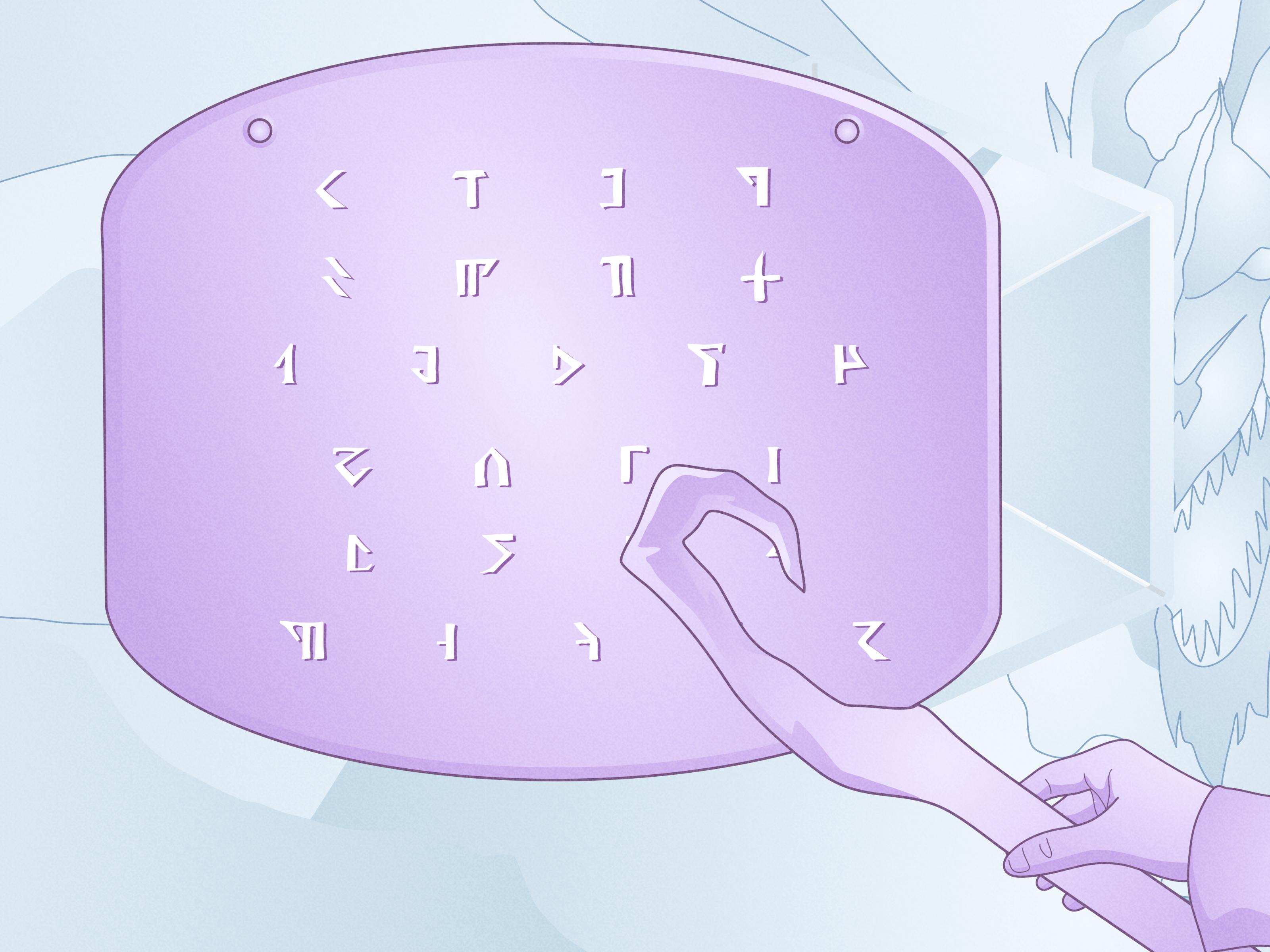
One of the most memorable images in the collection depicts the process of taking a shower as an enormous fantasy map. The route travels through locations such as Procrastination Point, Forgotten Chores Shore, Distractions Deep, Hyperfixation Hills, and the Sea of Social Stigma. Executive-function checks appear along the path like dice rolls in a tabletop game.
From the outside, the task is tiny: enter bathroom, take shower, emerge cleaner. Internally, however, it may involve changing activities, collecting supplies, estimating time, regulating attention, remembering each step, and overcoming the mysterious gravitational pull of the nearest comfortable chair.
The comic succeeds because it visualizes invisible effort without becoming a lecture. It does not argue that every person with ADHD experiences tasks identically. It simply shows why “it is easy” may be a description of the speaker’s brain rather than a universal fact.
Studies exploring ADHD and creativity have produced mixed findings. Some research connects certain ADHD traits with divergent thinking, while clinical experiences vary widely. Bourdon wisely presents his own perspective through metaphor rather than turning a personal comic into a medical rulebook.
Research basis: reviews and studies on ADHD, divergent thinking and creativity emphasize mixed, context-dependent findings.
“Try Harder” Is Not an Instruction Manual
Another comic attacks useless advice by applying it to breathing. A struggling person is told to try harder. A supernatural character then demonstrates the absurdity by dunking the adviser’s head underwater and recommending that he breathe harder.
The gag is dark, direct, and effective. Effort matters, but effort alone cannot remove every obstacle. A person may need a different method, more time, treatment, accommodations, better tools, or actual assistance. Telling someone to try harder without understanding the problem is not coaching. It is motivational wallpaper.
Lesson Four: Language Is a Trap We Happily Enter
Breaking a Leg to Escape a Presentation
When an anxious character mentions an upcoming presentation, Vlad offers the traditional theatrical encouragement to break a leg. The next scene reveals that the advice has been interpreted as a practical strategy. The injured presenter now has an excellent reason to stay home.
This is classic literalization: an idiom is treated as a direct command. The audience understands both meanings, so the final panel rewards the reader for switching between them. It also confirms what many anxious speakers have privately suspected—a minor orthopedic emergency would reduce the pressure considerably.
The Glass Is Half Empty, Mostly Empty, and in Need of a Refill
Another character is told that his glass appears half empty. He responds with an elaborate analysis involving precise measurements, chemical elements, and the empty space inside atoms. His explanation grows so detailed that the original speaker can only ask whether he wants more water.
The joke captures overthinking in its purest form. A simple metaphor is dissected until it becomes a science documentary. This is also how many online arguments develop: someone uses a harmless figure of speech, and three hours later strangers are debating molecular physics in the comments.
Lesson Five: Pop Culture Is the New Shared Mythology
Apples, Anime, and Excessive Power Levels
A hospital scene begins with an apparent medical crisis involving a large quantity of apples. The phrase “apple level” then transforms into an anime-style power measurement, complete with a glowing character and an over-the-top reading beyond 9,000.
The strip combines two cultural references that should not naturally occupy the same emergency room: the saying about apples keeping doctors away and a famous style of exaggerated battle ranking. The pleasure comes from recognizing both pieces just before the joke snaps them together.
The Mermaid Debate Takes an Unexpected Turn
Another comic begins with a familiar argument about the casting of a dark-skinned mermaid. A ghostly figure rejects the racial complaint, but the conversation then shifts toward a much stranger question: why does the character combine the scaled lower body of a fish with a horizontal tail associated with marine mammals?
The comic redirects selective demands for “scientific accuracy.” Anyone demanding biological realism from a singing mermaid must be prepared for the discussion to continue into anatomy, respiration, underwater hair physics, and the labor practices of talking crustaceans.
Superheroes, Adaptations, and Franchise Mathematics
WTFramecomics also plays with superhero universes. One strip compares Batman and Superman with a Marvel character who essentially combines elements of both. The joke relies on visual design, company rivalry, and the audience’s familiarity with superhero formulas.
Elsewhere, the collection pokes at live-action remakes, post-apocalyptic entertainment, and recognizable game or television properties. A particularly effective strip turns mushrooms found in a refrigerator into an emergency requiring the protective equipment of a fungal-apocalypse survivor. It is the correct response to a forgotten food container that has begun establishing its own government.
These references are not decorative. They act as narrative shortcuts. A familiar costume, logo, or phrase allows Bourdon to establish an entire fictional universe in a single panel. The reader supplies the remaining context.
Research basis: the 2023 collection was specifically described as expanding its use of pop-culture references and absurd everyday themes.
How the Unexpected Endings Work
Misdirection Creates the Setup
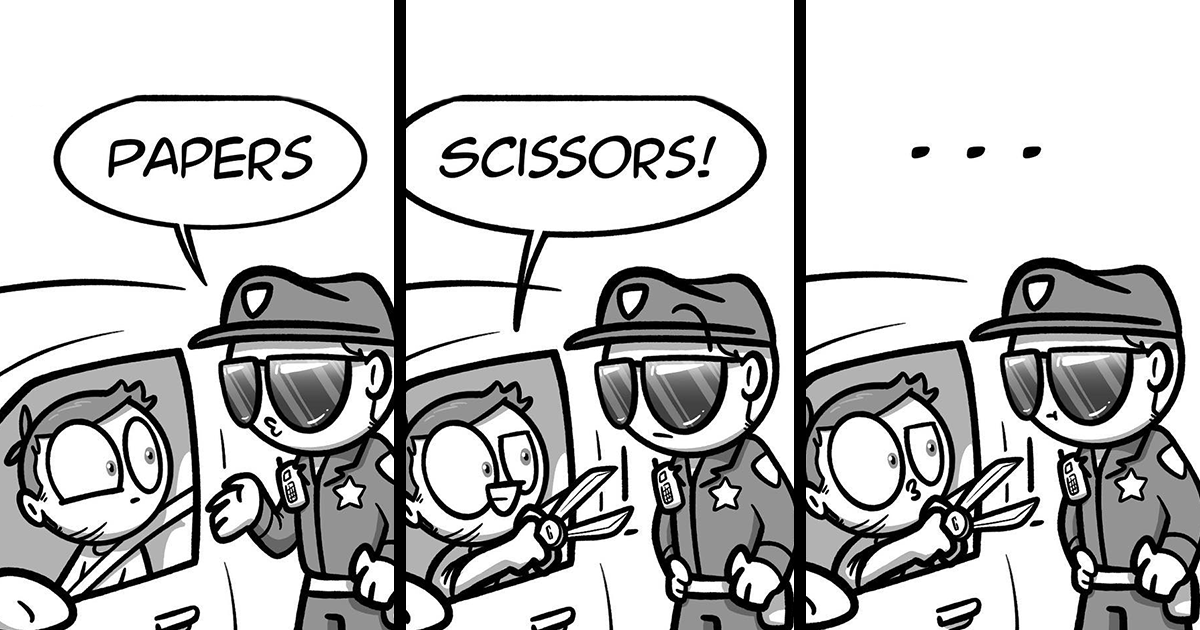
Most WTFramecomics strips begin with a recognizable script. A police officer approaches a driver. Someone attends a job interview. A friend offers encouragement. A person complains about social media. Readers unconsciously predict the next step because they have encountered similar situations before.
The Final Panel Rewrites the Rules
The punchline introduces an alternative rule: rock-paper-scissors becomes a police confrontation, a pyramid scheme removes its disguise and introduces itself as capitalism, or an “alpha male” is replaced by a more stable version after beta testing.
Researchers studying humor frequently discuss incongruity, surprise, and resolution. A joke creates a conflict between what the audience expects and what appears. The reader then discovers a new interpretation that makes the strange ending coherent. WTFramecomics repeats this mechanism with impressive consistency: establish the normal explanation, reveal the ridiculous explanation, and let the reader’s brain perform a tiny emergency recalculation.
Research basis: humor research identifies surprise, incongruity and reinterpretation as important components of joke comprehension.
Simple Artwork Protects the Timing
The black-and-white visual style keeps attention on expressions, poses, and dialogue. Large eyes communicate suspicion, confusion, panic, and resignation with minimal detail. Selective color is often reserved for apps, supernatural figures, special effects, or references that need to stand out.
The layouts are similarly readable. The audience rarely needs to search for the correct panel order. That clarity matters because comedy depends on timing. A confusing arrangement can expose the punchline too early or make the setup feel like homework.
What the Collection Says About the Way We See the World
The 30 comics suggest that people do not experience reality directly. We experience interpretations of it. Employers interpret boundaries as disengagement. Older generations interpret new technology as laziness. Social platforms interpret successful competitors as instruction manuals. An overthinker interprets half a glass of water as a doorway into atomic theory.
WTFramecomics makes those interpretations visible by pushing them one step beyond reason. The final panel is usually absurd, yet the thought pattern behind it remains recognizable. That is why the jokes feel relatable even when they involve vampires, ghosts, superheroes, personified apps, or post-apocalyptic warriors cooking toilet paper for dinner.
The strips also reveal why humor can make complicated experiences easier to discuss. A comic about executive dysfunction may invite recognition without demanding a clinical explanation. A workplace joke can criticize a trend without becoming a management seminar. Humor creates enough distance for readers to examine uncomfortable subjects while still enjoying the experience.
The American Psychological Association notes that humor and laughter can support coping and help people manage stress, although no comic should be treated as a substitute for professional care. Sometimes laughter does not solve the problem. It simply makes the problem stop standing on your chest for thirty seconds, which is still a respectable achievement.
Research basis: APA guidance recognizes humor and laughter as potentially helpful elements of healthy stress management.
How to Read the 30 WTFramecomics Without Missing the Best Jokes
Pause Before the Final Panel
Try predicting the ending. The wrong prediction is part of the entertainment because it reveals how effectively the setup guided your assumptions.
Watch the Background
Logos, costumes, labels, maps, and small props frequently carry secondary jokes. A tiny detail may identify the pop-culture reference before the dialogue does.
Notice When a Metaphor Becomes Physical
Many strips convert abstract phrases into literal objects or actions. Pyramid schemes become characters with pyramid heads. Attention problems become an adventure map. A DJ appears inside someone’s head to interrupt a conversation with maximum volume and minimal social usefulness.
Expect the Joke to Target More Than One Side
Bourdon often begins with an obvious cultural position and then redirects the criticism. A comic may appear to mock young people before exposing an older character’s hypocrisy. It may reject one bad argument and then discover an entirely different absurdity. The target is frequently inconsistency itself.
Reader Experience: Spending Time Inside the WTFramecomics Universe
Reading a large batch of WTFramecomics feels less like following one continuous story and more like visiting a city where every building operates under a different pun. At the first address, a vampire explains workplace boundaries. Next door, Instagram is going through an identity crisis. Around the corner, someone has transformed a minor household task into a fantasy quest requiring executive-function dice. None of these events belong together, yet Bourdon’s characters react to them with the same exhausted expressions ordinary people use when the self-checkout machine announces an “unexpected item” for the fifth time.
The strongest experience is the split second between setup and realization. You begin each strip feeling confident that you understand the scene. Then a detail changes the meaning of everything that came before it. The reaction is often not explosive laughter but a smaller, more satisfying recognition: a quick snort, a reluctant grin, or the internal admission that the comic successfully lured you into a trap made of four rectangles and several speech bubbles.
The ADHD-related comics can feel particularly personal for readers who struggle with executive function, distraction, hyperfixation, or the difficulty of switching tasks. The enormous shower map is funny because its scale is ridiculous, but it can also feel validating. What appears to be one task from the outside may contain a chain of decisions and transitions. Seeing that internal process transformed into a role-playing adventure makes the experience easier to communicate. Instead of producing a ten-minute explanation, a reader can mentally point to the map and say, “There. I am currently lost near Distractions Deep.”
The pop-culture jokes create a different type of participation. Recognizing a reference to superheroes, anime, a video game, a television adaptation, or a viral platform makes the reader a collaborator. The comic supplies the panels, but the audience contributes stored knowledge. Readers who recognize every reference may feel rewarded; readers who miss one can usually enjoy the surface joke anyway. That balance prevents the strips from becoming trivia tests wearing comedy costumes.
Binge-reading the collection also reveals recurring concerns beneath the silliness. People misunderstand one another because they assume their personal experience is universal. Institutions create fashionable labels for old behavior. Technology encourages imitation while pretending to offer individuality. Advice sounds wise until someone applies it literally. Pop culture shapes the metaphors through which people discuss real problems. Bourdon does not deliver these observations with a raised finger or a concluding moral. He hands them to a vampire, a ghost, or a confused person with enormous eyes and lets the absurdity make the argument.
The overall experience is playful rather than cynical. Even when the comics address burnout, social stigma, hypocrisy, online conflict, or generational complaints, they rarely feel hopeless. The world is ridiculous, but ridiculousness can be examined, redrawn, and shared. A frustrating thought can become a visual gag. An awkward experience can become a punchline. A problem may remain unsolved, but at least it now has better character design.
Conclusion: A Crooked but Useful Map of Modern Life
A Guide To Understanding The World In 30 Comics By “WTFramecomics” works because Jean-Nicolas Bourdon understands how quickly readers build expectations. He presents a familiar workplace complaint, social interaction, idiom, app, or entertainment reference and then replaces the expected conclusion with a more literal, exaggerated, or absurd interpretation.
The comics are easy to read, but they are not empty. Beneath the vampires, supernatural interruptions, internet mascots, and post-apocalyptic toilet-paper cuisine are observations about labor, attention, anxiety, hypocrisy, technology, and the stories people tell themselves. WTFramecomics may not explain the whole world, but it explains one important part of it: human beings are strange, language is dangerous, and nearly every serious situation is one unexpected panel away from becoming a joke.