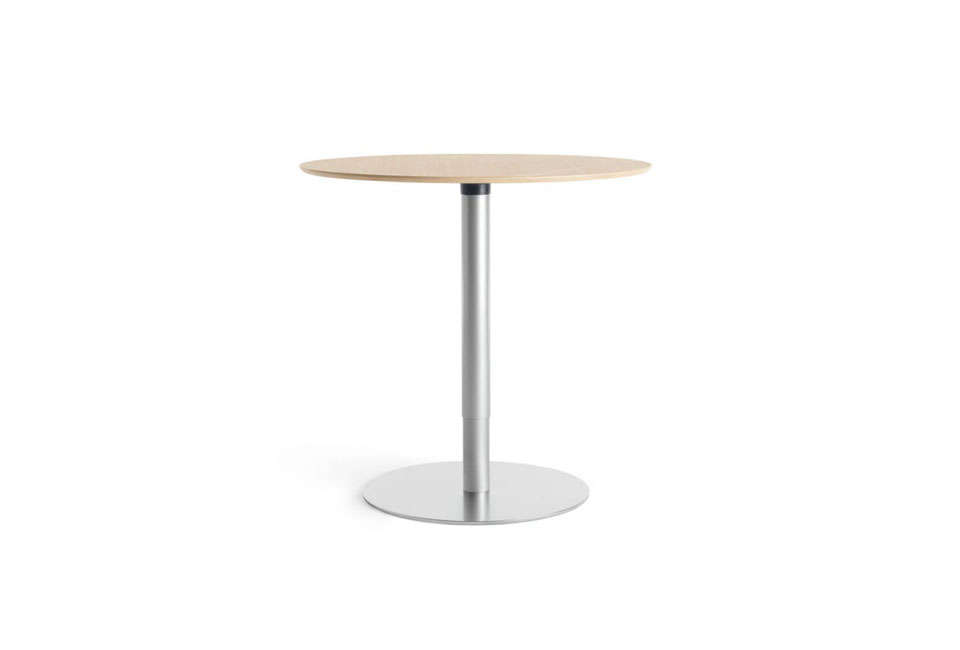

The Brio Adjustable Dining Table is what happens when an Italian furniture designer looks at an ordinary table and asks, “Why must this thing remain the same height all day?” Designed by Romano Marcato for Lapalma, Brio combines the clean appearance of a modern pedestal table with a height-adjustment mechanism that allows it to serve several roles without demanding additional floor space.
At dining height, it creates an intimate place for breakfast, dinner, or suspiciously competitive card games. Raise it, and it becomes a counter-height work surface or cocktail table. Some versions can also drop toward lounge-table height. In a compact apartment, flexible office, restaurant, or multipurpose kitchen, that range can be genuinely useful rather than merely clever showroom theater.
Brio has appeared in several sizes and configurations over the years, including the larger adjustable dining version formerly offered in the United States by Design Within Reach and the current Lapalma collection of round and square contract tables. Although dimensions and finishes vary, the central idea remains unchanged: one stable, minimalist table that adapts to the activity around it.
Brio Adjustable Dining Table at a Glance
| Designer | Romano Marcato |
|---|---|
| Manufacturer | Lapalma |
| Origin | Made in Italy |
| Design period | The Brio collection dates to 2001; the larger U.S. dining configuration was listed as a 2005 design |
| Adjustment system | Lever-controlled pneumatic or gas-lift mechanism, depending on configuration |
| Available shapes | Round and square |
| Common top materials | Wood veneer, laminate, HPL, and Fenix surfaces |
| Base options | Stainless steel, matte chrome, or powder-coated metal |
| Best uses | Dining, breakfast nooks, standing work, cafés, lounges, offices, and entertaining |
The Design Story Behind Brio
Romano Marcato approached furniture with a mechanical mind. Before becoming known for modern Italian seating and tables, he studied mechanical engineering and worked with precision machinery. That background helps explain why Brio feels less like a decorative table with a novelty feature and more like a carefully engineered object.
The tabletop, column, adjustment control, locking system, and weighted base work together as one compact machine. Nothing appears excessively technical from across the room. There are no exposed motors, tangled cords, or control panels glowing like a microwave at midnight. The mechanics remain discreetly tucked beneath the surface.
This restraint is central to Lapalma’s design language. The company has long specialized in furniture that works in homes, restaurants, offices, hotels, and other shared spaces. Brio follows that philosophy closely. It looks polished enough for a contemporary dining room but durable and practical enough for commercial use.
How the Height-Adjustment Mechanism Works
The best-known adjustable Brio models use a lever positioned beneath the tabletop. Activating the lever releases the locking mechanism and allows the top to move vertically along the central column. Depending on the version, pneumatic or gas-assisted support helps the surface rise and lower smoothly.
Once the lever is released, the table locks at the selected height. This means the user is not limited to two predetermined positions. The surface can be placed at a comfortable point within its adjustment range, whether that means standard dining height, counter height, or something between the two.
A Simple Mechanical Advantage
Electric height-adjustable furniture can be convenient, but it brings motors, cables, power requirements, and electronic components into the equation. Brio’s manually operated system avoids those complications. It can be repositioned without finding an outlet, charging a battery, or consulting an instruction manual thick enough to qualify as light summer reading.
The weighted pedestal base is equally important. Raising a tabletop changes its center of gravity, so a height-adjustable table needs enough mass below to remain reassuringly stable. Brio’s substantial metal base helps control wobbling while allowing chairs and stools to be positioned without four traditional table legs getting in the way.
Understanding Brio Sizes and Configurations
Shoppers should pay close attention to the specific model number and dimensions because “Brio table” refers to a collection rather than one universal product.
The Larger U.S. Dining Version
The larger Brio Adjustable Dining Table previously sold through Design Within Reach featured a round top approximately 35.5 inches in diameter. Its height adjusted from roughly 26.75 inches to 41.75 inches, covering traditional dining, counter, and bar-style positions. The base measured approximately 18 inches in diameter, and the table was promoted as suitable for as many as four people.
This is the configuration many American shoppers remember when searching specifically for the “Brio Adjustable Dining Table.” Its broader top made it more practical for meals than the smaller café versions currently found through many dealers.
Current Lapalma Brio Configurations
The contemporary collection includes round and square tops, commonly measuring about 23.5, 27.5, or 31.5 inches across, depending on whether the table is fixed or adjustable. One popular adjustable range runs from approximately 28.3 to 40.2 inches high. A lower version adjusts from around 20.5 to 27.5 inches, allowing it to move between lounge and seated-table applications.
Compact tops work particularly well beside a sofa, in a small breakfast nook, at a café, or as an extra workstation. However, a 23.5-inch top should not be mistaken for a full family dining table. It is better suited to one or two diners, a laptop, coffee service, or a light meal. Plates have a habit of occupying more territory than expected.
Materials, Finishes, and Construction
Brio’s material selection varies by year and configuration. Earlier dining versions combined a plywood top with blanched oak or dark-stained oak veneer. The base used zinc-plated metal wrapped in a stainless steel shell, while the column combined matte chrome and die-cast aluminum components.
Current versions may be ordered with laminate, wood, HPL, or Fenix tops. The supporting structure is generally available in stainless steel, matte chrome, black, white, or additional powder-coated colors offered by Lapalma.
Wood Veneer
Wood veneer provides warmth and natural variation without requiring a thick solid-wood slab. It pairs especially well with neutral rooms, Scandinavian interiors, and modern spaces that need something softer than another glossy white surface.
Veneer still deserves reasonable care. Standing water, very hot cookware, and aggressive chemical cleaners can damage the finish. Coasters and trivets may not be thrilling accessories, but neither is explaining a permanent heat ring to everyone who visits.
Laminate and HPL
Laminate and high-pressure laminate surfaces emphasize practicality. They are generally easy to wipe clean and well suited to cafés, offices, rental properties, or homes where the dining table doubles as a craft station. HPL tops are especially attractive when durability matters more than the unique grain of natural wood.
Fenix Surfaces
Some current Brio configurations use Fenix, a matte surface material known for its low-reflectivity appearance and soft-touch character. It creates a sophisticated, nearly seamless visual effect and works well in modern kitchens. Dark Fenix finishes can look dramatic, although dust, crumbs, and fingerprints may still make occasional guest appearances.
Why Brio Works Well in Small Spaces
A compact dining area often needs to perform several jobs. It may be a breakfast corner in the morning, a desk in the afternoon, and the social center of the apartment at night. Buying separate furniture for every task is not always realistic, particularly when the “home office” is six feet from the refrigerator.
The height-adjustable dining table concept addresses this problem by changing function vertically instead of expanding horizontally. Brio does not need leaves, folding wings, or a second table stored in a closet. It simply rises or lowers.
A Pedestal Base Improves Chair Placement
Traditional table legs can restrict where chairs fit, especially around a small round top. Brio’s central pedestal creates more freedom around the perimeter. Diners can shift positions without repeatedly introducing their knees to a wooden corner.
The round version also supports easy movement in tight rooms because it has no sharp corners projecting into walkways. A square model may align more neatly with walls or banquettes, but the circular design generally feels lighter in open-plan apartments.
From Dining Table to Standing Workstation
Brio was designed before working from the dining room became a normal part of daily life, yet its flexibility now feels remarkably current. At approximately 28 to 30 inches high, it can function like a conventional dining or writing table. Raised closer to 36 inches, it can support casual standing work or coordinate with counter-height stools. Near 40 inches, it becomes suitable for brief standing conversations or bar-height seating.
Height adjustability does not automatically make any surface a perfect ergonomic desk. Laptop users may still need an external keyboard, monitor stand, supportive chair, or anti-fatigue mat. Even so, the option to change posture is a meaningful advantage over spending the entire day folded over a fixed dining table.
Brio is particularly effective for short work sessions, video calls, reviewing documents, or alternating between seated and standing tasks. Its compact top is less appropriate for a giant monitor, three notebooks, two speakers, and a mug collection that has escaped all reasonable limits.
Seating the Brio Adjustable Dining Table
Because the tabletop height changes, the seating must change with it. Standard dining chairs usually work best when there is approximately 10 to 12 inches between the seat and tabletop. Counter stools are generally paired with surfaces around 34 to 36 inches high, while taller bar stools complement surfaces near 40 to 42 inches.
An adjustable stool is the most flexible companion for Brio. It allows the seat-to-table relationship to remain comfortable as the top moves. Households that use the table mostly at dining height can keep regular chairs nearby and reserve the higher setting for standing use.
Before purchasing stools, measure their seat height rather than relying exclusively on labels such as “counter” or “bar.” Furniture terminology occasionally behaves more like a friendly suggestion than a binding agreement.
Advantages of the Brio Adjustable Dining Table
Excellent Versatility
Brio can transition between meals, work, drinks, meetings, and casual gatherings. Few dining tables change personality so quickly without requiring tools or rearranging half the room.
Clean Modern Appearance
The slim column, round or square top, and restrained material palette suit minimalist, industrial, Scandinavian, and contemporary interiors. The design is distinctive without shouting across the room for attention.
No Electricity Required
The gas-assisted adjustment system works without plugs or visible wiring. That makes placement easier and reduces the number of components that could eventually need electronic repair.
Space-Efficient Pedestal Base
A central base allows more flexible seating and keeps the silhouette visually tidy. This is especially useful in apartments, breakfast nooks, hospitality spaces, and combined living-dining rooms.
Commercial-Grade Character
Brio’s use in restaurants, offices, and other high-traffic environments suggests a design created for regular adjustment and daily contact, not merely occasional formal dinners.
Potential Drawbacks
No table is ideal for every household. Brio’s weighted base improves stability but makes the table less convenient to carry from room to room. It may look visually light, yet it is not the kind of furniture most people casually pick up with one hand while holding coffee in the other.
The compact current configurations may also be too small for families or enthusiastic entertainers. A 27.5-inch round top is excellent for two people but crowded for four full place settings. The larger discontinued or preowned dining version offers more usable area, although availability may be limited.
Brio is also a premium designer product. Custom finishes, international freight, special-order policies, and dealer lead times can increase the final cost. Buyers should confirm whether the selected configuration is returnable before ordering. A made-to-order table is a poor candidate for an impulse purchase made at 1:00 a.m.
What to Check Before Buying
Confirm the Exact Adjustment Range
Some Brio versions move between lounge and dining height, while others move between dining and bar height. These ranges serve completely different purposes. Verify the minimum and maximum measurements in inches rather than assuming every adjustable model reaches standing height.
Measure the Top
Use painter’s tape to mark the proposed tabletop dimensions on the floor or an existing surface. Then place your usual dinnerware, laptop, or work equipment inside that outline. This simple exercise can reveal whether the table is comfortably compact or merely compact in the way an airplane tray is compact.
Consider the Base Diameter
The base must fit between chair legs and within the available floor area. It should also sit completely on a hard surface or stable rug. A pedestal positioned partly on a thick rug and partly on bare flooring may introduce movement that has nothing to do with the table’s engineering.
Request Physical Finish Samples
Wood, laminate, Fenix, chrome, and powder-coated colors can look different under real lighting than they do on a screen. A sample helps prevent surprises, particularly when coordinating Brio with cabinets, floors, stools, or nearby metal finishes.
Ask About Assembly and Delivery
Brio’s base can be heavy, and imported configurations may arrive by freight. Confirm doorway dimensions, elevator access, assembly requirements, delivery service, and packaging removal before the table appears at the curb looking sophisticated and unhelpfully substantial.
Care and Maintenance
Clean the tabletop with a soft, slightly damp cloth and dry it promptly. Use a mild cleaner approved for the specific surface. Abrasive pads, bleach-heavy products, and strong solvents may dull laminate, affect coatings, or damage wood finishes.
Wipe the metal base regularly to prevent dust from collecting around the column. Avoid spraying cleaning solution directly into the adjustment mechanism. Apply cleaner to the cloth instead.
When changing height, remove very heavy or unstable objects from the top. Operate the lever while maintaining control of the surface, particularly when lowering it. Periodically check accessible fasteners and stop using the adjustment mechanism if movement becomes rough, uneven, or unusually noisy.
Realistic Experiences With the Brio Adjustable Dining Table
The following experience-based scenarios illustrate what living with Brio is likely to feel like in an actual home. They are based on the table’s dimensions, mechanism, materials, and intended uses rather than a claim that every configuration behaves identically.
Morning: A Compact Breakfast Table
At standard dining height, the round Brio creates an appealing breakfast spot for one or two people. The pedestal base keeps the area beneath the top open, so chairs can be angled naturally rather than aligned with four fixed legs. In a small kitchen, this makes the table feel less obstructive than its weight might suggest.
A larger 35.5-inch version has enough room for two generous place settings and can accommodate four people for a simple meal. Smaller 23.5- or 27.5-inch configurations require more discipline. Coffee, toast, and a small plate fit comfortably. Add a newspaper, fruit bowl, laptop, and three mysterious condiment jars, and negotiations begin.
The round edge is pleasant in tight traffic paths. Walking around it feels easier than navigating the corner of a square table, particularly when the dining zone sits between the kitchen and living room.
Afternoon: Switching to Work Mode
After breakfast, raising the table changes the mood surprisingly quickly. At counter height, it stops reading as a traditional dining table and begins to feel like a compact project station. A person can review documents, answer messages, sort mail, or spend a short session working while standing.
The under-table lever is more intuitive than a complicated electronic control. With the tabletop reasonably clear, the user activates the mechanism, guides the surface upward, and releases it at the preferred height. The transition takes seconds and does not require moving the table closer to an outlet.
The tabletop’s size encourages a focused setup. A laptop, notebook, phone, and coffee fit. The table is less accommodating when asked to become a command center for multiple monitors and a desktop printer. In that situation, Brio politely reminds its owner that it was born a versatile café table, not an aircraft carrier.
Stability is generally reassuring because of the weighted base, though users may notice more leverage when pressing heavily on the edge at maximum height. Keeping equipment centered and using the surface for normal work rather than leaning on it with full body weight provides the best experience.
Evening: Dinner and Drinks
Lowering Brio back to dining height makes it ready for dinner without dismantling a workstation, assuming the laptop has been moved somewhere safe from pasta sauce. The adjustment feature is especially useful when different activities occur in the same room. Instead of owning a desk, dining table, and bar table, the household changes one object to match the occasion.
For casual entertaining, the higher setting can improve circulation. Guests naturally gather around a standing-height surface, set down drinks, and move away without pulling chairs into narrow walkways. In an open-plan apartment, this can prevent the dining zone from becoming a seated roadblock between the kitchen and sofa.
The metal base and minimalist top also photograph well in a room. Brio does not visually dominate nearby furniture, and its simple shape allows colorful stools, artwork, pendant lights, or tableware to provide personality. That is useful for anyone whose decorating philosophy changes more frequently than the furniture budget permits.
What Becomes Noticeable Over Time
The adjustment function is most valuable when it becomes part of a routine. Owners who regularly shift between dining, working, and entertaining are likely to appreciate it. Someone who leaves the table at 29 inches for five straight years may eventually wonder why they paid for a mechanical talent that never gets invited to perform.
Surface choice also shapes the ownership experience. Wood veneer feels warmer and more residential but encourages greater caution around spills and hot dishes. Laminate and HPL are easiergoing for work, crafts, or commercial use. Matte finishes look elegant but may reveal dust under strong side lighting, particularly in dark colors.
The substantial base inspires confidence once the table is positioned, but it makes spontaneous relocation less appealing. This is furniture best placed intentionally. Moving it for cleaning is possible, yet carrying it between floors is likely to become a two-person conversation involving strategy, door measurements, and at least one regrettable decision.
Overall, Brio’s daily experience is defined by quiet adaptability. It does not transform with dramatic folding panels or motorized theatrics. It simply changes height, locks into place, and allows the room to serve a different purpose. That modest mechanical trick can be surprisingly powerful in a home where every square foot is expected to earn its keep.
Is the Brio Adjustable Dining Table Worth It?
Brio makes the most sense for buyers who value authentic Italian design, mechanical simplicity, and multifunctional furniture. It is particularly compelling in small apartments, breakfast areas, flexible offices, hospitality interiors, and homes where the dining table regularly becomes a workstation.
It is less suitable for large families, people who need an expansive permanent desk, or shoppers seeking a low-cost table for occasional use. The smallest versions should be viewed as café, bistro, side, or compact work tables rather than full-size dining furniture.
The key is selecting the correct configuration. The larger U.S. dining edition can seat several people and cover a broad height range, while current compact models emphasize flexibility in smaller spaces. Once the dimensions, seating, finish, and delivery details have been matched to the room, Brio offers a rare combination of engineering and restraint.
Conclusion
The Brio Adjustable Dining Table succeeds because its adaptability does not overwhelm its design. Romano Marcato turned a practical height-adjustment system into a refined modern table that can move from breakfast to work and from dinner to drinks with minimal effort.
Its stable pedestal base, understated Italian styling, varied surface options, and electricity-free operation make it especially appealing for multifunctional interiors. It will not replace a banquet table or a fully equipped ergonomic office, but it can make a compact room far more useful. Brio is elegant, efficient, and just mechanical enough to be interesting without behaving like a household robot.
Note: Brio dimensions, adjustment ranges, finishes, pricing, and availability vary by model, production period, and retailer. Confirm the exact manufacturer specifications and return policy before ordering.