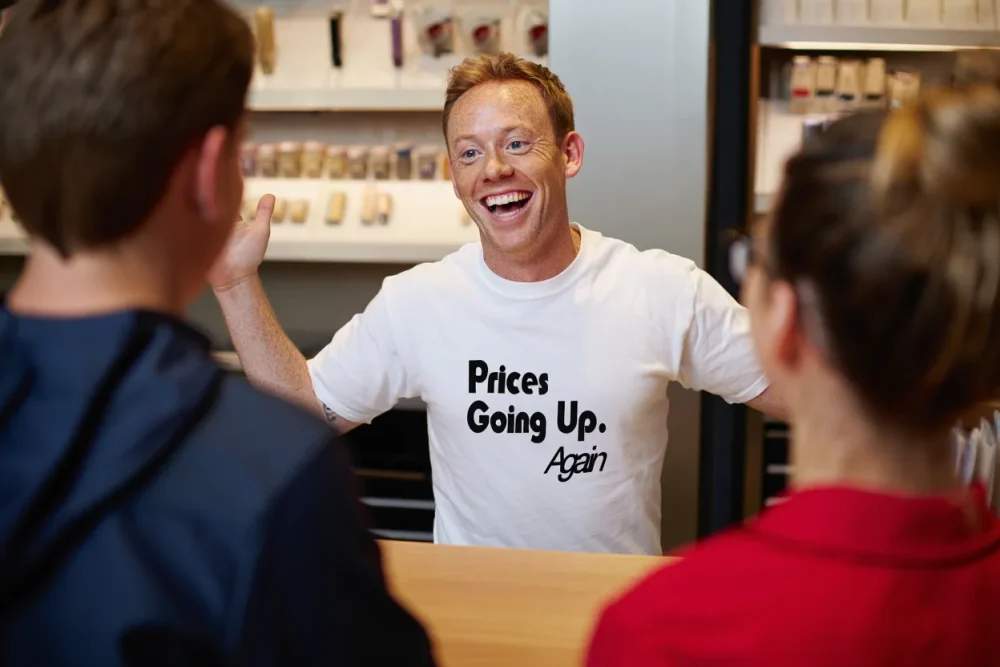

Raising prices in SaaS is a little like telling your dog you are switching to a cheaper brand of treats: the message may be logical, but the audience is emotionally invested. Customers do not wake up hoping their software bill becomes more adventurous. Yet pricing changes are a normal part of building a healthy SaaS business, especially when your product has improved, your support has expanded, your infrastructure costs have grown, or your old pricing simply no longer matches the value customers receive.
So, dear SaaStr-style founder, how do you let customers know you are raising prices without causing a cancellation stampede, support-ticket bonfire, or social media opera? The answer is simple in principle and delicate in practice: earn the increase, communicate early, explain clearly, give customers options, and make the whole experience feel like a professional business updatenot a surprise invoice ambush wearing a trench coat.
First, Make Sure You Have Earned the Price Increase
The best price increase announcement starts long before the email is written. It starts with value. If your product has become faster, more secure, more reliable, more integrated, easier to use, or more essential to the customer’s workflow, you have a story worth telling. If the only story is “our board wants better margins,” maybe keep that one inside the conference room.
Customers are more likely to accept higher pricing when they can connect the new cost to real improvements. In SaaS, those improvements might include new automation features, stronger reporting, AI-powered workflows, better onboarding, expanded customer support, higher uptime, improved compliance, or a cleaner user experience. The key is to lead with what changed for the customer, not what changed for your spreadsheet.
Do Not Hide the News in a Newsletter
A price increase should never be buried beneath a product roundup, a webinar invite, and a cheery GIF of someone typing on a laptop. Customers need a direct notice. That usually means email, but for higher-value accounts it may also mean a personal message from customer success, a call from the account manager, an in-app notification, and a clear billing-page update.
Transparency matters because pricing touches trust. If customers feel tricked, the price increase becomes a relationship problem. If they feel informed, respected, and given enough time to plan, it becomes a business update. That difference is worth real revenue.
Give Customers Advance Notice
Timing is one of the biggest factors in how customers react. A 24-hour warning feels rude. A same-day invoice change feels like a prank written by someone who hates retention. For self-service SaaS, a few weeks of notice may be acceptable for a small change. For annual contracts, enterprise accounts, or meaningful increases, 60 to 90 days is safer. Some companies give even longer notice when moving legacy customers to new pricing.
The larger the increase, the longer the runway should be. Customers need time to adjust budgets, get approvals, discuss internal usage, or decide whether to renew early. Giving them that time does not weaken your pricing decision. It makes your company look organized, mature, and less likely to set fire to trust for short-term cash.
Explain the “Why” in Plain English
A strong price increase message explains why the change is happening without sounding defensive. The reason does not need to be a novel. In fact, it should not be. One clear reason is better than seven corporate-flavored excuses stacked like pancakes.
For example, you might say the increase supports continued investment in product development, security, infrastructure, support quality, or new features customers already use. If your pricing model is changing because your value metric has evolved, explain that too. A company that started with simple per-seat pricing may later move toward usage-based pricing, tiered packaging, or outcome-based pricing because customers now receive value in a more measurable way.
Lead With Benefits Before Numbers
Do not open the email with “Surprise, your plan now costs more.” That is technically direct, but so is stepping on a rake. Start by reminding customers what has improved and how those improvements help them. Then state the new price clearly.
A good structure looks like this:
- Thank the customer for using the product.
- Summarize meaningful improvements made since the last pricing update.
- Explain why pricing is changing.
- State the effective date and new price or pricing structure.
- Offer options, support, or a way to ask questions.
- Close with appreciation and confidence.
This order matters. Customers should understand the value before they see the bill. Otherwise, the message feels like a toll booth instead of a product update.
Be Specific About What Is Changing
Vague pricing announcements create unnecessary anxiety. Tell customers exactly what is changing, when it changes, and how it affects them. If possible, personalize the message by plan type or customer segment. A customer on the Starter plan should not have to decode an Enterprise pricing memo like it is a treasure map from an exhausted pirate.
Include details such as the current plan, new monthly or annual price, effective date, renewal impact, available discounts, and whether existing usage limits or features are changing. If customers can lock in current pricing by renewing early, say so. If legacy plans are being retired, explain what plan they will move to and what new features they receive.
Give Customers Choices When Possible
Options reduce friction. Not every customer will love the new price, but many will appreciate having a path that fits their budget. For example, you can offer annual billing to save compared with monthly billing, allow customers to renew early at the old price for one more term, provide a lower-tier option, or give account managers room to help strategic customers transition.
Be careful, though. Flexibility should not turn into chaos. If every unhappy customer gets a custom discount, you train the market to complain instead of evaluate value. Create clear guardrails before the announcement goes out. Your sales, support, billing, and customer success teams should all know what they can offer and what they cannot.
Segment the Announcement by Customer Type
Not all customers should receive the same message. A self-service user paying $19 per month needs a simple, friendly email. A mid-market account with 40 seats may need a more detailed explanation. An enterprise customer with procurement, legal, and budget owners may need a call, a formal notice, and renewal planning.
Segmentation also helps you reduce churn risk. Identify customers with low product usage, recent complaints, pending renewals, or high support volume. These accounts may need extra care before receiving a pricing update. A customer who already feels underwhelmed will not suddenly feel delighted because the invoice discovered protein powder.
Prepare Your Customer-Facing Teams First
Before customers hear about the increase, your internal teams should be ready. Customer success, support, sales, finance, and billing need the same talking points. They should know why the price is changing, who is affected, when the change applies, what exceptions exist, and how to handle objections.
Create an internal FAQ. Include answers to predictable questions: “Why now?” “Can I keep my old price?” “What happens to my annual contract?” “Can I downgrade?” “What new value am I getting?” “Who can approve an exception?” If your team has to improvise every answer, customers will notice. And improvisation is best left to jazz musicians, not billing transitions.
Use a Human Tone, Not Corporate Fog
Customers can smell corporate fog from three tabs away. Phrases like “pricing optimization initiative” or “commercial realignment” sound like someone fed a billing memo into a blender. Use plain language. Be warm. Be direct. Be confident.
Instead of saying, “We regret to inform you of an adjustment to our commercial framework,” say, “Starting July 1, your plan will increase from $49 to $59 per month. This change helps us continue improving the product, expanding support, and maintaining the reliability your team depends on.”
The second version is not magical, but it is honest. That goes a long way.
Sample SaaS Price Increase Email
Here is a practical example you can adapt:
Subject: Upcoming update to your [Product Name] plan
Hi [First Name],
Thank you for being a [Product Name] customer. Over the past year, we have added [Feature 1], improved [Feature 2], expanded [Support or Security Improvement], and continued investing in a faster, more reliable experience for your team.
To keep delivering that level of value, we are updating our pricing. Starting [Date], your [Plan Name] subscription will change from [Old Price] to [New Price]. Your current features will remain available, and you will also continue receiving all recent improvements included in your plan.
If you prefer, you can switch to annual billing before [Deadline] to lock in your current rate for one more year. You can review your options in your billing settings or contact our team at [Contact Email].
We appreciate your trust and are here to answer any questions.
Best,
[Name]
Handle Objections With Respect
Some customers will complain. That does not mean the increase is wrong. It means they are customers, not decorative revenue objects. Listen carefully. Some objections reveal confusion. Others reveal product gaps. A few reveal customers who were never a great fit at the new price point.
The best response is calm and specific. Reconfirm the value, clarify the options, and help the customer choose the best path. Avoid apologizing for the existence of the increase if the decision is justified. You can be empathetic without sounding uncertain.
Measure the Impact After the Announcement
A pricing increase is not finished when the email sends. Track the results. Watch churn, downgrade rates, expansion revenue, support tickets, renewal delays, conversion rates, and customer sentiment. Compare reactions by segment. Newer customers may respond differently than long-term legacy users. Small accounts may be more price-sensitive than larger teams that rely on your software every day.
If you roll the increase out in phases, you can learn from each group before moving to the next. This is especially useful for SaaS companies shifting pricing models, not just raising existing prices. Pricing is part strategy, part communication, part psychology, and part “please let the billing system work correctly.”
Common Mistakes to Avoid
Apologizing Too Much
One sincere line of empathy is fine. A full paragraph of emotional groveling makes customers wonder if you believe your own value. Stand behind the decision.
Making the Increase Too Complicated
If customers need a spreadsheet, a webinar, and a minor in economics to understand the new pricing, simplify the message.
Ignoring Legacy Customers
Long-term customers often feel loyalty should be rewarded. If they are moving to higher pricing, acknowledge their history and give them a thoughtful transition.
Forgetting the Billing Details
Tell customers where the change will appear, which invoice it affects, and what action they need to take. Confusion creates tickets. Tickets create stress. Stress creates Slack messages with too many exclamation points.
Experience-Based Notes: What Actually Works When Prices Go Up
In real SaaS operations, the smoothest price increases tend to have one thing in common: customers are not surprised by the company’s ambition. They have already seen the product improving. They have received useful updates. They know the team is investing. By the time the pricing email arrives, the message feels like the next step in a visible pattern, not a random money grab.
One useful experience is to review your last six to twelve months of product announcements before writing the email. If you cannot quickly list meaningful improvements, customers may struggle to justify the increase too. This exercise forces honesty. Maybe you shipped major features, but never explained them well. Maybe customers use only a fraction of what you built. Maybe your value is strong for power users but unclear for smaller accounts. The pricing announcement becomes easier when the value story is already organized.
Another lesson: the first draft of a price increase email is usually too long. Teams want to explain everythingcosts, roadmap, support investments, market conditions, feature history, infrastructure upgrades, and possibly the emotional journey of the finance department. Customers do not need all of that. They need the reason, the date, the new price, the value, and the options. Keep the main message tight, then link internally to FAQs, billing pages, or account support if customers need more detail.
It also helps to rehearse objections before launch. Ask your customer success team to write down the ten toughest questions they expect. Then answer them in plain English. If the answers feel weak, the pricing strategy may need adjustment. If the answers are strong but scattered, the communication needs polishing. This role-play can prevent the awkward moment where a customer asks, “Why is this worth 30% more?” and the team responds with the spiritual equivalent of a loading spinner.
For larger customers, personal outreach works better than a mass email alone. An account manager can frame the change around the customer’s actual usage: “Your team added 18 users this year, adopted automation workflows, and reduced manual reporting time.” That is much stronger than a generic paragraph about innovation. The more specific the value, the less abstract the price feels.
Finally, treat customer feedback as data, not drama. Some churn may be acceptable if the old pricing attracted customers who were expensive to serve and unlikely to expand. Some complaints may reveal packaging problems. Some downgrade requests may show that customers want a slimmer plan. The goal is not to make every single person cheer for higher prices. That would require wizardry and possibly snacks. The goal is to communicate with enough clarity, respect, and confidence that the right customers understand why the price changed and why staying still makes sense.
Conclusion
Letting customers know you are raising prices is not just a billing task. It is a trust exercise. The winning approach is to earn the increase with real value, communicate early, explain the reason plainly, give customers enough detail to plan, and support the transition with human conversations where needed.
For SaaS companies, pricing is never only about numbers. It reflects positioning, product maturity, customer success, and confidence in the value you deliver. Raise prices carefully, but do not be afraid to raise them when the value is there. Customers may not throw a parade for your new pricing page, but if you communicate well, many will understandand stay.