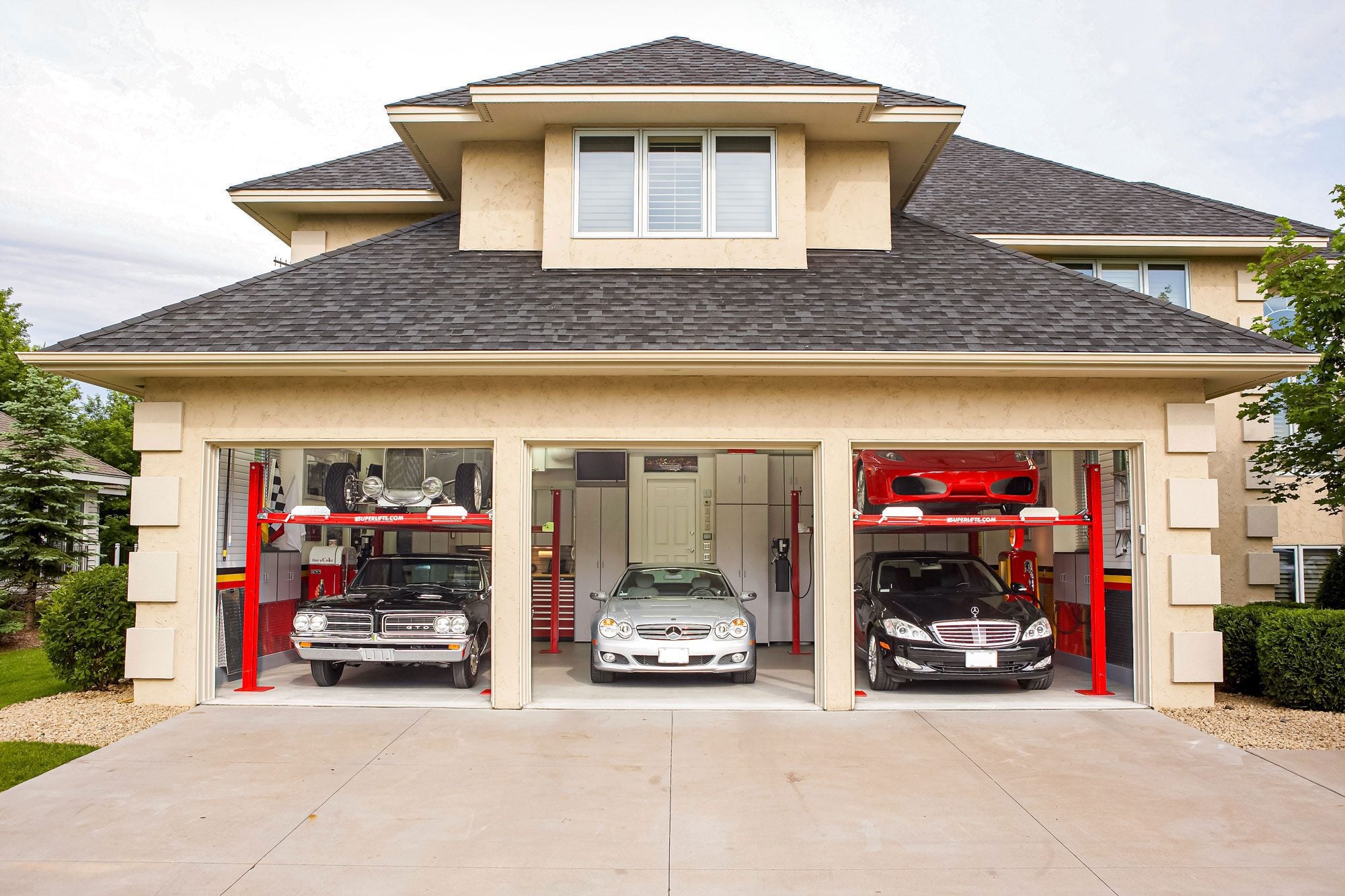

Fitting five cars into a three-car garage sounds like the setup to a suburban magic trick. “Pick a card, any cardnow please explain why there is a Miata hovering above a minivan.” But the answer is less about wizardry and more about math, vertical space, smart storage, and accepting one painful truth: the garage floor is not a museum for half-empty paint cans.
A three-car garage can hold five cars, but only if you stop thinking in two dimensions. The secret is to use height, reduce clutter, measure every inch, choose the right vehicle arrangement, and, in many cases, install residential parking lifts. If the garage has enough ceiling clearance, proper concrete, safe electrical access, and a layout that allows doors to open without requiring yoga certification, five vehicles can be possible.
The big question is not simply, “Can I fit five cars?” It is, “Can I fit five cars safely, legally, conveniently, and without turning my daily commute into a 17-step puzzle?” Let’s open the garage door and figure it out.
The Real Answer: You Stack, Sort, and Strategize
The most practical way to fit five cars into a three-car garage is to use two car lifts in two bays and keep one vehicle parked at floor level in the third bay. That gives you two stacked spaces on the left, two stacked spaces in the middle, and one standard space on the right. Congratulations: five cars, three bays, zero violation of physics.
However, this setup only works when the garage is suitable for lifts. A standard three-car garage may range from roughly 30 to 36 feet wide and 20 to 24 feet deep, though many are larger or custom-built. The ceiling height matters even more. A low ceiling may work for stacking two compact cars, but it will not be friendly to two tall SUVs unless your roof is secretly a cathedral.
Before spending money, measure the garage like your happiness depends on it. Because, frankly, it might.
Step One: Measure the Garage, Not Your Optimism
The first mistake many homeowners make is assuming a “three-car garage” means three comfortable parking spaces. Sometimes it means three cars technically fit, provided nobody breathes too aggressively. Modern vehicles are wider, taller, and longer than many older garage designs anticipated, so actual usable space matters more than the name on the real estate listing.
Measure These Areas First
Start with the basics: interior width, interior depth, ceiling height, garage door height, garage door track position, opener location, and the location of steps, water heaters, utility panels, posts, freezers, and workbenches. The cars may fit on paper, but a water heater in the corner can ruin your parking masterpiece like a villain in a home improvement movie.
Also measure each vehicle, including mirrors, roof racks, spoilers, antennas, tire width, and anything mounted on top. If one car has a roof box, remove it before you start designing around it. Nobody wants to redesign a garage around a cargo box used twice a year to transport beach chairs and emotional baggage.
Step Two: Declutter Until the Floor Reappears
Before adding lifts, cabinets, or ceiling racks, remove everything that does not support the goal of parking cars. A garage often becomes the family’s unofficial warehouse: sports equipment, holiday decorations, mystery cables, cracked flowerpots, a treadmill from the “new year, new me” era, and one lonely chair nobody likes but everyone feels guilty throwing away.
To fit five cars into a three-car garage, the floor must become sacred territory. Cars get the floor. Everything else earns a spot on the wall, in the ceiling, in cabinets, in a shed, or in a donation pile.
Create Storage Zones
Divide your garage into zones: automotive supplies, tools, lawn care, sports gear, seasonal storage, cleaning supplies, and frequently used household items. Keep daily-use items near the entry door. Put seasonal bins overhead. Hang bikes vertically or on pulley systems. Use wall-mounted track systems, pegboards, slatwall panels, shelves, and hooks to reclaim floor space.
Heavy items should stay low for safety. Light, bulky items can go higher. Clear bins and labels make the system easier to maintain. The goal is not to create a showroom garage where every wrench has its own spotlight. The goal is to stop stepping over a leaf blower every time you need to open a car door.
Step Three: Think Vertically with Car Lifts
The biggest space multiplier is a residential parking lift, especially a four-post lift. A four-post lift works well for vehicle storage because the car drives onto runways, rises, and allows another car to park underneath. For homeowners who collect cars, store seasonal vehicles, or simply have more drivers than garage bays, this is the classic solution.
For a five-car setup, the most common plan is simple:
- Bay 1: one car on a four-post lift, one car underneath
- Bay 2: one car on a four-post lift, one car underneath
- Bay 3: one car parked normally
That equals five cars. It also equals the moment your neighbors start asking whether you are running a boutique dealership.
Ceiling Height Is the Boss
For stacking cars, ceiling height determines everything. A useful rule of thumb is to add the height of the lower vehicle, the height of the upper vehicle, the thickness of the lift platform, and a safety margin. Then compare that number to the actual usable ceiling heightnot the height you wish you had.
Many residential four-post lifts need around 10 feet of clearance at minimum, and more is better. Compact cars and sports cars are easier to stack than trucks and SUVs. If your garage ceiling is 8 or 9 feet high, you may still use a low-rise lift for maintenance or storage of very low vehicles, but true double-stacking may be limited.
Garage Door Tracks Can Steal Space
Even if the ceiling is tall enough, the garage door hardware may hang in the way. Standard tracks and center-mounted openers can reduce usable height. Many five-car garage setups use high-lift garage door tracks, jackshaft wall-mounted openers, or modified door hardware to clear space above the vehicles. This is not a “grab a ladder and hope” project. Hire a qualified garage door professional.
Step Four: Choose the Right Cars for the Right Positions
Not every car deserves every parking spot. The easiest arrangement puts the least-used vehicles on the lifts and the daily drivers on the floor. If you drive one car every morning, do not park it above another car unless you enjoy starting your day with mechanical choreography.
Place compact cars, convertibles, coupes, or low sports cars on upper platforms when possible. Put taller vehicles underneath only if clearance allows. Keep the easiest-access bay for the car that leaves most often. If one vehicle is a weekend classic, it can live upstairs like royalty. If one vehicle is a teenager’s daily driver, keep it where it can escape without requiring a family meeting.
Step Five: Plan Door Clearance and Walking Paths
Fitting cars is one thing. Using them is another. A garage packed with five cars should still allow people to walk safely, open doors, reach storage, access electrical panels, and exit in an emergency. If the layout requires climbing through a hatchback like an action hero, the plan needs work.
Mark parking positions with floor tape or wheel stops. Use tennis balls, laser parking guides, or wall bumpers if needed. Leave clearance around lift posts. Keep walkways free of tools, cords, hoses, and boxes. If your garage has stairs leading into the house, protect that path like it is the red carpet at a car-lover awards show.
Safety Comes Before Showing Off
A five-car garage setup can be impressive, but safety is non-negotiable. Choose a lift that is certified for automotive use, matches the weight of your vehicles, and is installed according to manufacturer instructions. Check whether your local building department requires permits or inspections. Some areas have rules about residential lifts, electrical work, fire separation, and garage modifications.
Concrete matters too. The slab must meet the lift manufacturer’s requirements for thickness, strength, levelness, and condition. Cracked, sloped, or thin concrete may need evaluation before installation. Electrical supply should be installed properly. If you are adding EV charging, battery maintainers, lighting, or lift power units, use licensed professionals.
Note: Do not install a car lift based only on internet enthusiasm, neighborly confidence, or the phrase “I saw a guy do it once.” A vehicle weighs thousands of pounds. Gravity has no sense of humor.
Smart Storage Makes the Difference
Once lifts are installed, storage must become even more disciplined. The goal is to keep the garage functional, not transform it into a vertical junk drawer. Wall-mounted systems are ideal because they can hold tools, ladders, hoses, sports equipment, and garden supplies without touching the floor.
Best Storage Ideas for a Five-Car Three-Car Garage
Use overhead racks for seasonal bins, but keep them away from lift movement and vehicle roofs. Install cabinets for chemicals, cleaners, and small tools. Use pegboard or slatwall for visible, frequently used items. Hang bikes vertically. Mount tire racks if you store winter or track tires. Use rolling tool chests only where they do not block parking lanes.
Label everything. A label may not be glamorous, but neither is opening six bins to find one extension cord while balancing between a bumper and a recycling bin.
What About Tandem Parking?
In some garages, tandem parking can help. If the garage is unusually deep, two cars may fit nose-to-tail in one bay. This can create five-car capacity without lifts, such as two cars in one deep bay, two in another deep bay, and one in the third. But tandem parking has one major downside: access.
If the rear car needs to leave, the front car must move first. This arrangement works best for seasonal cars, collector vehicles, or cars used only occasionally. It is less ideal for households where everyone leaves at different times and nobody wants to play driveway Tetris before coffee.
Can You Fit Five Cars Without Lifts?
Sometimes, yesbut only if the garage is oversized, the cars are small, and the layout is unusually friendly. A large three-car garage with extra depth may hold five compact vehicles using tandem parking. A detached garage with a workshop area might be reconfigured. In rare cases, angled parking may help, though it often wastes space unless the garage is very wide.
For most homeowners, however, five cars in a normal three-car garage require lifts. Without vertical stacking, the math gets cranky.
Example Layout: The Practical Five-Car Setup
Imagine a 36-by-24-foot three-car garage with approximately 11 to 12 feet of ceiling height. Bay one has a four-post lift holding a weekend sports car above a compact commuter car. Bay two has another four-post lift holding a classic coupe above a small sedan. Bay three holds an SUV used daily.
Along the back wall, shallow cabinets store automotive fluids and detailing supplies. The side walls use slatwall panels for tools, hoses, and chargers. Seasonal decorations sit in overhead racks away from the lift zones. The garage door openers are wall-mounted to improve overhead clearance. Wheel stops help each vehicle park in the same position every time.
This setup works because it respects three rules: keep tall vehicles on the ground, keep daily drivers accessible, and keep clutter off the floor. The lifts create capacity, but organization keeps the garage usable.
Common Mistakes to Avoid
The first mistake is buying a lift before measuring. The second is measuring only the garage, not the cars. The third is forgetting the garage door tracks. The fourth is ignoring concrete requirements. The fifth is pretending you will “just move things around later.” Later never comes. Later is where broken folding chairs go to retire.
Another common mistake is overloading the garage with storage after adding lifts. When people see open air above the cars, they start imagining shelves, racks, kayaks, lumber, and maybe a full-size canoe named Regret. Do not crowd the lift zone. Keep moving parts clear and maintain access for inspection, cleaning, and maintenance.
Budget Considerations
The cost of fitting five cars into a three-car garage depends on the current garage, lift type, door modifications, electrical work, storage upgrades, and professional installation. A simple reorganization may be affordable. A full two-lift setup with high-lift garage doors, cabinets, lighting, and electrical upgrades can become a serious investment.
Still, for car collectors or multi-driver families, it may be cheaper than building an addition, renting long-term vehicle storage, or leaving valuable cars outside. The best approach is to price the whole system, not just the lift. Include installation, delivery, electrical work, concrete evaluation, garage door changes, lighting, storage, and any permits.
Experiences from Real Garage Setups: What Actually Matters
People who successfully fit five cars into a three-car garage usually learn the same lesson: the parking plan is only half the battle. The daily routine matters more. A beautiful five-car layout can become annoying if the car you need most often is trapped behind, under, or above another vehicle. The best systems are designed around habits, not just dimensions.
For example, a collector with two weekend cars may love having both cars on lifts. Those vehicles stay clean, secure, and protected, while daily drivers remain easy to access below or in the open bay. This setup feels luxurious because the lifted cars do not need to move every day. On the other hand, a family with five daily drivers may quickly discover that stacking cars is less romantic at 7:15 a.m. when three people are late and one person cannot find the lift key.
Another real-world pattern is that garage cleanliness improves after lifts are installednot because lifts magically organize anything, but because homeowners become more protective of the space. Once expensive equipment and valuable cars are involved, random clutter feels more offensive. The broken cooler, the old cabinet door, and the box labeled “miscellaneous 2014” suddenly look like intruders.
Lighting also becomes surprisingly important. A five-car garage needs bright, even lighting so drivers can see lift posts, mirrors, bumpers, wheel stops, and stored items. Shadows can make tight parking feel stressful. Many homeowners add LED shop lights, motion lighting, or task lighting near workbenches. It sounds minor until you are trying to park a black car at night between a lift column and a wall-mounted bike rack.
Noise is another practical consideration. Lifts are not usually outrageous, but they are mechanical equipment. If the garage is attached to the house, raising or lowering cars early in the morning may not delight sleeping family members. A detached garage gives more freedom. An attached garage requires more courtesy, unless your household already communicates exclusively through engine sounds.
One of the best experience-based tips is to rehearse the layout before installing anything permanent. Use painter’s tape to mark lift footprints, car positions, walking paths, cabinet depths, and door swings. Park the cars as close to the proposed arrangement as possible. Open doors. Carry groceries. Move trash bins. Pretend it is raining. Pretend everyone is late. The layout that survives these little tests is usually the right one.
Finally, successful five-car garages are maintained, not merely built. Owners check lift locks, keep platforms clean, inspect for leaks, maintain battery tenders, sweep the floor, and adjust storage as life changes. The garage becomes a system. When the system is respected, five cars in three bays feels clever and efficient. When the system is ignored, it becomes a very expensive puzzle with wheels.
Final Thoughts: Five Cars, Three Bays, One Very Organized Mindset
So, how do you fit five cars into a three-car garage? You measure carefully, remove clutter ruthlessly, use vertical space intelligently, install safe car lifts when the garage allows it, and design the layout around real daily use. The concept is simple: stack two cars in one bay, stack two cars in another, and park the fifth in the remaining bay.
The execution requires planning. Ceiling height, concrete, garage door hardware, vehicle size, walking clearance, storage placement, and safety standards all matter. Done well, a five-car three-car garage can protect your vehicles, improve organization, and make your garage feel like a private automotive clubhouse. Done poorly, it becomes a cramped metal sandwich.
The good news is that most garage problems are solvable with measurement, discipline, and a willingness to stop storing things on the floor. The bad news is that you may finally have to decide what to do with that box of “important cables” from 2009. Be brave.