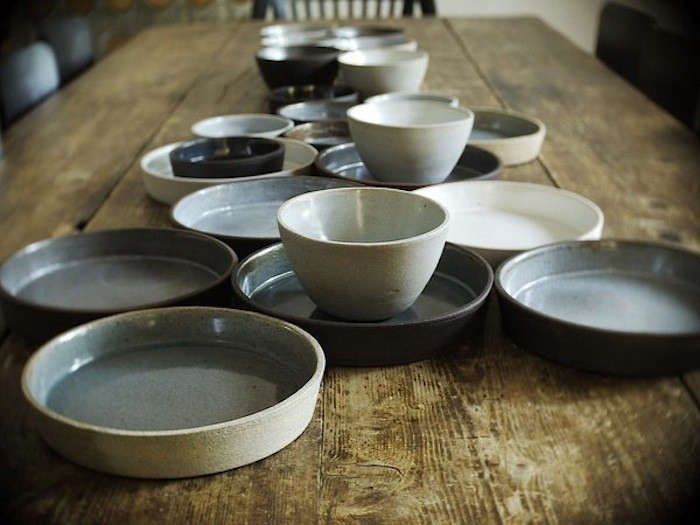

Humble Ceramics proves that a dinner plate can be quiet without being boring. In a city where nearly everything seems to arrive with a launch party, a neon logo, and a celebrity collaboration, this Los Angeles pottery studio built its reputation the old-fashioned way: make useful things beautifully, then keep making them well enough that people cannot stop asking for more.
Founded by Belgian-born artist Delphine Lippens, Humble Ceramics grew from a personal discovery of clay into a small-batch studio known for earthy stoneware, subtle glazes, raw edges, and everyday pieces with uncommon presence. The work does not shout from the shelf. It waits patiently, then makes your leftover pasta look like it has a reservation.
A Los Angeles Ceramics Story Built Slowly
Humble Ceramics did not begin as a carefully manufactured lifestyle brand. Lippens began working with clay in the early 2010s after taking an introductory pottery class, and interest in her early work gradually turned that creative practice into a business. Maker events led to retailer attention, and the studio eventually began serving both home-goods shoppers and restaurant clients. That organic rise still defines the brand: Humble Ceramics grew because people responded to the objects themselves, not because someone decided the world needed another trendy bowl.
The studio’s South Central Los Angeles roots also matter. LA is a city of reinvention, speed, and relentless visual noise. Humble Ceramics offers a quieter counterpoint. Its bowls, plates, tumblers, and canisters invite people to slow down long enough to feel texture, notice proportion, and remember that a useful object can still carry emotion.
Clay Has Opinions
There is a reason handmade pottery feels different from factory-made dinnerware: clay refuses to behave like a machine. It can crack, warp, dry unevenly, or remind the maker that gravity has been undefeated for several billion years. A small-batch ceramic studio works with those realities instead of pretending they do not exist.
That does not mean handmade pottery is random. The point is controlled individuality. Pieces can share the same shape, material, and finish while still carrying slight differences in surface, glaze movement, and form. They belong to the same family, but they are not identical twins forced into matching sweaters.
The Humble Ceramics Look: Rustic, Modern, and Ready for Dinner
Humble Ceramics is recognized for restrained forms, quiet neutral glazes, visible clay, and tactile surfaces. The collection often uses simple shapescircles, shallow dishes, canisters, bowls, and cupsbut makes them feel intentional through contrast. A snow-white glaze against gray stoneware, a raw rim beside a glossy interior, or a softly irregular edge can turn a functional dish into a small landscape.
By 2019, the Los Angeles Times described Humble Ceramics as a thoughtful handmade alternative to familiar modern home-store dinnerware, noting its neutral glazes and raw edges. That description still explains the appeal well. The pieces are clean enough for a minimalist kitchen, warm enough for a farmhouse table, and practical enough to survive an ordinary Tuesday night.
Why Raw Edges Feel So Good
Minimalism can occasionally feel like a waiting room with expensive lighting. Humble Ceramics avoids that problem by pairing clean lines with tactile irregularity. A slight dip in a rim, visible clay beneath a glaze, or a subtle change in surface keeps the object from feeling sterile.
These details make a plate more than a flat circle and a bowl more than a container. The vessel affects how food is framed, shared, and remembered. Lippens has compared selecting a glaze to cooking: ingredients should work together without overwhelming one another. It is a fitting philosophy for dinnerware that lets food take center stage instead of performing a ceramic solo over the entrée.
Canisters, Cazuelas, and Everyday Rituals
Among the studio’s best-known pieces are cork-lidded canisters, shallow cazuelas and cazuelitas, bowls from the Stillness collection, and everyday drinkware. The corked canisters are especially distinctive. Lippens has connected her interest in cork to childhood memories of visiting a cork factory and to old household jars fitted with replacement cork tops.
That material pairing feels warm and useful rather than decorative for decoration’s sake. A canister can hold salt, tea, coffee, sugar, pet treats, or the tiny household clutter that appears to reproduce after midnight. A shallow dish can serve olives, roasted vegetables, pasta, dessert, or the noble task of holding chips while everyone insists they are “just having a few.”
Why Small-Batch Ceramics Create Big Demand
Small-batch pottery offers something mass production often removes: evidence of time. Each piece moves through forming, drying, trimming, firing, glazing, final firing, and quality control. A studio can create a coherent collection, but it cannot press a button and turn Tuesday into two thousand finished dinner plates by Friday.
That slower pace creates scarcity, but scarcity is not the whole story. The deeper value is care. Buyers are choosing an object shaped by decisions: how thick the wall should be, where the glaze should stop, how the piece should balance in a hand, and whether it is ready to leave the studio at all.
One Bowl Is Easy. One Hundred Is a Different Sport.
For Humble Ceramics, demand has meant balancing a maker’s vision with the needs of retailers and restaurants. In a Craft in America conversation about handmade restaurant design, Lippens explained the challenge of producing consistent commissions in quantities of 50, 100, or 200 pieces. Raw-material issues, firing uncertainty, supplier delays, and team coordination can change a schedule quickly. “Small batch” is not just a charming phrase for a product page; it is a business model with clay dust on it.
Making one exceptional bowl leaves room for improvisation. Making one hundred bowls that share a silhouette, perform in service, fit a restaurant’s vision, and arrive on time requires discipline. It also requires knowing when to say no. In craft, protecting quality can be a smarter form of growth than accepting every opportunity that knocks.
From Home Shelves to Los Angeles Restaurant Tables
Humble Ceramics became part of LA’s dining scene because chefs understand that the plate is part of the meal. By 2019, the studio’s dinnerware had appeared at restaurants associated with chefs Josef Centeno and Michael Cimarusti. The work was also featured in Craft in America’s Consume: Handcrafting L.A. Restaurant Design exhibition, which explored how locally made objects shape Southern California dining spaces.
Restaurant ceramics have to work hard. They must complement the chef’s plating, match the room’s atmosphere, survive repeated handling, and feel good in a guest’s hands. A beautiful plate that terrifies servers is not romantic. It is a workers’ compensation meeting waiting to happen.
The Plate Is Part of the Story
Craft in America documented a Stillness Bowl by Lippens in use at Pizzana and the Rays and Stark Bar. The studio also participated in a discussion with Auburn chef Eric Bost and the restaurant’s designers about incorporating handmade objects into the dining experience. These examples show why the right bowl is not just décor. It connects food, hospitality, design, and memory.
At home, the lesson is much easier and much cheaper than opening a restaurant: choose a few pieces that make you want to sit down. A handmade bowl can turn soup into supper. A good tumbler can make morning coffee feel less like a software update and more like a moment.
How to Live With Handmade LA Pottery
The best way to appreciate Humble Ceramics is to use it. Let a gray-and-white bowl hold fruit on Monday, grain salad on Wednesday, and takeout noodles on Friday. Let a corked jar live where you can reach it every day. The goal is not to build a tiny shrine to good taste. The goal is to let good design improve the rhythm of a real home.
Build Slowly, Not Perfectly
Start with one versatile bowl, two everyday cups, or a canister that solves a real storage problem. Neutral stoneware works easily with vintage glass, plain white plates, wood serving boards, and nearly every tomato-based dish known to humanity. Rather than buying a perfectly matched set all at once, build a collection over time. It will feel more personal and less like you accidentally moved into a catalog.
Variation Is Part of the Value
Handmade does not mean carelessly made. It means slight variations in glaze, surface, and form are expected within a consistent design. A good piece should feel balanced, sit securely, and function comfortably. The variation is visual punctuation: evidence of the maker’s hand, not a reason for the Thanksgiving table to wobble.
The Bigger Meaning Behind Humble Ceramics
Humble Ceramics resonates because it offers an alternative to fast décor. The studio does not ask people to choose between art and usefulness. It suggests that useful objects deserve artistic attention.
Instead of buying twelve matching things because a sale timer says so, a person can choose one meaningful bowl, use it constantly, and add slowly over time. That is the real demand behind small-batch ceramics: a desire for objects that feel grounded, studios that preserve a human pace, and dinnerware that can make even leftovers look like they have their life together.
Experience: An Evening With Humble Ceramics in Mind
Picture the most ordinary Los Angeles evening possible: the light has softened, the kitchen is warmer than the rest of the apartment, and someone has placed a grocery-store bouquet in a jar because adulthood occasionally surprises you. Dinner is not ambitious. There is a roasted chicken, a bowl of greens, bread that was supposed to be saved for tomorrow, and a sauce made from whatever was still respectable in the refrigerator.
Now picture serving it on handmade stoneware. The food does not suddenly become Michelin-level cuisinelet us not ask a bowl to perform sorcerybut it changes the temperature of the moment. A shallow dish gives the chicken and sauce room to breathe. A generously sized bowl makes the greens feel like an actual course rather than a side quest. The subtle texture under your fingers slows you down by half a beat, which is sometimes all a weekday needs.
This is the experience small-batch pottery offers at its best. It does not announce itself with sparkle, logo mania, or a voice that says, “Look at me, I cost more than your rent.” It works quietly. The plate has a little weight. The rim is not perfectly mechanical. The glaze catches a stripe of late sun. You notice these things because they are there, but you do not have to stop the conversation to explain them.
Someone reaches for another piece of bread. Someone else asks where the bowl came from. The answer is not a sales pitch. It is a story about an LA ceramicist, a studio, a patient process, and a belief that useful things can carry feeling. That story is more interesting than a brand slogan because it continues after the meal. Tomorrow, the same tumbler holds coffee. Next week, the canister holds flaky salt. Months later, a small glaze variation becomes the identifying feature everyone knows: “Use the blue-gray bowlthe good one.”
There is also a small lesson in imperfection. A handmade plate may reveal a faint ripple, an exposed band of clay, or the gentle irregularity of a formed edge. Rather than making the table look unfinished, those details make it feel lived in. They leave room for the meal to be imperfect, too. The salad can be overdressed. The pasta can be a little too salty. The guests can arrive late. A good table can handle it.
That is why Humble Ceramics has such lasting appeal. It understands that the objects around us are not merely background props. They shape our habits. They can make us rush, or they can invite us to pause. In a city famous for chasing the next thing, a small-batch ceramic bowl offers a humble counterproposal: stay awhile, eat something warm, and notice what is already in your hands.
Conclusion
Humble Ceramics of LA makes a persuasive case for the everyday object as a small work of art. Delphine Lippens’ studio grew through craft, patience, and an eye for forms that feel calm without disappearing. From cork-lidded canisters to restaurant-ready bowls and plates, the collection honors texture, utility, and the beauty of slight variation.
For collectors, home cooks, and anyone tired of buying things that feel temporary, the appeal is simple: choose fewer objects, choose them well, and use them often. Small-batch pottery may take longer to make and sometimes longer to find, but that is exactly why it can make a home feel more personal. Humble Ceramics does not shout. It sets the tableand lets the moment do the talking.