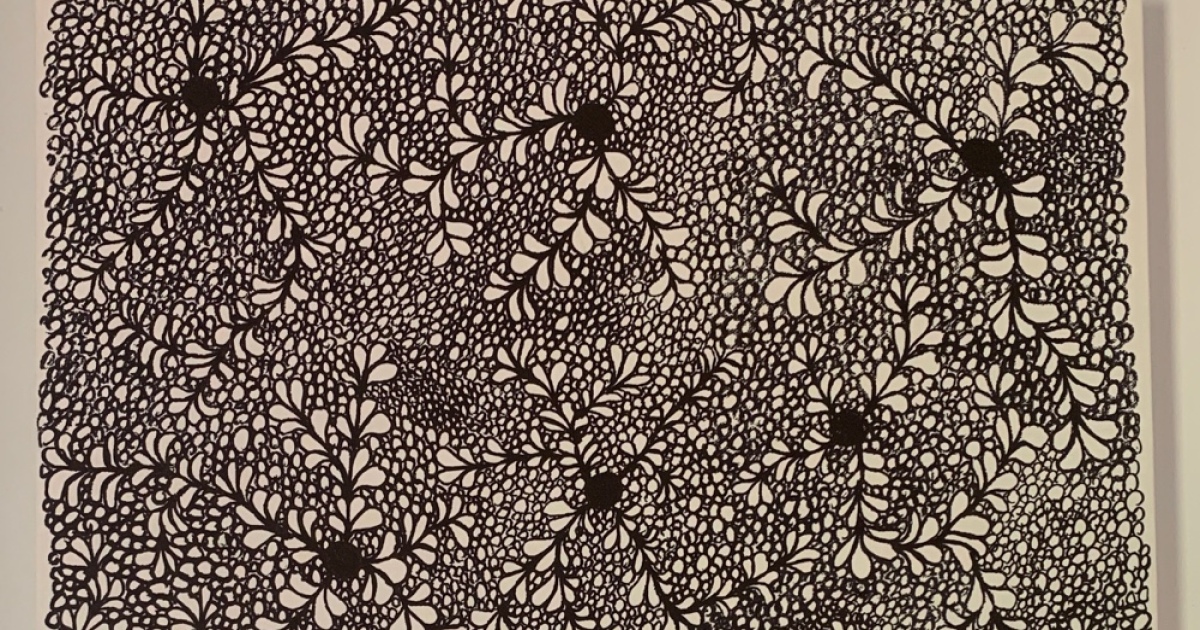

Most of my finished drawings do not begin with a grand artips: a crooked oval, three nervous lines, a suspicious-looking potato, or a shape scribbled while I am waiting for my coffee to become emotionally available.
For years, I treated these tiny doodles as disposable. They lived in notebook margins, on receipts, and occasionally on envelopes that I later discovered were important. Then I started looking at them differently. Instead of asking, “Is this a good drawing?” I asked, “What could this become?”
That question changed everything. A meaningless curve became a whale. A coffee ring became a planet. A tangled scribble became a dragon with serious cable-management problems. The original marks were rarely attractive, but they contained movement, personality, and accidents that I would never have planned deliberately.
Doodling can provide a low-pressure way to explore ideas, while sketchbooks preserve the small observations and repeated decisions that often lead to more developed artwork. In other words, the messy beginning is not necessarily something to hide. Sometimes it is the most interesting part of the creative process. >
Why I Started Turning Random Doodles Into Finished Art
The project began when I found an old notebook filled with meeting notes and strange little creatures. The notes were useless. Apparently, “follow up next Thursday” does not help when you cannot remember the month, year, person, or subject. The creatures, however, still had potential.
One doodle looked like a sleepy animal resting on a crescent moon. Another resembled a tiny house balancing on chicken legs. They were rough, uneven, and drawn without intention, yet they felt more original than many of the polished concepts I had forced myself to produce.
That discovery gave me a simple challenge: preserve the essential shape of each doodle and turn it into a complete illustration. I could rotate the page, add characters, adjust proportions, and introduce color, but I was not allowed to erase the original idea entirely.
My Basic Doodle-to-Drawing Process
I first photograph or scan the original doodle. Then I reduce its opacity and place it beneath a clean drawing layer. I trace only the lines that give the image its personality. The wobbly curve might become a spine, a roof, a wave, or a dramatic eyebrow.
Next, I create several thumbnail sketches to test the composition. This prevents me from spending two hours rendering a beautifully shaded character who is accidentally standing halfway outside the frame. After choosing a layout, I refine the line art, block in large color shapes, add shadows, and finish with small textures.
Digital layers make experimentation easier because individual elements can be moved, recolored, hidden, or edited without damaging the rest of the illustration. Still, I try not to polish every line into submission. The original doodle should remain visible in the final personality of the piece, even when the artwork becomes more detailed. n>
12 Doodles I Transformed Into Drawings
1. The Crescent Scribble That Became a Sleepy Whale

The first doodle was a thick curved line with two dots near one end. I rotated it sideways and immediately saw a whale. The dots became a tiny eye and nostril, while the lower curve suggested a relaxed belly.
I placed the whale in a nighttime sky surrounded by stars, paper airplanes, and one confused goldfish wearing a space helmet. Soft blue shadows helped create volume, but I kept the uneven outline because it made the whale look pleasantly squishy. The finished character appears to be floating through a dream and is probably late for something important.
2. The Coffee Ring That Became an Astronaut’s Planet

This image started with a partial coffee ring on a sheet of paper. Instead of hiding the stain, I traced its irregular edge and turned it into the outline of a small planet.
The darker patches became mountains and craters. I added a tiny astronaut planting a flag that reads “Probably Fine,” which felt like the appropriate slogan for exploring an unknown world alone. Warm browns from the original stain were paired with dusty pinks and muted oranges, creating a slightly retro science-fiction illustration.
3. The Tangled Line That Became a Cable Dragon

I drew this tangled line while trying to untie a pair of headphones. The loops reminded me of a curled dragon, so I added a head, claws, wings, and a tail shaped like a charging connector.
The finished dragon guards a treasure pile made of adapters, old phones, and one mysterious cable that has followed me through three moves without revealing its purpose. I used sharp highlights and dark purple shadows to make the cords appear glossy. The result is half fantasy creature, half accurate documentary about my desk drawer.
4. The Crooked House That Became a Walking Library

The original house had a leaning roof, one tiny window, and no visible door. Rather than correcting the structure, I exaggerated it. I added long mechanical legs, a chimney shaped like a bookmark, and shelves visible through every window.
The walking library travels from village to village, delivering books and occasionally stepping on decorative shrubbery. Its warm windows contrast with the cool forest background, making it feel welcoming despite the enormous metal feet. The crooked architecture remained the heart of the design.
5. The Grumpy Cloud That Became a Weather Mechanic

This doodle was a bumpy shape with two short lines underneath it. It looked like an irritated cloud, so I imagined a mechanic responsible for repairing thunderstorms.
I gave the character overalls, a toolbox, and a wrench shaped like a lightning bolt. Behind him sits a complicated machine that produces rain, wind, and dramatic weather alerts. The limited blue-and-yellow palette keeps the scene readable, while the exaggerated expression gives the cloud mechanic a clear personality: tired, capable, and deeply unimpressed by humidity.
6. The Cactus That Became a Shy Desert Monster

The cactus began as three vertical blobs. Once I added eyes beneath the central arm, it became a nervous creature trying very hard not to be noticed.
I placed it behind a tiny flowerpot, although the creature is approximately eight feet tall and therefore not especially hidden. Small desert flowers grow from its head whenever it feels embarrassed. I used grainy brushes and sun-faded colors to create a warm, storybook texture without smoothing away the original chunky silhouette.
7. The Single Eye That Became a Midnight Garden

I draw eyes constantly, usually when I have run out of ideas but refuse to admit it. For this version, I treated the iris as a circular garden rather than a realistic eye.
The pupil became a dark pond, eyelashes turned into flower stems, and the highlight became a crescent moon. Moths replaced the usual reflections. Deep greens, violet shadows, and pale silver accents created a mysterious atmosphere. This transformation taught me that a familiar subject can feel new when its internal logic changes.
8. The Bent Banana That Became a Spaceship

The original mark looked unmistakably like a banana, which seemed too easy. Naturally, I added engines, windows, landing gear, and a crew of tiny fruit explorers.
The banana spaceship travels through a bright universe where planets resemble oranges, grapes, and watermelons. I avoided realistic lighting and used flat shapes with bold outlines, giving the illustration the energy of a vintage children’s comic. The final drawing is gloriously ridiculous, which is often a sign that a doodle has reached its full potential.
9. The Oval With Legs That Became a Fish in Boots

This doodle was simply an oval with two lines beneath it. It could have become a bird, a person, or a table with low self-esteem. I chose a fish wearing boots.
The scene shows the fish walking through a rainy city while carrying an umbrella filled with water. The joke works because everything is technically backward, yet the character behaves as if the situation is completely normal. Bright red boots became the focal point, while reflections on the pavement helped ground the absurd little traveler.
10. The Rectangle That Became a Doorway Into a Giant’s Pocket

A plain rectangle does not appear promising until you decide it is a doorway. Behind this one, I drew a miniature town built inside the pocket of a giant coat.
Coins became public squares, buttons became rooftops, and threads served as bridges. A huge hand occasionally reaches inside, causing what residents refer to as “the seasonal apocalypse.” The composition required more planning than the other drawings, but the original rectangle remained the main portal into the scene.
11. The Two Hands That Became a Tiny City

Hands are difficult to draw, and my first attempt resembled a pair of confused forks. Instead of discarding it, I positioned the shapes around a cluster of rectangles and developed those forms into a miniature city.
The fingers curve protectively around glowing buildings, parks, and narrow roads. Warm light from the city reflects onto the hands, tying the composition together. I kept the anatomy stylized rather than chasing perfect realism. The emotional ideaprotecting something fragilemattered more than drawing award-winning knuckles.
12. The Chaotic Scribble That Became an Orchestra

The final doodle looked like pure chaos. It had overlapping circles, sharp turns, and several lines that went nowhere. Rather than separating them, I treated each section as part of a crowded musical performance.
Loops became brass instruments, straight lines became bows and batons, and small circles became the heads of musicians. The final composition still feels energetic and slightly disorderly, but now the disorder has rhythm. It became my favorite drawing because it proves that even an apparently hopeless scribble may contain a complete visual world.
What This 12-Picture Drawing Experiment Taught Me
Turning these doodles into finished drawings changed the way I approach creativity. Before this project, I believed strong artwork needed to begin with a strong idea. I would wait for inspiration, reject concepts that seemed too ordinary, and stare at a blank page as if it had personally failed to provide entertainment.
The doodles taught me that ideas can become interesting during development. The first mark does not need to contain the complete concept. It only needs to offer a direction. A curve can suggest movement. A stain can provide texture. An awkward proportion can create a memorable character.
I Stopped Trying to Make Every Sketch Impressive
One of the most useful changes was allowing my sketchbook to become messy again. I stopped treating every page like evidence that might someday be presented before an extremely judgmental art committee.
Some pages now contain nothing but noses, crooked chairs, strange shoes, and attempts to draw cats that look more like disappointed bread. Most of these sketches will never become finished illustrations. That is fine. Their purpose is to keep my hand moving and my visual imagination active.
When every sketch must be shareable, experimentation becomes risky. When a sketch is private and disposable, failure becomes cheap. I can try ten versions of an idea, laugh at nine of them, and develop the remaining one without feeling that the earlier attempts wasted my time.
Accidents Became Part of My Illustration Style
I also became less eager to correct unusual shapes. In traditional drawing practice, there is value in studying proportion, perspective, light, anatomy, and structure. Those skills help an artist make intentional decisions. However, intentional does not always mean realistic or perfectly symmetrical.
The sleepy whale works because its back is too curved. The walking library feels magical because the building leans. The cable dragon has an impossible body, but the tangled shape communicates its personality immediately.
I began asking whether a “mistake” damaged the image or simply made it unexpected. If the drawing became confusing, I corrected it. If the mistake created character, I protected it like a tiny endangered species.
Finishing a Drawing Requires Different Skills Than Starting One
Doodling is spontaneous, but finishing an illustration requires decisions. I still had to choose a focal point, simplify distracting areas, organize values, and make the color palette feel connected. The playful idea might begin the journey, but composition and editing help it reach the destination without driving into a decorative ditch.
I learned to preserve the emotional core of the doodle while strengthening everything around it. For example, the fish in boots needed a simple background because the central joke was already visually busy. The giant’s pocket required more environmental detail because exploration was the main appeal.
Knowing what to add became important, but knowing what to remove became even more important. My first versions often contained extra stars, plants, clouds, signs, patterns, and tiny characters competing for attention. Apparently, once I begin adding mushrooms to an illustration, adult supervision is required.
Sharing the Process Was More Interesting Than Showing Only the Result
When I showed people the original doodles beside the finished drawings, they spent more time comparing the two images than examining the polished artwork alone. They wanted to see which lines survived, which details changed, and how an accidental mark became a recognizable object.
That response reminded me that creative process has its own story. A perfect final image may look effortless, but the rough sketch reveals the choices, revisions, and small discoveries behind it. Showing both versions made the work feel more human and gave other people permission to reconsider their own notebook scribbles.
I Found More Drawing Ideas in Everyday Life
After completing the series, I started noticing possible characters everywhere. A folded jacket looked like a sleeping bear. Cracks in the sidewalk resembled a map. The shadow of a kitchen chair became a long-legged bird. A pile of laundry remained a pile of laundry, although I briefly considered naming it and charging it rent.
This habit did not require expensive materials or elaborate equipment. A pocket notebook and an ordinary pen were enough. The important part was collecting ideas before my practical brain arrived to explain why they were silly.
Now, whenever I feel creatively stuck, I make a page of random marks. I rotate the paper, connect unrelated shapes, add eyes where eyes clearly do not belong, and search for a possible story. The exercise does not always produce a finished piece, but it reliably replaces the fear of starting with the curiosity to continue.
How to Turn Your Own Doodles Into Drawings
Begin with doodles you already have rather than trying to manufacture a perfect “random” scribble. Search notebooks, calendars, sticky notes, and the papers beside your phone. Choose marks that suggest movement or personality, even if you cannot yet identify the subject.
Rotate each doodle in several directions. Trace it onto another sheet or import a photograph into a digital drawing app. Add only a few exploratory details at first: eyes, legs, windows, leaves, wheels, or a horizon line. Ask what the shape resembles, where it might live, and what problem it could be experiencing.
Most importantly, do not bury the original doodle beneath technical perfection. The goal is not to prove that you can clean up a messy sketch. The goal is to discover what the mess was trying to become.