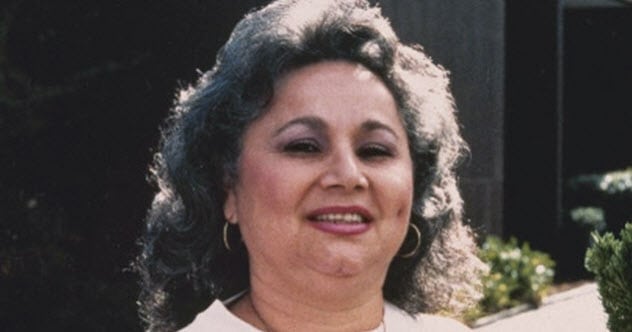

Some criminals leave behind a rap sheet. Griselda Blanco left behind a whole genre. Long before every streaming service discovered it could slap a moody soundtrack over cartel history and call it prestige television, Blanco had already become one of the most infamous figures in the cocaine trade. She was feared, mythologized, exaggerated, dramatized, and turned into a dark pop-culture symbol that still makes headlines decades after her death.
Known as the “Godmother of Cocaine,” Blanco helped build smuggling routes between Colombia and the United States, became a major player in New York and Miami, and created a legend so oversized that even the verified parts sound like they were written by a screenwriter who desperately needed an editor. The strange thing is that the truth is already more than enough.
This article breaks down the craziest Griselda Blanco facts without turning her into a superhero, because she was not one. She was a central figure in a violent criminal world that left real damage behind. Still, understanding how she rose, how she operated, and why her story keeps resurfacing helps explain a big chapter in the history of the Miami drug wars, the cocaine cowboys era, and the endless American fascination with outlaw mythology.
1. She became a legendary drug boss in an era when almost nobody expected a woman to run that kind of empire
One reason Griselda Blanco still stands out is simple: she became one of the most notorious power brokers in a male-dominated criminal world. In the 1970s and 1980s, she rose from the Colombian underworld into the U.S. cocaine trade and built a network that moved enormous quantities of drugs into major American cities. That alone made her unusual. The scale of it made her unforgettable.
Blanco wasn’t just adjacent to power. She was the power. Reports about her empire often describe a distribution machine stretching from Colombia into New York, Miami, and Southern California. That mattered because this was the period when cocaine was becoming a booming business in the United States, and Blanco helped turn that market from a loose hustle into a ruthlessly organized enterprise.
In other words, she was not merely “around” history. She helped shape it. And yes, that is the kind of fact that makes people keep comparing her to movie gangsters. The difference is that movie gangsters usually don’t come with customs-friendly lingerie logistics.
2. One of her most infamous “innovations” involved bras and girdles with hidden compartments
If you’ve ever heard the story that Blanco smuggled cocaine in specially designed bras and girdles, that detail is not just tabloid glitter. It is one of the most repeated and best-known parts of her story. Multiple accounts say she used female couriers wearing undergarments with concealed pockets to move cocaine into the United States.
That detail sounds absurd until you remember why it worked: security in that era was much less sophisticated than it is now. According to later retellings, Blanco understood something many criminals misslogistics beats drama. While other traffickers may have preferred macho theater, she treated smuggling like product design. Hide the merchandise, reduce suspicion, keep the pipeline moving.
This is one reason the true story of Griselda Blanco keeps fascinating audiences. Her notoriety was not built on personality alone. She also had a talent for criminal systems thinking. It was evil, efficient, and horribly effective. If history gave awards for terrible entrepreneurship, this would be one of the darkest entries on the list.
3. She was tied to the chaos that helped define Miami’s cocaine wars
To understand Blanco’s reputation, you have to understand Miami in the late 1970s and early 1980s. This was the era of the cocaine cowboys, when drug money flooded the city, public violence surged, and Miami’s image became tangled with smuggling, flashy excess, and fear. Blanco is widely described as one of the central figures in that transformation.
Her operation didn’t just sell cocaine. It intensified a brutal competitive culture where intimidation and retaliation were treated as business tools. Reports frequently connect her to the use of motorcycle-riding hit teams and to the wider atmosphere of terror that helped make Miami a byword for drug-era mayhem. Even when specific body counts vary by source, the broader picture stays the same: Blanco’s name became inseparable from a period of urban panic.
That is why so many Griselda Blanco facts feel larger than life. They are attached to one of the most cinematic and catastrophic chapters in modern American crime history. Miami was becoming a global symbol, and Blanco was one of the people helping write that ugly script.
4. Her nicknames were unforgettable, and none of them exactly screamed “good choices”
Few criminals have ever had a branding package as alarmingly effective as Griselda Blanco. “The Godmother.” “The Godmother of Cocaine.” “The Black Widow.” “La Madrina.” You could hear any one of those in a movie trailer and immediately know somebody’s day is about to go very badly.
The “Black Widow” label came from repeated claims that multiple husbands or partners around her died violently. The “Godmother” title reflected her authority in the drug trade and her near-mythical reputation in Miami and beyond. These nicknames mattered because they helped turn a criminal figure into a legend, and legends are sticky. They survive prison, newspaper archives, documentaries, and now streaming platforms.
But nicknames also create distortion. They can make a real person sound like a comic-book villain, which is convenient for pop culture and terrible for historical clarity. Blanco’s aliases were effective because they captured her image in a flash. They were also part of the process that turned her from a criminal operator into a dark American myth.
5. Her rise included New York, not just Miami, and that part often gets overlooked
Most people connect Blanco with Miami, but her story in the United States did not begin there. Before she became a towering figure in South Florida, she and her associates were already working in New York. That matters because it shows her network was national in scope, not just local.
In April 1975, Blanco and more than 30 associates were indicted on federal drug conspiracy charges as part of a major case known as Operation Banshee. That detail is huge. It means law enforcement already saw her as part of a large, organized trafficking structure by the mid-1970s. She was not some sudden Miami phenomenon who appeared out of thin tropical air wearing sunglasses and chaos. She had already been operating at scale.
When she later became dominant in Miami, she was building on experience, contacts, and methods developed earlier. The New York chapter is the prequel many casual readers skip, but it helps explain why she could move so aggressively once Florida became the next major battlefield.
6. Her downfall was real, but the legal story got weird in a way Hollywood would probably reject as “too much”
Griselda Blanco was arrested in California in 1985 after years of evading capture. She was tried in New York and sentenced to 15 years in prison on federal drug conspiracy charges. That part sounds straightforward enough. The truly strange chapter came later.
While in prison, she also faced murder charges in Florida. Prosecutors built part of that case around testimony from hitman Jorge Ayala. But then the proceedings were derailed by a bizarre scandal involving Ayala and women working in the prosecutor’s office. Yes, really. The sort of detail that would make viewers roll their eyes in a crime series was, inconveniently, part of the actual legal mess.
Ultimately, Blanco pleaded guilty in 1998 to three counts of second-degree murder and received concurrent sentences. So the state still secured a conviction, but the route there was anything but clean. Her story is a reminder that criminal empires are often chaotic, but so are the institutions trying to dismantle them.
7. She named her son Michael Corleone, which is either bold, bizarre, or the least subtle move in crime history
Some details are so on-the-nose that they feel almost parody-proof. One of Blanco’s four sons was named Michael Corleone Blanco, after the iconic character from The Godfather. That single fact has probably launched a thousand “you cannot make this up” reactions, and honestly, fair enough.
The name reveals something about how Blanco’s world intersected with the mythology of organized crime. It suggests not just criminal ambition, but a self-conscious embrace of criminal iconography. She was not simply living in the underworld. She was, in some sense, curating a role within it.
Michael Corleone Blanco later became a public figure in his own right through interviews and reality television, which only added another surreal layer to the family saga. It is one of the clearest examples of how Blanco’s legacy spilled from the world of crime into the realm of celebrity, branding, and media fascination. For better headlines, there may never have been a more efficient baby name. For family stability, probably less ideal.
8. A surprising amount of her life story is still disputed, fuzzy, or wrapped in legend
Here is one of the most important facts about Griselda Blanco: not every “fact” attached to her is equally solid. Even reputable sources disagree on some details, including whether she was born in Cartagena or Santa Marta. Stories about her childhood, including one especially notorious tale of kidnapping and killing at age 11, are often repeated but remain difficult to verify with confidence.
That uncertainty is not a minor footnote. It is part of the story. Blanco’s life sits at the intersection of journalism, law enforcement lore, underworld storytelling, and pop-culture exaggeration. Add in decades of retellings, plus the tendency of cartel history to attract embellishment like a magnet attracts fridge poetry, and the result is a biography with blurry edges.
So when readers ask, “What are the craziest facts about Griselda Blanco?” the smartest answer is sometimes: the wildest part is how myth and reality fused around her. Even the gaps tell you something. They show how notoriety can become its own kind of smoke machine.
9. She died in 2012 in a way that echoed the methods long associated with her name
After serving her time and being deported to Colombia in 2004, Blanco reportedly lived more quietly than she had during her peak years. But her story did not end quietly. In September 2012, she was killed outside a butcher shop in Medellín by a gunman on a motorcycle.
That detail hit the public with eerie force because motorcycle assassinations had long been associated with Blanco’s own operations during the Miami drug wars. The symbolism was impossible to miss. It felt like history snapping shut on itself with grim precision.
This does not make her ending poetic. It makes it bleak. Her death reinforced one of the central truths of cartel history: the methods people use to dominate violent systems often become the same methods that consume them. In Blanco’s case, the final headline practically wrote itself, which is one reason the story has remained lodged in the public imagination.
10. Pop culture cannot stop revisiting her, but it keeps running into the same problem: she is hard to dramatize without glamorizing
From documentaries to dramatizations to the 2024 Netflix series Griselda starring Sofía Vergara, Blanco’s life keeps being retold. And every retelling runs into the same ethical wall: how do you make an undeniably compelling figure watchable without turning her into a dark girlboss icon?
That tension has become a major part of her legacy. Critics have argued that modern adaptations sometimes soften or stylize what should remain morally disturbing. Others point out that these projects can also bring attention to overlooked figures around her story, including investigators such as June Hawkins, a Miami detective whose role in Blanco’s downfall gained fresh attention through recent coverage.
So yes, Griselda Blanco remains a cultural obsession. But that obsession says as much about us as it does about her. America loves a criminal legend almost as much as it loves pretending it does not.
The modern experience of learning about Griselda Blanco
There is a specific experience that comes with learning about Griselda Blanco today, and it is very different from simply reading a crime timeline. You start with curiositymaybe because of the Netflix series, maybe because someone mentions the “Godmother of Cocaine,” maybe because the name pops up in a documentary about Miami in the 1980s. At first, the story feels almost unreal. The nicknames are cinematic. The scale is enormous. The details sound too outrageous to belong to one person. Then, slowly, the glamour falls away.
That is the strange emotional rhythm of Blanco’s story. On the surface, it has all the ingredients pop culture loves: ambition, reinvention, money, betrayals, fashion, danger, and a central figure who seems to break every rule in the book. But the longer you sit with it, the less it feels stylish and the more it feels like a study in damage. The real experience of understanding Blanco is not “wow, what a legend.” It is more like, “wow, this is what happens when myth makes violence look marketable.”
For readers interested in Griselda Blanco history, the most eye-opening part is often how much of the story is really about systems. It is about smuggling routes, porous borders, the hunger of the U.S. drug market, the glamor economy of Miami, and the media machinery that can turn a criminal into a symbol. Blanco herself is the headline, but behind the headline is a wider story about how cities, governments, entertainment, and black-market money all collide.
There is also the experience of sorting truth from legend. One source says Cartagena, another says Santa Marta. One retelling presents her as a mastermind innovator, another as a brutal opportunist surrounded by chaos and exaggeration. One adaptation frames her as a woman surviving male violence, another warns that this framing risks sanding down the horror of what she did. Reading across those accounts is almost like watching history argue with storytelling in real time.
And then there is the Miami factor. Blanco’s story feels inseparable from the city’s reinvention during the cocaine era. Even people who were not alive for those years often recognize the visual language it created: neon excess, speedboats, money, white suits, tabloid panic, law-enforcement crackdowns, and news footage that looks like a thriller trailer with worse consequences. Learning about Blanco means learning how that aesthetic was built on fear as much as fantasy.
In the end, the experience of engaging with Griselda Blanco’s story is a lesson in caution. It reminds us that charisma and notoriety are not the same thing as greatness. It reminds us that crime narratives become dangerous when they blur into admiration. Most of all, it reminds us that some figures survive in memory not because they deserve celebration, but because they exposed something dark and durable about power, profit, and the stories societies choose to keep retelling.
Final thoughts
Griselda Blanco remains one of the most infamous names in cartel history because her story combines scale, fear, mythology, and media magnetism in a way few others do. The 10 craziest facts about Griselda Blanco are not just outrageous trivia. Together, they reveal how one criminal figure became a symbol of the Godmother of Cocaine era, the Miami drug wars, and the uneasy line between history and entertainment.
That is why she still fascinates. Not because she should be admired, but because her story shows how crime can become spectacle, how spectacle becomes legend, and how legend keeps showing up decades later wearing better lighting and a streaming budget.
Note: This article is written for web publication, based on widely reported historical information, and avoids graphic detail while clearly acknowledging disputed claims where the public record is inconsistent.