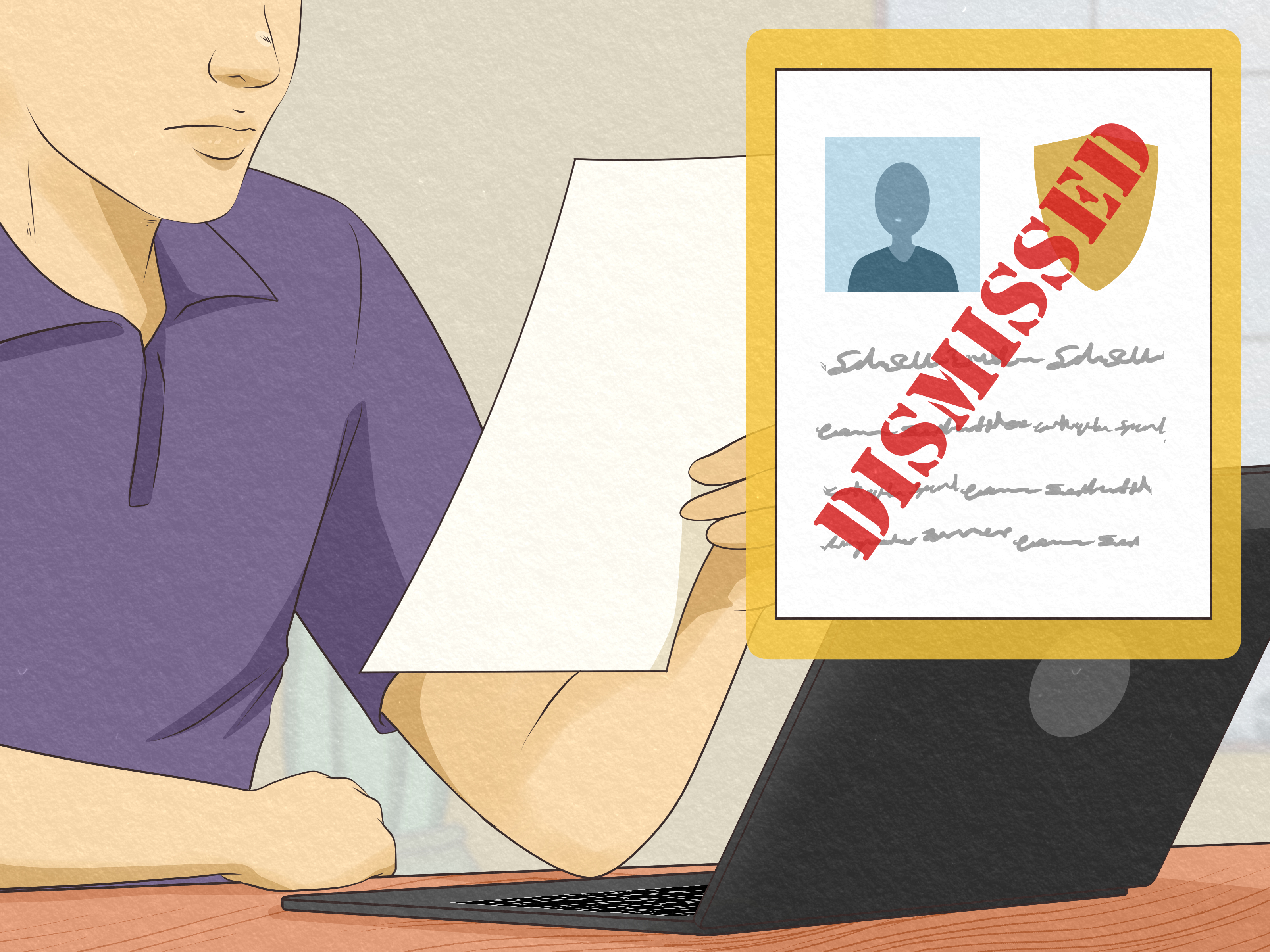

A court case can feel like a television drama, except the paperwork is heavier, the coffee is worse, and nobody delivers a brilliant closing argument before the first commercial break. Whether you are facing criminal charges or defending a civil lawsuit, you may naturally wonder whether the case could be dismissed before trial.
Some warning signs genuinely suggest that dismissal is becoming more likely. The prosecutor may lose crucial evidence. A civil plaintiff may have filed too late. The court may lack jurisdiction. A complaint may contain plenty of outrage but no legally recognized claim. Still, no single clue guarantees an early victory.
The most meaningful signs are usually found in court filings, evidentiary rulings, discovery responses, witness developments, and statements made during hearings. Here are 11 signs your case may be dismissed, along with an explanation of how each one can apply to criminal and civil cases.
What Does It Mean When a Case Is Dismissed?
A dismissal ends some or all of the claims or charges without a conventional trial verdict. In a criminal case, the government may ask to dismiss charges, or the judge may dismiss them because of a legal or constitutional defect. In a civil case, the plaintiff may voluntarily withdraw the lawsuit, or the defendant may obtain dismissal through a motion.
Dismissal With Prejudice
A dismissal with prejudice ordinarily prevents the same claim or charge from being filed again. This is the courthouse equivalent of closing the door and removing the doorknob. It is a powerful result, but courts do not grant it casually.
Dismissal Without Prejudice
A dismissal without prejudice usually permits refiling after the problem is corrected, assuming the applicable deadline has not expired. For example, a civil case dismissed because of defective service might be filed or served again. A defective criminal indictment may also be replaced with a properly drafted charging document in some circumstances.
That distinction matters. Hearing “the case was dismissed” sounds final, but the words following it can determine whether the legal dispute is truly over or merely taking an inconvenient intermission.
Federal Rules 12, 41, and 48 distinguish several dismissal procedures and consequences.
11 Signs Your Criminal or Civil Case May Be Dismissed
1. The Prosecutor or Plaintiff Is Actively Backing Away
The clearest sign of possible dismissal is not a mysterious facial expression from the judge. It is a concrete action by the party pursuing the case.
In a criminal matter, the prosecutor may announce that the office is reviewing whether to continue, ask for time to reassess the evidence, reduce multiple charges to one minor count, or file a formal motion to dismiss. Federal prosecutors are generally expected to proceed only when they believe admissible evidence can obtain and sustain a conviction beyond a reasonable doubt.
In a civil case, the plaintiff may propose a voluntary dismissal, stop opposing a dismissal motion, sign a settlement agreement requiring dismissal, or file a notice withdrawing the action. These are much stronger indicators than rumors that “the other side looks worried.” Lawyers often look worried. It is practically part of the uniform.
DOJ principles require federal prosecutors to assess whether admissible evidence is sufficient to obtain and sustain a conviction.
2. Crucial Evidence Has Been Suppressed or Excluded
Evidence is the fuel that moves a case. When a judge excludes the main evidence, the case may remain parked indefinitely.
In a criminal prosecution, a successful motion to suppress may prevent the government from using drugs, weapons, electronic records, statements, or other evidence obtained through an unlawful search or interrogation. Suppression does not automatically dismiss the charges. However, if the excluded evidence was necessary to prove identity, possession, intent, or another element, the prosecutor may have little left to present.
In a civil case, evidence may be excluded because it is inadmissible hearsay, lacks authentication, violates discovery rules, or requires expert testimony that the plaintiff failed to obtain. Imagine a product-liability plaintiff who must prove a technical defect but has no qualified expert. The complaint may sound convincing, yet the proof may never reach a jury.
The exclusionary rule may prevent unconstitutionally obtained evidence from being used in criminal trials, although several exceptions apply.
3. The Key Witness Recants, Disappears, or Becomes Unreliable
A weak witness does not necessarily destroy a case. A collapsing only witness might.
Suppose a criminal charge depends almost entirely on one eyewitness. That witness later admits uncertainty, contradicts earlier statements, refuses to cooperate, or is shown to have received undisclosed benefits. If no physical evidence, video, confession, or independent testimony supports the accusation, dismissal becomes more realistic.
The same principle applies in civil litigation. A plaintiff alleging an oral agreement may depend on one person who supposedly heard the promise. If that witness denies hearing it or lacks firsthand knowledge, the plaintiff may be unable to prove that a contract existed.
Witness problems must be evaluated carefully. A recantation is not automatically accepted as true, and prosecutors may sometimes use earlier statements. The important question is whether enough admissible and credible evidence remains after the witness problem is considered.
4. New Evidence Directly Undermines an Essential Allegation
Helpful evidence is good. Evidence that makes an essential allegation impossible is much better.
Examples include time-stamped video showing that a criminal defendant was elsewhere, digital records contradicting the prosecution’s timeline, medical records disproving the claimed cause of an injury, or a signed agreement showing that the civil defendant performed exactly what the contract required.
In criminal cases, prosecutors have constitutional and ethical disclosure obligations concerning material exculpatory and impeachment evidence. When newly disclosed information contradicts an element of the offense or seriously damages the government’s principal witness, the case may be reduced or dismissed.
In civil cases, discovery can uncover documents that make the complaint unsustainable. A plaintiff may allege nonpayment, only for bank records to show that payment was made. At that point, the lawsuit is no longer a factual mystery. It is an accounting error wearing a necktie.
Current DOJ policy addresses disclosure of information inconsistent with a charged element or substantially undermining prosecution evidence.
5. The Charge or Complaint Does Not State a Valid Legal Claim
A court does not ask only whether something unpleasant happened. It asks whether the alleged facts satisfy the elements of a recognized offense or cause of action.
In a criminal case, an indictment or information may be challenged if it fails to allege an essential element, uses an invalid legal theory, or contains certain defects in how the prosecution was instituted. Dismissal may follow, although the government might be permitted to correct the problem and file again.
In a civil case, a motion to dismiss for failure to state a claim argues that the complaint remains legally insufficient even when its properly pleaded factual allegations are treated as true. A complaint that says, “The defendant was rude and ruined my week,” may describe an unpleasant Tuesday, but it does not necessarily describe a lawsuit.
Repeated failure to repair the same defect is especially significant. If the court has already allowed amendments and the revised complaint still omits a required element, dismissal with prejudice becomes more plausible.
Federal civil and criminal rules permit challenges to legally insufficient pleadings and charging documents.
6. The Court Lacks Jurisdiction or the Plaintiff Lacks Standing
Before deciding who should win, a court must have legal authority to decide the dispute.
Subject-matter jurisdiction concerns the court’s power to hear a particular category of case. A federal court, for example, generally needs a federal question, qualifying diversity jurisdiction, or another statutory basis. If subject-matter jurisdiction is absent, a federal court must dismiss the action.
Personal jurisdiction concerns the court’s authority over a defendant. A person or business with insufficient connections to the forum may challenge that authority, although the defense can sometimes be waived if it is not raised promptly.
Standing generally requires the civil plaintiff to have a sufficiently concrete and personal stake in the dispute. A person cannot ordinarily sue merely because a policy is annoying, a corporation behaves badly, or a neighbor’s cousin heard something suspicious at brunch.
Jurisdictional defects are among the strongest grounds for dismissal because they concern the court’s power, not merely the persuasiveness of the evidence.
7. The Applicable Statute of Limitations Has Expired
Legal claims come with deadlines. Unfortunately, courts do not usually accept “I had a lot going on” as a tolling doctrine.
In civil cases, statutes of limitations vary by state and by claim. Personal injury, fraud, breach of contract, defamation, professional malpractice, and claims against government agencies may all have different filing periods. The calculation may also depend on when the injury was discovered, whether the defendant was absent, or whether another tolling rule applies.
Criminal offenses also have limitation periods, although serious offenses may have lengthy deadlines or no limitation period at all. Filing a charging document within the applicable period may preserve the prosecution even if the case continues beyond that date.
If the deadline clearly expired before the case was filed and no valid exception applies, dismissal may be highly likely. However, limitation calculations can be surprisingly technical, so calendar arithmetic should not replace legal analysis.
State limitation periods and tolling rules differ considerably; filing after the applicable period may support dismissal.
8. Service of Process Is Defective and Cannot Be Timely Corrected
A civil defendant generally must receive legally sufficient notice of the lawsuit. Sending a photo of the complaint through social media with the message “surprise!” is rarely the preferred method.
Service rules control who may deliver the documents, what must be delivered, where delivery may occur, and when proof of service must be filed. A defendant can sometimes seek dismissal when these requirements are not met.
Improper service frequently results in dismissal without prejudice, allowing the plaintiff another opportunity. The issue becomes more serious when the deadline for service has expired, the court has already granted extensions, or the statute of limitations now prevents refiling.
Criminal cases use different procedures, but serious defects in arrest warrants, charging documents, grand-jury proceedings, or the institution of the prosecution may also support pretrial challenges.
9. Delay Has Created a Speedy-Trial Violation
A criminal defendant has constitutional and, in many jurisdictions, statutory speedy-trial protections. These rules do not mean every delay requires dismissal. Courts consider such matters as the length and reason for delay, whether the defendant asserted the right, and whether the delay caused prejudice.
Federal law also establishes time limits under the Speedy Trial Act, with numerous periods that may be excluded from the calculation. If a qualifying violation occurs, dismissal can be mandatory, although the judge may need to decide whether the dismissal is with or without prejudice.
Civil cases do not use the Sixth Amendment speedy-trial right. Nevertheless, prolonged inactivity can lead to dismissal for failure to prosecute, especially when the plaintiff repeatedly misses hearings, ignores discovery, disobeys court orders, or makes no meaningful effort to move the case forward.
A proven Sixth Amendment speedy-trial violation requires dismissal; statutory calculations can involve excluded periods and additional factors.
10. Discovery Shows the Opposing Party Cannot Meet Its Burden
Many cases look strong when the allegations are viewed alone. Discovery tests whether the evidence has been invited to the party.
In a criminal case, the government must prove every element beyond a reasonable doubt. If discovery reveals no reliable identification, no admissible connection to the seized property, no evidence of intent, and no credible confession, the prosecution may reconsider the charges.
In a civil case, the plaintiff usually carries the burden of proving the essential elements by a preponderance of the evidence. Depositions, document requests, admissions, expert reports, and business records may reveal that the plaintiff cannot establish causation, damages, ownership, breach, or another required element.
This development may lead to voluntary dismissal, a motion for summary judgment, or dismissal as a discovery sanction. Technically, summary judgment differs from a Rule 12 dismissal, but from the litigant’s perspective, both can end the case before trial.
11. Concrete Exit Procedures Are Already Underway
A case is substantially closer to dismissal when the parties have moved beyond casual discussions and begun completing the required legal steps.
In a civil lawsuit, this may include a signed settlement agreement, a stipulation of dismissal, a filed notice of voluntary dismissal, or confirmation that settlement funds have been delivered. It may also include a pending recommendation to dismiss because the plaintiff repeatedly failed to prosecute the action.
In a criminal matter, relevant signs may include a filed government motion to dismiss, approval of a diversion program that will result in dismissal after completion, a formal decision not to proceed, or a hearing scheduled specifically to address dismissal.
Until the judge signs an order or the authorized filing takes effect, however, the case usually remains active. A handshake in a courthouse hallway may be encouraging, but it is not a certified court order.
Signs That Sound Promising but Do Not Guarantee Dismissal
Some developments are routinely overinterpreted. The prosecutor requesting a continuance does not necessarily mean the criminal case is collapsing. A plaintiff making a low settlement demand does not automatically mean the civil claim is worthless. A judge criticizing one argument does not mean the judge will dismiss the entire action.
Other unreliable “signs” include:
- The opposing lawyer appears nervous or disorganized.
- A police officer misses one preliminary hearing.
- The plaintiff has not contacted the defendant recently.
- The online docket has shown no update for several weeks.
- Friends confidently announce that the case is “obviously getting thrown out.”
Courts act through filings, evidence, hearings, and orders. Body language, gossip, and amateur predictions have considerably less legal authority.
Experience-Based Lessons About Cases Nearing Dismissal
People involved in criminal and civil litigation commonly discover that a case rarely collapses in one cinematic moment. More often, dismissal becomes likely through a sequence of smaller developments. One document contradicts a witness. A scheduled deposition exposes another weakness. The judge orders the opposing party to explain a jurisdictional problem. The response creates two new problems while failing to answer the first one.
A Strong-Looking Case Can Change After Discovery
At the beginning, courts generally have allegations rather than a complete evidentiary record. A police report may sound decisive because it presents one narrative. A civil complaint may describe the plaintiff’s version without mentioning inconvenient documents. Once discovery begins, the situation can change rapidly.
A defendant may receive surveillance footage that does not match an eyewitness description. Business records may reveal that the allegedly unpaid invoice was credited months earlier. Phone-location data may undermine a timeline that previously sounded perfectly reasonable. This is why experienced lawyers are often cautious about predicting results from the initial filings alone.
Procedural Dismissal May Not Be the End
One of the most frustrating experiences for litigants is celebrating a dismissal and then learning that the other side can file again. A dismissal for defective service, improper venue, or a correctable pleading problem is often without prejudice.
Before treating the result as permanent, review the order for phrases such as “with prejudice,” “without prejudice,” “leave to amend,” or “leave to refile.” In criminal cases, determine whether the charge can be refiled, whether a new indictment is possible, and whether the statute of limitations remains open. In civil litigation, consider whether a savings statute or tolling rule permits another lawsuit.
Small Procedural Details Can Become Decisive
Litigants often focus on the dramatic facts while overlooking service dates, filing deadlines, preservation notices, hearing requirements, or local court rules. Yet these details can control the outcome.
A compelling civil claim filed one day late may face dismissal. A strong defense may be waived if it is not raised in the first responsive motion. A criminal defendant may weaken a speedy-trial argument by requesting repeated continuances without understanding how those periods are calculated.
Maintaining an accurate timeline is therefore one of the most practical steps in any case. Record the date of arrest, charging, service, filing, discovery production, hearings, continuances, amendments, and court orders. The calendar may reveal a defense that emotional arguments never uncover.
Dismissal Often Follows Focused Work, Not Passive Waiting
Cases are rarely dismissed simply because a defendant waits long enough and hopes the other side becomes bored. Strong dismissal outcomes commonly follow investigation, legal research, witness interviews, preservation of electronic evidence, carefully drafted motions, and timely objections.
A criminal defense lawyer may need to obtain body-camera footage, challenge a search, document an alibi, or expose undisclosed benefits given to a witness. A civil defense lawyer may need to analyze the complaint element by element, secure contracts and payment records, or prove that the plaintiff sued in the wrong jurisdiction.
The practical lesson is simple: encouraging signs matter most when they are converted into admissible evidence and properly presented legal arguments.
Life After Dismissal May Require Additional Steps
Dismissal does not automatically erase every consequence. A criminal arrest record may remain visible unless sealing or expungement is available and separately requested. Bond conditions may need to be formally released. Seized property may require a return order.
In a civil case, dismissal may leave unresolved questions about attorney fees, costs, confidentiality, liens, counterclaims, or enforcement of the settlement. Parties should obtain the signed order, verify that every claim and party is covered, and keep copies of all settlement and dismissal documents.
The best experience is not merely hearing that a case was dismissed. It is understanding exactly what was dismissed, whether it can return, and what must happen next to close the matter completely.
Conclusion
The strongest signs your case will be dismissed are concrete legal developments: suppressed evidence, an unreliable essential witness, exculpatory records, an expired deadline, defective pleadings, missing jurisdiction, failed service, prolonged delay, or a formal decision by the prosecutor or plaintiff to withdraw.
Even powerful signs are not guarantees. Evidence may be admitted under an exception, a complaint may be amended, charges may be refiled, or the opposing party may discover new proof. Evaluate the complete docket, the applicable law, and the precise language of every court order before assuming the case is over.
Research synthesis based on materials from the U.S. Department of Justice, U.S. Courts, Legal Information Institute at Cornell Law School, Constitution Annotated, American Bar Association, California Courts, New York Courts, The Florida Bar, Illinois Legal Aid Online, FindLaw, Nolo, and the National Association for Public Defense.