
Christmas decorations look innocent enough. A tree in the corner, a wreath on the door, a few candy canes hooked over branches, and suddenly your living room has transformed into the North Pole’s better-organized cousin. But behind those cheerful ornaments are centuries of folklore, religious symbolism, practical problem-solving, marketing genius, international travel, and at least a few questionable fire hazards.
The surprising stories behind popular Christmas decorations reveal that the holiday season has never been just about sparkle. It is about ancient winter rituals, German craftsmanship, Victorian style, American invention, Mexican plants, homemade traditions, and the universal human need to make the darkest part of the year feel bright. From electric Christmas lights to poinsettias, stockings, wreaths, and gingerbread houses, each decoration carries a little cultural luggage in its festive suitcase.
So before you untangle another string of lights while muttering words that would frighten Santa’s elves, take a tour through the history of Christmas decor. These 20 stories may change the way you look at your holiday home.
1. Christmas Trees Began as Winter Hope, Not Living Room Furniture
Long before Christmas trees became the centerpiece of holiday decorating, evergreen branches were used by ancient cultures to symbolize life during winter. When everything else looked frozen, bare, or dramatically uninterested in photosynthesis, evergreens stayed green. That made them powerful symbols of endurance and renewal.
The Christmas tree tradition as we know it is most often connected to Germany, where decorated indoor trees became popular centuries ago. Early trees were not covered in glittery plastic baubles. They were decorated with apples, nuts, paper flowers, candles, and sweets. In other words, the first Christmas tree ornaments were part decor, part snack bar.
2. Ornaments Started as Edible Decorations
Today’s ornaments include everything from hand-blown glass angels to miniature pickup trucks carrying tiny trees. But early Christmas ornaments were often edible. Fruits, nuts, cookies, and candies were hung from branches to represent abundance and hope for the coming year.
German artisans later helped turn ornaments into a true craft. Glass ornaments became especially popular, eventually spreading across Europe and into America. Once mass production arrived, ornaments became easier for ordinary families to buy, collect, and accidentally drop while saying, “It’s fine, nobody liked that one anyway.”
3. Christmas Lights Were Invented Because Candles Were Terrifying
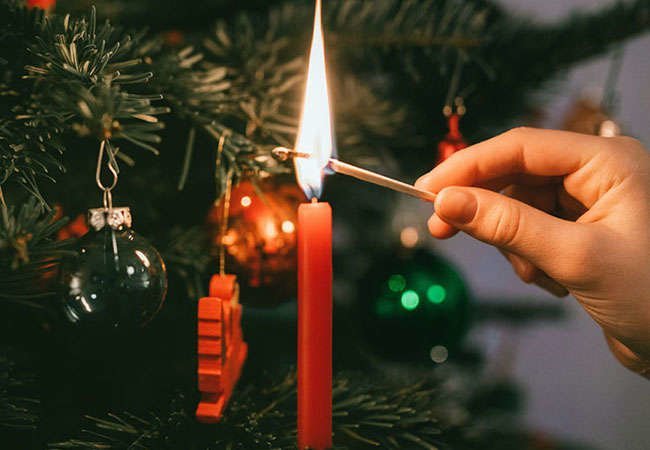
Candles on Christmas trees were beautiful, glowing, and deeply committed to becoming a house fire. Before electric lights, families clipped or tied candles to branches and lit them carefully. The effect was magical, but the risk was obvious.
In 1882, Edward H. Johnson, a colleague of Thomas Edison, hand-wired a string of 80 red, white, and blue electric bulbs for his Christmas tree. The tree even revolved, because apparently simply inventing safer Christmas lighting was not dramatic enough. Electric Christmas lights were expensive at first, but over time they became one of the most beloved holiday decorations in America.
4. Tinsel Was Once Made of Real Silver
Tinsel did not begin as the lightweight, clingy stuff that attaches itself to pets, sweaters, and your soul. Early tinsel was made from thin strips of real silver, designed to reflect candlelight and make Christmas trees shimmer like winter icicles.
Silver looked gorgeous, but it tarnished. Later versions used other metals, and eventually modern materials made tinsel cheaper and easier to produce. Its reputation has swung wildly over the years: glamorous, tacky, nostalgic, tacky again, and now charmingly retro. Tinsel is basically the disco ball of Christmas decor.
5. Wreaths Came From Tree Trimmings
Christmas wreaths are now front-door celebrities, but their origin is wonderfully practical. When families brought evergreen trees indoors, they trimmed branches to shape the tree or make it fit inside the home. Instead of wasting those extra pieces, they wove them into circular wreaths.
The circle came to symbolize eternity, while evergreen branches represented resilience and life through winter. Over time, Christian tradition added more meaning, especially through Advent wreaths with candles. What started as “let’s not waste these branches” became one of the most recognizable Christmas decorations in the world.
6. Garland Was the Original DIY Holiday Hack
Before stores sold pre-lit garland with battery packs and pinecones already attached, families made their own. Evergreen garlands decorated mantels, stair railings, churches, and doorways. They brought fragrance, texture, and color into the home when winter made the outside world look like a black-and-white movie.
In America, homemade garlands often included popcorn, cranberries, dried fruit, and nuts. These decorations were affordable, accessible, and family-friendly. They also required patience, which explains why many modern families now buy garland in a box and call it personal growth.
7. Popcorn Garlands Became a Budget-Friendly American Classic
Popcorn garlands are strongly associated with old-fashioned American Christmas decorating. In the 19th century, popcorn was inexpensive and easy to turn into festive tree trim. Families sometimes dyed popcorn or alternated it with cranberries for a cheerful red-and-white look.
The charm of popcorn garland is that it feels handmade in the best way. It does not need to be perfect. In fact, if your garland has uneven spacing, a few broken kernels, and one suspiciously short section where someone was snacking, that is practically historical authenticity.
8. Candy Canes Have a Twisty Past
Candy canes are surrounded by legends, including stories that connect their shape to shepherds’ crooks or religious symbolism. Some of those details are difficult to prove, but the broader history points to Europe and the popularity of hard sugar sticks.
In the United States, candy canes became much easier to produce thanks to Bob McCormack of Albany, Georgia, and his brother-in-law, Father Gregory Keller. Keller invented a machine that automated the twisting and bending process, helping turn candy canes from fragile handmade treats into mass-produced Christmas staples. That is right: one of Christmas’s sweetest symbols owes a debt to engineering.
9. Stockings Come From a Saint Nicholas Legend
The Christmas stocking tradition is commonly tied to a legend about Saint Nicholas. According to the story, Nicholas secretly helped a poor family by dropping gold into stockings or shoes left near the fire to dry. The gift saved the family from hardship and became associated with secret generosity.
Over time, children began hanging stockings in hopes of receiving small gifts, sweets, fruit, or coins. Today, stockings are often filled with candy, toys, lip balm, novelty socks, and at least one item purchased at the checkout counter in a mild panic.
10. Poinsettias Were Once Known by a Different Name
Poinsettias are native to Mexico, where they were known long before they became a standard Christmas plant in the United States. Their bright red bracts bloom naturally during the winter season, making them a striking choice for holiday celebrations.
The plant’s English name comes from Joel Roberts Poinsett, the first U.S. minister to Mexico and an amateur botanist who sent cuttings back to South Carolina in the 1820s. Later, commercial growers in California helped make poinsettias a massive holiday industry. Today, they decorate churches, offices, grocery stores, and homes, even though many people still cannot spell “poinsettia” without a quick emotional pause.
11. Mistletoe Was Mysterious Before It Was Romantic
Mistletoe has a long history in folklore and ancient symbolism. Various cultures associated it with fertility, vitality, peace, and protection. Because it grows on trees and stays green in winter, it seemed almost magical to people trying to explain nature’s stranger habits.
The kissing tradition developed later, especially in Britain, and eventually crossed the Atlantic through literature and custom. Today, mistletoe is less a botanical mystery and more a holiday social risk. Hang it wisely.
12. Holly Brought Color, Symbolism, and Pointy Little Leaves
Holly has been used in winter celebrations for centuries. Its glossy green leaves and red berries made it a natural choice for decorating during the coldest months. In Christian symbolism, holly was later associated with the crown of thorns and drops of blood, adding religious meaning to an older winter plant tradition.
It also has a practical advantage: holly looks festive without needing much help. Add it to a mantel or wreath and it immediately says, “This house understands seasonal styling.” It also says, “Please do not grab me carelessly.”
13. Nativity Scenes Began as a Teaching Tool
Nativity scenes present the story of Jesus’s birth through figures such as Mary, Joseph, the Christ Child, shepherds, animals, angels, and the Magi. The tradition is often linked to Saint Francis of Assisi, who used a live nativity scene in the 13th century to help people visualize the Christmas story.
Over the centuries, nativity scenes evolved into carved, painted, ceramic, and collectible displays. Some are simple and reverent; others include entire villages, waterfalls, tiny bakers, miniature sheep, and enough scenery to qualify for zoning review.
14. Nutcrackers Became Christmas Icons Because of a Ballet
Nutcrackers began as functional tools, and decorative wooden nutcrackers became especially associated with German craftsmanship. Many were carved as soldiers, kings, or stern little authority figures who looked ready to inspect your wrapping technique.
Their Christmas fame grew through the story of “The Nutcracker” and Tchaikovsky’s ballet, which is set on Christmas Eve. The ballet helped transform nutcrackers from practical kitchen tools into holiday guardians, collectibles, and oversized front-porch statement pieces.
15. Gingerbread Houses Were Not Always Christmas-Only
Gingerbread has a much older history than the modern holiday house kit. Spiced gingerbread appeared in Europe centuries ago, and gingerbread houses became associated with German traditions. The Brothers Grimm story “Hansel and Gretel” helped popularize the image of an edible house, though the tradition itself may be older.
In America, gingerbread became part of both holiday baking and decorative display. The White House has its own gingerbread traditions, and many families now build gingerbread houses that range from charming cottages to frosting-based structural emergencies.
16. Christmas Villages Grew From Miniature Worlds
Christmas villages appeal to anyone who has ever thought, “My mantel needs a tiny bakery, a skating pond, and a ceramic mayor.” These miniature scenes became popular as families created little holiday landscapes under trees or on tabletops.
In the United States, collectible villages gained momentum in the 20th century. They combine nostalgia, storytelling, and the irresistible joy of tiny illuminated windows. A Christmas village is less a decoration than a seasonal real estate empire.
17. Angels Reflect Both Faith and Victorian Style
Angels appear throughout Christmas decorating because of their role in the Nativity story, announcing the birth of Jesus and bringing messages of peace. As Christmas decorating expanded in the 19th century, angel ornaments, toppers, and figures became increasingly common.
Victorian aesthetics helped shape the soft, glowing angel imagery many people still recognize today. Whether placed on a tree, mantel, or tabletop, angels add a note of reverence and calmunless the tree topper refuses to sit straight, in which case they add character.
18. Stars Became the Tree Topper With a Story
The star on top of a Christmas tree is often connected to the Star of Bethlehem, which guided the Magi in the Nativity story. Its placement at the highest point of the tree gives it symbolic importance and visual drama.
Stars also work beautifully as design elements because they catch light, balance the tree’s triangular shape, and politely distract from any bare patch near the top. Whether made of straw, metal, glass, paper, or glitter, the star topper remains one of the most meaningful Christmas decorations.
19. Santa Decorations Were Shaped by American Popular Culture
Santa Claus decorations draw from a blend of Saint Nicholas legends, Dutch traditions, literature, illustration, advertising, and American imagination. By the 19th century, poems, prints, and cartoons helped shape Santa into the jolly, gift-giving figure familiar today.
Once Santa became a visual icon, he naturally moved into holiday decor. Santa figures now appear as ornaments, inflatables, cookie jars, mugs, wreath accents, and motion-activated musical statues that may or may not frighten guests.
20. White House Christmas Decor Helped Make Themes Popular
The White House has played a major role in American Christmas decorating culture. The first known White House Christmas tree was placed during the Benjamin Harrison administration in 1889, and later first ladies helped expand and shape official holiday decorating traditions.
Jacqueline Kennedy is especially remembered for introducing themed White House Christmas trees in the 1960s. Since then, themes have become a major part of holiday decorating, from elegant historical concepts to family trees built around travel, pets, handmade ornaments, or the timeless theme of “we bought this all on sale.”
Why Christmas Decorations Still Matter
Christmas decorations endure because they do more than fill space. They turn memory into something visible. A wreath on the door says welcome. A stocking says someone is expected. A tree covered in ornaments says the family history department has opened for the season. Even the most mismatched decor carries meaning when it has been unpacked year after year.
Many popular Christmas decorations began as practical solutions. Wreaths used leftover branches. Popcorn garlands used affordable pantry staples. Electric lights reduced the danger of open flames. Other decorations grew from faith, folklore, craft, or commerce. Together, they form a holiday language that Americans understand instantly, even when every household speaks it with a different accent.
Personal Experiences and Real-Life Reflections on Christmas Decorating
One of the funniest things about Christmas decorating is that everyone begins with a vision and ends with a negotiation. The vision is usually peaceful: soft lights, tasteful greenery, a tree that looks like it belongs in a magazine, and perhaps a cup of cocoa nearby. The reality often involves a missing extension cord, one ornament hook lodged in the carpet, and someone asking why the outdoor reindeer has only one antler this year.
That is part of the charm. Christmas decorations are not meant to be museum exhibits. They are memory machines. A slightly chipped ornament from childhood may matter more than the perfect glass bauble from a designer collection. A paper snowflake made by a child can outshine a luxury garland because it carries a story. Even decorations that are objectively ridiculous can become beloved simply because they return every December like cheerful old friends.
Many families also develop decorating rituals without realizing it. Someone always handles the lights because they are “good at it,” which usually means they complained the least one year and got permanently promoted. Someone else unwraps ornaments and tells the same story about each one. A certain song plays while the tree goes up. A certain cookie gets burned. A certain box remains mysteriously full even after everyone swears all the decorations are finished.
The best holiday homes are often the ones that mix history with personality. A traditional evergreen wreath can hang next to a modern porch display. Vintage tinsel can sparkle beside LED lights. A nativity scene can share the room with nutcrackers, Santa mugs, gingerbread houses, and a poinsettia that everyone is trying very hard not to overwater. Christmas decor works because it welcomes layers.
There is also something grounding about decorating with natural materials. Fresh greenery, pinecones, oranges, cinnamon sticks, cranberries, and popcorn connect modern households to older traditions. They remind us that Christmas style does not have to come entirely from a store. Some of the most beautiful decorations are simple, inexpensive, and temporary. They dry, fade, crumble, or get eaten, and that is okay. Not every decoration needs a storage bin and a label maker.
At the same time, modern convenience deserves applause. Pre-lit trees have saved countless evenings. Shatterproof ornaments have protected families with toddlers, cats, and enthusiastic adults. Battery-operated candles provide a warm glow without turning the centerpiece into a fire department training exercise. The evolution of Christmas decorations is really a story of people trying to keep the magic while reducing the chaos.
If there is one lesson behind these 20 surprising stories, it is that Christmas decorating has always been creative, adaptive, and deeply human. People use what they have, borrow what they love, improve what scares them, and pass down what matters. Whether your style is classic, rustic, maximalist, minimalist, vintage, handmade, or “the attic exploded,” your decorations are part of a long, fascinating tradition.
Conclusion
The history of Christmas decorations proves that the holidays are decorated with more than ribbon and lights. Behind every tree, wreath, stocking, candy cane, poinsettia, and gingerbread house is a story shaped by culture, faith, invention, craft, and family life. Some traditions are ancient, some are surprisingly modern, and some became popular because someone found a smarter way to make them.
That is what makes Christmas decor so enduring. It is not just about making a home look festive. It is about creating warmth in winter, passing memories from one generation to another, and turning ordinary rooms into places of wonder. The next time you hang an ornament or plug in the lights, remember: you are not just decorating. You are joining a centuries-old celebration of hope, creativity, and sparkle.