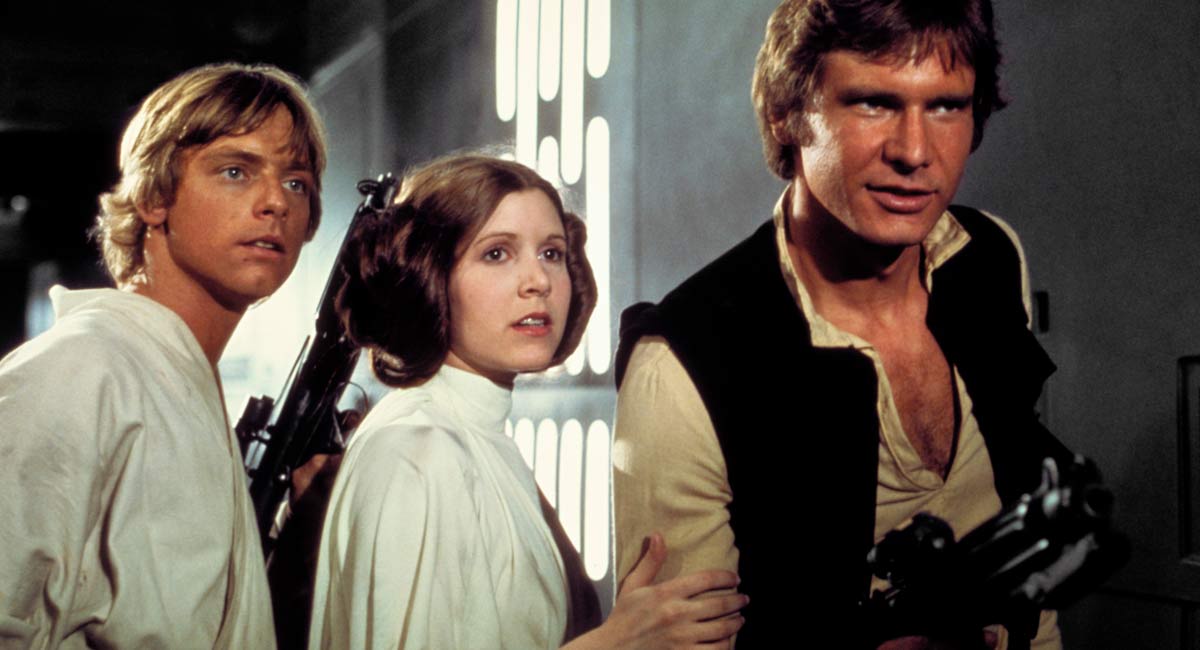

Star Wars is one of the rare movie franchises that can inspire goosebumps, Halloween costumes, academic essays, family arguments, and a suspicious amount of toy storage in one closet. It gave us lightsabers, Darth Vader’s breathing, John Williams’ thunderbolt of a score, the Millennium Falcon, Princess Leia’s courage, Luke Skywalker staring at twin suns, and the deeply important cultural question: “Would I survive five minutes on Tatooine?” Probably not. Sand alone would defeat most of us.
But because the galaxy far, far away means so much to so many people, fans have also spent decades debating what went wrong. The prequels were too political. The sequels were too reactive. The special editions changed too much. The Ewoks were too cute. Jar Jar was too Jar Jar. Palpatine returned somehow, and the internet has not emotionally recovered.
Still, here is the funny thing: for all the complaints, the Star Wars movies could have been worse. Much worse. Catastrophically worse. “A committee of spice-mining accountants wrote this in a windowless conference room” worse. So instead of simply ranking the best Star Wars movies or arguing over canon until someone throws blue milk, let’s celebrate the disasters we narrowly avoided.
Why Star Wars Survived Its Weirdest Choices
Every major Star Wars era has taken risks. The original trilogy mixed myth, Westerns, samurai cinema, pulp adventure, fantasy, and old movie serials into something that should not have workedbut did. The prequel trilogy expanded the galaxy with Jedi politics, clone armies, and the fall of Anakin Skywalker. The Disney-era films revived beloved icons while introducing Rey, Finn, Poe, Kylo Ren, Jyn Erso, Cassian Andor, and a new generation of hyperspace headaches.
Some choices were divisive, but divisive is not always the same as doomed. A franchise this big survives because its core ingredients are sturdy: hope, family, temptation, rebellion, redemption, friendship, and cool glowing swords. The movies occasionally wobble, but they usually remember that Star Wars is at its best when ordinary people choose courage in a galaxy run by terrifying people in capes.
21 Ways The Star Wars Movies Could Have Been Worse
1. Luke Skywalker Could Have Stayed on Tatooine for Three Movies
Imagine if Luke never left the moisture farm. No Death Star trench run. No Jedi training. No dramatic confrontation with Vader. Just Luke negotiating vaporator maintenance while Aunt Beru says, “Please pick up the power converters after dinner.” The original film works because Luke’s small life crashes into a massive destiny. Keeping him on Tatooine would have turned the saga into Farm Equipment: A New Hope.
2. Darth Vader Could Have Been Less Mysterious
Vader is powerful because he is simple at first: black armor, mechanical breathing, few words, terrible presence. If the first movie had immediately explained his childhood, favorite podracing snack, emotional insecurities, and helmet-cleaning routine, the myth would have shrunk. Star Wars needed Vader to feel like a nightmare before it asked us to understand the man inside the machine.
3. The Force Could Have Become Pure Math
Midi-chlorians remain one of the most debated Star Wars ideas because many fans prefer the Force as spiritual mystery rather than biological measurement. But it could have gone further. The Jedi Council might have carried clipboards, tested blood samples every 12 minutes, and told younglings, “Sorry, your destiny score is only 74.” Thankfully, even with midi-chlorians, the movies still leave room for faith, instinct, discipline, and awe.
4. Han Solo Could Have Been Too Noble From the Beginning
Han works because he begins as a selfish, charming smuggler and slowly becomes a hero. If he had entered the story as a perfect gentleman with excellent tax records and a spotless moral résumé, he would have been less interesting. Star Wars needs scoundrels. It needs characters who pretend not to care, then fly back at the last second because their conscience finally wins the argument.
5. Leia Could Have Been Only a Damsel in Distress
One of the smartest choices in the original trilogy is that Leia is not waiting politely to be rescued. She grabs a blaster, insults everyone, leads under pressure, and often seems like the only adult in the room. The movies could have made her passive, but instead she became one of the franchise’s strongest leaders. Without Leia’s fire, the Rebellion would have had courage but far less organization.
6. The Ewoks Could Have Become the Entire Third Act
The Ewoks are divisive, but they serve a purpose: they show that the Empire can be beaten by underestimating the small, local, and supposedly primitive. That is thematically useful. But the movie could have gone full teddy-bear opera. Thirty minutes of Ewok council meetings? A musical number called “Yub Nub, But Make It Longer”? A subplot about village catering? Even the forest moon has limits.
7. The Prequels Could Have Skipped Obi-Wan’s Personality
Ewan McGregor’s Obi-Wan Kenobi is one of the prequel trilogy’s great stabilizers. He brings wit, restraint, sadness, and a very specific energy of “exhausted teacher on a field trip.” Without that performance, the prequels could have drowned in exposition. Obi-Wan makes the politics easier to watch because he keeps reacting like a man who knows the galaxy is collapsing but still has to finish grading Anakin’s behavior.
8. Jar Jar Binks Could Have Become the Main Character
Jar Jar is already one of the most controversial characters in the saga. Now imagine if The Phantom Menace had fully centered on him. Picture every lightsaber duel interrupted by slapstick. Picture Senate debates resolved by accidental pratfalls. Jar Jar has a place as comic relief, but too much of him would have turned galactic tragedy into a two-hour rubber chicken routine.
9. Darth Maul Could Have Had No Visual Impact
Darth Maul does not get endless dialogue in The Phantom Menace, but his design is unforgettable: red-and-black face, horns, double-bladed lightsaber, predatory silence. The movie could have given us a forgettable villain in a gray robe named Darth Administrative Error. Instead, Maul became iconic almost instantly because Star Wars understands that sometimes a character’s silhouette can do half the storytelling.
10. Anakin’s Fall Could Have Been Even More Sudden
Anakin Skywalker’s turn to Darth Vader remains heavily debated, but it could have been far clumsier. He might have woken up one morning, spilled caf on his tunic, and declared war on democracy. The prequels at least connect his fall to fear, attachment, manipulation, pride, and desperation. The execution is imperfect, but the ingredients are tragic. A worse version would have made evil feel like a random calendar appointment.
11. The Clone Wars Could Have Stayed Offscreen Forever
The movies introduce the Clone Wars as a huge galactic conflict, but the animated series later deepened the era tremendously. Without that broader storytelling, many characters and themes would feel thinner. The films could have left the clones as anonymous soldiers and Anakin’s heroism as mostly theoretical. Instead, the larger franchise gave that period moral weight, friendship, betrayal, and the slow horror of Order 66.
12. The Special Editions Could Have Changed Everything
Fans still debate changes made to the original trilogy, especially scenes that altered timing, tone, or character interpretation. But it could have been worse. The special editions might have added a digital dance number to every cantina visit, replaced Yoda with a motivational hologram, or inserted a winking CGI porg into the Death Star plans. Compared with that nightmare buffet, the actual changes remain survivable.
13. The Sequel Trilogy Could Have Ignored the Original Heroes Entirely
The sequel trilogy did not satisfy everyone, but it understood that Han, Leia, and Luke still mattered. Their stories were painful, imperfect, and sometimes controversial, yet they were not erased. A worse sequel trilogy might have treated them as museum props or skipped them completely. Instead, the films used their legacy to explore failure, memory, mentorship, and the cost of legends becoming real people.
14. Rey Could Have Been Written Without Inner Conflict
Rey’s story works best when it leans into loneliness, identity, anger, and the fear that her power might define her. A weaker version would have made her cheerful, flawless, and emotionally frictionless. Heroes need cracks. Rey’s uncertainty gives Daisy Ridley something human to play, especially when the story asks whether bloodline, choice, or belonging matters most.
15. Finn Could Have Stayed Only Comic Relief
Finn begins with one of the strongest concepts in modern Star Wars: a stormtrooper who rejects the First Order. That idea carries moral force. The movies sometimes underuse him, but they could have reduced him entirely to jokes and panic. At his best, Finn represents conscience breaking through conditioning. That is powerful, and the franchise would be poorer if it forgot that completely.
16. Kylo Ren Could Have Been Just a Darth Vader Copy
Kylo Ren wears a mask, worships Vader, and throws spectacular tantrums, but the character becomes interesting because he is unstable, wounded, entitled, conflicted, and desperate to be more frightening than he is. A worse version would have made him a smooth Vader clone with no insecurity. Adam Driver’s performance gives Kylo volatility, making him less like a recycled villain and more like a broken heir to a poisoned legacy.
17. Rogue One Could Have Avoided Sacrifice
Rogue One is one of the strongest Disney-era Star Wars films because it commits to the cost of rebellion. Jyn Erso, Cassian Andor, and their team do not get an easy victory lap. A softer version might have saved everyone, handed out medals, and sent the crew to brunch. Instead, the film gives the Death Star plans emotional weight. Hope arrives, but it is paid for.
18. Solo Could Have Explained Every Detail of Han’s Life
Solo: A Star Wars Story already explains several Han Solo details, from his name to his friendship with Chewbacca. But it could have gone completely overboard. We might have learned where he bought every vest, why he tilts his head, and the origin story of each eyebrow movement. Prequels are dangerous because mystery is part of charm. The film is most enjoyable when it relaxes and becomes a space-crime adventure.
19. Palpatine Could Have Returned Even More Casually
“Somehow, Palpatine returned” became a meme because it summarized a gigantic plot twist with impressive speed. But yes, it could have been worse. Palpatine might have returned in a post-credits scene wearing sunglasses. He might have announced himself through a cooking show. The actual return is messy, but Ian McDiarmid still brings theatrical menace. When Palpatine smiles, democracy checks under the bed.
20. The Movies Could Have Abandoned Practical Texture
One reason Star Wars endures is that its galaxy feels used. Ships are scratched. Droids squeak. Cantinas are crowded. Jedi robes look like they have survived several bad laundry cycles. Even when digital effects expanded the universe, the best Star Wars scenes kept a tactile quality. A worse version would look sterile and weightless, like everyone lives inside a very expensive screensaver.
21. Star Wars Could Have Lost Its Sense of Hope
The darkest Star Wars moments work because hope remains possible. The Empire wins battles, families break, Jedi fail, planets die, and villains rise. Yet someone still chooses to fight, forgive, rescue, or resist. If the movies became pure cynicism, they would stop feeling like Star Wars. The franchise can survive awkward dialogue, strange creatures, and questionable plotting. It cannot survive losing hope.
What These “Worse Versions” Reveal About Star Wars
The fun of imagining worse Star Wars movies is that it reveals what the real movies usually get right. The saga is not beloved because every line is perfect. It is beloved because the emotional architecture is strong. A farm boy looks at the horizon and wants more. A princess refuses to surrender. A smuggler discovers loyalty. A father returns from darkness. A scavenger searches for belonging. A stormtrooper chooses conscience. Rebels fight impossible odds because surrender would be easierand morally unbearable.
Star Wars also survives because it welcomes contradiction. It is mythic and silly. Spiritual and commercial. Operatic and goofy. One minute, a character is discussing destiny; the next, a tiny alien is stealing snacks or a droid is screaming in binary. That tonal range is risky, but it is also the franchise’s secret engine. A totally serious Star Wars would be exhausting. A totally silly Star Wars would be empty. The magic lives between the two.
The franchise’s weakest moments often come from imbalance: too much explanation, not enough feeling; too much nostalgia, not enough discovery; too much mystery, not enough payoff. But even then, Star Wars usually leaves behind something memorable. A flawed Star Wars movie can still give us a great duel, a beautiful planet, a strange creature, a heartbreaking farewell, or one line that fans quote forever.
Experiences Related to “21 Ways The Star Wars Movies Could Have Been Worse”
Watching Star Wars as a fan is less like consuming a normal movie series and more like joining a noisy intergalactic family reunion. Everyone has opinions. Someone insists The Empire Strikes Back is untouchable. Someone defends the prequels with the intensity of a Jedi protecting sacred texts. Someone argues that The Last Jedi is either brilliant or a crime scene. Someone else just wants more Darth Maul, which is honestly understandable.
That is why thinking about how the movies could have been worse is such a refreshing exercise. It pulls the conversation away from outrage and back toward appreciation. Yes, a scene may be clumsy. Yes, a plot twist may feel rushed. Yes, certain dialogue sounds like it was negotiated by a committee trapped in an elevator. But then you remember the alternative. Luke could have been boring. Leia could have been sidelined. Vader could have been overexplained too early. The Force could have become a spreadsheet. Suddenly, the actual saga looks sturdier.
Many fans have had the same experience: a Star Wars movie disappoints them in the theater, then years later one scene refuses to leave. Maybe it is Obi-Wan shouting that Anakin was his brother. Maybe it is Yoda lifting the X-wing. Maybe it is Rey catching the lightsaber. Maybe it is Vader’s hallway scene in Rogue One, which caused countless adults to briefly become terrified children in reclining cinema seats. Star Wars has a way of planting moments that outlive the debate around them.
The franchise also grows with its audience. Kids who loved Jar Jar grew up to discover political tragedy in the prequels. Fans who disliked the sequels sometimes found more appreciation for the performances later. Viewers who ignored animated shows eventually realized that The Clone Wars and related series added emotional depth to the films. Star Wars changes because the viewer changes. A movie that once seemed silly can become charming. A scene that once felt slow can become meaningful. Even the weird parts become part of the shared language.
There is also a lesson for storytelling. Big franchises do not need to be flawless to matter. They need emotional anchors. They need characters who want something deeply. They need visual identity, music, stakes, and a reason for audiences to care beyond lore diagrams. Star Wars has made mistakes, but it rarely feels anonymous. Even when fans are frustrated, they are frustrated loudly because they care. Nobody writes a 900-word argument about a franchise that means nothing to them. Well, maybe someone does, but that person probably also has a very organized lightsaber ranking.
In the end, the Star Wars movies could have been worse in hundreds of ways. They could have forgotten wonder. They could have treated myth like homework. They could have replaced characters with references and called it storytelling. Instead, even at their messiest, they usually offer something worth keeping: a spark of rebellion, a strange planet, a family wound, a joke from a droid, a villain’s shadow, or a sunrise over twin suns. That is why the galaxy keeps pulling people back. Not because it is perfect, but because it still feels alive.
Conclusion
“21 Ways The Star Wars Movies Could Have Been Worse” is more than a playful roast of the galaxy’s strangest creative choices. It is a reminder that Star Wars has survived for decades because its foundation is stronger than its flaws. The saga can absorb awkward dialogue, divisive twists, overexplained lore, controversial characters, and the occasional “somehow” because its emotional core still works.
The best Star Wars stories understand that hope is not clean or easy. It is messy, costly, and often carried by people who are scared, unprepared, or arguing inside a spaceship that desperately needs repairs. That is the charm. The galaxy far, far away has never been perfectbut thank the Force it was never as bad as it could have been.
Note: This article is written in original American English for web publication and is based on real Star Wars movie history, lore, production context, and franchise reception.