
Metric conversions are the rare corner of math that usually behaves itself. No mysterious 12 inches in a foot, no 16 ounces sneaking into a pound like an uninvited guest, and no conversion chart that looks like it was designed during a caffeine shortage. In the metric system, units are connected by powers of 10, which means converting measurements is often more about place value than pain.
That is exactly why students, teachers, cooks, science lovers, and ordinary humans trying to measure something without starting a family argument often prefer the metric system. Once you understand the patterns, converting millimeters to centimeters, grams to kilograms, or liters to milliliters becomes much more manageable. In many cases, it becomes fast enough to do in your head without dramatically staring at the ceiling first.
In this guide, we will walk through three practical ways to convert within metric measurements. You will learn the logic behind metric units, see step-by-step examples, avoid common mistakes, and pick up real-world strategies that make these conversions stick. Whether you are working with metric conversion charts, solving a homework problem, measuring ingredients, or checking a science lab result, these methods can help you convert with confidence.
Why Metric Conversions Are So Much Easier
Before diving into the three methods, it helps to know why metric measurements are so conversion-friendly. The metric system is built on a decimal structure. That means the units grow or shrink by factors of 10, 100, or 1,000 depending on the prefix. This is why moving from kilometers to meters or from liters to milliliters feels more orderly than converting miles to feet or gallons to cups.
Here are some of the most common metric prefixes you will see:
- kilo- = 1,000 times the base unit
- hecto- = 100 times the base unit
- deca- = 10 times the base unit
- base unit = meter, gram, or liter
- deci- = one-tenth of the base unit
- centi- = one-hundredth of the base unit
- milli- = one-thousandth of the base unit
So when you convert within the metric system, you are really moving between unit names that are tied to the same base measurement. That is the secret sauce. Or the secret spreadsheet. Depends on your lifestyle.
Way 1: Use the Metric Prefix Pattern
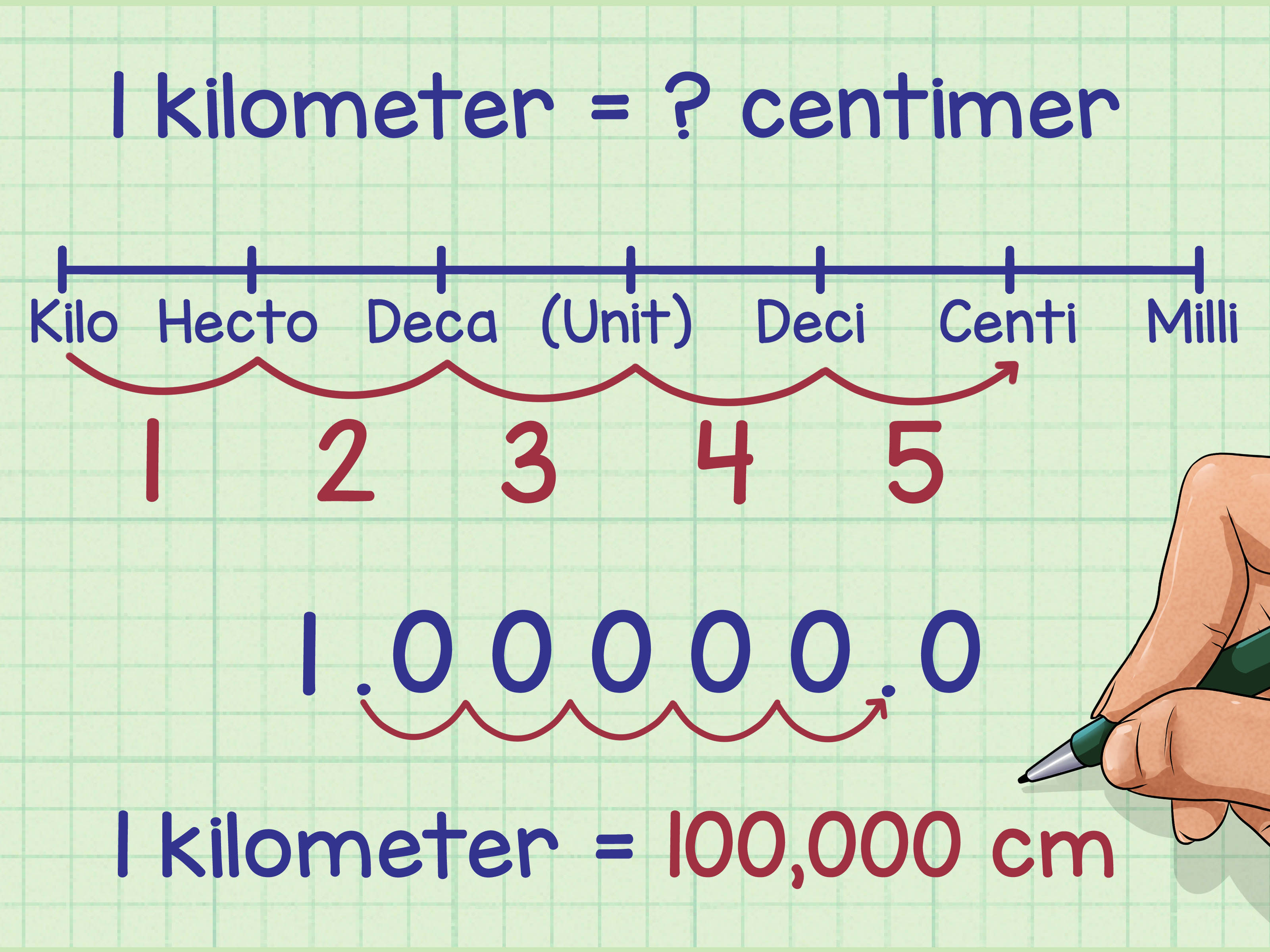
The first and most popular method is to use the metric prefix pattern. This works especially well for length, mass, and volume. You identify the starting unit, identify the target unit, and then count how many steps apart they are on the metric scale.
The Basic Metric Ladder
A common order looks like this:
Kilo – Hecto – Deca – Base Unit – Deci – Centi – Milli
If you move to the right, you are going to a smaller unit, so the number gets larger. If you move to the left, you are going to a larger unit, so the number gets smaller.
Example 1: Convert 3.5 meters to centimeters
Start with meters. End with centimeters. On the metric ladder, meter to centimeter is two steps to the right: meter to decimeter, then decimeter to centimeter.
Each step to the right means multiply by 10:
3.5 × 10 × 10 = 350
So:
3.5 meters = 350 centimeters
Example 2: Convert 4,800 milligrams to grams
Milligrams to grams is three steps to the left: milli to centi, centi to deci, deci to base.
Each step to the left means divide by 10:
4,800 ÷ 10 ÷ 10 ÷ 10 = 4.8
So:
4,800 milligrams = 4.8 grams
Why This Method Works
This method is perfect when you want speed. It helps you visualize the relationship between units, and it turns metric measurement conversion into a place-value exercise instead of a full-blown math drama. It is especially useful in classrooms, quick calculations, and everyday situations where you need a fast answer.
Way 2: Move the Decimal Point
The second method is closely related to the first, but it feels more mechanical and often faster once you are comfortable with it. Instead of thinking in terms of multiplying or dividing, you can move the decimal point left or right depending on the direction of the conversion.
How to Use Decimal Movement
Use the same metric ladder. Count how many places you move between the units. Then move the decimal point that many places:
- Move the decimal right when converting to a smaller unit
- Move the decimal left when converting to a larger unit
Example 1: Convert 2.75 liters to milliliters
Liters to milliliters is three steps to the right:
Liter → deciliter → centiliter → milliliter
Move the decimal three places to the right:
2.75 → 2750
So:
2.75 liters = 2,750 milliliters
Example 2: Convert 9,200 centimeters to kilometers
Centimeters to kilometers is five steps to the left:
centi → deci → base meter → deca → hecto → kilo
Move the decimal five places left:
9200 → 0.092
So:
9,200 centimeters = 0.092 kilometers
When This Method Is Best
The decimal-point method works beautifully when the units stay within the same measurement family, such as length to length, mass to mass, or volume to volume. It is great for students who like visual patterns and for adults who want a shortcut that still makes mathematical sense. It is also handy when working with metric unit conversions on worksheets, tests, or lab notes.
Way 3: Use Conversion Factors
The third method is the most flexible and the most powerful. It is called the conversion factor method, also known as dimensional analysis. That name sounds like it should come with safety goggles, but the idea is simple: multiply by a fraction that equals 1, so the old unit cancels and the new unit remains.
This method shines when a problem looks more complicated, when the numbers are awkward, or when you want to be absolutely sure your setup is correct.
Example 1: Convert 7.2 kilograms to grams
You know that:
1 kilogram = 1,000 grams
Set up the conversion so kilograms cancel:
7.2 kg × (1,000 g / 1 kg) = 7,200 g
Answer:
7.2 kilograms = 7,200 grams
Example 2: Convert 650 milliliters to liters
You know that:
1 liter = 1,000 milliliters
Set up the fraction so milliliters cancel:
650 mL × (1 L / 1,000 mL) = 0.65 L
Answer:
650 milliliters = 0.65 liters
Why This Method Is So Useful
This method helps prevent one of the biggest conversion mistakes: using the right numbers in the wrong direction. Because the units cancel visibly, it acts like built-in error control. If the units do not cancel the way you want, your setup needs fixing. That makes dimensional analysis a favorite in science, engineering, math, and any situation where “close enough” is not the energy you want to bring.
How to Choose the Right Method
All three methods work, but each has a sweet spot:
- Prefix pattern is best for learning the structure of the metric system.
- Decimal movement is best for speed and mental math.
- Conversion factors are best for precision and more complex problems.
In real life, most people end up mixing these methods. You might think through the prefixes first, move the decimal in your head, and then double-check with a conversion factor if the answer looks suspicious. That is not cheating. That is being smart and slightly skeptical, which is usually a winning combination.
Common Mistakes to Avoid in Metric Conversion
1. Mixing Different Measurement Types
You can convert meters to centimeters because both measure length. You can convert grams to kilograms because both measure mass. But you cannot convert liters to meters without extra information, because volume and length are not the same kind of measurement. Nice try, though.
2. Moving the Decimal the Wrong Way
This happens all the time. A good rule is this: smaller units create bigger numbers. If you convert 2 meters to centimeters, the answer should be larger than 2, not smaller.
3. Forgetting Placeholders
When moving decimals to the right, remember to add zeros if needed. For example, 4.6 liters becomes 4,600 milliliters, not 46 milliliters. That would be a tragically tiny bottle.
4. Skipping the Unit in the Final Answer
Always write the unit. A naked number is just standing there with no context, which is uncomfortable for everyone.
Real-World Examples of Metric Measurement Conversion
Cooking and Nutrition
A smoothie recipe might call for 500 milliliters of milk. If your measuring container is marked in liters, you need to know that 500 mL equals 0.5 L. Suddenly breakfast is also a math lesson.
Fitness and Health
Body weight, medication amounts, and hydration goals often use kilograms, grams, liters, and milliliters. Knowing how to convert between them helps make sense of labels, workout plans, and wellness instructions.
Science Class
Lab reports constantly use metric units. Students measure liquid in milliliters, distances in centimeters, mass in grams, and sometimes convert those values into larger or smaller units to compare results accurately.
Travel and Maps
If a sign says a destination is 3 kilometers away, and you want to think in meters, that is 3,000 meters. The math is easy. Walking the distance is still on you.
Quick Practice Problems
Try these on your own:
- Convert 6.4 kilometers to meters.
- Convert 850 grams to kilograms.
- Convert 3.25 liters to milliliters.
- Convert 9,000 millimeters to meters.
- Convert 0.75 kilograms to grams.
Answers:
- 6,400 meters
- 0.85 kilograms
- 3,250 milliliters
- 9 meters
- 750 grams
Final Thoughts on Converting Within Metric Measurements
Learning how to convert within metric measurements is one of those skills that pays off more often than people expect. It shows up in school, in science, in recipes, in travel, in health information, and in everyday problem-solving. The good news is that the metric system is designed to be consistent, logical, and far less dramatic than many other measurement systems.
If you remember just one idea, make it this: metric conversions are all about powers of 10. Once that clicks, the rest becomes much easier. Use the prefix pattern when you want structure, move the decimal when you want speed, and use conversion factors when you want precision. With a little practice, these conversions stop feeling like math homework and start feeling like common sense with better handwriting.
Experiences With Metric Conversions in Real Life
The funny thing about metric conversions is that they often start as a school topic and then quietly move into everyday life like they own the place. A student might first meet them while converting centimeters to meters on a worksheet, but later the same skill shows up while reading a nutrition label, mixing sports drinks, measuring for a craft project, or checking luggage size for a flight. Suddenly, the old classroom exercise is not just an exercise anymore. It is useful, and that is a pretty satisfying plot twist.
One of the most common experiences people have with metric measurement conversion happens in the kitchen. A recipe says 250 milliliters of broth, but the measuring pitcher is labeled in liters. At first, that can feel mildly rude. Then you remember that 1 liter equals 1,000 milliliters, move the decimal, and realize 250 milliliters is just 0.25 liters. Crisis avoided. Soup preserved. Confidence restored.
Science classrooms are another place where metric conversions stop being abstract. Students might measure the mass of a sample in grams, record the length of a container in centimeters, and pour liquid in milliliters all in the same activity. At first, the numbers can look like random guests at a party who do not know each other. But once students understand the metric structure, those values begin to connect. That is often the moment when the system finally makes sense and math becomes less about memorizing and more about reasoning.
Fitness is full of metric units too. People track body weight in kilograms, water intake in liters, and distances in kilometers. Runners often become accidental experts in unit conversion because race distances love metric language. A 5K sounds compact and sporty, but it really means 5 kilometers, or 5,000 meters. Knowing that makes training plans easier to understand and helps people compare workouts more accurately.
Travel creates another surprisingly practical metric experience. Road signs, weather reports, bottled drinks, and product packaging in many places use metric units. Even when someone does not think of themselves as “good at math,” knowing how to convert liters to milliliters or kilometers to meters can make the world feel more readable. It is not about being a human calculator. It is about being comfortable with information that shows up in daily life.
Over time, many people discover that metric conversions become easier when they stop trying to memorize everything as isolated facts. Instead, they learn to see the pattern. The prefixes tell the story. The decimal does the heavy lifting. And the conversion factor method stands by like a responsible adult when the numbers get weird. Once that mindset clicks, metric conversions become less intimidating and a lot more practical. They may never be the star of the party, but they are definitely the reliable friend who helps everything run smoothly.