
Note: To keep the deliverable clean for web publishing, the citations are outside the HTML block. The article below synthesizes guidance from Purdue OWL on business-letter structure and closings, university career-writing resources fro
sacd.sdsu.edu
+4
Purdue OWL
+4
Purdue OWL
+4
ls to action, plus USAGov and CFPB complaint-letter guidance that emphasizes stating the problem clearly, asking for a specific remedy, and keeping the tone professional.
Grammarly
+13
Purdue OWL
+13
Purdue OWL
+13
le>
Ending a request letter sounds easy until you actually have to do it. Suddenly, your brain offers three choices: sound too stiff, sound too needy, or sound like a robot who learned manners from an office memo in 1987. The good news is that a strong ending does not need to be dramatic. It just needs to be clear, polite, and useful.
Whether you are asking for information, a refund, a meeting, a document, a donation, a deadline extension, or a favor from someone who controls your fate for the next week, the final paragraph matters more than most people think. A messy ending can weaken a solid letter. A smart ending can make your request feel reasonable, professional, and easy to answer.
In this guide, you will learn three effective ways to end a request letter, when to use each one, what mistakes to avoid, and how to make your closing sound confident without turning into a Shakespearean plea for mercy. We will also walk through examples so you can borrow the structure without copying the exact words.
Why the Ending of a Request Letter Matters
The ending of a request letter does four jobs at once. First, it reminds the reader what you want. Second, it tells the reader what should happen next. Third, it leaves a professional impression. Fourth, it gives the recipient a graceful path to say yes.
That last part is important. Good business writing does not just communicate. It reduces friction. If the person reading your letter understands your request, knows your timeline, and feels respected, your chances of getting a helpful response go up. That is true whether you are writing to a manager, a school office, a customer service department, or a local organization.
Many people spend most of their energy on the opening paragraph and the body, then end with something vague like, “I hope to hear from you soon.” That is not terrible, but it is not strong either. It is the verbal equivalent of leaving a shopping cart in the middle of the parking lot and hoping the universe handles it.
A better closing gives the reader direction. It feels courteous, but it also feels purposeful.
Way #1: End with Gratitude and a Clear Restatement of the Request
The first and most reliable way to end a request letter is to thank the reader and restate exactly what you are asking for. This works especially well in formal situations where you want to sound respectful and straightforward.
Why This Works
Gratitude softens the request. A clear restatement removes confusion. Together, they create a closing that feels polished instead of pushy. The reader finishes your letter knowing both your tone and your goal.
This method is ideal for:
- Requesting documents or records
- Asking for approval or permission
- Requesting assistance from an office or department
- Writing complaint or adjustment letters
- Asking for information in a professional setting
Simple Formula
Thank the reader + restate the request + close professionally
Example
Thank you for your time and consideration. I would appreciate your approval of my request for a two-day extension on the submission deadline. Please let me know if you need any additional information.
This kind of ending is effective because it is specific. The reader does not have to hunt through the letter to remember what you wanted. You bring the request back into focus right before signing off.
When to Use It
Use this ending when the relationship is formal, when the request is straightforward, or when you do not need a detailed next-step timeline. It is also a good choice when you want to sound professional without sounding cold.
Mini Example Variations
For a document request:
Thank you for your assistance. I respectfully request a copy of my academic transcript at your earliest convenience.
For a refund request:
Thank you for reviewing this matter. I would appreciate a full refund for the damaged item described above.
For a meeting request:
Thank you for considering my request. I would welcome the opportunity to meet with you next week to discuss this proposal further.
If you remember only one technique from this article, make it this one. It is the white shirt of request-letter endings: classic, useful, and hard to embarrass yourself with.
Way #2: End with a Polite Call to Action
The second strong way to end a request letter is to invite a response or next step. This is your call to action, but in business-letter form, so it wears a tie and uses indoor voices.
Why This Works
Some requests need more than a polite ending. They need movement. If you are asking the reader to reply, schedule something, send materials, or make a decision by a certain date, a call to action makes the letter more effective.
This kind of closing is especially helpful when:
- You need a reply within a reasonable timeframe
- You are requesting a meeting or interview
- You want the recipient to review an attachment or supporting documents
- You need confirmation, approval, or follow-up
Simple Formula
Polite request for action + optional timeframe + appreciation
Example
I would appreciate a response by Friday, April 18, so I can finalize the project schedule. Thank you again for your time and consideration.
This ending works because it tells the reader what action you need and when. It is not demanding if the deadline is reasonable and the tone stays respectful.
How to Keep It Polite
A call to action becomes annoying when it sounds like a threat disguised as a sentence. Avoid wording like:
- I expect to hear from you immediately.
- You must respond by tomorrow.
- Please handle this as soon as possible. (Too vague, and oddly bossy.)
Instead, use calm, specific language:
- Please let me know your decision by May 2.
- I would be grateful for your response at your earliest convenience.
- Please feel free to contact me if additional details are needed.
Mini Example Variations
For a recommendation request:
If you are able to support my application, I would be grateful to receive your recommendation by June 1. Thank you for considering my request.
For a workplace request:
Please let me know whether this schedule adjustment can be approved by the end of the week. Thank you for your consideration.
For a customer complaint letter:
I would appreciate your response within 10 business days regarding the replacement of the defective product. Thank you for your attention to this matter.
A polite call to action is powerful because it respects the reader’s time while protecting your own. That is a rare and beautiful thing.
Way #3: End with Respect, Openness, and Contact Information
The third way to end a request letter is to show respect, express openness to follow-up, and make it easy to contact you. This approach works best when your request may involve questions, clarification, or discussion.
Why This Works
Sometimes the person reading your letter is willing to help but needs more information first. A closing that welcomes follow-up can feel collaborative instead of transactional. It tells the reader, “I am serious, prepared, and easy to work with.”
This type of ending is useful when:
- Your request is detailed or unusual
- You are writing to someone you do not know well
- You are submitting supporting evidence or attachments
- You expect questions before approval
Simple Formula
Respectful close + invitation to contact you + professional sign-off
Example
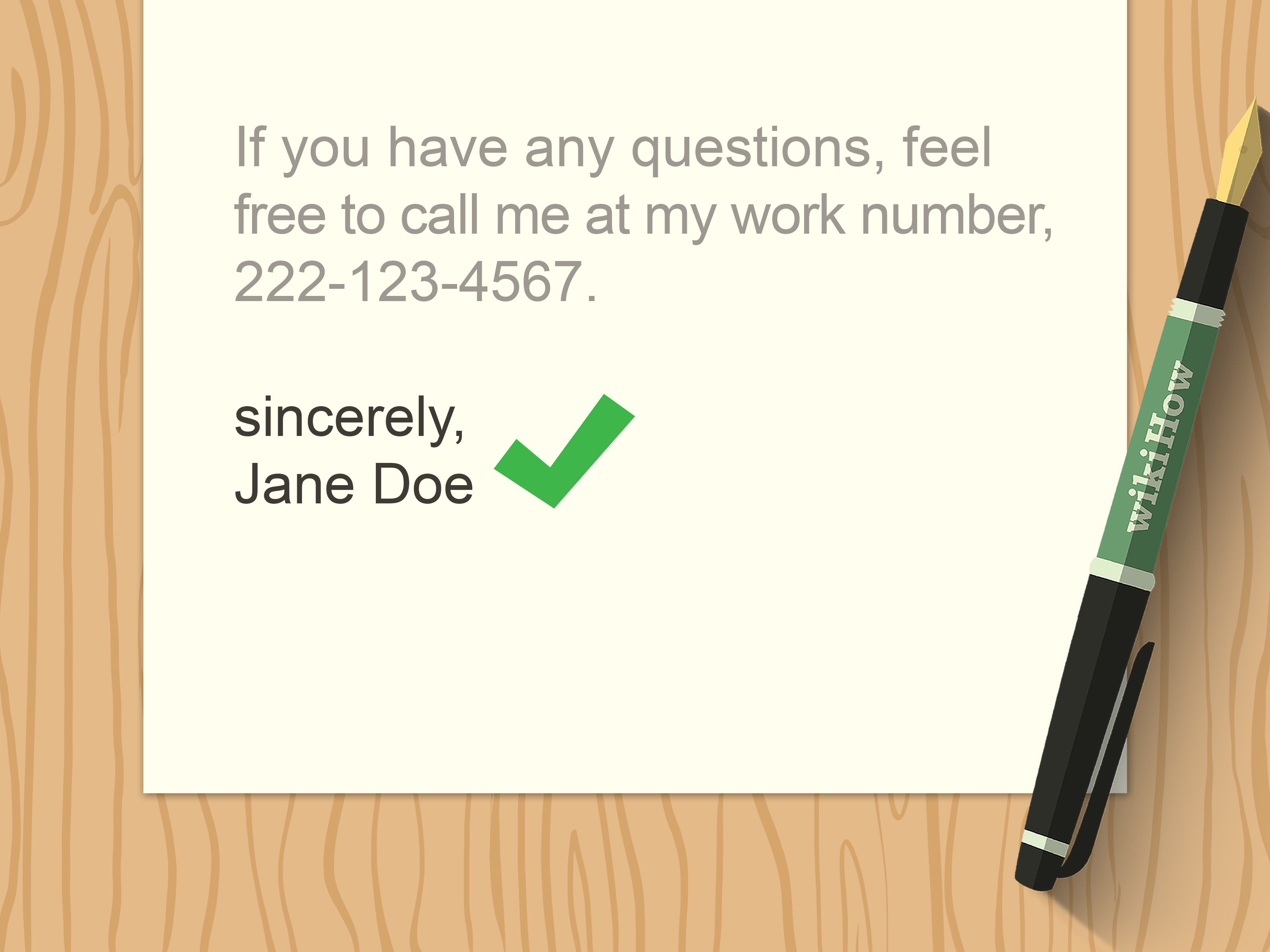
I appreciate your consideration of this request. If you need any additional documentation, please do not hesitate to contact me at the phone number or email listed above. Sincerely,
This ending works well because it signals flexibility. You are not disappearing after making the request. You are staying available and making the reader’s job easier.
Mini Example Variations
For a school-related request:
Thank you for reviewing my appeal. If further documentation would be helpful, I would be glad to provide it promptly.
For a business proposal request:
I appreciate your time and consideration. I would be happy to discuss this proposal further or answer any questions at your convenience.
For a records request:
Please contact me if additional identification or paperwork is required to process this request. Thank you for your assistance.
This style is especially effective when you want to sound calm, professional, and cooperative. It is less about pressure and more about trust.
Best Sign-Offs for a Request Letter
After your final sentence, choose a complimentary close that matches the tone of the letter. In most cases, these are safe and professional:
- Sincerely,
- Respectfully,
- Best regards,
- Kind regards,
- Thank you, (best when the whole letter already supports a polite, appreciative tone)
Sincerely is the most universal choice. Respectfully works well when you are writing to an official, administrator, or authority figure. Best regards and Kind regards are slightly warmer, but still professional.
Try to avoid sign-offs that are too casual for a formal request letter, such as Cheers, Take care, or anything that sounds like it belongs at the end of a text message sent while walking through a grocery store.
Mistakes to Avoid When Ending a Request Letter
1. Being Vague
If the reader finishes the letter and still wonders what you want, your ending did not do its job. Restate the request clearly.
2. Sounding Demanding
Confidence is good. Pressure is not. A request letter should sound firm but courteous.
3. Adding New Information Too Late
Do not introduce an important fact for the first time in the closing paragraph. The ending should reinforce your point, not surprise the reader.
4. Using a Generic Sign-Off Without a Purposeful Final Sentence
Ending with just Sincerely is not enough. The final sentence before the sign-off carries the real weight.
5. Writing Too Much
A closing paragraph should feel clean and controlled. If your final paragraph turns into a second essay, the impact fades.
Sample Closing Paragraphs You Can Adapt
Sample 1: Request for Information
Thank you for your time and assistance. I would appreciate receiving the requested information regarding your application process at your earliest convenience. Please let me know if any additional details are needed.
Sample 2: Request for Approval
Thank you for considering my request. I respectfully ask for your approval of this schedule change and would appreciate a response by next Wednesday so I can make the necessary arrangements.
Sample 3: Request After a Problem or Complaint
I appreciate your attention to this matter. I am requesting a replacement or full refund for the item described above, and I would be grateful for your response within 10 business days.
Sample 4: Request for a Meeting
Thank you for your consideration. I would welcome the opportunity to meet with you to discuss this matter further and am available at your convenience.
How to Choose the Right Ending for Your Situation
If your letter is formal and simple, use gratitude plus a clear restatement. If timing matters, use a polite call to action. If the topic may require discussion or documents, use respect plus openness to follow-up.
Think about what the reader needs in order to respond. Do they need clarity? A deadline? Reassurance that you are available? The best request-letter ending is the one that removes the most friction.
That means there is no single perfect closing for every situation. There is only the best closing for this letter, this reader, and this request. Writing gets easier when you stop chasing fancy language and start aiming for useful language.
Experience-Based Insights: What Actually Makes a Request Letter Ending Work
In real life, people rarely ignore a request letter because the grammar was flawless and the closing was sparkling. They respond because the ending made the next step easy. That is the part many writers miss. A request letter is not just a piece of writing. It is a small decision-making tool.
One common experience is that shorter, clearer endings usually perform better than long emotional ones. A person asking for a school exception, customer refund, or workplace adjustment often feels tempted to explain everything one more time in the final paragraph. But the strongest closings usually become more effective when they trim the drama and sharpen the ask. A reader who is busy, tired, or scanning quickly will respond better to a clear request than to an emotional encore.
Another real-world pattern is that gratitude works best when it sounds specific. “Thank you for your consideration” is perfectly professional, but “Thank you for taking the time to review my request” often sounds warmer and more human. It shows awareness that the other person is doing something for you. That subtle difference matters. People are more responsive when they feel respected rather than managed.
Writers also learn through experience that deadlines must feel reasonable. A request letter ending that says, “Please respond by tomorrow” can sound abrupt unless the urgency has already been explained. But an ending like, “I would appreciate a response by May 10 so I can complete the next step in the process” feels grounded. It gives a purpose for the date, not just pressure. Readers tend to cooperate more when the timeline sounds practical.
There is also a big difference between confidence and stiffness. Some people try to sound professional by writing as if they swallowed a legal dictionary. The result is often overly formal and strangely distant. Others go too far in the opposite direction and sound casual enough to end with a smiley face and “Thanks a bunch.” The sweet spot is polite, direct, and natural. A good request-letter ending sounds like an organized adult wrote it, not a machine or a medieval clerk.
Experience also shows that offering follow-up help can improve the odds of a response. When a letter says, “Please let me know if further documentation is needed,” it signals readiness. It tells the reader you are cooperative, not just asking them to do all the work. This is especially useful in appeals, records requests, reimbursement letters, and formal administrative requests.
Finally, the most memorable lesson is simple: the ending should match the size of the request. A small ask needs a clean, modest close. A more serious request may need a deadline, supporting detail, or invitation to discuss. When the tone, clarity, and next step line up, the letter feels trustworthy. And trustworthy letters get answered.
So if you are wondering how to end a request letter, remember this: do not chase fancy. Chase clear. Be polite. Restate the request. Show the next step. End like someone who respects the reader and knows what they are asking for. That combination still works, and probably always will.
Conclusion
The best way to end a request letter depends on your goal, but the strongest closings usually do the same three things: they restate the request, guide the next step, and leave the reader with a respectful impression. You can end with gratitude and clarity, a polite call to action, or an open invitation for follow-up. Each method works when the tone is professional and the wording is specific.
If you want your request letter to sound polished, do not overcomplicate the ending. A smart final paragraph is not there to perform. It is there to help the reader say yes, reply clearly, or take action. Keep it courteous, keep it focused, and let your closing do the quiet heavy lifting.
“` :