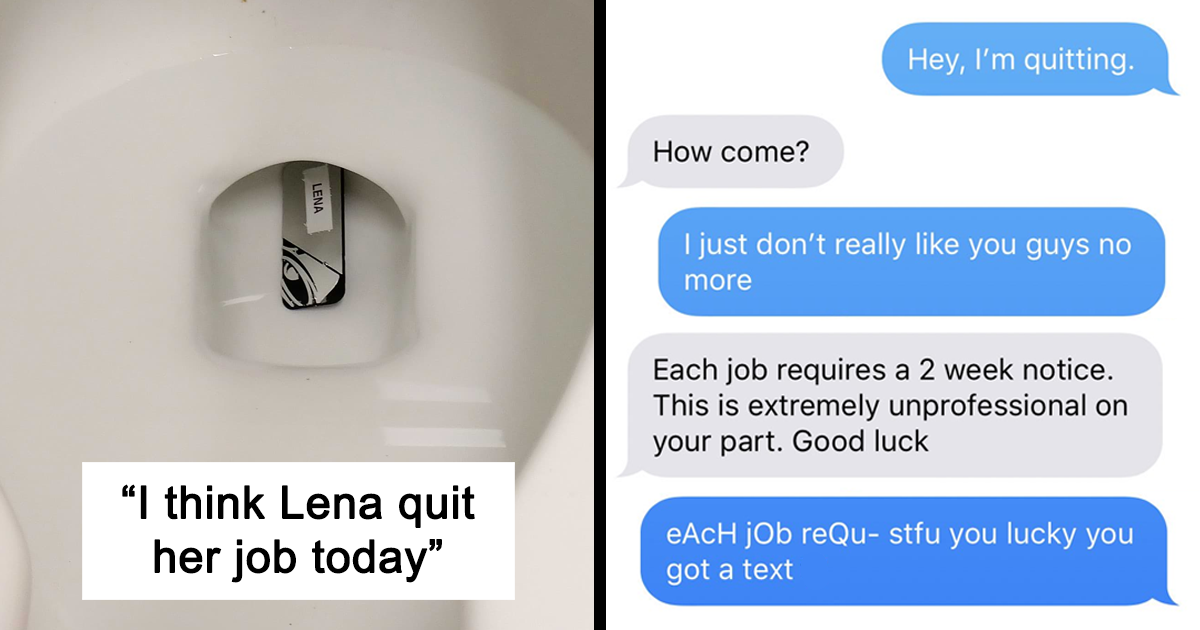

Most resignations are painfully ordinary. An employee schedules a private meeting, delivers a carefully sanitized letter, transfers a few files, and spends the final afternoon pretending to be emotionally invested in an exit interview.
Then there are the people who bring a marching band.
Across corporate offices, television studios, restaurants, airports, newsrooms, and even airplanes, frustrated workers have transformed quitting into performance art. Some wrote resignation letters on cakes. Others danced through empty offices, made announcements over store intercoms, published blistering essays, or walked away during live broadcasts.
Not every dramatic resignation was wise. A few damaged careers, created legal trouble, or left innocent coworkers cleaning up the mess. Still, these unforgettable workplace exits reveal something important: people rarely quit with fireworks because of one bad afternoon. The grand finale usually follows months or years of burnout, ethical conflict, poor management, low pay, or feeling invisible.
The Most Unforgettable Ways People Have Quit
1. Marina Shifrin Danced Out of the Office
Video producer Marina Shifrin turned her resignation into a late-night dance routine. Moving through an empty office while captions described long hours and management’s obsession with traffic, she concluded with a simple announcement: she was quitting. The video attracted millions of views and helped launch her writing and comedy career.
2. Joey DeFrancesco Brought a Brass Band
Hotel employee Joey DeFrancesco did not merely hand over his resignation letter. He entered the workplace with musicians performing a lively tune behind him. After giving the letter to a manager, he walked away while the band supplied the soundtrack. It was part resignation, part parade, and entirely impossible to ignore.
3. Steven Slater Took the Emergency Exit
JetBlue flight attendant Steven Slater became a workplace legend after an argument aboard a plane. He made a frustrated announcement, grabbed beer from the galley, deployed an emergency slide, and left the aircraft. The exit generated enormous attention, but it also led to criminal charges and restitutionproof that style can become expensive surprisingly fast.
4. Chris Holmes Put His Notice on a Cake
Airport border employee Chris Holmes wanted to leave his position and build a baking business. Naturally, he wrote his resignation in icing on a homemade cake. The dessert explained his plans and promoted his new company. It was polite, delicious, and strategically brandedthe rare resignation that doubled as an edible business launch.
5. Mark Herman Delivered a Broadcast-Worthy Dessert
Television newscast director Mark Herman also used cake to announce his departure. He gave management a traditional letter but shared the news with coworkers through a frosted version. Because he was leaving on good terms for another broadcasting job, the gesture felt celebratory rather than bitter. Everyone received closure and, presumably, a fork.
6. W. Neil Berrett Served a Giant Sheet-Cake Notice
W. Neil Berrett submitted an unusually sweet resignation to his employer at San Francisco’s Hunters Point Naval Shipyard. His formal message was reproduced across a large sheet cake. It thanked the organization, identified his departure date, and demonstrated that administrative paperwork improves dramatically when covered in frosting.
7. Gwen Dean Quit During the Super Bowl
Engineer and puppet maker Gwen Dean announced her resignation in a GoDaddy commercial shown during the Super Bowl. The advertisement featured Dean telling her boss that she was leaving to operate her puppet business full time. Few employees have delivered notice before an audience of more than 100 million people.
8. Charlo Greene Resigned on Live Television
Alaska television reporter Charlo Greene revealed during a broadcast that she owned the cannabis organization featured in her report. She then announced that she would devote herself to legalization advocacy and abruptly quit on air. The profanity in her farewell made the clip viral, though it also raised serious questions about disclosure and journalistic ethics.
9. Liz Wahl Broke With Her Network on Air
RT America correspondent Liz Wahl used a live broadcast to announce that she could no longer work for the Russian government-funded network. She criticized its coverage of Russia’s actions in Ukraine and resigned before viewers. Unlike a humorous workplace stunt, Wahl’s departure was framed as a public stand over professional principles.
10. Inetta Hinton Turned the Radio Into an Exit Interview
Mobile, Alabama, radio personality Inetta Hinton, known as Inetta the Moodsetter, resigned during an on-air monologue. She discussed low pay and workplace frustration before delivering an unmistakable farewell. The recording became internet folklore and showed why giving an unhappy broadcaster access to a live microphone can be an adventurous management decision.
11. Beth McGrath Used the Walmart Loudspeaker
Louisiana Walmart employee Beth McGrath announced her resignation through the store’s public-address system. She criticized management and thanked coworkers before ending with language unsuitable for the toy aisle. A recording spread online, turning an ordinary retail shift into a company-wideand eventually worldwideannouncement.
12. Jackson Racicot Addressed the Whole Store
Teenage Walmart employee Jackson Racicot also used an intercom for his departure. He read a prepared statement criticizing management and working conditions while customers listened. Recording the moment ensured that his resignation traveled far beyond the store, proving that the modern exit interview sometimes includes an audience, a camera, and instant distribution.
13. Rachael Flores and Her Burger King Team Used the Marquee
At a Burger King in Lincoln, Nebraska, former general manager Rachael Flores and several employees announced their departure on the restaurant’s outdoor sign. The message said the team had quit and apologized for the inconvenience. The towering notice became a national symbol of workers collectively reaching their limit.
14. Zoey Bernal’s McDonald’s Crew Left a Napkin Note
When workers at a McDonald’s location resigned together, a handwritten message informed customers that everyone had quit and the restaurant was closed. Former employee Zoey Bernal shared footage of the empty workplace online. The simple note reached millions, demonstrating that viral communication does not require an expensive marketing department.
15. Greg Smith Published His Resignation
Goldman Sachs executive Greg Smith resigned through a widely read newspaper opinion essay. After nearly 12 years with the firm, he argued that its culture had become overly focused on profit at the expense of clients. The public letter generated global debate, internal scrutiny, interviews, and eventually a book.
16. Jake DeSantis Made His AIG Dispute Public
AIG executive Jake DeSantis published a detailed resignation letter during the financial crisis. He argued that employees uninvolved in the company’s disastrous transactions were being unfairly blamed and said he would donate his after-tax retention payment. His departure turned a compensation dispute into a national conversation about responsibility and fairness.
17. Andrew Lahde Wrote a Wall Street Farewell Manifesto
Hedge-fund manager Andrew Lahde closed his fund after profiting from the financial crisis and released a sprawling farewell letter. Instead of offering a standard corporate goodbye, he criticized financial elites, political corruption, consumer culture, and drug policy. It read less like a resignation and more like someone clearing every unfinished thought from his desk.
18. Jonathan Schwartz Resigned With a Haiku
Sun Microsystems CEO Jonathan Schwartz announced his departure on Twitter using a three-line poem. His compact message referenced financial problems, stalled customers, and his changed employment status. While other executives needed several pages and a communications team, Schwartz managed his entire farewell within the platform’s original character limit.
19. Paul Carr Made His Final Article His Resignation Letter
Technology writer Paul Carr resigned from TechCrunch through a post published on the website itself. He discussed leadership disputes and editorial independence before thanking colleagues and readers. It was simultaneously journalism, criticism, workplace documentation, and a final click of the publish button.
20. Heidi Norby Lunde Tweeted Her Departure
Norwegian editor Heidi Norby Lunde reportedly announced online that she had cleared her desk and was ready for new challenges after learning that her responsibilities would increase. Her employer discovered the resignation through social media. Long before remote workers began leaving jobs over chat, Lunde demonstrated the efficiencyand awkwardnessof the digital goodbye.
21. Doug Walker Revealed His Resignation on His Chest
Comedian and online creator Doug Walker entered his workplace break room carrying a boom box, climbed onto a table, and opened his shirt to reveal the words “I quit” written across his chest. He left to concentrate on his growing entertainment website. Subtle? No. Difficult to misunderstand? Also no.
22. Kevin Nalty Sang About Following His Passion
Marketing executive and YouTube creator Kevin Nalty faced a choice between his corporate career and his increasingly successful comedy channel. His musical departure emphasized doing work he loved. The resignation reflected an emerging career path in which employees were leaving established companies to become independent digital creators.
23. Stephen Pollard Hid a Message in His Final Column
British journalist Stephen Pollard used an acrostic in his last newspaper column to hide an insulting message aimed at his employer. Readers could discover it by examining the first letters of successive sentences. The trick was clever, but his incoming employer reportedly disliked the stunt and withdrew its offera memorable lesson in bridge combustion.
24. Geoffrey Howe Resigned With Polite Precision
British politician Geoffrey Howe delivered a restrained but devastating resignation speech criticizing Prime Minister Margaret Thatcher’s approach to Europe. His calm language made the attack more powerful, not less. The speech helped trigger a political crisis and demonstrated that a softly spoken departure can shake an institution more effectively than shouting.
25. William Faulkner Escaped the Post Office
Before becoming one of America’s most celebrated authors, William Faulkner worked as a university postmaster. His resignation letter complained about being at the command of demanding customers purchasing inexpensive postage. Brief, sharp, and unmistakably literary, the note suggested that public service was interfering with more important activitiessuch as writing masterpieces.
26. Eleanor Roosevelt Resigned on Principle
Eleanor Roosevelt left the Daughters of the American Revolution after the organization refused to allow Black opera singer Marian Anderson to perform at Constitution Hall. Roosevelt’s resignation was measured rather than theatrical, but its moral clarity attracted national attention and reinforced support for Anderson’s historic Lincoln Memorial concert.
27. James Mattis Explained the Disagreement
Defense Secretary James Mattis resigned through a carefully written letter emphasizing the importance of alliances and a clear view of strategic competitors. Although professional in tone, the document made his fundamental disagreement with President Donald Trump’s foreign-policy approach obvious. Sometimes the most stylish resignation is a calm explanation that leaves no room for spin.
28. Bari Weiss Published Her Criticism
Opinion editor Bari Weiss resigned from The New York Times and published her letter online. She criticized the newspaper’s internal culture and what she saw as excessive influence from social media. Supporters praised her candor, while critics disputed her description. Either way, the letter became a public debate rather than a private personnel document.
29. Joe Sale Returned His Materials as “Trash”
LivingSocial marketing consultant Joe Sale mailed company business cards and promotional materials back to headquarters inside a white trash bag. His attached message argued that the company had treated its sales force poorly. The visual metaphor was direct, inexpensive, and unlikely to be mistaken for ordinary interoffice mail.
30. An Unnamed Designer Created an Error Message
One designer reportedly formatted a resignation like a computer error notification. The message announced that the poorly treated designer had “quit unexpectedly” and even included an option suggesting renegotiation. It was an exit perfectly matched to the employee’s profession: concise, visual, sarcastic, and just technical enough to worry management.
Experiences and Lessons From Quitting a Job With Style
The first lesson from these creative resignation stories is that the best exits match the person leaving. A baker using a cake makes sense. A video producer creating a dance film makes sense. A designer building a fake error message makes sense. These departures became memorable because the format reflected the employee’s skills, personality, or next career move. The resignation itself acted as a final portfolio piece.
That does not mean every worker should plan a viral performance. In professional life, audiences remember the spectacle but may forget the circumstances that produced it. A funny clip can follow someone for years, appearing whenever a recruiter searches that person’s name. The employee may feel heroic for five minutes while a future hiring manager sees poor judgment, unresolved anger, or an uncomfortable appetite for public conflict.
There is also a major difference between creative quitting and destructive quitting. Holmes’s resignation cake promoted his new business without attacking coworkers. Shifrin’s dance emphasized her goals and frustration through humor. By contrast, exits involving profanity, safety equipment, confidential systems, or attacks on individual colleagues can create legal and reputational consequences. Style works best when it does not require a lawyer afterward.
Another recurring experience is the relief employees feel once the decision becomes final. Remaining in an unsuitable job creates a peculiar form of emotional exhaustion. A worker may spend months mentally rehearsing difficult conversations, calculating finances, fearing disappointment, and wondering whether leaving is irresponsible. Delivering notice can feel like releasing pressure from a sealed container. The dramatic gesture becomes a physical representation of that relief.
However, the smartest resignations begin long before the final announcement. Workers who leave successfully often build savings, secure another position, review employment agreements, collect personal files, document important accomplishments, and prepare an orderly transition. These steps are less exciting than hiring a marching band, but they protect health insurance, references, income, and future opportunities.
Experience also suggests that managers should not dismiss dramatic resignations as random acts by difficult employees. Mass walkouts and public complaints are often warning signals. When several workers leave together, management should examine staffing levels, scheduling, communication, pay, safety, and whether employees believe concerns are heard. Replacing the people without addressing the conditions simply resets the countdown.
Employees considering a bold farewell should ask what they want the exit to accomplish. Is the goal to celebrate a new opportunity, promote a business, document misconduct, force public discussion, or embarrass a supervisor? The first three can sometimes be justified. The final option often delivers satisfaction without producing meaningful change.
A professional resignation can still have personality. A thoughtful letter, a farewell lunch, a small gift, a humorous presentation, or a creative announcement made after management has been informed can make the departure memorable without creating unnecessary enemies. The strongest exit communicates confidence rather than revenge.
Ultimately, quitting with style is not about being loud. It is about leaving in a way that reflects your values and supports the life you intend to build next. Sometimes that means a dance video. Sometimes it means a principled public letter. Most of the time, it means calmly thanking the right people, documenting the truth, and walking out knowing the job no longer owns your future.
Conclusion
These 30 memorable resignations range from joyful career pivots to explosive workplace protests. Their methods were different, but the underlying message was consistent: an employee who feels ignored long enough may eventually find an audience somewhere else.
The safest takeaway is not to copy the most dramatic stunt. It is to recognize the power of a well-planned departure. Leave with purpose, protect your reputation, and make sure the next chapter is more important than the final scene of the old one. And should your resignation arrive on a cake, at least remember to bring enough for the accounting department.
SEO Metadata