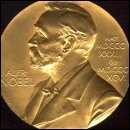

Note: The headline is intentionally provocative because, frankly, that is how history often talks about genius when it gets nervous. This article does not use mental illness as a joke. Instead, it looks at four Nobel laureates whose lives included documented breakdowns, psychosis, depression, paranoia, trauma, or severe psychological collapse.
History loves a tidy myth. The brilliant writer is “eccentric.” The math genius is “odd.” The poet is “troubled.” The moment things get darker, messier, and less dinner-party friendly, the labels turn dramatic: mad, insane, unhinged, broken. It is a clumsy vocabulary, but it reveals something real. Some Nobel Prize winners did not merely flirt with melancholy or wear eccentricity like a jaunty scarf. They lived through profound mental health crises that shaped their work, their reputations, and in some cases the way the world remembers them.
So no, this is not a cheap list built on rumor, gossip, or “he collected too many cats, therefore madness.” These are real stories about Nobel laureates whose lives crossed into territory that biographers, doctors, friends, and even institutions recognized as psychological emergency. Their genius did not cancel their suffering. If anything, it made the contrast more startling. One minute the world is handing you a Nobel medal. The next minute you are fighting paranoia, hospitalization, collapse, or the kind of internal storm that makes ordinary life feel like a trapdoor.
Here are four Nobel Prize winners whose lives went far beyond quirky and into something much more serious.
1. John Nash: The Mathematical Titan Who Lost Decades to Schizophrenia
If Hollywood had invented John Nash, critics would have complained that the script was too on the nose. Brilliant young mathematician? Check. Revolutionary ideas in game theory? Check. Nobel-winning intellect? Check. Years of paranoid schizophrenia that derailed his career and turned him into a ghost wandering Princeton hallways? Also check. Reality, as usual, refused to be subtle.
Nash made his name early. His work on noncooperative games permanently changed economics, political science, and strategic thinking. “Nash equilibrium” sounds dry enough to clear a room at a party, but it became one of the most influential concepts in modern social science. That work helped earn him the 1994 Nobel Memorial Prize in Economic Sciences. Yet the famous equations were only half the story. The other half was brutal.
Beginning in the late 1950s, Nash experienced severe delusions and behavior associated with paranoid schizophrenia. His academic momentum crashed. Friends and colleagues watched a dazzling mind disappear behind persecutory ideas, grandiose thinking, and long stretches of instability. He spent years in psychiatric hospitals and then drifted through a long, painful period in which he became a legendary but fragile presence at Princeton. Students knew him, sometimes cruelly, as a phantomlike figure around Fine Hall. It was the academic version of seeing a king reduced to haunting his own castle.
What makes Nash’s story so extraordinary is not that suffering made him a genius. That is a lazy myth, and it should be retired with bad wallpaper and office fax machines. What matters is that the same man who transformed game theory also had to survive a chronic, severe mental illness. His later partial recovery became almost as famous as his mathematics, especially after A Beautiful Mind turned his life into a cultural symbol of resilience.
Nash’s story is often flattened into inspiration-poster material, but it is more complicated than that. Recovery was not neat. It was not cinematic in the clean, uplifting way movies like to pretend. It was slow, uneven, and hard-won. That is exactly why it matters. Behind the Nobel aura was a man who knew what it meant to have his own mind become a battlefield.
2. Ernest Hemingway: Nobel Laureate, Literary Legend, and a Man Under Siege by His Own Brain
Ernest Hemingway built one of the toughest public images in literary history. He boxed, hunted, fished, drank, traveled, fought, posed, swaggered, and generally behaved like he was trying to win a contest called Most Likely to Intimidate Furniture. But the macho shell covered a far more unstable and painful inner life.
Hemingway won the Nobel Prize in Literature in 1954, largely on the strength of a body of work that helped redefine American prose. His sentences were lean, his style was disciplined, and his influence was enormous. Unfortunately, his mental health was not nearly so controlled. Biographical and psychiatric assessments have long pointed to severe depression, paranoia, alcoholism, repeated head injuries, and symptoms that may also fit bipolar disorder or other neuropsychiatric decline. In his later years, people around him saw increasing fear, confusion, agitation, and persecutory thinking.
That last part matters. Hemingway was not simply “sad” or “moody,” as if he were a weather report with a beard. Accounts of his final years describe a man who believed he was being watched, tracked, and targeted. Some of those fears touched real-world surveillance, but the broader pattern of psychiatric deterioration appears far more serious than ordinary stress. He was treated with electroconvulsive therapy, and many scholars argue that his mental state was worsened by a wrecking-ball combination of alcohol use, physical injuries, family history, and neurological damage.
The tragic irony is almost unbearable. Hemingway’s greatness as a writer depended heavily on memory, concentration, precision, and control. Yet the mind that gave him his edge also became the thing he could trust least. Imagine being a writer whose whole career is built on exactness and then feeling your thoughts blur, your confidence fracture, and your fear become bigger than the room you are standing in. That is not ordinary artistic angst. That is psychological siege warfare.
What makes Hemingway fit a list like this is not a cartoon stereotype of the “crazy genius.” It is the scale of the collapse. The public saw the celebrity. The private record shows a Nobel laureate fighting depression, paranoia, and a level of mental deterioration that turned everyday life into a maze with no clear exit.
3. Nelly Sachs: Nobel-Winning Poet of Holocaust Grief, Exile, and Breakdown
Nelly Sachs is not as instantly recognizable to American readers as Hemingway or Nash, which is a shame, because her life reads like a collision between history’s worst cruelty and the fragile endurance of art. Sachs shared the 1966 Nobel Prize in Literature, and her poetry became one of the most haunting literary responses to Jewish suffering, exile, and the Holocaust. But her own life was marked by intense psychological vulnerability, deep depression, hallucination-like fears, and periods of psychiatric hospitalization.
Born in Berlin, Sachs escaped Nazi Germany with her mother and found refuge in Sweden. That rescue saved her life, but survival did not magically restore peace. Trauma has terrible manners. It does not leave quietly just because the train has crossed a border. After her mother’s death, Sachs reportedly sank into profound depression, and later accounts describe breakdowns marked by paranoia, especially fears of persecution connected to Nazi terror. She was hospitalized multiple times in the late 1950s and early 1960s.
That history matters when reading her work. Sachs did not write about horror from a comfortable balcony. She wrote from inside the aftershock. Her language often feels scorched, visionary, and full of spiritual smoke, as if every line had been carried through fire and barely survived customs. She turned trauma into lyric intensity, but the cost was enormous.
Calling Sachs “insane” would be too glib for a life shaped by exile and terror. Still, if the point is to identify Nobel laureates whose psychological suffering was severe, undeniable, and far beyond ordinary sadness, she belongs on this list. Her life was marked by breakdown, fear, and hospital treatment, all while she was producing literature powerful enough to stand on the Nobel stage.
There is something especially heartbreaking about Sachs because her illness cannot be separated from history. With Nash, we talk about schizophrenia. With Hemingway, we talk about depression, paranoia, and neurological decline. With Sachs, we are forced to admit that sometimes the world drives the mind toward collapse and then acts surprised when the mind does not come out tidy. Her poems are not merely beautiful. They are evidence that language can survive even when peace of mind does not.
4. Hermann Hesse: Nervous Breakdown, Psychoanalysis, and the Long Search for Inner Survival
Hermann Hesse, winner of the 1946 Nobel Prize in Literature, is often packaged as the patron saint of sensitive seekers. Read Siddhartha, breathe deeply, stare at a river, have a spiritual revelation, and maybe buy a notebook you never use. But Hesse’s life was not a calm little lantern floating across a peaceful pond. It was full of crisis, depression, internal conflict, and at least one major nervous breakdown that pushed him into psychoanalysis.
Hesse had psychological struggles from a young age, and his early life included serious emotional turmoil. Later, during World War I, personal catastrophe piled up with almost sadistic efficiency: family illness, the death of his father, marital collapse, public hostility over his pacifist views, and severe emotional strain. In 1916, he suffered a breakdown serious enough to send him into treatment with a disciple of Carl Jung. That experience shaped both his life and his writing.
Once you know this, Hesse’s fiction looks different. The split selves, the spiritual unrest, the hostility toward conformity, the obsession with inner fracture, the search for wholeness through suffering: none of it feels decorative anymore. It feels lived. Steppenwolf does not read like a clever thought experiment once you realize the author knew psychological fragmentation from the inside. It reads like a flare fired from the middle of a mental night.
Hesse is a fascinating case because he was not remembered primarily as a public psychiatric figure in the way Nash was. Instead, his instability seeped into the intellectual bloodstream of his work. Readers felt the turmoil even when they did not know the biographical footnotes. His books became manuals for alienated souls because they were written by someone who understood inner fracture not as a metaphor, but as weather he had actually lived through.
So was Hesse “clearly insane”? That headline is too blunt, but his life absolutely included breakdown severe enough to require psychoanalytic care and to transform the shape of his writing. In other words, he was not merely a moody novelist in a scarf. He was a Nobel laureate who had to fight for psychic survival.
Why This Topic Fascinates People So Much
People are endlessly fascinated by the intersection of genius and madness because it feels like a secret passage through human nature. We want to believe extraordinary creativity comes from extraordinary suffering, or that brilliance burns so hot it melts the wiring. Sometimes that belief turns into harmful romantic nonsense. Mental illness is not a magic key to genius. It is illness. It hurts. It disrupts. It isolates. It can destroy careers, families, memory, trust, and ordinary life.
And yet these four Nobel laureates remind us of something equally important: severe psychological suffering does not erase intelligence, artistry, or dignity. John Nash changed economics even while schizophrenia tore through his life. Ernest Hemingway revolutionized prose while battling deep psychiatric and neurological decline. Nelly Sachs transformed exile and terror into searing poetry. Hermann Hesse turned breakdown into literature that still comforts restless readers generations later.
The real story is not that Nobel winners were “crazy.” The real story is that human greatness can coexist with terrifying vulnerability. Sometimes the same mind that produces extraordinary insight is also the mind that suffers most violently. That does not make suffering glamorous. It makes these lives more human, and far more unsettling, than any polished award citation.
Related Experiences: What It Feels Like to Read These Lives Now
There is a particular experience that comes with reading about Nobel Prize winners who lived through mental collapse, and it is not the cheap thrill people expect. It is not “Wow, genius people are wild.” It is usually something quieter and heavier. First comes awe. Then comes discomfort. Then comes the strange realization that prestige, intellect, money, fame, and global recognition do not create a force field around the human brain.
When people read about John Nash wandering Princeton during years of schizophrenia, it can feel eerie in a deeply human way. A mind capable of abstract beauty and revolutionary mathematics could still become trapped in delusion. That realization lands hard, especially for readers who have watched a brilliant teacher, family member, or friend struggle with severe mental illness. It makes genius look less like armor and more like exposed wiring.
Reading Hemingway produces a different experience. With him, many readers feel the collapse of a public persona. The larger-than-life masculinity starts to look brittle. The swagger stops reading as confidence and begins to look like compensation, or at least a desperate performance. His story can make readers rethink how often society rewards toughness while ignoring pain. It can also remind people how many high-functioning adults are praised right up until the moment they clearly are not okay.
Nelly Sachs often creates the most haunting reaction of all. Her story forces readers to confront how trauma can follow a person long after physical escape. You can leave the country that tried to kill you and still not feel safe inside your own mind. For many people, especially descendants of war, exile, or family violence, that experience feels painfully recognizable. Sachs turns historical catastrophe into personal aftershock, and readers often come away feeling both moved and unsettled, as though they have been trusted with a wound rather than a biography.
Hermann Hesse offers yet another kind of recognition. Readers who have gone through burnout, depression, identity crisis, or the creeping sense of becoming a stranger to themselves often find his story less dramatic and more familiar. His breakdown does not feel like a distant museum piece. It feels modern. It feels like the hidden backstory of many people who look functional on the outside while quietly splintering within.
That is why this topic stays powerful. These stories are not just about Nobel Prize winners. They are about the uncomfortable truth that the mind can be magnificent and fragile at the same time. Readers may arrive out of curiosity, maybe even because the title sounds outrageous, but they often leave with something more serious: sympathy, caution, and respect. The lasting experience is not mockery. It is humility. Because once you really look at lives like these, the old joke about genius and insanity stops being funny. It starts looking like a warning, a tragedy, and, occasionally, a form of survival.
Conclusion
The phrase “clearly insane” is flashy, crude, and a little irresponsible, which is exactly why history keeps using it. But when you strip away the tabloid language, what remains is more compelling anyway. These Nobel Prize winners were not defined solely by madness, nor were they saved from suffering by genius. They were brilliant people who also lived through severe mental health crises, trauma, psychosis, breakdown, or psychological collapse. Their awards did not cancel their pain. Their pain did not erase their achievement.
If there is a lesson here, it is not that suffering creates greatness. It is that greatness does not make anyone less breakable. And sometimes the most astonishing part of a Nobel laureate’s life is not the medal, the speech, or the canonized work. Sometimes it is the brutal, stubborn fact that they kept going at all.