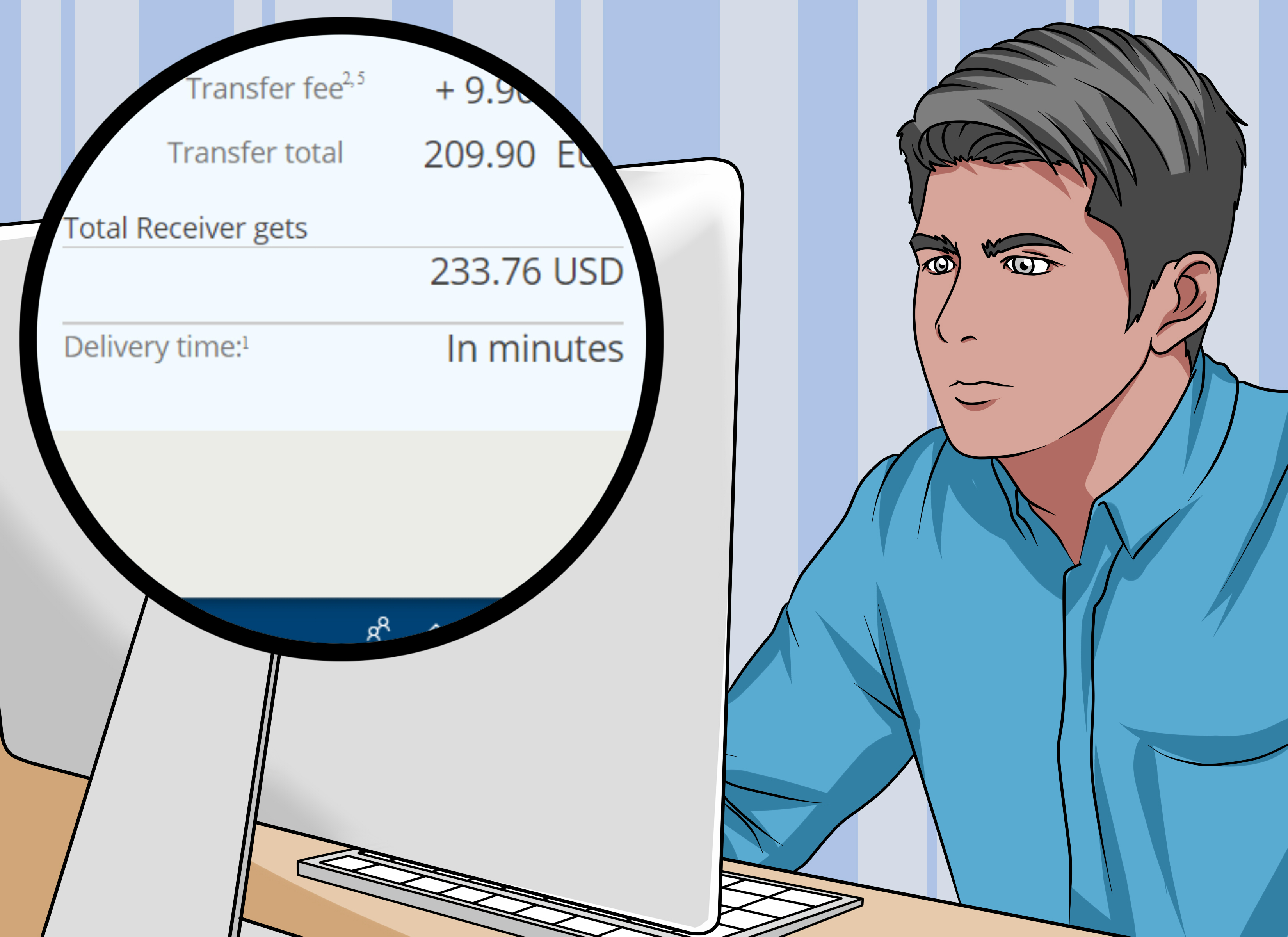

Sending euros to a U.S. bank account sounds simple until you actually do it and discover that international money transfers have more moving parts than a carry-on suitcase with one broken wheel. Between exchange rates, wire fees, delivery times, and mysterious banking acronyms that sound like robot passwords, it is easy to lose money or patience.
The good news is that transferring euros to a U.S. bank account is absolutely doable, and in many cases, it is easier than people expect. The real challenge is choosing the right method for your situation. A freelancer getting paid by a client in Europe may want low conversion costs. A parent sending emergency money may care more about speed. A business owner may need better tracking, higher limits, and cleaner records for accounting.
In this guide, we break down four smart ways to transfer euros to a U.S. bank account, how each one works, who it suits best, and what to watch out for before you hit the send button. We will also cover common fees, exchange-rate traps, and practical examples so you can move your money with fewer surprises and more confidence.
Why Choosing the Right Transfer Method Matters
When people compare international money transfer options, they often focus only on the visible fee. That is understandable. A transfer fee is right there on the screen, staring at you like it wants attention. But the exchange rate is often just as important, and sometimes more important, especially when you are moving larger amounts.
For example, a bank transfer with a modest wire fee can still become expensive if the provider adds a wide margin to the EUR-to-USD exchange rate. On the other hand, a service that looks more expensive up front may actually leave more money in the recipient’s U.S. bank account because the conversion rate is stronger.
Before choosing a method, ask yourself four questions:
- How fast does the money need to arrive?
- Am I sending a small amount, a large amount, or recurring payments?
- Do I want the funds converted from euros to U.S. dollars immediately, or would I rather hold the money first?
- How much paperwork or identity verification am I willing to deal with?
Those answers will point you toward the best transfer path.
1. Use a Traditional International Bank Wire
How it works
A traditional bank wire is the classic way to transfer euros to a U.S. bank account. The sender initiates the payment through their bank, usually using the SWIFT network. The money travels from the European bank through one or more banking partners and lands in the recipient’s U.S. account, where it is credited in U.S. dollars if the bank does not maintain a euro balance for that customer.
Why people still use it
Bank wires remain popular because they feel familiar and official. If you are sending a large amount, paying for a property transaction, settling business invoices, or moving funds between your own accounts, a bank wire can feel reassuringly old-school. It is the financial equivalent of showing up in a blazer instead of flip-flops.
Best for
- Large one-time transfers
- Business payments
- Situations where both sender and receiver prefer banks over apps
- People who want a bank-generated transfer record
Pros
- Widely accepted and familiar
- Suitable for high-value transactions
- Often supported through online banking or branch service
- Good paper trail for personal or business records
Cons
- Can involve outgoing, incoming, and intermediary bank fees
- Exchange rates may be less competitive than specialist services
- Transfers can take longer if correspondent banks are involved
- Errors in routing details can cause delays or rejections
Real-world example
Imagine a consultant in France sending the equivalent of several thousand euros to a U.S. checking account for a real estate closing. In that case, a bank wire may make more sense than a consumer transfer app because the sender wants a conventional banking process, detailed records, and transfer references that are easy to share with attorneys or accountants.
What to double-check
For a bank wire, the sender usually needs the recipient’s full name, bank name, account number, routing number, and often the U.S. bank’s SWIFT code or wire instructions. One wrong digit can turn a simple transfer into a support-ticket hobby.
2. Use an Online Money Transfer Specialist
How it works
Online money transfer providers such as Wise, OFX, and Xe specialize in cross-border payments. Instead of relying entirely on the traditional international wire system for the full journey, many of these services streamline the process and focus heavily on transparent pricing, online tracking, and exchange-rate efficiency.
Why this option is so popular
If your top goals are convenience and cost control, this is often the sweet spot. You can usually set everything up online, compare the amount the recipient will receive, and review the fee before sending. For people who transfer euros to U.S. bank accounts regularly, that visibility matters a lot.
Best for
- Freelancers and remote workers paid in euros
- People sending recurring personal transfers
- Digital nomads, students, and expats
- Anyone focused on exchange-rate value
Pros
- Usually easier to compare total cost before sending
- Often more competitive exchange rates than traditional banks
- Convenient mobile apps and web dashboards
- Useful for repeat transfers and saved recipients
Cons
- Transfer limits may vary by country, currency, or verification status
- First-time users may need identity checks
- Funding options and delivery speed can differ by corridor
- Not every provider is the best fit for very large corporate transfers
Real-world example
A graphic designer in Spain who invoices U.S. clients but gets paid in euros may use a specialist transfer platform every month. Why? Because even small differences in the exchange rate can add up over a year. Saving a little bit on each transfer may not feel dramatic on Tuesday afternoon, but twelve months later it can look surprisingly handsome.
What to compare
Do not compare only the transfer fee. Compare the final U.S. dollar amount received. That number tells the truth. Some platforms shine on small transfers, while others become more attractive for larger amounts or business use.
3. Use a Remittance Service with Bank Deposit Delivery
How it works
Remittance brands such as Western Union, MoneyGram, Remitly, and Xoom are often associated with cash pickup, but many of them also support bank deposit to U.S. accounts. That means the sender can pay through the provider, and the funds are deposited directly into the recipient’s U.S. bank account rather than picked up in cash.
Why this method deserves more attention
People often overlook remittance services when the goal is a bank account transfer, but that can be a mistake. These services can be convenient when speed matters, when the sender is already comfortable using a remittance app, or when the transfer amount is moderate and the interface is built for easy person-to-person sending.
Best for
- Family support payments
- Emergency transfers
- Smaller to mid-sized personal transfers
- Senders who want app-based simplicity
Pros
- Simple setup for personal transfers
- Good app experience and transfer tracking
- Can be fast, depending on the route and payment method
- Some services offer multiple payout options if bank deposit is not available
Cons
- Fees and exchange rates can vary a lot by country pair
- Not always ideal for high-value transfers
- Promotional rates may not reflect long-term cost
- Availability depends on the specific sending country and corridor
Real-world example
Let’s say a student in the U.S. needs rent money, and a parent in Germany wants the funds to arrive quickly in the student’s bank account. A remittance provider with bank deposit delivery can be a practical choice because the process is often built for fast personal transfers rather than bank-office formality and waiting-room wallpaper.
What to watch
Always review whether the transfer is being sent as a bank deposit, a debit card deposit, or another payout type. Those details affect speed, fees, and what information you need from the U.S. recipient.
4. Use a Multi-Currency Account Before Moving Funds to Your US Bank
How it works
A multi-currency account lets you receive, hold, and sometimes convert money in different currencies before sending it onward. This method can be especially useful if you earn in euros but live, spend, or save in U.S. dollars. Instead of converting immediately every time money arrives, you may hold euros for a while, then convert and withdraw to your U.S. bank account when it makes sense for your cash flow.
Why people like it
This approach gives you more control. If you are paid in euros regularly, you may not want every payment automatically converted the moment it appears. A multi-currency setup can make your finances more flexible and reduce the feeling that your money is being hustled through customs every week.
Best for
- Freelancers and contractors with euro income
- Small business owners with cross-border clients
- People managing multiple currencies over time
- Anyone who wants more timing control over conversion
Pros
- Lets you hold euros before converting
- Useful for recurring international income
- Can improve budgeting across currencies
- Often pairs well with digital transfer platforms
Cons
- May require more setup than a simple one-off transfer
- Account features vary widely by provider
- Some users may overcomplicate a transfer that could have been simple
- Timing the market for exchange rates is harder than it looks
Real-world example
A U.S.-based software developer working with European clients may receive monthly payments in euros into a multi-currency account, hold them there briefly, and transfer dollars to a U.S. checking account as needed for bills, payroll, or taxes. That can be cleaner than using a new manual transfer workflow every single time.
How to Choose the Best Way to Transfer Euros to a US Bank Account
Here is the simple version:
- Choose a bank wire if you are sending a large amount, need a formal banking trail, or want bank-to-bank handling.
- Choose a specialist transfer service if you care most about exchange-rate value, digital convenience, and recurring transfers.
- Choose a remittance provider if you want fast personal sending with bank deposit as one of the payout options.
- Choose a multi-currency account if you receive euros regularly and want more control over when conversion happens.
There is no universal winner. The best euro transfer method depends on whether your priority is speed, cost, simplicity, or control.
Mistakes to Avoid When Sending Euros to a US Bank Account
- Ignoring the exchange rate: A low fee does not always mean a cheap transfer.
- Using the wrong bank details: Double-check routing numbers, account numbers, recipient names, and wire instructions.
- Assuming every transfer is instant: Verification, banking holidays, and cutoff times matter.
- Using the first option you see: Compare what the recipient will actually receive in U.S. dollars.
- Forgetting about intermediary fees: Traditional bank wires may pass through other banks on the way.
Final Thoughts
If you need to transfer euros to a U.S. bank account, you have more choices than ever, and that is both wonderful and mildly annoying. Wonderful because competition gives you better tools. Mildly annoying because now you have to choose among them like a person staring at a menu with twelve kinds of coffee and one growing sense of panic.
The smartest move is to match the method to the situation. Traditional bank wires are strong for large or formal transfers. Online money transfer specialists are often great for cost-conscious users. Remittance apps can be excellent for personal transfers that need convenience and speed. Multi-currency accounts work well for people living with one foot in euros and the other in dollars.
Whatever route you choose, compare the full cost, verify the details, and focus on the final amount that reaches the U.S. account. That is the number that matters most.
Real-Life Experiences and Practical Lessons From Euro-to-US Transfers
The examples below are composite, realistic scenarios based on common transfer situations people run into when moving money from euros to a U.S. bank account.
One of the most common experiences involves people who send money the “easy” way the first time, then realize later it was not actually the best way. A freelancer in Portugal might receive payment in euros, move it to a U.S. bank through a traditional bank wire, and feel perfectly satisfied until comparing the result with a specialized money transfer service the next month. Nothing went wrong. The money arrived. No alarms went off. No banker chased anyone down the street. But after looking at the final dollars received, the freelancer notices that the quiet part of the transaction was the exchange-rate spread. That is often the moment people become much more interested in transfer math.
Another very real experience is speed anxiety. People sending money internationally tend to become amateur detectives the moment the funds do not land immediately. A parent sending euros from Belgium to a child’s U.S. bank account for rent may assume “sent today” means “arrived today.” Then the transfer hits a cutoff time, a weekend, or an identity review, and suddenly everyone is refreshing banking apps like they are waiting for concert tickets. In practice, speed depends on the provider, the corridor, the verification stage, and the payout method. Bank deposit is usually smooth, but smooth does not always mean instant.
Business owners often experience a different problem: too many moving parts. A U.S.-based consultant with European clients may receive several euro payments each month, all from different countries, all with slightly different banking references. At first, each transfer seems manageable. Then bookkeeping enters the chat. The consultant realizes that the real issue is not just how to transfer euros into a U.S. bank account, but how to do it repeatedly, with clean records, predictable conversion timing, and fewer reconciliation headaches. That is why recurring earners often migrate toward specialist services or multi-currency accounts. The goal is not only to save money. It is also to save sanity.
Then there is the classic “small mistake, large delay” experience. A sender enters a recipient name slightly differently from the name on the U.S. bank account, or types one incorrect digit in an account number, or misunderstands whether the transfer needs wire instructions versus standard bank details. The result is rarely dramatic, but it is often annoying. The payment may bounce back, pause for review, or require customer support to untangle the issue. People usually learn the same lesson after that: international transfers reward boring accuracy. This is one of the few situations in life where triple-checking details is genuinely thrilling, because it prevents a problem.
Many people also discover that convenience matters more than they expected. Someone who only sends money twice a year may be completely happy using a bank wire through a familiar branch or banking app. But someone who sends money every month starts to value saved recipients, transfer tracking, rate previews, and a clean mobile interface. Repetition changes preferences. A method that feels fine once can feel clunky by the sixth round.
The biggest practical lesson from real transfer experiences is simple: the best option is not always the cheapest-looking one, the fastest-sounding one, or the most recognizable brand. The best option is the one that fits your amount, timing, frequency, and comfort level. People who learn that early usually save money, avoid stress, and stop treating every euro transfer like a suspense film with banking music in the background.