
Note: This article discusses film bans as cultural history, not as a watchlist or viewing recommendation. Some bans were national, some were regional, some were temporary, and some involved refused cinema certificates or withdrawn distribution.
Why Do Countries Ban Movies?
Movies are tiny cultural grenades with popcorn attached. A film can look harmless in one country and become a diplomatic headache in another. One scene, one map, one kiss, one joke about a leader, or one religious image can turn a regular release schedule into an emergency meeting with officials, lawyers, distributors, and probably one very nervous intern holding a clipboard.
Film censorship usually comes from a few familiar concerns: politics, religion, sexuality, violence, national identity, public morality, and the fear that audiences may copy what they see on screen. The United States once had its own powerful self-censorship system, the Hays Code, which shaped Hollywood from the 1930s into the 1960s. Other countries use classification boards, import rules, religious guidelines, security laws, or informal pressure to keep certain movies away from cinemas.
What makes banned movies fascinating is that the ban often becomes part of the movie’s legend. A film may be forbidden because officials think it is dangerous, insulting, immoral, unpatriotic, or simply too awkward to explain at a press conference. Sometimes the ban makes sense within a country’s laws; sometimes it looks like a giant official overreaction wearing a suit.
50 Banned Movies and Why They Became Controversial
1. Barbie (2023)
Vietnam banned Barbie over a scene involving a stylized map that officials believed referenced China’s disputed “nine-dash line” in the South China Sea. A pink plastic dream world somehow became a geopolitical seminar.
2. Uncharted (2022)
Uncharted was also banned in Vietnam over a map-related controversy tied to the same maritime dispute. It proved that treasure maps are fun until real-world borders enter the chat.
3. Abominable (2019)
This animated adventure faced restrictions in Vietnam and controversy in parts of Southeast Asia because of a map image associated with the South China Sea dispute. Even a friendly yeti could not climb over that political mountain.
4. Lightyear (2022)
Pixar’s Lightyear was blocked in several Middle Eastern and Asian markets because of brief LGBTQ+ representation. The controversy showed how family animation can still collide with strict local media standards.
5. Eternals (2021)
Marvel’s Eternals was pulled from or denied release in several Gulf countries after Disney reportedly refused requested edits involving LGBTQ+ content. Superheroes may save universes, but they cannot always save release certificates.
6. Doctor Strange in the Multiverse of Madness (2022)
This Marvel sequel was denied release in Saudi Arabia and other markets over LGBTQ+ themes connected to the character America Chavez. Apparently, not every multiverse includes the same censorship rules.
7. West Side Story (2021)
Steven Spielberg’s remake faced bans or blocked certificates in several Gulf countries because of a transgender character. A classic musical about division became part of a very modern censorship debate.
8. Onward (2020)
Pixar’s fantasy comedy was restricted in some Middle Eastern markets over a brief reference to a same-sex relationship. The film’s elves had magic, but not enough to pass every censor board.
9. Noah (2014)
Darren Aronofsky’s biblical epic was banned in several Muslim-majority countries because Islamic tradition generally discourages visual depictions of prophets. The movie sailed into a flood of religious objections.
10. The Da Vinci Code (2006)
This religious mystery thriller faced bans or heavy controversy in countries including Egypt, Lebanon, and parts of Asia. Its plot challenged Christian traditions, which turned a bestselling adaptation into a censorship magnet.
11. The Last Temptation of Christ (1988)
Martin Scorsese’s film was banned or restricted in multiple countries because many religious groups considered its portrayal of Jesus deeply offensive. Few movies better show how theology and cinema can crash into each other at full speed.
12. Monty Python’s Life of Brian (1979)
This religious satire was banned in Ireland, Norway, and several local jurisdictions. The joke, of course, is that a comedy about mistaken identity became mistaken by some critics for blasphemy.
13. The Passion of the Christ (2004)
Mel Gibson’s film faced bans or restrictions in some Middle Eastern countries because it depicted Jesus, who is also revered in Islam. Its intense religious subject matter made it a global flashpoint.
14. Wonder Woman (2017)
Wonder Woman was banned in Lebanon because star Gal Gadot is Israeli and had served in the Israeli military. In this case, the controversy focused less on the story and more on international politics.
15. Death on the Nile (2022)
This Agatha Christie adaptation also faced restrictions in some countries tied to the presence of Gal Gadot. A murder mystery became tangled in a real-world diplomatic mystery.
16. Waltz with Bashir (2008)
This Israeli animated documentary about the Lebanon War was banned in Lebanon because of laws and cultural boycotts involving Israeli works. Its anti-war tone did not protect it from political restriction.
17. Persepolis (2007)
The animated memoir about growing up during and after the Iranian Revolution was briefly banned in Lebanon after objections that it offended Iran and Islam. It later became a symbol of how animation can carry very adult political weight.
18. Schindler’s List (1993)
Steven Spielberg’s Holocaust drama was banned in Malaysia and Indonesia, where officials objected to what they viewed as political or religiously sensitive content. The decision remains one of the more debated examples of censorship around historical memory.
19. The Wolf of Wall Street (2013)
Martin Scorsese’s financial-crime satire was banned in Malaysia and Nepal and censored elsewhere because of sexual content, language, and depictions of excess. Wall Street looked wild enough without regulators sending in the scissors.
20. Fifty Shades of Grey (2015)
This romantic drama was banned in Malaysia, Kenya, and other markets due to sexual content. Its controversy proved that some films do not need politics to scare censors; sometimes intimacy is enough.
21. The Exorcist (1973)
The Exorcist faced bans or long restrictions in countries including Ireland and the United Kingdom’s home-video market. Religious horror, panic headlines, and youth-protection concerns helped build its forbidden reputation.
22. A Clockwork Orange (1971)
Stanley Kubrick’s dystopian film was withdrawn from UK distribution at the director’s request after controversy and alleged copycat fears. Its absence lasted for decades, turning it into a legendary case of self-imposed restriction.
23. The Texas Chain Saw Massacre (1974)
This horror landmark was refused or restricted in several countries because censors considered its atmosphere too intense. Ironically, its reputation was often more graphic than what the film actually showed.
24. The Evil Dead (1981)
Sam Raimi’s horror film became part of the UK “video nasties” panic, when home-video releases were targeted as harmful. The ban helped turn a scrappy low-budget horror movie into cult royalty.
25. Cannibal Holocaust (1980)
This Italian shock film was banned or cut in many places because of extreme content and real animal cruelty. It remains one of the most notorious examples of how controversy can outlive a film for generations.
26. The Last House on the Left (1972)
Wes Craven’s early film was long rejected or heavily restricted in the UK due to its disturbing subject matter. It became a key example in debates over whether censorship protects audiences or simply creates mythology.
27. Faces of Death (1978)
This pseudo-documentary was banned in several countries for presenting disturbing death-related material, some real and some staged. Its controversy thrived partly because viewers argued over what was authentic.
28. Salò, or the 120 Days of Sodom (1975)
Pier Paolo Pasolini’s brutal political allegory was banned or restricted in multiple countries because of sexual cruelty, abuse, and anti-fascist symbolism. It is often discussed more as a censorship case than as casual entertainment.
29. The Devils (1971)
Ken Russell’s film about religion, politics, and institutional power was cut, banned, or suppressed in several markets. Its clash with religious sensibilities made it one of Britain’s most famous censorship battles.
30. Last Tango in Paris (1972)
This controversial drama was banned in Italy for years after obscenity proceedings. Its censorship history is now closely tied to modern conversations about consent, power, and filmmaking ethics.
31. Caligula (1979)
This historical epic was banned or heavily cut in many territories because of explicit adult content and violence. Ancient Rome has rarely needed help looking messy, but this film brought an entire scandalous banquet.
32. The Battle of Algiers (1966)
This political war film was banned in France for a time because of its depiction of the Algerian struggle for independence. It remains a classic example of cinema being treated as a political document.
33. Battleship Potemkin (1925)
Sergei Eisenstein’s revolutionary silent film was banned in countries including the UK and France because authorities feared its political influence. A silent film somehow made governments hear alarm bells.
34. All Quiet on the Western Front (1930)
This anti-war classic was banned in Germany after nationalist protests and claims that it damaged the country’s image. Its message was simple: war is awful. That was apparently too radical for some officials.
35. The Great Dictator (1940)
Charlie Chaplin’s satire of Adolf Hitler was banned in Nazi-controlled territories and other sympathetic regimes. It remains proof that a mustache joke can be politically explosive.
36. Paths of Glory (1957)
Stanley Kubrick’s anti-war film faced restrictions in France and Spain because of its critical portrayal of military authority. The movie was less about battles than about the machinery that sends people into them.
37. Fahrenheit 9/11 (2004)
Michael Moore’s documentary was banned in Kuwait because officials objected to its criticism of the Iraq War and U.S. allies. Political documentaries often discover that “free debate” has a different address in every country.
38. The Death of Stalin (2017)
Russia revoked the distribution certificate for this dark political comedy, calling it offensive and ideologically troubling. Satire is funny until the people being mocked control the cinema license.
39. The Interview (2014)
This comedy about North Korea became an international crisis after the Sony hack and threats against theaters. Even before audiences could judge the jokes, the movie had already become a free-speech symbol.
40. Team America: World Police (2004)
This puppet satire was controversial in several markets for mocking political leaders and terrorism-era foreign policy. It showed that tiny felt actors can still create giant diplomatic discomfort.
41. Zoolander (2001)
Malaysia banned Zoolander because its plot involved a fictional assassination attempt on the Malaysian prime minister. A fashion comedy somehow walked the runway straight into national-security concerns.
42. Borat (2006)
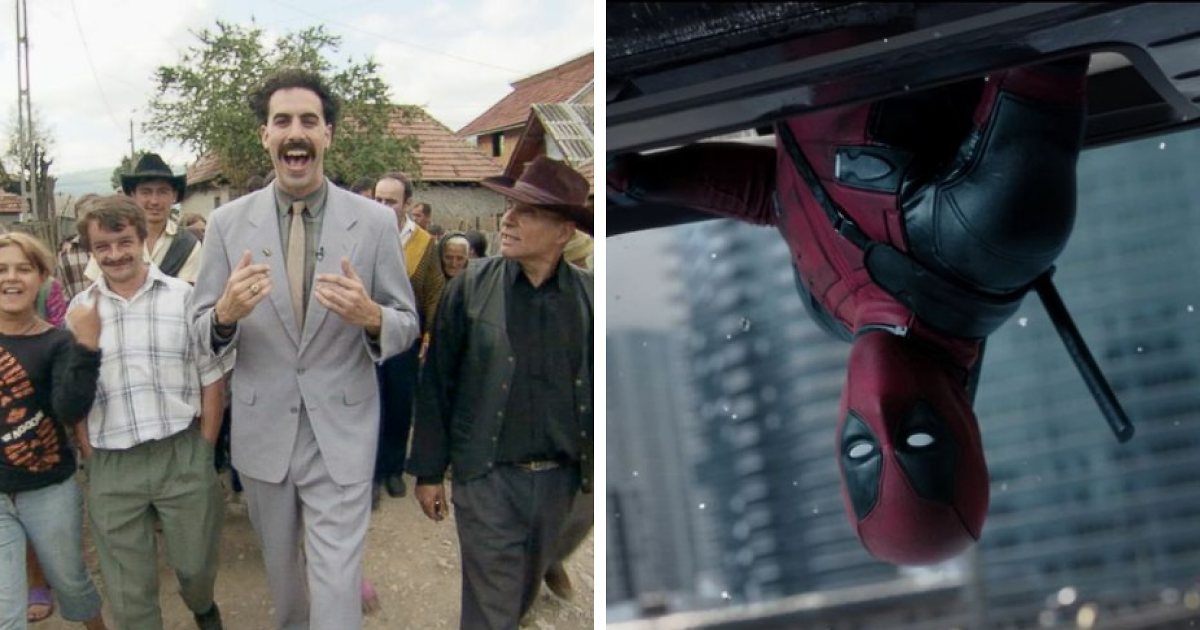
Sacha Baron Cohen’s satire angered officials and audiences in Kazakhstan and was restricted or discouraged in some regions because of its fictionalized portrayal of the country. The movie’s fake nationalism created very real diplomatic headaches.
43. District 9 (2009)
Nigeria objected to District 9 over its portrayal of Nigerian characters, and officials reportedly asked cinemas not to show it. Alien apartheid was controversial enough before national image entered the room.
44. 300 (2006)
300 was condemned in Iran for its depiction of ancient Persians. The film’s comic-book style did not soften the feeling that it insulted national heritage.
45. 2012 (2009)
North Korea reportedly banned the disaster film because the apocalyptic title year clashed with state messaging about 2012 as a proud national milestone. Even the end of the world had scheduling conflicts.
46. The Hunger Games: Mockingjay – Part 1 (2014)
Screenings were pulled in parts of Thailand after the film’s three-finger salute became associated with anti-coup protest. A fictional resistance gesture suddenly had a real political life.
47. Christopher Robin (2018)
Disney’s gentle Winnie-the-Pooh film was denied release in China, reportedly because the bear had become an online symbol used to mock President Xi Jinping. It may be the only censorship case where honey became a political risk.
48. Deadpool (2016)
Deadpool was denied theatrical release in China because censors objected to violence, language, and adult humor. The character’s whole brand is being inappropriate, so nobody should have been shocked.
49. Pirates of the Caribbean: Dead Man’s Chest (2006)
This fantasy sequel was reportedly blocked in China because of supernatural content and depictions involving spirits. Pirate ghosts, it turns out, may have trouble clearing customs.
50. Back to the Future (1985)
This beloved time-travel comedy has often been cited in discussions of Chinese restrictions on time-travel stories, which officials criticized for treating history too casually. Marty McFly did not just bend time; he bent censorship logic.
What Banned Movies Reveal About Culture
The most interesting thing about banned movies is that the same film can mean wildly different things depending on where it lands. In one place, Barbie is a candy-colored comedy about identity. In another, it becomes a dispute over maritime sovereignty. In one market, Lightyear is a Pixar space adventure. In another, it becomes a battle over media values and public morality.
That is why movie bans are rarely just about movies. They are about borders, memory, religion, power, generational change, and national pride. Censors often argue that they are protecting society. Critics argue that bans flatten public discussion and make governments look fragile. The truth depends on the case, but one pattern is hard to miss: banning a movie often makes more people curious about it.
There is also a big difference between classification and censorship. A rating tells viewers what kind of content to expect. A ban says viewers should not be allowed to decide at all. That line matters. Adults can disagree about whether a film is tasteful, offensive, useful, irresponsible, brilliant, or a two-hour headache wearing expensive lighting. But when the state removes the choice entirely, the conversation changes from film criticism to civil liberty.
Many banned movies also age strangely. A film once considered dangerous may later look tame, clumsy, or historically important. Some horror movies once treated as civilization-ending threats now appear on collector editions with academic essays. Some political films once suppressed by governments become classroom staples. Time has a funny way of turning yesterday’s panic into tomorrow’s syllabus.
Experience-Based Reflections: Watching the Story Behind Banned Movies
Reading about banned movies feels a little like opening an old attic trunk labeled “Do Not Touch.” Naturally, the first thing everyone wants to do is touch it. That is the strange psychology of censorship: the warning label becomes part of the attraction. A film described as “too controversial” immediately gains a mysterious glow, even if the actual movie turns out to be slow, strange, dated, or less shocking than its reputation.
One useful experience when exploring this topic is to look beyond the scandal and ask a better question: what exactly frightened people at the time? Sometimes it was violence. Sometimes it was religion. Sometimes it was a government worried that a joke would travel faster than an official statement. Sometimes it was a censor board trying to apply old rules to new social realities. The ban itself becomes a snapshot of a country’s anxieties.
For writers, critics, and film fans, banned movies are valuable because they teach context. You cannot understand A Clockwork Orange only by talking about its imagery; you also need to understand the British media panic around crime and youth culture. You cannot understand the Barbie ban without understanding how maps in Southeast Asia can carry political weight. You cannot understand The Death of Stalin without recognizing how modern governments may still guard historical memory like a locked museum cabinet.
Another lesson is that controversy does not automatically make a film good. Some banned movies are masterpieces. Some are messy. Some are famous mostly because they were forbidden. A ban can inflate a movie’s reputation the way a bicycle pump inflates a tire: suddenly it looks bigger, but that does not mean it can survive a long ride. Smart viewers separate artistic value from outlaw glamour.
The best way to write about banned films is with curiosity, not cheerleading. It is easy to say, “Censors are silly,” and sometimes they are. But it is more useful to examine why certain images threaten certain systems. A brief kiss, a cartoon map, a religious figure, or a satirical dictator can reveal where a society draws its red lines. Those lines may be moral, political, historical, or emotional. They are rarely random.
In the end, banned movies remind us that cinema is not just entertainment. It is a public argument with lighting, music, costumes, and a marketing budget. A film can comfort, offend, provoke, unite, divide, and occasionally make officials panic over a bear in a red shirt. That is why the history of banned movies remains so compelling: it tells us as much about the people doing the banning as it does about the movies themselves.
Conclusion
The story of banned movies is really the story of cultural pressure points. Some countries ban films to protect religious values. Others do it to defend national image, political authority, public morality, or historical narratives. From Barbie and Lightyear to The Exorcist, Waltz with Bashir, and The Death of Stalin, controversial films show how powerful cinema can be when it touches a society’s most sensitive nerves.
Whether a ban is reasonable, excessive, temporary, or absurd, it often gives a movie a second life as a symbol. A banned film becomes more than a film. It becomes a debate about who controls stories, who gets to watch them, and what happens when art refuses to behave politely.