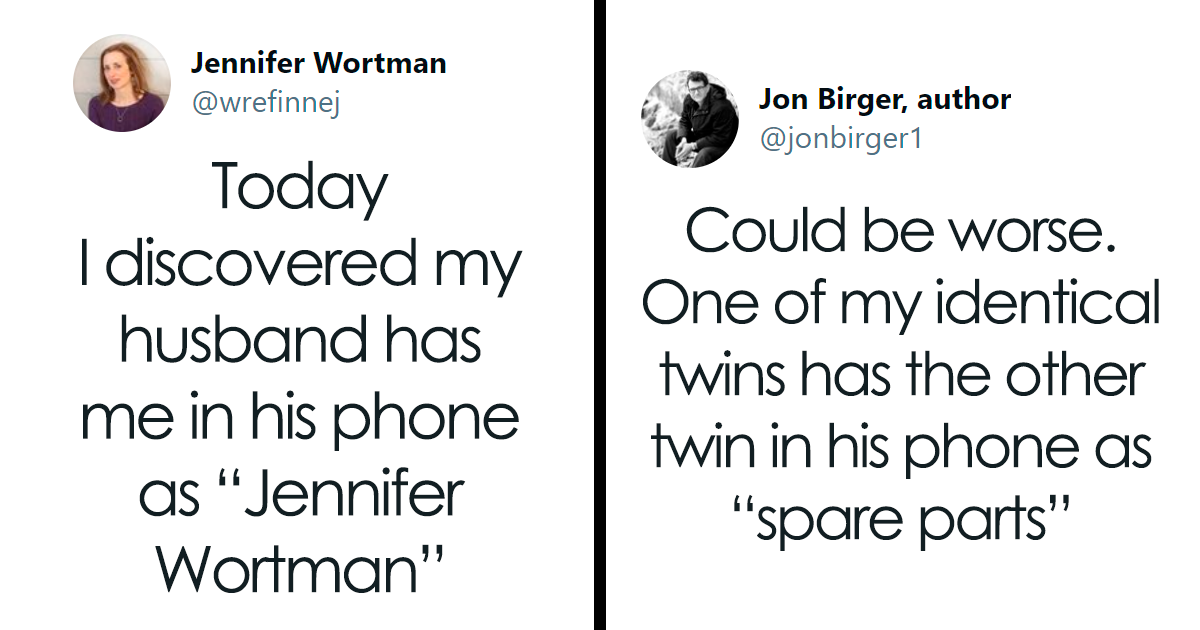

The internet has given humanity instant access to libraries, scientific discoveries, maps of nearly every street on Earth, and the ability to communicate across continents in seconds. Naturally, we used these miracles of technology to write comments so disturbing, ridiculous, and unexpectedly funny that complete strangers felt compelled to screenshot them.
Welcome to the wonderfully questionable world of cursed commentsthe sort of replies that make you laugh, stare at the screen, reread the sentence, and then wonder whether laughing has permanently damaged your moral character.
One of the best-known gathering places for this peculiar form of dark internet humor has been Reddit’s Cursed Comments community. The idea is beautifully simple: people spot bizarre, unsettling, absurd, or hilariously inappropriate comments elsewhere online and bring screenshots back for the community to judge. Sometimes the joke is clever. Sometimes it is terrible. Occasionally, it feels like somebody opened a trapdoor underneath an ordinary conversation and dropped everyone directly into the basement of human imagination.
What Exactly Makes a Comment “Cursed”?
A cursed comment is difficult to define with a dictionary-style sentence because much of its power comes from surprise. It is not merely an offensive comment, a rude insult, or random shock humor. The memorable ones usually begin in completely ordinary territory before taking a spectacularly wrong turn.
Imagine somebody posting an innocent photograph of a strangely shaped sandwich. Most people might discuss cheese, bread, or lunch. Then one commenter appears with a sentence that makes everybody else suddenly reconsider the sandwich, their appetite, and perhaps civilization itself.
That transformation is the key.
The Setup Looks Harmless
Many funny cursed comments depend on contrast. The original post might involve pets, childhood memories, cooking, relationships, video games, or household objects. Nothing seems unusual. Your defenses are down.
Then comes the reply.
A talented cursed commenter can transform a wholesome picture into a horror movie using twelve words and questionable judgment. The bigger the distance between the innocent setup and the unexpected response, the stronger the reaction tends to be.
The Punchline Arrives From Another Dimension
Traditional jokes usually prepare you for humor. Cursed comments often refuse to provide that courtesy. Their punchlines can involve impossible hypotheticals, grotesque misunderstandings, uncomfortable double meanings, dark wordplay, or a completely literal interpretation of something that obviously should not have been taken literally.
The emotional experience is less “Ha! Good joke!” and more “WHAToh nookay, that’s actually clever.”
How the Cursed Comments Community Became an Internet Institution
The Cursed Comments subreddit dates back to 2018. Its creator later explained that the idea emerged after encountering someone casually mentioning a nonexistent “CursedComments” subreddit beneath a suitably strange comment. Instead of allowing a good imaginary community to remain imaginary, the creator made it real. Early efforts emphasized posting regularly, encouraging participation, and building an identity around a particular flavor of internet humor.
That formula worked. Within a few years, the community had attracted millions of members and spawned repeated collections of screenshots, reposts, discussions, imitators, and even debates about whether particular submissions were actually cursed enough to qualify. In other words, the internet eventually developed quality-control standards for nightmare jokes. Progress is beautiful.
Why Cursed Comments Are So Funny
The appeal is not simply that people enjoy being shocking. Much of the humor follows recognizable psychological and comedic patterns.
Surprise Is Doing Most of the Heavy Lifting
Comedy frequently relies on violating expectations. Your brain predicts where a conversation is going, and humor appears when the destination suddenly changes.
Cursed comments push that mechanism toward the extreme. A perfectly normal discussion can become surreal after one unexpected sentence. The reader’s mental brakes are applied approximately three exits too late.
Research into social media has repeatedly shown that novelty and emotionally provocative material can attract attention and sharing. MIT researchers discussing social-media dynamics have noted how novel material can generate especially strong reactions, while Yale researchers found evidence that platform rewards such as likes and shares can reinforce particular styles of emotional expression over time. The research is not specifically about cursed jokes, but the underlying attention mechanics help explain why an unusually shocking punchline can travel so efficiently online.
Dark Humor Creates a Tiny Social Test
Part of the experience is wondering whether you are “allowed” to laugh.
A good cursed joke places the reader in a tiny moral courtroom. The prosecution says, “That was awful.” The defense says, “Yes, but the timing was magnificent.” The jury is already laughing.
This tension separates successful dark comedy from merely unpleasant comments. Humor needs some recognizable structure: exaggeration, absurdity, wordplay, irony, or an obviously fictional leap. Without that layer, cruelty is simply cruelty wearing a party hat.
The Comment Section Becomes Part of the Entertainment
Online posts are no longer complete when the original creator presses “publish.” Replies can transform the meaning of a post, create running jokes, correct mistakes, launch arguments, or produce entirely new entertainment.
Researchers at Columbia Business School have studied how comments can meaningfully influence engagement and attitudes, while Cornell researchers have emphasized that the enormous audience reading comment sections can make those conversations influential far beyond the relatively small number of people actually posting.
That explains one of the oldest pieces of internet wisdom: never skip the comments.
The original content might be an appetizer. Somewhere three replies down, a stranger named something like PotatoDestroyer91 may have prepared the main course.
The Most Common Species of Cursed Comment
1. The Horrifying Literal Interpretation
Someone uses an innocent figure of speech. Another person interprets it literally, identifies the worst possible implication, and calmly announces it.
This format works because language contains countless expressions nobody is supposed to examine too closely. Cursed commenters examine them with laboratory equipment.
2. The Innocent Question With an Unacceptable Answer
Questions are dangerous on the internet because users are under no legal obligation to respond like normal human beings.
“What would you do if…?” is practically an engraved invitation for chaos.
The funniest responses often obey the technical requirements of the question while completely betraying its spirit. This is internet comedy’s version of a genie granting wishes exactly as worded.
3. The Escalating Reply Chain
One strange comment is manageable. A dozen users competing to make it worse creates something special.
The first person introduces a questionable idea. The second adds a horrifying logistical detail. The third develops a business model. By reply number eight, somebody has calculated shipping costs.
No single participant planned the joke. The community constructed the monster together.
4. The Perfectly Timed Dark Pun
These are dangerous because you understand them immediately.
The wording is often simple, the connection precise, and the joke sufficiently terrible that you resent yourself for appreciating the craftsmanship. A great cursed pun can convert an ordinary sentence into something that feels illegal despite breaking no laws except perhaps several involving good taste.
5. The “Why Would You Even Think of That?” Comment
This may be the purest form of cursed content.
The comment contains an observation nobody else would have considered. Once you read it, however, you cannot return to the peaceful life you enjoyed fifteen seconds earlier.
Your knowledge has increased. Your happiness has not.
Anonymity Helps People Say the Quiet Part Very, Very Loudly
Internet culture also changes how freely people communicate. Psychologists have long discussed the online disinhibition effect: distance, invisibility, anonymity, and reduced immediate social feedback can make people express things online that they would probably never announce while standing in line at a grocery store.
That can produce creativity, confession, unusual honesty, niche communities, and hilarious nonsense. It can also produce harassment and cruelty.
Cornell research has suggested that trolling is not necessarily limited to a permanent class of naturally awful people; situational factors such as mood and exposure to negative behavior can increase the likelihood of ordinary users behaving badly. Other research and commentary on online behavior similarly point to anonymity and group norms as important parts of digital interaction.
Which explains why your quiet coworker Dave might politely ask whether you want anything from Starbucks at 3 p.m. and then spend his evening online writing jokes that sound as though they were discovered carved into the wall of an abandoned psychiatric hospital.
Funny-Cursed and Actually Awful Are Not the Same Thing
There is an important difference between taboo humor and genuine abuse.
A joke can be fictional, absurd, dark, or deliberately uncomfortable without targeting an actual person. Harassment, threats, stalking, humiliation, hateful attacks, and sustained abuse are different matters entirely.
Pew Research Center found in its major 2021 study that 41% of U.S. adults surveyed had experienced some form of online harassment, with social media being the most commonly reported location of respondents’ latest experiences. That broader reality is worth remembering whenever internet humor begins drifting from imaginary horror toward attacks on real people.
The best cursed comedy punches through expectations rather than punching down at vulnerable strangers.
Why Moderators Matter in Communities Built Around Chaos
Managing a dark-humor community is a strange balancing act. Make the rules too restrictive and the community loses its personality. Make them nonexistent and the place can become an unusable swamp of spam, hate, harassment, recycled material, and people attempting to win an imaginary championship for being offensive.
Volunteer moderators therefore become cultural referees. They are not merely deleting posts; they are constantly defining what a community is supposed to be.
Reporting on Reddit moderation has repeatedly documented how moderators fight spam, coordinated manipulation, low-quality submissions, abusive behavior, and content that simply does not fit a community’s purpose. Research on moderated online communities likewise suggests moderation can influence content quality and participation.
Even users themselves argue about standards. Discussions in and around cursed-comment communities have included recurring complaints that submissions are either not cursed enough or merely offensive without being funny. Apparently, even chaos requires editorial judgment.
Cursed Comments Are Part of a Much Older Internet Tradition
Long before today’s social platforms, internet users were remixing jokes, images, catchphrases, and cultural references into forms that made sense mainly to people who spent far too much time online.
Early web memes established the basic formula: recognize something familiar, alter the context, invite others to remix it, and watch the joke mutate. Smithsonian coverage of internet meme history has documented how everything from early animated images to LOLcats became collective cultural artifacts through repetition and transformation.
Cursed comments belong to the same evolutionary family.
Instead of remixing a picture, users remix meaning. A sentence becomes funny because it appears beneath another sentence. Screenshotting preserves that combination, and reposting moves the joke into a community capable of understanding its unwritten rules.
The Screenshot Is Half the Joke
Context matters enormously.
Copy a cursed comment into a blank document and it may seem confusing or simply unpleasant. Keep the original post, username structure, reply indentation, reaction counts, and surrounding conversation, and suddenly the entire comedy mechanism becomes visible.
That is why screenshots dominate this genre. They preserve timing.
Comedy is usually associated with spoken pauses and delivery, but internet conversations have their own rhythm. The blank space between posts, the progression of replies, and the realization that somebody actually typed the sentence are digital forms of comedic timing.
Why We Keep Reading Things We Immediately Regret Reading
Humans are curious creatures. Tell someone there is something wonderful behind a door and they may open it eventually. Put up a sign reading “DO NOT OPEN THIS DOOR UNDER ANY CIRCUMSTANCES,” and suddenly everybody has weekend plans.
“Cursed” functions similarly.
The label promises a controlled encounter with something socially unusual. We know the material is supposed to be strange before opening it. That expectation creates a kind of psychological safety rail: the reader understands that absurdity is part of the performance.
It also creates a challenge. How cursed can this possibly be?
Internet commenters hear that question and apparently take it personally.
What Browsing a Cursed-Comment Rabbit Hole Actually Feels Like
A typical cursed-comment session begins innocently. You intend to look at three screenshots while waiting for coffee. Twenty-five minutes later, the coffee is cold, you have learned four pieces of information you desperately wish you could unlearn, and you are sending screenshot number seventeen to a friend accompanied by the message, “I had to see this, so now you do too.”
The first stage is surprise. A post looks ordinary enough: perhaps somebody asking about a pet, describing a family situation, discussing food, or making an observation about everyday life. Then comes the comment that changes everything.
The second stage is forensic analysis.
You reread the sentence because surely you misunderstood it. Maybe punctuation will save you. It does not. You inspect the original post again. Somehow that makes things worse.
The third stage is the reply section. Other users have already passed through the same emotional crisis and are now leaving reactions ranging from fake horror to increasingly absurd additions. Somebody asks why the commenter would think of such a thing. Another responds with something even worse. Humanity abandons the building.
Eventually, however, browsing enough examples teaches you something about the difference between genuinely funny dark humor and cheap provocation.
The memorable comments usually contain an idea. There is misdirection, linguistic creativity, clever timing, or an absurd connection. You may hate the joke’s destination, but you can see how the vehicle got there.
Low-effort shock humor is different. It simply chooses the most offensive available subject and expects offensiveness itself to function as a punchline. After a while, that becomes predictablewhich is fatal for comedy.
You also become more conscious of context. A joke about an impossible fictional scenario is different from mocking somebody experiencing genuine grief. A ridiculous exaggeration among consenting participants is different from directing abuse at a stranger. Internet communities constantly negotiate those boundaries, and their healthiest versions develop norms that allow strange humor without pretending every cruel statement deserves protection because somebody added “LOL.”
There is another surprisingly wholesome side to the experience: shared laughter.
Sending a bizarre screenshot to a friend creates a tiny social ritual. No sophisticated explanation is necessary. Sometimes the entire conversation consists of the image followed by “BRO,” three skull emojis, and “WHY.” Linguistically primitive? Perhaps. Emotionally efficient? Absolutely.
That may explain the enduring appeal of collections built around cursed comments. They are not just catalogs of edgy sentences. They capture moments when ordinary online conversation unexpectedly transformed into collaborative comedy.
The internet can be exhausting, argumentative, manipulative, and occasionally terrifying. But every so often, a complete stranger notices an absurd opening in a conversation, writes exactly the wrong sentence at exactly the right moment, and reminds millions of people that humans remain impressively creativeeven when that creativity should probably be supervised.
Conclusion: The Internet’s Most Questionable Comedy Club
Cursed comments occupy a strange but enduring corner of internet culture. Their best examples combine surprise, absurdity, taboo, context, timing, and community participation into jokes that could barely exist anywhere except online.
They also illustrate why comment sections themselves have become creative spaces. A post begins a conversation, but users can completely transform it through replies, references, misunderstandings, and collaborative escalation.
Of course, darkness alone does not make something funny. The difference between an unforgettable cursed joke and simple cruelty is usually creativity, context, and whether real people are being harmed. Moderation and community standards therefore remain essential even in groups whose entire purpose is celebrating material that makes readers whisper, “Who gave this person internet access?”
So the next time you see an innocent post followed by a reply so spectacularly inappropriate that you stare into the middle distance for several seconds, remember: you may have discovered a genuine cursed comment.
Screenshot responsibly.
Research note: This article synthesizes reporting and research from Bored Panda’s interviews about the Cursed Comments community and U.S.-based sources including Pew Research Center, Yale University, MIT, Cornell University, Columbia University, Harvard University, NYU, Rutgers University, the American Psychological Association, Smithsonian Magazine, WIRED, The Verge, The Atlantic, and The Washington Post.
Note: Examples and descriptions are independently written and synthesized for this article rather than reproducing the original collection or its captions verbatim.