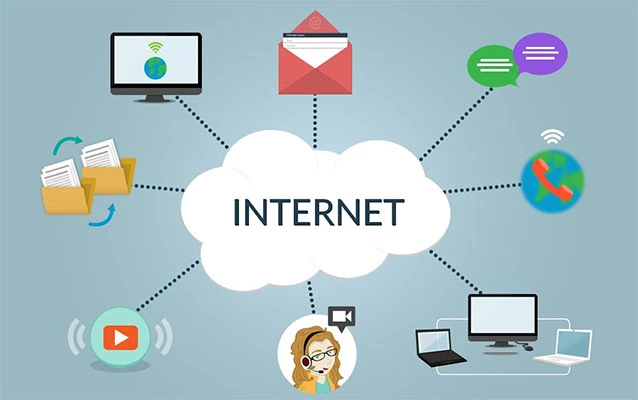

Modern cars no longer simply transport people from one place to another. They locate charging stations, diagnose mechanical problems, and occasionally remind drivers that their coffee is getting cold. With 5G connectivity, these rolling computers can exchange more information at higher speeds and with less delay than earlier connected vehicles.
That connectivity can improve navigation, emergency response, traffic management, vehicle maintenance, and collision avoidance. It can also create more opportunities for personal information to be collected, transmitted, combined, sold, exposed, or stolen. The problem is not that 5G is automatically unsafe. The problem is that faster connectivity can expand a complicated automotive data ecosystem that many drivers barely know exists.
What Does 5G Connectivity in a Car Actually Mean?
A 5G-connected car contains cellular hardware that allows onboard systems to communicate with automakers, cloud platforms, roadside infrastructure, mobile applications, entertainment providers, repair networks, and other services. Some connections operate continuously, while others activate when a particular feature is used.
Depending on the vehicle, 5G may support:
- Real-time navigation and traffic updates
- Over-the-air software and firmware updates
- Remote locking, starting, climate control, and vehicle tracking
- Streaming entertainment and in-car Wi-Fi
- Emergency crash notification and roadside assistance
- Predictive maintenance and remote diagnostics
- Communication with roads, traffic signals, pedestrians, and other vehicles
- Advanced driver-assistance and automated-driving functions
5G is attractive to automakers because it can support large numbers of connections, high data-transfer speeds, and low-latency communication. Those capabilities may eventually help vehicles react quickly to nearby hazards or coordinate with transportation infrastructure. NIST has identified low-latency, high-speed communication as an important capability for connected and automated vehicle systems. G and C-V2X Are Related but Not Identical
Conversations about connected cars often combine standard cellular connectivity with cellular vehicle-to-everything technology, commonly called C-V2X. C-V2X is designed to let vehicles communicate with other vehicles, roadside units, infrastructure, networks, and potentially vulnerable road users such as cyclists and pedestrians.
In November 2024, the Federal Communications Commission adopted technical rules supporting the transition of intelligent transportation communications in the 5.9 GHz band from Dedicated Short-Range Communications to C-V2X. The rules took effect in February 2025, establishing a clearer foundation for wider C-V2X deployment in the United States. se systems could help warn drivers about a car braking beyond a blind curve or a traffic signal changing ahead. However, every new communication path must be authenticated, updated, monitored, and protected. Otherwise, the digital highway may develop the cybersecurity equivalent of potholes.
Why 5G Can Expand Automotive Data Vulnerability
Faster connectivity does not magically create bad security. A properly designed 5G system can include strong encryption, authentication, network segmentation, and other protections. Vulnerability grows when 5G connects more components, companies, accounts, and databases without equally strong safeguards.
More Data Can Leave the Vehicle
Older vehicles stored much of their information locally. A technician generally needed physical access and diagnostic equipment to retrieve it. Connected cars can transmit information to remote servers throughout the vehicle’s life.
Potentially collected information includes:
- Precise or approximate location history
- Routes, destinations, and frequently visited places
- Speed, acceleration, braking, steering, and seat belt use
- Battery condition, fuel consumption, mileage, and maintenance records
- Voice-command recordings or transcripts
- Phone contacts, call logs, messages, and media preferences
- Facial images, fingerprints, eye movements, and other biometric data
- Cabin-camera footage and driver-attention information
- Mobile app identifiers, account details, and subscription history
The Federal Trade Commission has warned that connected cars may collect highly sensitive information, including precise location and biometric data. The FTC has also emphasized that the collection, use, and disclosure of this information can affect consumer privacy and financial welfare. Larger Attack Surface
A modern vehicle may contain dozens of electronic control units, multiple wireless interfaces, mobile applications, cloud services, supplier systems, and third-party software components. Each connection is another place where a design flaw, stolen password, unpatched vulnerability, insecure application programming interface, or configuration error could appear.
The National Highway Traffic Safety Administration defines automotive cybersecurity broadly, covering electronic systems, communication networks, control algorithms, software, users, and underlying data. In other words, securing the cellular modem while ignoring the mobile app would be like locking the front door and leaving the garage open. sible attack routes include compromised mobile accounts, malicious charging equipment, vulnerable infotainment software, exposed cloud databases, weak dealer credentials, insecure supplier networks, counterfeit components, and poorly protected wireless interfaces. The risk is distributed across the entire connected vehicle ecosystem rather than concentrated in one dashboard computer.
Faster Transmission Can Increase the Scale of Exposure
With greater bandwidth, vehicles can upload richer datasets more frequently. This may include detailed diagnostic logs, sensor measurements, video clips, road imagery, and driver-behavior records. A privacy problem that once involved a modest trip log could become a continuously updated profile of where a person travels and how that person behaves behind the wheel.
The central concern is not merely the speed of transmission. It is the combination of high-volume collection, long retention periods, multiple recipients, and limited consumer awareness. A secure connection can still transport information that never needed to be collected in the first place.
Your Car’s Data May Travel Far Beyond the Automaker
Drivers may assume vehicle information stays inside the car or goes only to the company whose badge appears on the hood. In reality, connected vehicle services can involve telecommunications providers, cloud hosts, analytics firms, mapping platforms, insurance companies, repair networks, roadside-assistance operators, marketing partners, data brokers, and software suppliers.
In January 2026, the FTC finalized an order settling allegations that General Motors and OnStar collected and sold precise geolocation and driving-behavior data from millions of vehicles without adequate notice and affirmative consent. The order included limits on sharing covered data with consumer reporting agencies and requirements involving consumer consent and deletion options. The case demonstrates that automotive data can influence matters far beyond navigation or vehicle maintenance. riving Data Can Become Financial Data
Telematics information may be used to estimate risk, calculate insurance discounts, investigate claims, evaluate warranties, or build consumer profiles. A hard-braking event might reflect dangerous driving, but it could also mean the driver avoided a child chasing a ball into the street. Data usually records the movement, not the reason.
When information is incomplete or interpreted without context, a safety feature can become a financial liability. Drivers may face higher insurance prices, disputed claims, personalized offers, or other automated decisions without clearly understanding what information produced the result.
Location History Can Reveal a Life Story
A single location point may seem harmless. A long-term location history can reveal a person’s home, workplace, daily schedule, relationships, religious activities, medical visits, political events, and recreational habits.
Location information becomes even more revealing when combined with contacts, app activity, voice commands, payment records, or cabin-sensor data. A vehicle does not need to record a driver’s private conversation to infer a great deal about that driver’s life.
Privacy and Cybersecurity Are Different Problems
Cybersecurity asks whether unauthorized people can access, alter, or disrupt information and systems. Privacy asks whether information should be collected, how it may be used, who may receive it, and how much control the individual has.
A vehicle platform can be technically secure while still collecting excessive personal data under a broad privacy policy. Conversely, a company may promise limited collection but fail to protect its database adequately. Drivers need both strong security and meaningful privacy protections.
Mozilla’s review of 25 major automotive brands reported that all collected more personal information than the researchers believed necessary. Mozilla also found that most said they could share information with service providers, data brokers, or other businesses, while many reserved the right to sell data. These findings do not prove that every listed practice occurs in every vehicle, but they illustrate how broad automotive privacy policies can be. onsent May Be Buried in the Ownership Process
A driver may encounter separate terms for the vehicle, mobile app, navigation service, roadside assistance, entertainment account, insurance program, charging network, and dealership portal. Consent can become scattered across screens and documents that few people have time to read while sitting at a dealership desk surrounded by forms.
Passengers and secondary drivers face an additional problem: they may never see those notices. Pairing a phone, sitting in front of an interior camera, or riding in a connected vehicle can create data even when the person is not the registered owner.
Could Hackers Take Control of a 5G-Connected Car?
The most dramatic fear is remote control of steering, acceleration, or braking. Safety-critical systems deserve serious protection, but not every vulnerability provides direct access to vehicle controls. Many incidents are more likely to involve account theft, location exposure, unauthorized unlocking, service disruption, data theft, ransomware, or manipulation of noncritical features.
Still, cybersecurity teams cannot treat privacy and safety as completely separate. If an attacker can move from an exposed wireless service into other vehicle networks, a data-security flaw may become a physical-safety problem. For that reason, automakers use approaches such as network isolation, secure gateways, signed software, intrusion detection, encrypted communication, hardware-backed credentials, vulnerability testing, and coordinated incident response.
Government and industry guidance recommends designing security throughout the vehicle lifecycle rather than attaching it at the end. NHTSA, NIST, CISA, and the Automotive Information Sharing and Analysis Center have all promoted risk management, information sharing, software assurance, testing, and layered defenses for connected transportation systems. n>
What Automakers and Technology Providers Should Do
Collect Less Information
Data minimization is one of the most effective privacy controls. If a service needs current location to provide directions, it may not need to store years of location history. If a maintenance alert needs an error code, it may not need the driver’s contact list.
Separate Safety Systems from Entertainment Systems
Infotainment, mobile-device pairing, and passenger Wi-Fi should be strongly isolated from safety-critical networks. Layered gateways can restrict commands and limit how far an attacker can move after compromising a less sensitive component.
Use Secure Over-the-Air Updates
Remote updates can fix vulnerabilities without requiring millions of dealership visits. However, update packages should be cryptographically signed, verified before installation, protected against rollback attacks, and delivered with a safe recovery process.
Provide Clear Controls
Drivers should be able to see what categories of data are active, why they are needed, who receives them, and how long they are retained. Privacy controls should not be hidden in a mobile app submenu designed by someone who apparently enjoys digital treasure hunts.
Protect the Entire Supply Chain
A connected vehicle contains hardware and software from many suppliers. Automakers should maintain an inventory of components, require vulnerability disclosure processes, test third-party systems, monitor supplier access, and plan for security support throughout the vehicle’s useful life.
How Drivers Can Reduce Connected-Car Data Risk
Drivers cannot redesign an automaker’s cloud platform, but they can reduce unnecessary exposure.
- Review privacy options in both the car and mobile app. Look for settings involving location history, driving analytics, personalized advertising, voice data, insurance sharing, product improvement, and third-party services.
- Enable automatic security updates. Install vehicle, infotainment, phone, and mobile app updates promptly.
- Protect the connected-car account. Use a unique password and multifactor authentication when available.
- Remove old drivers and devices. Delete phones, profiles, digital keys, addresses, contacts, and account access that are no longer needed.
- Limit app permissions. A vehicle app may not need permanent access to contacts, photos, microphones, or precise phone location.
- Ask about optional telematics. Understand what an insurance-monitoring program collects before enrolling for a discount.
- Be cautious with third-party accessories. Cheap diagnostic adapters and unofficial apps can introduce new security weaknesses.
- Reset the car before selling or returning it. Perform a factory reset, remove digital keys, disconnect subscriptions, delete paired devices, and contact the manufacturer when necessary.
Consumer Reports advises owners to manage privacy settings through vehicle applications where possible and to remove personal information from infotainment systems and connected accounts before selling a vehicle. n>
The Real-World Experience of Living With a 5G-Connected Car
Connected-car privacy becomes easier to understand when it is viewed through ordinary ownership experiences rather than abstract cybersecurity diagrams.
Experience One: The Convenient Morning Routine
Imagine a driver opening an automaker’s app before breakfast. The app shows the vehicle’s location, battery level, cabin temperature, remaining range, and whether the doors are locked. One tap warms the cabin before the driver walks outside.
The convenience is obvious. However, the app must authenticate the user, communicate with a cloud service, identify the correct car, transmit a command, and report the result. The platform may also record the request, phone identifier, time, location, vehicle status, and account activity.
A weak password or stolen email account could allow someone else to enter the app. A poorly designed application interface could expose information about other vehicles. Even when no attacker is present, the provider may retain more activity history than the driver expects. The experience is convenient precisely because several systems know where the car is and how to reach it.
Experience Two: Pairing a Phone in a Rental Car
A traveler rents a vehicle and connects a phone for music and hands-free calling. The infotainment screen requests access to contacts and recent calls. The traveler accepts quickly because a line of impatient customers is waiting behind the rental counter.
At the end of the trip, the phone is disconnected, but the contact list, device name, call history, destination history, and home address may remain stored in the vehicle. The next renter might see some of that information if the system was not reset.
5G does not create this local storage problem, but continuous connectivity may add remote account records, navigation searches, streaming-service logins, and usage analytics. A five-minute pairing process can leave a surprisingly long digital tail.
Experience Three: Buying a Used Connected Vehicle
A buyer purchases a three-year-old car from a private seller. The physical keys change hands, but the previous owner forgets to remove the vehicle from the manufacturer’s app. Depending on the system, that former owner may still receive location notifications or retain limited remote access.
The new owner may also inherit navigation favorites, garage-door programming, paired phones, Wi-Fi credentials, charging accounts, or voice-command history. A dealership inspection focused on brakes and tires may not include a complete digital reset.
Used-car buyers should treat connected accounts like property access. Reset the infotainment system, establish a new primary profile, remove all digital keys, change access codes, update the vehicle software, and verify ownership with the manufacturer. The transfer of a connected car is partly a mechanical transaction and partly an information-security handoff.
Experience Four: The Insurance Discount That Changes Character
A driver joins a usage-based insurance program that promises lower premiums for safe driving. At first, the arrangement feels reasonable. The system measures mileage, braking, acceleration, cornering, nighttime travel, or phone use while driving.
Then ordinary situations complicate the score. The driver brakes hard when another car changes lanes, accelerates to merge safely, or travels late at night after a delayed flight. The data captures the action but may not capture the surrounding context.
The lesson is not that all telematics programs are unfair. Some drivers save meaningful amounts of money. The lesson is that drivers should understand whether participation is optional, what variables are measured, how long information is kept, whether it affects future pricing, and whether it is shared with other parties.
Experience Five: A Family Car With Several Digital Identities
A household vehicle may serve two adults, a teenage driver, visiting relatives, children, and occasional passengers. Each person may connect a phone or use a profile. The vehicle can accumulate different destinations, voice searches, music preferences, messages, and driving patterns.
The registered owner may have agreed to the privacy terms, but the teenager, passenger, or visiting relative may know nothing about them. Cabin cameras and microphones also create questions about people who never opened the vehicle’s app.
Families can reduce confusion by using separate profiles, limiting permissions, deleting temporary devices, reviewing digital-key access, and explaining which monitoring features are active. A connected family car should not become a household surveillance system simply because nobody explored the settings menu.
What These Experiences Reveal
The biggest 5G car data vulnerability is often not a cinematic hacker taking over the steering wheel. It is the steady accumulation of small disclosures: a saved address here, an old account there, a location record sent to a vendor, and a privacy setting that remained enabled because nobody knew it existed.
Drivers benefit from connected technology when the bargain is understandable: the vehicle uses a limited amount of information to provide a clearly defined service and protects that information throughout its lifecycle. Trust breaks down when collection is invisible, consent is vague, sharing is excessive, or deletion is unnecessarily difficult.
Conclusion: Connectivity Needs Accountability
5G can make vehicles safer, more responsive, easier to update, and more enjoyable to use. It can support timely hazard warnings, remote diagnostics, improved traffic coordination, and services that once sounded like science fiction.
However, a faster connection also gives automakers and their partners the ability to collect and transmit more information. Without data minimization, strong authentication, secure updates, network isolation, transparent consent, and practical deletion controls, increased connectivity can become increased vulnerability.
The goal should not be to turn every connected feature off. The goal should be to ensure that drivers do not have to surrender an intimate record of their lives merely to use the vehicle they purchased. A smart car should be smart enough to respect its owner.