
“`
Note: This article is written for cybersecurity awareness, defensive planning, and public education. It explains the 5Ghoul vulnerabilities at a safe, high level and does not provide exploit instructions.
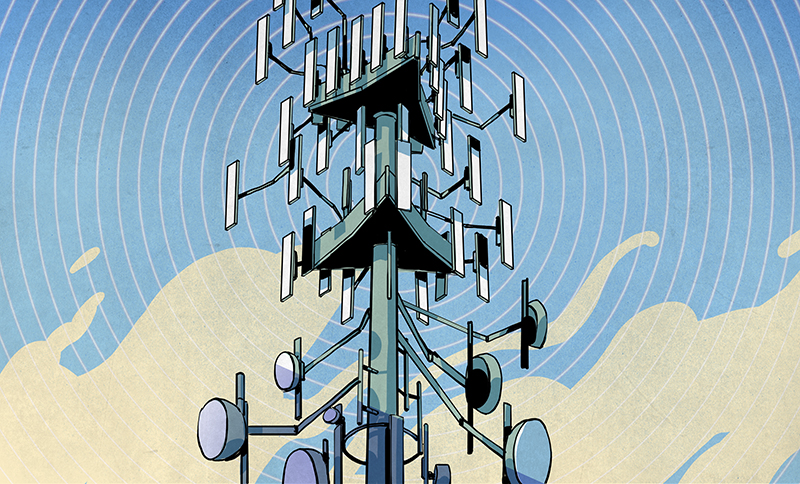
5G was supposed to be the sleek sports car of mobile connectivity: faster downloads, lower latency, smarter networks, and fewer moments of waving your phone around like a confused wizard. Then along came 5Ghoul, a family of 5G modem vulnerabilities that made security teams look twice at the tiny radio brains inside smartphones, routers, USB modems, and edge devices.
The name sounds like a Halloween special for telecom engineers, but the risk is real. 5Ghoul refers to a set of 14 implementation-level 5G vulnerabilities disclosed by researchers from the ASSET Research Group at the Singapore University of Technology and Design. The flaws affect certain 5G modems from major chipset vendors, especially Qualcomm and MediaTek, and can be abused to disrupt 5G connectivity, crash modem firmware, freeze connections, or force devices to downgrade from 5G to 4G.
That last part matters. A downgrade attack is not just an inconvenience; it can push a device away from newer 5G protections and into older cellular environments with a larger history of known weaknesses. In everyday language, 5Ghoul does not usually mean an attacker magically reads your messages from across town. It means a nearby attacker with specialized radio equipment may be able to make your phone’s 5G connection stumble, reboot, or fall back like it just saw a ghost in the network.
What Is 5Ghoul?
5Ghoul is a collection of 5G New Radio vulnerabilities found in modem firmware and related 5G user equipment behavior. These flaws sit below the apps you tap, below Android or iOS settings, and deep inside the communications stack that helps your phone talk to a cellular base station.
The researchers grouped the flaws as implementation bugs rather than weaknesses in one single app or website. That distinction is important. Your banking app can have flawless password rules, your browser can be updated, and your phone can still depend on a modem firmware layer that must safely interpret complex 5G messages. When that layer mishandles malformed radio protocol messages, the result can be a denial-of-service condition: the device loses connectivity, the modem crashes, or 5G service becomes unavailable until recovery.
Why the Name Sounds Spooky
The “ghoul” branding fits because the attack can appear invisible to the average user. There is no suspicious email to delete, no fake login page to spot, and no obvious “You have been hacked” pop-up. The victim may simply notice that 5G vanished, the phone became stuck, or the device needed a restart. In other words, the ghoul does not knock on the front door. It rattles the radio stack from the shadows.
How 5Ghoul Attacks Work At A High Level
At a safe conceptual level, 5Ghoul attacks involve a malicious or rogue 5G base station-like setup within radio range of a vulnerable device. The target device may interact with this nearby radio source during early connection procedures. Before the device has fully completed later-stage authentication and protection steps, it may process certain control messages used to establish or configure the connection.
If a vulnerable modem receives malformed or unexpected messages during these procedures, the firmware can behave badly. Some 5Ghoul cases cause a crash. Some lead to a modem reboot. Some interrupt 5G service. One particularly concerning class can downgrade connectivity from 5G to 4G or prevent the device from reconnecting to 5G until the user manually reboots.
Think of it like a hotel check-in system. The guest has not reached the locked room yet, but the front desk still has to process an ID, assign a room, print a key, and answer basic questions. If the front desk software crashes because someone enters a weird but carefully structured value into a required field, the whole lobby grinds to a halt. 5Ghoul is similar, except the lobby is your modem and the weird form field is a low-level radio protocol message.
The 14 Shambling Flaws: What They Target
The 5Ghoul research described 14 vulnerabilities in total, with a subset publicly assigned CVEs at disclosure time. They span several parts of the 5G protocol stack, including RRC (Radio Resource Control), NAS (Non-Access Stratum), MAC, and RLC. These are not household acronyms, but they are the plumbing that helps cellular devices attach to networks, negotiate configuration, and move data.
Qualcomm-Related 5Ghoul Issues
Several 5Ghoul findings involved Qualcomm X55 and X60 modem platforms used in certain phones, routers, USB modems, and 5G customer premises equipment. The reported impact included modem denial of service, connection blocking, and 5G downgrade behavior. One key risk was that a single malformed message could leave 5G connectivity disabled until a manual reboot restored normal operation.
For consumers, this might look like a stubborn phone refusing to stay on 5G. For businesses, it can be more serious. A 5G router used for backup connectivity, field operations, point-of-sale systems, or remote monitoring could become unavailable at exactly the wrong time. The modem is small, but the operational headache can be impressively large.
MediaTek-Related 5Ghoul Issues
Other 5Ghoul vulnerabilities affected MediaTek 5G modem firmware, including Dimensity-based devices tested by the researchers. These flaws commonly involved malformed RRC or RLC messages that could trigger modem crashes, reachable assertions, or memory-related errors. In practical terms, a vulnerable phone could briefly lose modem functionality and recover only after the modem rebooted.
That may sound less dramatic than data theft, but availability is one of the three classic pillars of cybersecurity. Confidentiality asks, “Can someone read what they should not?” Integrity asks, “Can someone change what they should not?” Availability asks, “Can the system keep working?” 5Ghoul is mainly an availability problem, and availability problems are not cute when they affect emergency communications, medical devices, industrial gateways, transportation, or business continuity.
Why 5Ghoul Matters For Smartphones
Most users never think about their baseband modem. It is the quiet specialist inside the device, handling cellular communication while the main operating system gets all the glamour. But the modem is extremely important. It speaks to cell towers, processes radio messages, and keeps the device connected to mobile networks. When modem firmware has a bug, the problem can affect many phone models that share the same chipset family.
That is why 5Ghoul drew attention: the potential impact was not limited to one niche device. Research and security reporting connected the vulnerable modem families to hundreds of smartphone models, plus routers, USB dongles, and other 5G edge products. The exact exposure depends on firmware versions, vendor patches, device models, carrier update pipelines, and whether the device maker actually shipped fixes to users.
Disruption Is The Main Threat
The clearest 5Ghoul risk is disruption. A vulnerable phone may drop 5G, freeze its connection, crash the modem, or fall back to 4G. In a normal day, that could mean missed calls, failed uploads, lagging maps, payment issues, or a streaming video that suddenly looks like a potato painting. In a business setting, it could affect mobile workforces, 5G-connected equipment, kiosks, remote cameras, or backup internet links.
It is also important not to exaggerate the threat. 5Ghoul is not the same as a remote app exploit delivered through a text message from another continent. The attacks require radio proximity and specialized knowledge. But “requires proximity” does not mean “irrelevant.” Airports, campuses, convention centers, factories, hospitals, and dense urban spaces are exactly the kinds of places where proximity is easy and connectivity matters.
Why 5G Security Is So Hard
5G is more secure than older generations in many ways, but it is also more complex. Modern cellular systems involve device firmware, radio access networks, core network services, carrier configurations, roaming relationships, chipset vendors, operating systems, and product manufacturers. That is a lot of cooks in the digital kitchen. Someone is bound to leave a protocol casserole in the oven too long.
5Ghoul highlights a difficult truth: standards can be well-designed, yet implementations can still fail. A protocol specification may say how messages should behave, but each vendor must translate that specification into firmware that runs safely under weird conditions. Attackers and researchers love weird conditions. Fuzzing, malformed inputs, edge cases, and pre-authentication message handling are where polished systems often reveal their messy sock drawer.
Who Should Pay Attention?
Everyday Smartphone Users
Regular users should care, but not panic. Keep your phone updated, install carrier and operating system security patches, and avoid ignoring update prompts for months. If your device no longer receives security updates, it may be time to consider replacement, especially if you rely on it for sensitive work or travel.
IT And Security Teams
Organizations should inventory 5G devices just like laptops and servers. That includes smartphones, tablets, routers, mobile hotspots, USB modems, IoT gateways, and customer premises equipment. If a device contains affected modem families, teams should check whether the manufacturer has released firmware or operating system updates. The tricky part is that chipset vendors may release patches to product vendors, but end users only benefit when those patches travel through the full supply chain and land on actual devices.
Healthcare, Industrial, And Critical Operations
Any environment using 5G for operational resilience should evaluate 5Ghoul-style risks carefully. A denial-of-service flaw in a consumer phone is annoying. The same class of flaw in a medical telemetry device, industrial router, emergency response tool, or transportation system can become a continuity issue. Organizations should consider redundant connectivity, monitoring for unusual radio behavior, and clear procedures for device reboot and recovery.
How To Reduce Risk From 5Ghoul
Users cannot patch modem firmware by sheer optimism, although many have tried optimism on printer issues with mixed results. Practical mitigation depends on updates from chipset vendors, device manufacturers, operating system maintainers, and carriers. Still, there are useful steps.
1. Install Security Updates Quickly
Security updates are the most important defense. Android security patch levels, device firmware updates, carrier updates, and vendor-specific modem firmware releases may include fixes for low-level vulnerabilities. Delaying updates gives old bugs a longer vacation in your pocket.
2. Replace Unsupported Devices
If a phone or 5G router is no longer receiving updates, it becomes harder to defend. Unsupported devices are especially risky in business environments where mobile connectivity supports payments, logistics, monitoring, or remote access.
3. Inventory 5G Hardware
Companies should know which 5G chipsets and modem modules they use. A spreadsheet is not glamorous, but neither is discovering during an outage that your “backup internet” depends on an unpatched modem from 2021.
4. Build Redundancy
Do not depend on one 5G path for critical operations. Use Wi-Fi, wired broadband, multi-carrier failover, or alternate devices where downtime would be costly or dangerous.
5. Monitor For Strange Connectivity Patterns
Repeated 5G drops, forced 4G fallback, unexplained modem reboots, or localized outages may deserve investigation. Not every dropped signal is a cyberattack; sometimes buildings are just signal-eating concrete beasts. But patterns matter.
What 5Ghoul Teaches Us About The Future Of Mobile Security
5Ghoul is a reminder that mobile security is not only about passwords, phishing links, and malicious apps. The radio layer matters. The baseband matters. Firmware matters. Supply chains matter. The phone in your hand is not a single computer; it is a stack of specialized systems wearing a touchscreen costume.
As 5G becomes more common in factories, hospitals, vehicles, cities, and home internet setups, these low-level vulnerabilities deserve more attention. Security testing must include modem behavior, radio protocol edge cases, and pre-authentication message handling. Vendors need faster patch delivery paths. Buyers need better visibility into chipset support timelines. And users need to understand that “connected” does not always mean “resilient.”
Experiences And Practical Lessons From 5Ghoul-Style Incidents
Anyone who has worked around mobile fleets, field devices, or business connectivity knows that the scariest outages are often the boring ones. A server breach announces itself with alerts, logs, and urgent meetings. A cellular disruption can look like nothing more than “the tablets stopped syncing” or “the backup router is being weird.” That is what makes a 5Ghoul-style problem so frustrating: the symptoms can resemble ordinary network gremlins.
Imagine a retail store that uses a 5G router as failover when wired internet drops. The team tests it once, sees the green light, and sleeps peacefully. Months later, a local outage hits, the store falls back to 5G, and suddenly card terminals become unreliable. The first suspect is the payment provider. Then the carrier. Then the router. Then someone power-cycles everything because that is the ancient ritual of IT survival. If the underlying issue is a modem-level denial of service or downgrade condition, the visible problem is not “CVE in modem firmware.” It is a line of annoyed customers holding oat milk and judging everyone.
The lesson is simple: mobile connectivity should be treated as infrastructure, not magic. Organizations should document device models, modem modules, firmware versions, patch status, and carrier dependencies. When a vendor says “updates were made available,” that does not automatically mean the device in your warehouse, ambulance, kiosk, or executive travel kit has actually received them. Patch delivery can be delayed by manufacturers, carriers, region-specific firmware, or end-user update policies.
For personal users, the experience is more familiar. Your phone drops from 5G to LTE in a crowded area. You blame the carrier, the building, the weather, Mercury retrograde, or all four. Most of the time, that is fair. But 5Ghoul shows why persistent, repeatable, location-specific 5G failures should not be dismissed forever. If your device behaves strangely only in one area, or if several similar devices show the same pattern, it may be worth updating firmware, contacting the carrier, or testing with a newer patched device.
The biggest practical takeaway is not paranoia. It is resilience. Keep devices updated. Avoid unsupported hardware in critical roles. Give important systems more than one way to connect. Monitor outages with enough detail to distinguish a bad signal day from a pattern. And remember that a smartphone is not just a shiny rectangle for memes, maps, and messages. It is a radio computer negotiating with powerful infrastructure all day long. When that negotiation goes wrong, even a tiny firmware flaw can make a very modern device behave like it just walked into a haunted house.
Conclusion
5Ghoul is not a reason to throw your 5G phone into a lake. Please do not do that; the fish have enough problems. But it is a serious reminder that mobile security reaches deep into modem firmware and radio protocol handling. The 14 5G flaws showed how vulnerable devices could suffer dropped connections, modem crashes, frozen service, or forced downgrades when exposed to malicious radio behavior within range.
For users, the best response is simple: update devices, replace unsupported models, and pay attention to unusual connectivity problems. For businesses, the response should be more structured: inventory 5G hardware, track firmware status, demand vendor transparency, and design redundancy into critical systems. 5G is powerful, but power without resilience is just speed wearing tap shoes on a wet floor.
SEO Tags