
Summer fruit does not require a sprawling backyard, a tractor, or a straw hat with dramatic movie-star energy. Sometimes all you need is a sunny balcony, a few roomy containers, good potting mix, and plants that understand the assignment: grow fast, fruit soon, and look cheerful while doing it.
Container fruit gardening is especially helpful for renters, small-space gardeners, patio growers, and anyone whose yard soil behaves like either beach sand or wet cement. Pots let you control soil, drainage, placement, and watering more easily. They also let you move your plants when the weather turns rude, which, depending on where you live, may happen before your coffee cools.
The key is choosing fruits that are realistic for a same-season harvest. A tiny apple tree planted today will not politely hand you a pie by August. But day-neutral strawberries, patio tomatoes, ground cherries, compact blueberries, everbearing raspberries, and mini melons can deliver summer rewards when started with the right plant size and care. In some cases, “fast-growing” means planting healthy transplants rather than seeds. That is not cheating. That is gardening with snacks in mind.
Below are six fast-growing fruits you can plant in containers now and enjoy this summer, plus practical tips on pot size, sunlight, watering, feeding, and harvest timing. Your patio may be small, but your fruit ambitions do not have to be.
Before You Plant: The 5 Rules of Container Fruit Success
Fruit plants in containers are productive, but they are also slightly dramatic. They cannot stretch roots deep into the ground to find water or nutrients, so your job is to be their tiny weather system, cafeteria, and real estate manager.
1. Choose a container with drainage
Drainage holes are non-negotiable. A pretty pot without drainage is not a planter; it is a decorative swamp. Most fruiting plants hate sitting in soggy soil because oxygen-starved roots quickly become weak roots. Use containers with several holes and lift pots slightly on feet or bricks if water has trouble escaping.
2. Use quality potting mix, not garden soil
Garden soil may work beautifully in the ground, but in containers it can compact, drain poorly, and turn into something resembling a brick with trust issues. Use a lightweight potting mix designed for containers. For blueberries, choose an acidic mix or amend carefully for acid-loving plants.
3. Give fruit plants enough sun
Most summer fruiting plants need at least six hours of direct sun per day. Eight hours is even better for tomatoes, strawberries, melons, and berries. If your space gets afternoon shade, choose the brightest available spot and use reflective walls or light-colored surfaces to boost brightness.
4. Water consistently
Containers dry out faster than garden beds, especially in summer heat. Check moisture daily during hot weather. Water when the top inch of mix feels dry, and keep watering until water runs from the bottom. Inconsistent watering can reduce fruit quality, cause splitting in tomatoes, stress berries, and make melons sulk like teenagers asked to unload the dishwasher.
5. Start with transplants when summer harvest matters
Seeds are satisfying, but transplants are faster. For summer fruit, start with nursery plants whenever possible: strawberry crowns or plugs, patio tomato seedlings, potted blueberry bushes, raspberry canes, ground cherry seedlings, and melon transplants. The bigger and healthier the plant at planting time, the better your odds of harvesting before fall taps you on the shoulder.
1. Day-Neutral Strawberries
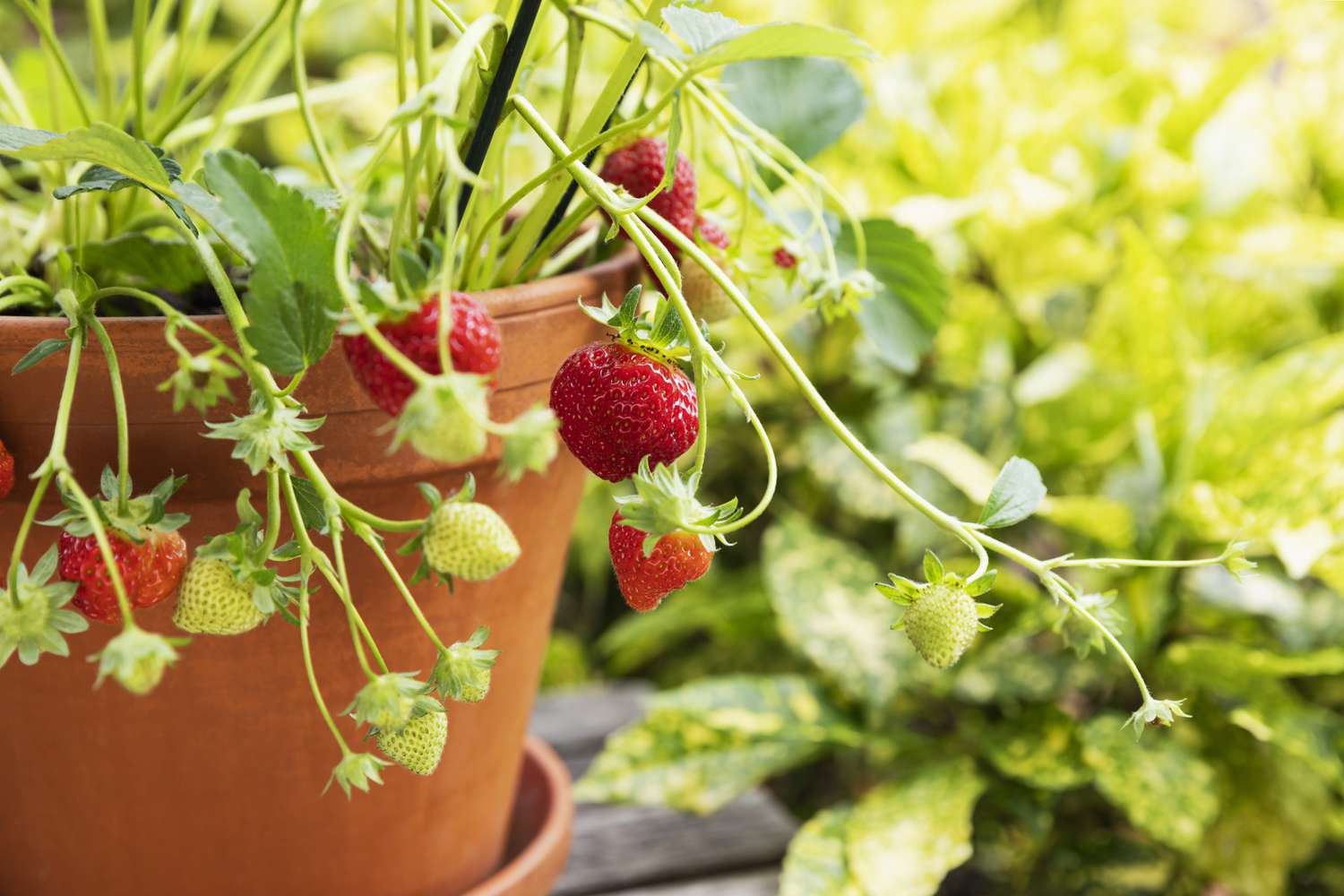
If container fruit had a “most likely to succeed quickly” award, day-neutral strawberries would show up early, accept the trophy, and bring dessert. Unlike June-bearing strawberries, which produce one main crop, day-neutral types can flower and fruit through the growing season when temperatures are favorable.
For the fastest summer harvest, buy healthy strawberry transplants rather than starting from seed. Look for day-neutral varieties such as Albion, Seascape, Evie-2, or Tribute, depending on what grows well in your region. These varieties are popular for containers because they stay compact, produce repeatedly, and do not require a giant garden bed.
Best container size
Use a container at least 8 inches deep. A 12-inch pot can hold one to three plants, depending on width. Window boxes, hanging baskets, tiered planters, and grow bags also work well. Strawberries have shallow roots, but they still need steady moisture and room for airflow.
How to plant
Plant strawberries so the crown sits at soil level. Burying the crown too deeply can cause rot, while planting too high can dry the roots. Think of the crown like a tiny plant neck: comfortable above the collar, not buried under a scarf.
Care tips for summer fruit
Place the pot in full sun and water consistently. Remove runners if your goal is fruit production rather than baby strawberry plants. Feed lightly with a balanced fertilizer according to label directions, but avoid overdoing nitrogen, which can encourage leafy growth at the expense of berries.
When you can harvest
With strong transplants, you may see fruit in early to midsummer. Pick berries when they are fully red and fragrant. Do not harvest them pale and hopeful; strawberries do not ripen much after picking. Let them finish their performance on the plant.
2. Patio Cherry Tomatoes
Yes, tomatoes are botanically fruits. In the kitchen, they may hang out with basil and mozzarella, but in the garden they are fruiting machines. If your goal is quick container-grown summer harvests, patio cherry tomatoes are one of the best choices you can make.
Cherry tomatoes often ripen earlier than large slicing tomatoes, and compact varieties are bred for small spaces. Look for names that hint at container life, such as Tiny Tim, Patio Choice, Tumbling Tom, Red Robin, Veranda Red, or Husky Cherry Red. Local garden centers often carry region-friendly options.
Best container size
A small determinate cherry tomato can grow in a 5-gallon container, but a 10-gallon pot gives better root space, moisture stability, and fruit production. Larger plants may need a 15- to 20-gallon container. When in doubt, size up. Tomatoes are not shy about using the extra room.
How to plant
Plant tomato transplants deeply, burying part of the stem so new roots form along it. Add a cage, stake, or small trellis at planting time. Waiting until the plant is flopping over like a tired umbrella makes support much harder.
Care tips for summer fruit
Give tomatoes full sun, consistent moisture, and regular feeding. Container tomatoes are hungry plants. Use a fertilizer labeled for vegetables or tomatoes, following the package instructions. Avoid letting the pot dry completely and then flooding it, because moisture swings can lead to cracking fruit and stressed plants.
When you can harvest
Many cherry tomato varieties produce ripe fruit 55 to 70 days after transplanting, depending on the plant, weather, and variety. Harvest when fruits are fully colored and slightly firm. Pick often to encourage more flowering and fruiting. Also, try not to eat the first ripe tomato standing barefoot on the patio like a raccoon at a buffet. Actually, never mind. That is part of the ritual.
3. Ground Cherries
Ground cherries are the delightful oddballs of the summer fruit container world. They are related to tomatoes and tomatillos, but their small golden fruits taste sweet-tart, tropical, and slightly mysterious. Each fruit grows inside a papery husk, like nature wrapped it for a tiny birthday party.
Ground cherries are excellent for sunny decks and patios because many varieties stay relatively compact, usually around 1.5 to 3 feet tall with a spreading habit. Popular varieties include Aunt Molly’s, Pineapple, and Goldie.
Best container size
Use at least a 5-gallon container for one plant, though 7 to 10 gallons is better if you want stronger growth and easier watering. A wide container helps because ground cherries sprawl. You can also use a tomato cage to keep the plant slightly more upright.
How to plant
Plant ground cherry transplants after frost danger has passed and the weather is warm. Like tomatoes, they appreciate warmth and do not enjoy chilly soil. Place them in full sun and use rich, well-drained potting mix.
Care tips for summer fruit
Water evenly and mulch the surface of the pot with straw or shredded leaves to keep fallen husks clean. Avoid eating unripe green fruits, leaves, or husks. The ripe fruit is the prize; the rest of the plant is not invited to snack time.
When you can harvest
Ground cherries are ready when the husks turn dry and tan and the fruits naturally drop from the plant. This usually happens in late summer into early fall, but in warm regions or with early transplants, you may enjoy them before summer ends. Gather fallen ripe fruits frequently so they stay clean and do not invite pests.
4. Compact Blueberries
Blueberries are not the fastest fruit from scratch, but they can be a same-summer treat if you start with a mature potted plant from a nursery. The trick is to buy a plant that is already old enough to flower and fruit. A tiny starter plant may be adorable, but it is thinking about roots, not muffins.
For containers, choose compact or half-high blueberry varieties. Depending on your region, good container-friendly options may include Top Hat, Jelly Bean, Northblue, Sunshine Blue, or other dwarf cultivars recommended locally. Planting two compatible varieties can improve berry size and yield, even when a variety is listed as self-fertile.
Best container size
Start young plants in a container around 16 to 20 inches wide, then move up as they grow. Mature blueberries often need large pots, such as half-barrel-style containers or 20-gallon containers. The pot should be wide, stable, and well-drained.
How to plant
Blueberries need acidic growing conditions. Use an acidic potting mix or a blend designed for acid-loving plants. Plant the shrub at the same depth it grew in its nursery pot. Do not bury the stem deeper, and do not add regular garden lime unless you are trying to make your blueberry file a formal complaint.
Care tips for summer fruit
Keep the soil evenly moist but not soggy. Blueberry roots are shallow and can dry out quickly in containers. Use rainwater when possible if your tap water is very alkaline. Feed with fertilizer labeled for acid-loving plants, following directions carefully. Protect ripening berries from birds with netting if needed, because birds understand blueberries perfectly.
When you can harvest
If you buy a healthy potted plant with flower buds or young fruit already forming, you may harvest berries in summer. Wait several days after berries turn fully blue for the best sweetness. Blue is the outfit; flavor is the after-party.
5. Everbearing Raspberries
Raspberries sound like they require a country lane and a cottage named something like Bramblewick, but compact and everbearing types can grow in large containers. For summer results, choose a healthy nursery plant rather than bare-root canes, and look for primocane-bearing or everbearing varieties. These can fruit on current-season canes, often from late summer into fall.
Good container candidates include compact varieties such as Raspberry Shortcake or regional everbearing types recommended by local nurseries. Traditional raspberries can also grow in pots, but they need more space, support, and pruning.
Best container size
Use a large container, ideally 15 to 25 gallons for one raspberry plant. Some vigorous types do best in 20- to 30-gallon containers. Raspberries have deeper root systems than strawberries, so a shallow decorative bowl will not cut it.
How to plant
Plant raspberries at the same depth they were growing in the nursery container. Add a stake or small trellis for support. Even compact varieties benefit from structure, especially when fruit begins weighing down the canes.
Care tips for summer fruit
Place raspberries in full sun, water deeply, and keep the pot from drying out. During hot spells, container raspberries may need water every day. Mulch the top of the pot to conserve moisture. Prune based on the type you grow: everbearing raspberries can often be simplified by cutting canes down after the season, but always follow variety-specific guidance.
When you can harvest
If planted from an established potted plant, everbearing raspberries may produce in late summer. If the plant is young, expect a better harvest next year. Gardening sometimes teaches patience, which is annoying but effective.
6. Mini Melons
Melons in containers sound ambitious, but small-fruited varieties can work beautifully with warmth, sun, water, and a sturdy trellis. The goal is not to grow a watermelon the size of a car tire. Choose compact, short-vined, or personal-size melons that mature quickly.
Look for small cantaloupes, mini watermelons, or compact muskmelons with shorter days to maturity. Varieties such as Sugar Baby watermelon, Minnesota Midget muskmelon, or other regional compact types may suit container growing. Always check the seed packet or plant tag for days to maturity and vine habit.
Best container size
Use at least a 10-gallon container for one mini melon plant. A 15- to 20-gallon grow bag is even better because melons need steady moisture and root space. Choose a heavy container or anchor the trellis well, unless you want your melon vine to recreate a patio wind disaster.
How to plant
Melons dislike root disturbance, so transplants should be handled gently. Plant after nights are warm and frost is long gone. Use rich potting mix and place the container in the sunniest spot you have.
Care tips for summer fruit
Water consistently and feed regularly. Train vines up a trellis to save space. Support developing fruits with soft slings made from old T-shirts, mesh produce bags, or strips of cloth. This keeps heavy fruit from pulling on the vine.
When you can harvest
Mini melons often mature in 65 to 85 days, depending on variety and weather. Many muskmelons develop fragrance and slip from the vine when ripe, while watermelons require different clues such as a creamy field spot and drying tendril near the fruit. Read the variety instructions because melons are delicious, but they are not always obvious communicators.
Best Container Fruit Planting Plan for Summer
If you want the fastest payoff, plant a mixed container fruit setup. Use hanging baskets or railing planters for day-neutral strawberries, one large pot for a patio cherry tomato, a 7- to 10-gallon container for ground cherries, and a big decorative pot for a compact blueberry. If you have more room, add an everbearing raspberry and a mini melon grow bag with a trellis.
This combination gives you different harvest windows. Strawberries may start early and continue in waves. Cherry tomatoes can produce heavily through summer. Blueberries provide a shorter but exciting harvest if you begin with a mature plant. Ground cherries come later, bringing golden, candy-like fruit. Raspberries and mini melons add the grand finale.
For families, this setup is also a fun way to teach where food comes from. Children who ignore a bowl of fruit indoors may suddenly become deeply committed strawberry inspectors when the berries grow outside. Adults are not immune either. There is something wildly satisfying about eating a tomato you watered yourself, even if it cost you more in potting mix than a grocery-store pint. We garden for flavor, joy, and the right to say, “I grew that,” with unreasonable pride.
Common Mistakes to Avoid
Using containers that are too small
Small pots dry quickly and restrict roots. A tiny pot may look cute in May and become a crispy regret by July. Bigger containers hold moisture better and support stronger plants.
Forgetting to fertilize
Potting mix does not provide endless nutrients. Fruiting plants need regular feeding, especially tomatoes, melons, strawberries, and raspberries. Use a balanced fertilizer or one formulated for fruiting vegetables and berries.
Watering only the surface
A quick splash is not enough. Water thoroughly so the entire root zone gets moisture. Then let excess water drain. Deep, consistent watering encourages better roots and better fruit.
Planting too many plants in one pot
Overcrowding reduces airflow, increases disease risk, and creates competition. Follow spacing recommendations. Plants are like people in an elevator: technically they fit, but nobody is thriving.
Expecting tree fruit speed from young plants
Blueberries, figs, citrus, and dwarf fruit trees can grow beautifully in containers, but many need time before serious production. For same-summer fruit, buy mature potted plants or choose faster annual-style fruits like tomatoes, ground cherries, strawberries, and melons.
Extra Growing Experience: What Actually Works on a Patio
After growing fruit in containers, one lesson becomes obvious: the plant tag tells you the dream, but your patio tells you the truth. A tag may promise “compact growth” and “heavy yields,” yet a container in full afternoon sun will need more water than expected, while a shady balcony may slow fruiting even when everything else is done correctly. The best container gardeners learn to observe daily without fussing constantly.
A practical summer routine starts in the morning. Check the soil before the heat builds. Push a finger into the potting mix about an inch deep. If it feels dry, water thoroughly. Morning watering gives plants moisture before the stressful part of the day and allows leaves to dry quickly if they get splashed. Evening watering can work in hot climates, but wet leaves overnight may increase disease pressure, especially on tomatoes, strawberries, and raspberries.
Another experience-based tip: group containers by thirst. Strawberries and blueberries prefer consistent moisture, while tomatoes and melons drink heavily once they start growing fast. Keeping thirsty plants together makes watering simpler. It also prevents the classic mistake of watering everything the same way. A blueberry in acidic mix, a melon in a grow bag, and a strawberry basket do not have identical needs, even if they all look adorable at the garden center.
Wind is another underrated factor. Balconies and patios can be wind tunnels. Wind dries containers faster, knocks over tall tomatoes, and can damage tender melon vines. Use heavy pots for taller plants, place containers near a railing or wall, and install supports early. A tomato cage added when the plant is young is helpful. A tomato cage added after the plant has become a green octopus is an emotional challenge.
Pollination also matters. Strawberries and tomatoes are usually dependable, but melons and blueberries benefit from pollinator activity. If your balcony is high above the ground or has few visiting bees, grow flowers nearby, such as marigolds, alyssum, basil, or nasturtiums. For melons, you can hand-pollinate by moving pollen from male flowers to female flowers with a small brush. Female melon flowers have a tiny swelling behind the bloom, which looks like a baby fruit waiting for paperwork approval.
Harvest timing is where patience pays. Strawberries should be fully red. Blueberries taste better after staying on the plant a few days past turning blue. Cherry tomatoes should be fully colored. Ground cherries should fall in dry husks. Mini melons require variety-specific signs, so keep the plant tag or seed packet. Picking too early is one of the easiest ways to turn homegrown fruit into disappointment wearing a cute outfit.
Finally, keep notes. Write down variety names, planting dates, container sizes, and what worked. Next summer, those notes become your shortcut to better harvests. Container fruit gardening rewards small improvements: a bigger pot, a sunnier spot, a better watering routine, or a variety that fits your climate. You do not need perfection. You need curiosity, consistency, and the willingness to celebrate three ripe strawberries like you just won a county fair ribbon.
Conclusion
Fast-growing container fruits make summer gardening feel instantly rewarding. With the right plants and a little daily care, even a small patio can produce bowls of berries, handfuls of cherry tomatoes, golden ground cherries, compact blueberries, late-summer raspberries, and personal-size melons. The smartest strategy is to start with healthy transplants, choose containers large enough for real root growth, water consistently, and match each fruit to your sunlight and climate.
Will every plant produce a farmers-market-level harvest in its first season? Probably not. But many will give you enough fruit to make the whole project feel magical. And once you taste a sun-warmed strawberry or cherry tomato from your own container garden, grocery-store fruit starts looking a little less exciting. Your summer harvest may begin with one pot, one plant, and one ripe berry. That is still a garden. That is still joy. And yes, you are allowed to brag.