15 Of The Most Beautiful Abandoned Castles I Discovered During My Travels Around The World

Some travelers collect passport stamps. Others collect fridge magnets, questionable airport sandwiches, or tiny hotel shampoos that multiply mysteriously in the suitcase. I collect abandoned castlesat least in memory, photographs, and the occasional muddy bootprint. There is something irresistible about a ruined fortress standing quietly after centuries of storms, wars, fires, family feuds, and tourists trying to take dramatic profile pictures.
Abandoned castles are not just pretty piles of stone. They are history with the roof missing. Their cracked towers, ivy-covered windows, broken staircases, and wind-battered walls tell stories that polished museums sometimes smooth over. These places remind us that power fades, architecture ages, and nature always has the last wordusually in the form of moss.
During travels through Europe, Asia, and North America, I found castle ruins that felt romantic, eerie, cinematic, and occasionally like the setting for a very expensive vampire wedding. Below are 15 of the most beautiful abandoned castles around the world, each chosen for its atmosphere, real history, dramatic setting, and ability to make even a tired traveler whisper, “Okay, one more photo.”
Why Abandoned Castles Are So Fascinating
Beautiful abandoned castles sit at the crossroads of travel, architecture, folklore, and imagination. Unlike fully restored palaces, ruined castles leave gaps for the mind to fill. A missing roof becomes a skylight for clouds. A collapsed tower becomes a sculpture. A lonely courtyard becomes a stage where you can almost hear armor clanking, horses snorting, and some medieval accountant complaining about candle expenses.
For travelers, these forgotten fortresses offer a richer kind of beauty than perfection. They show the fingerprints of time. Some were destroyed by fire, some abandoned after military decline, some left behind by wealthy families, and others became ruins after earthquakes, political change, or simple neglect. Yet many survive as protected heritage sites, outdoor museums, or haunting landmarks that reward patient explorers.
15 Beautiful Abandoned Castles Around the World
1. Bannerman Castle, New York, USA
Floating in the Hudson River on Pollepel Island, Bannerman Castle looks like Scotland misplaced one of its dramatic ruins and New York politely decided to keep it. Built in the early 20th century by Francis Bannerman VI as a military surplus warehouse, the structure was designed to look like a romantic castle, which is one way to make ammunition storage feel fancy.
Today, its crumbling walls rise from the island like a ghostly advertisement for ambition, industry, and poor long-term storage planning. The castle suffered explosions, fire, weather damage, and partial collapse, but preservation efforts have helped stabilize parts of the site. Seen from the river at sunset, Bannerman Castle is one of the most photogenic abandoned castles in America.
2. Ha Ha Tonka Castle Ruins, Missouri, USA
At Ha Ha Tonka State Park, limestone bluffs, natural bridges, caves, and lake views already create a landscape that feels overqualified. Then the castle ruins appear, and suddenly Missouri is auditioning for a Gothic novel. The mansion was built in the style of a European castle by businessman Robert Snyder, but tragedy struck before the dream could fully settle into domestic comfort.
A fire later destroyed the building, leaving behind stone walls, arches, and a commanding hilltop silhouette. The result is both grand and melancholy. The name “Ha Ha Tonka” may sound cheerful, but the ruins have the moody charisma of a place that has seen too much and would prefer not to discuss it before coffee.
3. Château de la Mothe-Chandeniers, France
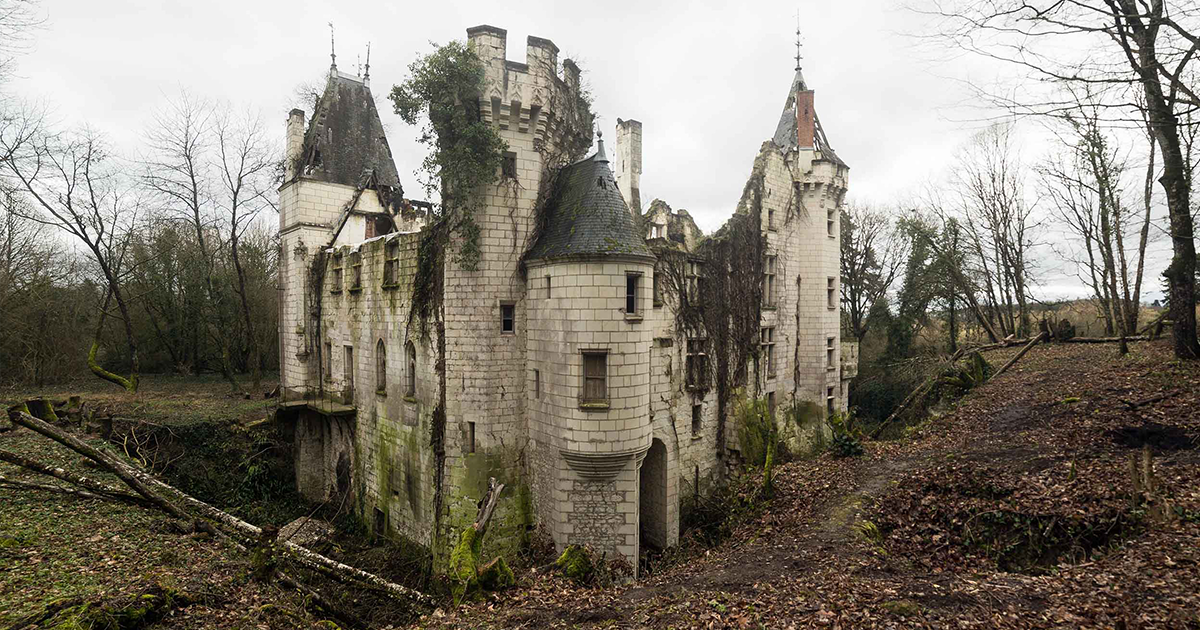
Few abandoned castles look more like a fairy tale after the fairy godmother lost funding. Château de la Mothe-Chandeniers in western France dates back to the medieval period and endured wars, revolution, redesign, and a devastating 20th-century fire. Its roofless rooms and vine-draped walls make it one of the most romantic castle ruins in Europe.
What makes this château especially memorable is its revival story. Thousands of people from around the world helped fund its purchase and preservation, turning a forgotten ruin into a shared heritage project. Walking near its moat and green walls, you feel the odd comfort of seeing decay interruptednot erased, but respected.
4. Castillo Torre Salvana, Spain
Just outside Barcelona, Castillo Torre Salvana stands near Colonia Güell like a secret the city forgot to put on postcards. Dating back more than a thousand years, this abandoned castle has survived conflict, neglect, and enough ghost stories to keep local storytellers happily employed.
Its broken corridors, weathered tower, and rough stone textures make it a dream for lovers of abandoned places and travel photography. The ruins feel raw and unpolished, which is exactly their appeal. While Barcelona dazzles with Gaudí curves and beachside energy, Torre Salvana offers a darker, quieter beautyless sangria, more shadows.
5. Menlo Castle, Ireland
Menlo Castle, near Galway, is the kind of ivy-covered ruin that makes you question whether plants have a secret degree in interior design. Once home to the Blake family, this 16th-century castle was destroyed by fire in 1910 and later became one of Ireland’s most atmospheric abandoned castles.
Set along the River Corrib, the ruin seems to dissolve into the landscape. Greenery covers much of the stonework, softening the tragedy of its past and turning the building into a living wall. It is beautiful in the way old songs are beautiful: quiet, sad, and impossible to forget once you hear them.
6. Dunluce Castle, Northern Ireland
Dunluce Castle is perched on basalt cliffs above the Atlantic, which suggests its builders believed in dramatic entrances and possibly had excellent balance. The present ruins date largely from the late medieval and early modern periods, tied to the MacQuillan and MacDonnell clans. Its location on the Causeway Coast makes it one of the most breathtaking abandoned castle ruins in the world.
Sea wind rushes through empty windows, waves crash below, and the remaining walls cling to the cliff edge as if stubbornness were a construction material. Dunluce is romantic, yes, but not delicate. It has the wild energy of a place built for defense, drama, and weather reports involving the phrase “hold onto your hat.”
7. Kilchurn Castle, Scotland
Kilchurn Castle sits beside Loch Awe in the Scottish Highlands, framed by mountains, water, and that particular Scottish sky that can look poetic and mildly threatening at the same time. Built in the 15th century, it served the Campbells of Glenorchy before later becoming a garrison stronghold.
By the late 1700s, the castle had been abandoned, and time transformed it into one of Scotland’s most photographed ruins. Its beauty lies in proportion and placement: the square tower, open courtyard, mirrored loch, and lonely mountain backdrop. Bring a camera, waterproof shoes, and emotional readiness for fog.
8. Hammershus Castle Ruins, Denmark
Hammershus, on the island of Bornholm, is often described as the largest medieval castle ruin in Northern Europe. Built on a granite outcrop overlooking the Baltic Sea, it combines military history with sweeping coastal scenery. If castles had LinkedIn profiles, Hammershus would list “strategic cliff presence” under core skills.
The ruins are expansive, open, and surprisingly graceful. Walking through the stone remains, you can imagine centuries of power struggles between church and crown, while the sea keeps doing what it has always done: shining, crashing, and refusing to care about politics.
9. Brederode Castle, Netherlands
Near Santpoort-Zuid, the Ruins of Brederode are a peaceful reminder that the Netherlands has more than canals, windmills, and bicycles moving at heroic speeds. Built in the 13th century and associated with the noble House of Brederode, the castle suffered repeated damage through conflict and decline.
Today, the remaining walls, towers, and courtyard create a dignified ruin that feels intimate rather than overwhelming. It is a wonderful stop for travelers who love medieval architecture without needing every castle to shout from a mountain. Brederode whispers, and that is part of its charm.
10. Andělská Hora Castle, Czechia
Andělská Hora Castle rises above the Karlovy Vary region of Czechia, surrounded by forested hills and open views. Built in the 14th century, the castle eventually fell into ruin, but its hilltop position still gives it a commanding presence.
The name means “Angel’s Mountain,” which feels appropriate until the wind starts howling through the stones and your imagination adds a soundtrack. The ruins are scenic, rugged, and rewarding for travelers who enjoy castles that require a bit of climbing and repay the effort with panoramas.
11. Ogrodzieniec Castle, Poland
Ogrodzieniec Castle in southern Poland looks as if it grew directly out of the limestone cliffs beneath it. Part of the famous Trail of the Eagles’ Nests, this ruined fortress dates back to the medieval period and later gained Renaissance features before war and time stripped it down to its dramatic bones.
Its jagged walls, stone towers, and high position make it one of the most cinematic abandoned castles in Europe. It is easy to see why filmmakers and fantasy fans love it. Even without dragons, Ogrodzieniec has enough atmosphere to make your backpack feel like a quest item.
12. Spiš Castle, Slovakia
Spiš Castle is not merely a ruin; it is a stone kingdom spread across a hill. One of the largest castle complexes in Central Europe, it forms part of a UNESCO World Heritage site and includes Romanesque and Gothic architectural elements that have survived with remarkable impact.
A fire in the late 18th century contributed to its decline, but the scale remains astonishing. From a distance, the castle seems to crown the landscape. Up close, it becomes a maze of walls, courtyards, towers, and viewpoints. Spiš is the kind of abandoned castle that makes you lower your voice without knowing why.
13. Rocca Calascio, Italy
High in the Abruzzo mountains, Rocca Calascio is a fortress of stone, sky, and silence. Originally developed from a medieval watchtower, it sits at more than 4,000 feet above sea level, where the air feels thin and the views feel wildly unfair to every other landscape.
The ruin is small compared with massive European castles, but its setting gives it mythic power. Nearby mountain ridges, open plains, and the octagonal church of Santa Maria della Pietà create a scene that feels ancient and cinematic. It is proof that a castle does not need size when it has altitude and attitude.
14. Takeda Castle Ruins, Japan
Takeda Castle Ruins in Hyogo Prefecture are famous for appearing to float above a sea of clouds on certain autumn mornings. Known as the “Castle in the Sky,” the site consists mainly of stone foundations and walls, but its atmosphere is unforgettable.
There is a special kind of magic in arriving before sunrise, waiting in the cold, and watching mist gather below the mountaintop. When conditions are right, the ruins seem suspended between earth and heaven. When conditions are wrong, you still get a hike, which is travel’s way of saying, “Character building, my friend.”
15. Bhangarh Fort, India
Bhangarh Fort in Rajasthan is often called one of India’s most haunted places, but even travelers allergic to ghost stories can appreciate its beauty. Built in the 17th century, the fort complex includes gateways, temples, palaces, and ruined streets set against the Aravalli hills.
The legends are famous, but the architecture deserves equal attention. Bhangarh is not beautiful in a polished way; it is beautiful because it feels like an entire settlement paused mid-breath. Monkeys patrol the stones with suspicious confidence, the hills glow in warm light, and the ruins remind visitors that folklore is often history wearing a dramatic cape.
What These Forgotten Fortresses Teach Travelers
The most beautiful abandoned castles around the world share a few lessons. First, location matters. A castle on a cliff, island, mountain, or lakeshore becomes part of the landscape, not just an object placed on it. Dunluce needs its sea cliffs. Kilchurn needs Loch Awe. Takeda needs mist. Remove the setting, and half the magic vanishes.
Second, ruins are not failures. They are buildings continuing in another form. A restored castle may show how people wanted to live; an abandoned castle shows what time decided to keep. Broken walls reveal construction methods. Empty halls reveal scale. Nature reveals patience.
Third, responsible castle travel matters. Many abandoned castles are fragile, protected, privately owned, or unsafe inside. The best travelers respect barriers, follow local rules, avoid vandalism, and remember that “I saw it on social media” is not a legal access permit. Good travel photography never requires trespassing, climbing unstable masonry, or annoying a security guard who has clearly heard every excuse since breakfast.
My Travel Experiences With Abandoned Castles Around the World
The first thing I learned from chasing abandoned castles is that they rarely appear when you are looking glamorous. Travel magazines may suggest linen shirts, golden light, and effortless wonder. My reality involved rain jackets, bus schedules, snacks crushed into powder, and hair that looked like it had negotiated poorly with the wind.
Still, the effort became part of the experience. At cliffside ruins, I learned to arrive early, before tour groups and selfie sticks transformed silence into choreography. At hilltop castles, I learned that medieval builders had no interest in modern knee comfort. Every climb seemed to say, “If you want the view, earn it.” Annoying? Yes. Effective? Also yes.
Photography taught me patience. The best abandoned castle photos often came after waiting ten extra minutes for a cloud to move, a crowd to pass, or a shaft of sunlight to land on a broken wall. Ruins reward slowness. They are not theme park attractions designed to shout for attention. They ask you to notice small things: lichen on stone, wildflowers in arrow slits, birds nesting where guards once stood, and doorways that frame nothing but sky.
I also learned that local stories matter as much as official history. A guide in one place spoke more passionately about a family tragedy than about royal ownership. A café owner near another ruin corrected my pronunciation with the patience of someone rescuing both language and dignity. In Ireland, a riverside castle felt more alive after hearing how locals still walked past it daily, not as a tourist attraction but as part of the neighborhood’s emotional furniture.
The strangest feeling came from modern abandoned places like castle-inspired developments and half-finished dream projects. Medieval ruins make sense; centuries have passed, wars happened, families died out, roofs collapsed. But modern ruins feel impatient, as if ambition tripped over economics yesterday and left the lights off. They remind travelers that abandonment is not only ancient. It is still happening.
My best advice is simple: wear sturdy shoes, bring water, check access rules, and leave more time than you think you need. Abandoned castles are not just places to “see.” They are places to absorb. Sit on a legal bench, lean against a safe wall, watch the shadows move, and let the building become less of a checklist item and more of a conversation.
Most of all, do not rush the quiet. In a world trained to document everything instantly, abandoned castles offer a rare gift: the permission to stand still in front of something older, stranger, and more patient than you are. That is their real beauty. Not the towers. Not the ivy. Not even the dramatic fog, though the fog is absolutely showing off. Their beauty is the feeling that time is visible, and for a few minutes, you are allowed to walk beside it.
Final Thoughts
From the Hudson River to the Scottish Highlands, from the Baltic coast to the mountains of Japan, the world’s most beautiful abandoned castles prove that ruins are not empty. They hold memory, architecture, landscape, legend, and a little bit of delicious spookiness. They invite us to look beyond perfect restoration and appreciate the poetry of survival.
These abandoned castles are worth visiting not because they are untouched, but because they have been touched by everything: weather, war, fire, neglect, preservation, and imagination. For travelers who love history with atmosphere, they are unforgettable destinations. For photographers, they are visual treasure. For daydreamers, they are proof that even broken things can remain magnificent.