
Some dining rooms announce their expense with chandeliers the size of small satellites. The dining room at Mãos took the quieter route. Its appeal came from pinkish hand-finished plaster, substantial walnut, dark charred chairs, relaxed linen, and ceramics that appeared touched by an actual makernot approved by a committee carrying matching clipboards.
Set inside Blue Mountain School in Shoreditch, Mãos was conceived as an alternative to formal fine dining. The restaurant’s interior was shaped by Blue Mountain School’s founders, 6a architects, and American designer Tyler Hays of BDDW. Although Mãos closed in its original form in 2022 and the space later became Cycene, the Mãos-era rooms remain a useful case study in warm minimalism, restaurant-inspired dining room design, and hospitality built around human connection.
You do not need a Michelin-star budget or a London townhouse to borrow the look. The recipe is surprisingly practical: use fewer materials, make each one count, bring light down to human level, and leave enough empty space for dinner to become the decoration.
Why the Mãos Dining Room Look Works
Mãos balanced opposites. It felt refined but not polished to death, minimal but not empty, and rustic without resembling a themed country inn. The limited palettedusty pink, walnut brown, charcoal, stone gray, cream, and occasional blue-and-white detailallowed texture to provide the visual interest.
The space also supported the restaurant’s supper-club spirit. Guests were encouraged to experience the kitchen and dining areas rather than remain fixed in a stiff, conventional setup. At home, that idea translates into easy circulation, clear sightlines, accessible serving pieces, and furniture that encourages people to linger. A beautiful room is useful; a beautiful room that keeps everyone talking after dessert is better.
1. Begin With Warm, Hand-Finished Walls
The main dining room featured raw gypsum plaster applied by hand, retaining subtle ridges and tonal movement. British plaster naturally carries a pink cast, giving the walls a warm, skin-like glow. The finish looked alive as daylight shifted across it.
For the closest residential interpretation, consider lime plaster, clay plaster, or another mineral finish. When genuine plaster is outside the budget, use matte paint in dusty rose, mushroom, putty, or pale terracotta. Two neighboring shades applied loosely with a broad brush can create gentle variation without drifting into faux-finish theater.
Keep the Architectural Envelope Calm
Bright white trim can visually slice through a warm minimalist room. Paint baseboards and door casings in a related tonal shade, or use natural wood where appropriate. The objective is a quiet background that lets the table, chairs, ceramics, and people carry the scene. Imperfection is welcome; paint on the electrical outlet is still just paint on the electrical outlet.
2. Let a Solid Wood Table Anchor the Room
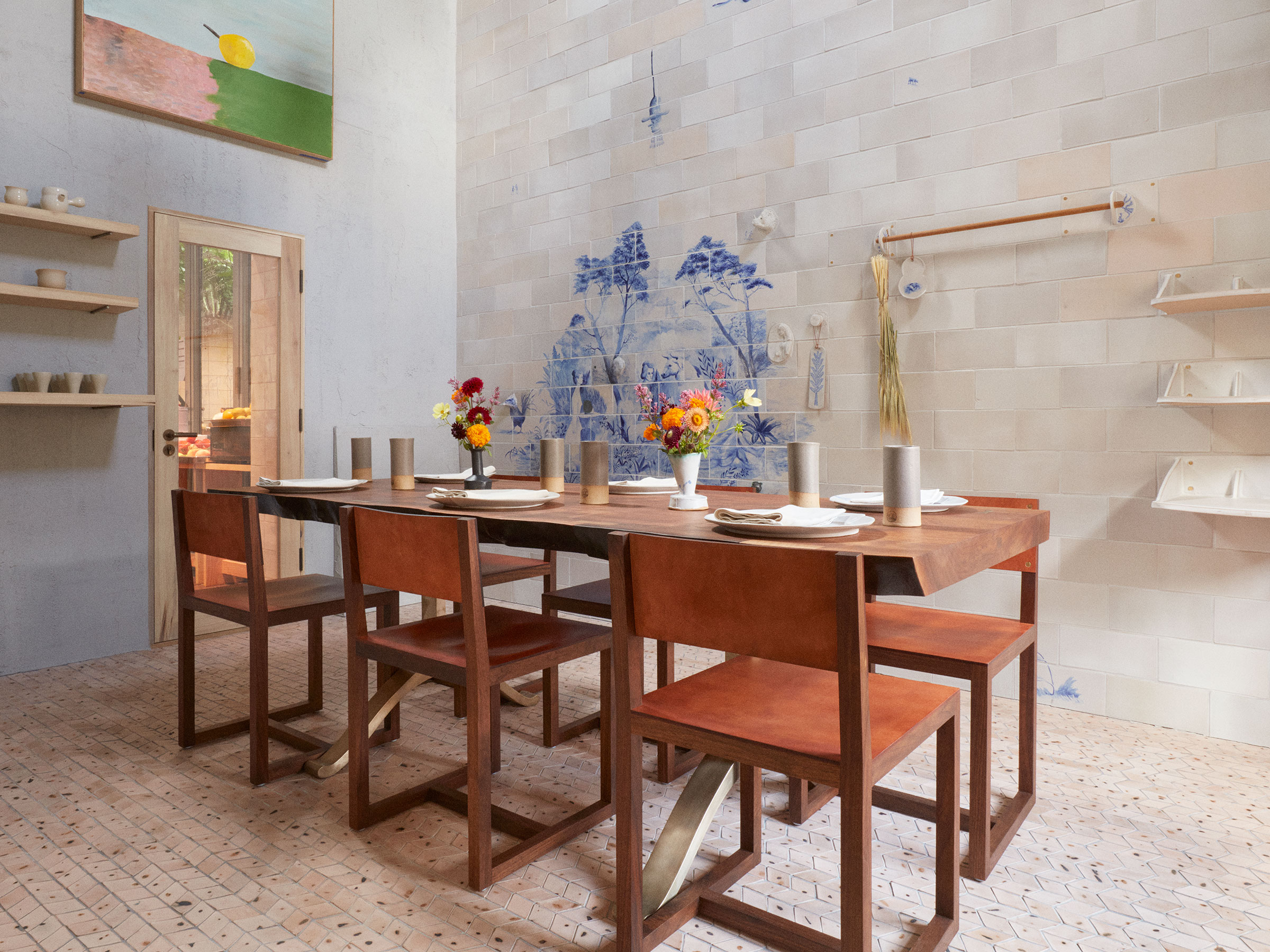
A live-edge walnut slab table gave the Chef’s Table room its visual weight. A table of this kind functions as both furniture and landscape: grain, knots, irregular edges, and natural color provide enough character that surrounding decoration can remain restrained.
Walnut is ideal, but oak, elm, chestnut, ash, or reclaimed timber can create a similar feeling. Prioritize a substantial top, straightforward joinery, and a low-sheen finish. A long rectangular table captures the communal spirit of Mãos; a round pedestal table adapts the mood to a small apartment.
Three Ways to Buy the Look
- Investment: Commission a local woodworker to build a table precisely for the room.
- Midrange: Choose a solid wood table with a simple trestle or pedestal base.
- Budget: Refinish a sturdy vintage farmhouse table with a matte oil or hardwax finish.
Allow enough tabletop width for plates and glassware without crowding the center. Use one low bowl, a carafe, or a narrow bud vase instead of an arrangement tall enough to require guests to communicate by semaphore.
3. Add Dark, Sculptural Chairs
Mãos paired warm wood with charred comb-back Windsor chairs in the main room and leather-finished square chairs in the tiled space. The dark silhouettes brought definition against pale plaster and walnut without creating a showroom-matched suite.
Look for blackened wood, ebonized oak, charcoal-stained beech, or vintage Windsor chairs painted soft black. Mixing two related chair styles can make a dining room feel collected over time, but keep seat heights compatible and test comfort. A chair may resemble museum-worthy sculpture, yet dinner loses poetry when everyone’s legs go numb.
In a narrow room, place a bench along one side of the table. It reduces visual clutter and accommodates an extra guest. A slim linen or leather cushion adds comfort without making the arrangement bulky.
4. Treat Handmade Tile as Art
The private Chef’s Table room delivered the bolder half of the Mãos aesthetic. Hand-painted BDDW tiles covered walls and floor, combining blue-and-white ceramic tradition with loose, graphic marks. Repetition made the small room immersive; irregularity preserved the feeling of craft.
A home version does not require full-room tile. Use it inside a niche, behind a bar, around a fireplace, on the back of open shelving, or as a narrow panel above a console. Hand-painted Delft-inspired tile works particularly well.
For an economical approach, frame a grid of decorative tiles as artwork. Nine or twelve pieces can create the rhythm of a tiled wall without sending the renovation budget into witness protection.
5. Bring Lighting Down to Human Level
A small ceramic table lamp was one of the room’s most instructive details. Light placed on a table, counter, or sideboard creates a warm pool near faces, catches ceramic glazes, and makes a space feel inhabited rather than illuminated for inventory control.
Layer a dimmable pendant above the table with a ceramic lamp on a console and candles during dinner. Choose warm bulbs and avoid relying on one harsh ceiling fixture. Over a long table, two or three modest pendants often look more balanced than one undersized light floating overhead like a lonely weather balloon.
Choose Fixtures With Material Presence
Plaster, ceramic, aged brass, darkened steel, parchment, and handblown glass suit the look. A fixture should contribute texture even when switched off. Keep the form simple so it supports the room rather than auditioning for lead actor.
6. Use Relaxed Linen Instead of Formal Table Dressing
Mãos used subdued, stony linens that reinforced the feeling of an elevated dinner party. Washed linen is especially effective because its wrinkles look naturala reassuring feature for anyone whose iron has become mainly decorative.
Choose putty, oyster, mushroom, warm gray, or unbleached flax. A full tablecloth softens the room, while napkins and a narrow runner allow a beautiful wood tabletop to remain visible. Skip elaborate folds and towering centerpieces. The table should look prepared, not enlisted.
7. Curate Ceramics Slowly
Handmade plates, side plates, carafes, tumblers, pitchers, and small vessels were central to the room’s character. Their glazes and shapes varied, but a restrained color palette kept the collection cohesive.
Begin with simple dinner plates, then add hand-painted side plates or bowls. Introduce contrast through a charcoal carafe or a dark bud vase holding one branch. Mixing handmade and commercial pieces is sensible: invest in objects guests handle or notice most, and let well-made everyday dishes fill the supporting roles.
The purpose is not to create a shrine to expensive pottery. Beautiful objects should be used. A plate that terrifies everyone is merely a flat sculpture with boundary issues.
8. Edit Until Every Object Supports the Meal
The empty space at Mãos made craftsmanship visible and helped conversation take priority. Apply the same principle at home. Remove objects that interrupt circulation, block sightlines, or compete with the table.
A narrow sideboard can hold a low lamp, water, wine, napkins, and extra plates. One woven textile or artwork may be stronger than a crowded gallery wall. If an edited room feels sterile, add one tactile elementa linen curtain, rough vessel, vintage stool, or woven hangingrather than scattering small accessories across every surface.
A Mãos-Inspired Dining Room Checklist
- Dusty-pink, mushroom, or pale terracotta mineral-style walls
- A solid walnut, oak, elm, or reclaimed-wood dining table
- Charcoal Windsor chairs or other dark sculptural seating
- Optional bench with a slim linen or leather cushion
- Hand-painted tile used architecturally or framed as art
- A dimmable pendant and small ceramic accent lamp
- Washed linen in stone, putty, oyster, or flax
- Restrained handmade-looking tableware and a low vase
Adapting the Look to Your Home
Small Apartment
Use a round wood table, four dark chairs, one ceramic pendant, and a warm mineral wall color to define the dining corner. Frame four decorative tiles above a slim shelf and keep the tabletop nearly clear.
Open-Plan Kitchen
Let the dining zone carry warmer materials than the kitchen. A walnut table, linen shade, and charcoal chairs soften sleek cabinetry. Repeat one kitchen finish in the dining area so the spaces relate without matching like coordinated pajamas.
Formal Dining Room
Use full-height plaster or mineral-finish walls, a long solid-wood table, mixed dark seating, and layered lighting. Add one large textile or tiled feature. Formality should come from proportion and material quality, not a battalion of silver objects demanding weekly polishing.
The Experience: What the Mãos Look Teaches About Dining
Recreating this room is not merely an exercise in buying furniture. The design mattered because it shaped the evening. Imagine entering a space where walls absorb and soften light, the table displays the history of a tree, and every cup feels slightly different in the hand. Before food appears, the room has already slowed the pace. That pause is part of the experience.
The first sensation is warmth, although little in the room is conventionally cozy. There are no overstuffed chairs, shag rugs, or signs reminding guests to gather. Warmth comes from color temperature, wood, imperfect surfaces, and scale. Light sits low. Objects feel close enough to touch. The room appears composed but not frightened of fingerprints. At home, that is the difference between a dining room that photographs well and one people choose to remain in after dessert.
The second lesson is that conversation depends on layout. A substantial table provides a shared center, while low decorations preserve sightlines. When water, wine, serving pieces, and extra napkins are easy to reach, the host spends less time sprinting between rooms. A stocked sideboard may be the least glamorous feature in the design, but it can prevent dinner from becoming competitive cardio.
Touch matters just as much. Plaster, oiled wood, linen, leather, and hand-thrown ceramics invite attention. Guests notice the cool weight of a tumbler, the soft fold of a napkin, or the uneven rim of a plate. These small sensory moments make an ordinary meal feel deliberate. They also explain why the look succeeds without abundant color or ornament: texture supplies the drama.
Sound changes with materials, too. Linen, wood, plaster, curtains, and woven art soften a dining room more effectively than a combination of glossy paint, glass, and bare hard surfaces. The goal is not recording-studio silence. It is comfortable conversation without everyone conducting an interview at airport volume.
Scent and ritual complete the scene. Wood, candle wax, warm food, tea, and wine create a natural fragrance more convincing than a heavily perfumed diffuser. Serving a first drink near the kitchen, placing bread or a small snack on the table, and changing the light as evening settles can give a meal a beginning, middle, and end. These gestures cost almost nothing, yet they make the room feel designed in time as well as space.
Most importantly, the Mãos concept treated hospitality as an atmosphere of permission. The restaurant encouraged movement and interaction instead of enforcing stiff fine-dining behavior. A home can express the same generosity. Put water where guests can reach it. Let friends help serve. Dim the lights before the doorbell rings. Use the beautiful plates on an ordinary Tuesday. Leave room on the table for an unexpected dish, bottle, elbow, story, or late-arriving friend.
That is the real look worth stealing. Pink plaster and walnut are beautiful, but the lasting idea is a room that treats craft as something to live with and dining as something people create together. It feels luxurious because it is attentive, not because it is loud. Unlike a towering centerpiece or an impossible chair, attention never goes out of style.
Conclusion
The Mãos London dining room turned restraint into atmosphere. Hand-worked plaster, warm wood, dark seating, artisan tile, relaxed linen, and modest pools of light created intimacy without decorative clutter. To bring the look home, choose fewer materials, choose them carefully, and arrange the room around people rather than possessions.
Start with one meaningful improvementa warmer wall finish, a better table, a ceramic lamp, or a set of dark chairsthen edit. The closer the room comes to supporting real meals and easy conversation, the closer it comes to the spirit of Mãos.
SEO Tags