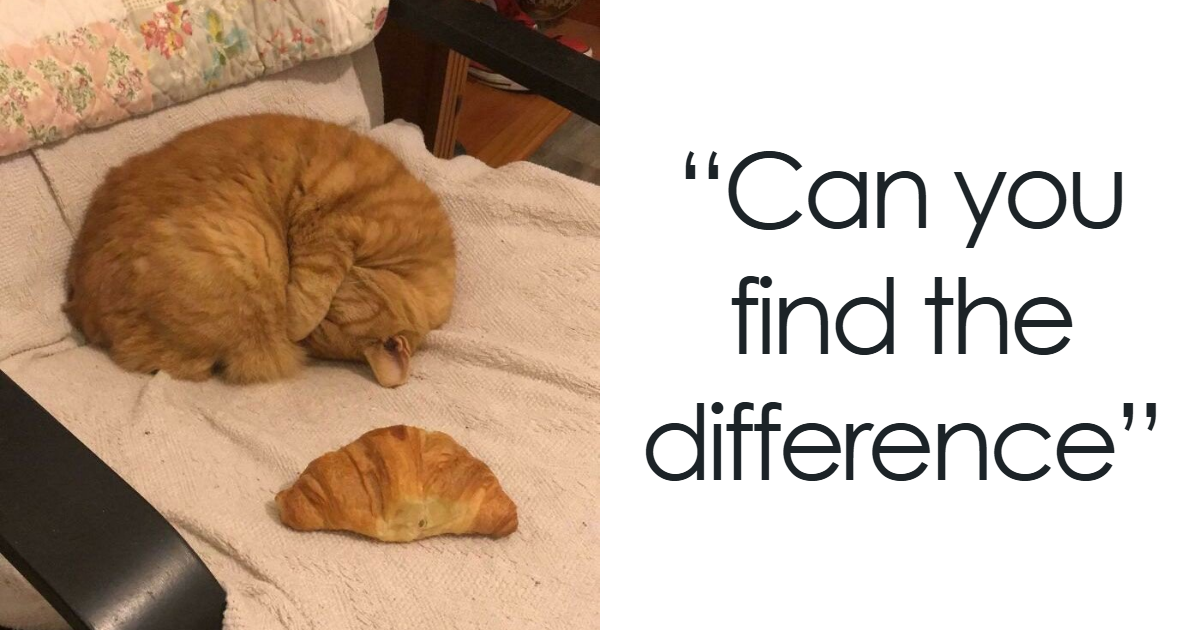

Cats have spent thousands of years living beside humans, yet apparently nobody included “behave normally for five consecutive minutes” in the domestication agreement. One moment, your cat is sitting elegantly on a windowsill like an oil painting titled Distinguished Creature Contemplating Eternity. Thirty seconds later, the same animal is attacking a sock, screaming at a closed closet, and attempting to squeeze its entire body into a cereal box.
That glorious contradiction is why weird cats have essentially become a genre of entertainment. Their strange sleeping positions, midnight zoomies, dramatic reactions to vegetables, cardboard-box obsession, and ongoing feuds with household appliances can look completely unpredictable to us. Underneath much of the comedy, however, is recognizable feline behavior: hunting instincts, curiosity, scent communication, play, territorial preferences, comfort seeking, and an impressive willingness to investigate absolutely anything.
So here are 80 imaginary-but-painfully-recognizable examples of cats being weird in the uniquely committed way only cats can manage. Somewhere, somebody’s real cat is probably doing every single one of these right now.
Why Are Cats So Delightfully Weird?
A lot of supposedly bizarre cat behavior makes more sense when you remember that your eight-pound roommate is still built like a miniature predator. Cats stalk, pounce, climb, hide, scratch, explore, inspect movement, react strongly to smells, and spend large portions of the day resting so they can suddenly become Olympic sprinters at 2:47 a.m.
Veterinary behavior resources describe those sudden sprints as frenetic random activity periods, commonly called zoomies. Scratching can stretch muscles, maintain claws, and leave visual and scent marks. Kneading often begins during nursing in kittenhood and may continue as a comforting adult behavior. Boxes offer hiding opportunities, warmth, security, and excellent ambush headquarters.
In other words, cats have reasons. Whether those reasons justify staring into an empty bathtub for 40 minutes is another matter entirely.
80 Cats Operating Under Their Own Mysterious Rules
1–10: The Cardboard Department
- The Luxury-Bed Rejector: Ignores the $120 orthopedic cat bed and sleeps inside the shipping box it arrived in.
- The Box Optimist: Attempts to fit 14 pounds of cat into a box designed for one coffee mug.
- The Cardboard Submarine Captain: Sits completely hidden inside a box except for one suspicious ear sticking through the top.
- The Ambush Accountant: Hides in an Amazon box for 25 minutes just to slap an innocent ankle passing nearby.
- The Structural Engineer: Chews one corner from a perfectly good box, then appears offended that the box collapses.
- The Box Collector: Refuses yesterday’s cardboard box because today’s nearly identical cardboard box is obviously superior.
- The Portable Fortress: Walks around with a small box stuck over their head and seems oddly confident about the arrangement.
- The Geometry Denier: Sits halfway inside a box and concludes that technically counts as fitting.
- The Cardboard Renovator: Spends the afternoon shredding a box into confetti, then naps proudly among the debris.
- The Territorial Landlord: Claims every delivery box before the human has removed the actual purchase.
11–20: Household Objects That Apparently Deserved It
- The Cup Inspector: Slowly pushes a drinking glass toward the edge while maintaining uninterrupted eye contact.
- The Printer Technician: Appears whenever the printer activates and immediately attempts to defeat the emerging paper.
- The Laptop Supervisor: Waits until an important email is being written, then sits directly on the keyboard.
- The Faucet Philosopher: Watches one dripping faucet with the concentration of a physicist discovering a new law of nature.
- The Vacuum Revolutionary: Flees from the vacuum cleaner, then returns later to inspect the defeated enemy.
- The Remote Thief: Has twelve comfortable places to sit and chooses the television remote every time.
- The Curtain Mountaineer: Suddenly remembers at age six that curtains can technically be climbed.
- The Laundry Archaeologist: Burrows beneath freshly folded clothes until only a suspicious moving lump remains.
- The Refrigerator Auditor: Materializes from another dimension whenever the refrigerator door opens.
- The Dishwasher Explorer: Inspects an open dishwasher as though preparing to certify it for commercial operation.
21–30: Sleep Positions That Should Require Medical Imaging
- The Boneless Pretzel: Sleeps with the head facing north, back paws facing east, and spine apparently on vacation.
- The Sink Loaf: Selects a hard porcelain bathroom sink over every soft surface in the house.
- The Face Planter: Falls asleep with forehead pressed directly into a pillow.
- The Gravity Experiment: Sleeps on the very edge of the couch with 60 percent of the body hanging into space.
- The Vertical Sleeper: Somehow naps sitting upright against a wall like an exhausted commuter.
- The Keyboard Pillow Enthusiast: Discovers that Q, W, E, R, and T provide premium lumbar support.
- The Sunbeam Technician: Relocates every twelve minutes to remain precisely inside a moving rectangle of sunlight.
- The Shoe Sleeper: Puts their face inside a human sneaker and apparently encounters no reason to reconsider.
- The Bookshelf Gargoyle: Sleeps six feet above the floor while one paw hangs dramatically over the edge.
- The Impossible Curl: Becomes a mathematically perfect circle with no obvious beginning or end.
31–40: Crimes Committed After Midnight
- The Hallway Drag Racer: Goes from unconscious to approximately 900 mph without an observable intermediate stage.
- The Invisible Pursuer: Sprints upstairs while repeatedly checking behind themselves for an enemy nobody else can see.
- The Bed Trampoline Specialist: Launches onto a sleeping human’s stomach and immediately leaves.
- The Midnight Vocalist: Carries one sock through the hallway while performing an opera about personal suffering.
- The Bathroom Sprinter: Exits the litter box at such speed that witnesses reasonably assume something exploded.
- The Doorway Jumper: Runs through three rooms, leaps vertically beside a doorway, then calmly starts grooming.
- The Staircase Thunderstorm: Somehow makes eight pounds of cat sound like a refrigerator falling downstairs.
- The 3 A.M. Archaeologist: Discovers a bottle cap under the sofa and dedicates the rest of the night to excavating it.
- The Blanket Monster Hunter: Attacks feet beneath a comforter despite living with those exact feet for seven years.
- The Sudden Statue: Stops mid-zoomie and freezes completely, as though somebody unplugged the cat.
41–50: Hunting Skills Applied to Completely Wrong Targets
- The Ceiling-Fan Specialist: Tracks a rotating fan with enormous pupils while calculating an attack that will never happen.
- The Dust Assassin: Pounces heroically on one visible particle illuminated by sunlight.
- The Cursor Hunter: Discovers the computer pointer and immediately decides the household requires protection.
- The Shadow Warrior: Attacks their own shadow, loses track of it, and looks betrayed.
- The Ice-Cube Tracker: Hunts an ice cube until it disappears, then searches the floor for evidence of sorcery.
- The Hair-Tie Smuggler: Gradually relocates every hair elastic in the home to one secret location.
- The Leaf Investigator: Spots a leaf moving outside and begins chattering like a tiny malfunctioning machine.
- The Fly Negotiator: Spends fifteen minutes stalking a fly and then seems surprised when the fly can fly.
- The Tail Detective: Notices their own tail for apparently the first time and launches an investigation.
- The Blanket Lump Predator: Hunts a suspicious bump that is, inconveniently, their own back foot.
51–60: Social Behavior Written by an Unreliable Screenwriter
- The Selective Cuddler: Demands affection for ten minutes, then reacts as if the eleventh minute violates international law.
- The Bathroom Escort: Cannot tolerate closed bathroom doors despite showing no interest in humans during normal hours.
- The Slow-Blink Diplomat: Communicates peaceful intentions across the room, then immediately steals another cat’s seat.
- The Butt Presenter: Expresses trust by positioning the least conversational part of their anatomy six inches from your face.
- The Head-Butt Enthusiast: Greets favorite humans by repeatedly bonking their forehead into them.
- The Guest Inspector: Ignores the person begging for feline attention and sits exclusively on the allergic visitor.
- The Meeting Participant: Remains silent all morning but begins screaming when a video call starts.
- The Personal-Space Hypocrite: Objects to being picked up but sleeps directly on a human’s neck.
- The Closed-Door Activist: Demands access to a room, enters, sees nothing interesting, and immediately demands exit.
- The Conversation Expert: Responds to every human sentence with a differently flavored meow.
61–70: Food Logic From Another Dimension
- The Bowl Emergency Coordinator: Reports starvation because a tiny patch of bowl bottom is visible through otherwise abundant food.
- The Dinner Critic: Screams for dinner, smells dinner, and walks away like a disappointed restaurant reviewer.
- The Contraband Inspector: Rejects expensive cat food but becomes obsessed with an empty bread bag.
- The Water Snob: Ignores fresh water in a clean bowl and attempts to drink from the bathtub.
- The Plate Consultant: Has already eaten but urgently needs to inspect whatever the human is eating.
- The Treat Mathematician: Can hear one treat bag opening through two closed doors and a running television.
- The Floor-Food Gourmet: Refuses food from the bowl, then happily eats the identical piece after it falls onto the floor.
- The Kitchen Timekeeper: Knows dinner is six minutes late and has prepared a formal complaint.
- The Grocery-Bag Enthusiast: Finds the shopping bag more interesting than every edible thing that came out of it.
- The Empty-Bowl Historian: Continues checking the spot where food existed fifteen minutes ago, hoping history repeats itself.
71–80: Advanced-Level Feline Nonsense
- The Wall Witness: Stares intensely at a blank wall until every human in the room becomes uncomfortable.
- The Flehmen Face Specialist: Smells something interesting, opens their mouth slightly, and looks personally offended by chemistry.
- The Biscuit Factory Manager: Kneads one blanket for twenty minutes before finally deciding it meets sleeping regulations.
- The Mirror Stranger: Discovers their reflection, investigates briefly, then decides the mysterious cat is somebody else’s problem.
- The Paper Enthusiast: Chooses one sheet of printer paper as the finest bed ever manufactured.
- The Ceiling Inspector: Suddenly looks straight upward, causing everybody else to look upward despite seeing absolutely nothing.
- The Tiny-Noise Investigator: Sleeps through thunder but wakes instantly when a treat touches the kitchen counter.
- The Furniture Parkour Professional: Uses four perfectly good steps to reach a table by jumping across three unrelated pieces of furniture.
- The Grooming Interruption: Stops licking one leg halfway through, forgets the assignment, and remains frozen with the leg in the air.
- The Final Boss: Spends ten minutes desperately trying to enter a cardboard box while already sitting inside it.
The Science Hiding Under All That Cat Chaos
The funniest thing about these funny cat behaviors is that many begin with perfectly reasonable feline instincts. A cat launching at a moving shoelace is practicing the same basic stalk-and-pounce sequence that makes felines effective hunters. A cat climbing the tallest cabinet may simply prefer an elevated observation point. A cat rubbing its face on furniture or people can be depositing scent while engaging socially with familiar surroundings.
Even the legendary box obsession isn’t merely an internet conspiracy. Enclosed spaces can provide security and opportunities for hiding or ambushing. Cardboard also offers texture for scratching, chewing, and exploration. To a human, it’s packaging. To a cat, it’s a studio apartment, hunting blind, nap pod, scratching project, and defensive fort with zero monthly rent.
Kneading is another excellent example. The alternating paw motion begins when kittens nurse, and many cats continue doing it later while comfortable or preparing to rest. Humans call it “making biscuits” because apparently witnessing a predator rhythmically massage a blanket required a bakery-themed rebrand.
Then there are cat zoomies. Cats naturally cycle through periods of rest and activity, and sudden bursts of running can provide an outlet for energy and play. Young cats can be particularly energetic. The effect inside a small apartment, however, is less “natural activity cycle” and more “someone released a furry pinball.”
When Weird Cat Behavior Deserves More Than a Laugh
Most quirky feline habits are harmless, but “cats are weird” shouldn’t become an excuse to ignore a significant behavioral change. A cat that suddenly begins excessive vocalizing, hiding, overgrooming, eliminating outside the litter box, appearing disoriented, showing unusual aggression, eating nonfood objects, or moving differently may need veterinary attention.
Context matters. A lifelong habit of yelling while carrying a toy is very different from sudden unexplained crying in an older cat. Likewise, occasional zoomies are ordinary for many cats, while frantic new activity combined with distress or other physical changes deserves closer attention.
The golden rule is simple: enjoy the harmless weirdness, but pay attention when your cat’s version of weird suddenly changes.
What Living With a Weird Little Cat Actually Feels Like
Ask people who share their homes with cats what the experience is like, and the funniest stories usually aren’t about dramatic disasters. They’re about tiny rituals that gradually become normal. At first, it seems unusual that the cat waits outside the shower every morning. Six months later, the human starts wondering where the cat is if the bathroom inspection team doesn’t arrive on schedule.
That is one of the strangest parts of living with cats: their weird behavior quietly reorganizes your life. You stop placing glasses near table edges because you’ve learned that gravity experiments will occur. You begin saving cardboard boxes because destroying one before the cat has inspected it feels almost disrespectful. You know which blanket is the biscuit-making blanket, which chair technically belongs to the cat, and which cabinet must never remain open unless you’re prepared to conduct a feline extraction operation.
Many cat owners also become accidental students of body language. A tail flick stops being “just a tail flick.” Ear position becomes meaningful. You notice when your cat wants company without touching, when play is becoming overstimulating, and when the animal sitting three feet away is actually participating in family time despite pretending everyone else is irrelevant.
Then come the personalized rules. One cat may demand running water but distrust fountains. Another may retrieve toy mice like a dog. One might announce every litter-box visit as though returning from an expedition. Another may sleep peacefully through construction noise but react to a banana placed on the counter as though the government has declared an emergency.
These routines can also produce surprisingly strong memories. Years later, people often remember the ridiculous details: the cat that slept inside a fruit bowl, the kitten that stole socks, the elderly tabby that joined every online meeting, or the orange cat that spent an entire summer attempting to capture one unreachable moth outside a window.
That’s why collections of cats being weird little guys work so well. The pictures are funny on their own, but cat people recognize the larger experience immediately. Every household has its own version of the box addict, midnight sprinter, food critic, invisible-ghost detector, or tiny supervisor who believes all human activity requires feline oversight.
Living with a cat means accepting that not every mystery will receive an explanation. Why is the expensive bed unacceptable but the grocery receipt perfect? Why must the same closed door be opened fourteen times? Why does a cat suddenly sprint away after making direct eye contact?
Eventually, you stop demanding answers. The mystery becomes part of the appeal. Humans provide food, shelter, toys, medical care, and approximately 40 different sleeping surfaces. Cats provide companionship, routine, affection, and the occasional unforgettable sight of a fully grown animal becoming frightened by an object it personally knocked over.
Fair trade.
Why We Never Get Tired of Funny Cats
Cats are endlessly entertaining because they balance dignity with complete absurdity. They can spend twenty minutes grooming a single shoulder with aristocratic precision and then fall off a chair because they forgot where the edge was. They move like professional athletes until somebody places a paper bag on the floor, at which point all strategic planning disappears.
More importantly, their oddities reveal personality. Two cats living in the same home can respond completely differently to the same box, toy, visitor, sound, or sunny window. That’s what turns generic feline behavior into memorable individual comedy.
So the next time your cat sits inside a saucepan, screams at the ceiling, attacks an innocent towel, or falls asleep with one foot resting mysteriously on their own forehead, appreciate the moment. You may never know exactly what inspired it.
And that’s probably why it’s funny.
Conclusion
These 80 weird cats demonstrate an important principle of feline life: predictability is optional. Behind the cardboard obsession, midnight zoomies, dramatic staring contests, kneading sessions, impossible sleeping positions, and household-object vendettas are instincts that have traveled with cats for thousands of years.
But scientific explanations can only take us so far. Knowing why cats enjoy enclosed spaces explains the box. It does not explain why your cat chose the smallest box available while three better boxes were sitting beside it. Some questions belong to veterinary science. Others belong to the cat.
And the cat isn’t talking.
Note: This article is intended for entertainment and general educational purposes. Harmless quirks are part of normal feline individuality, but sudden or significant changes in behavior, appetite, movement, grooming, vocalization, or litter-box habits should be discussed with a veterinarian.