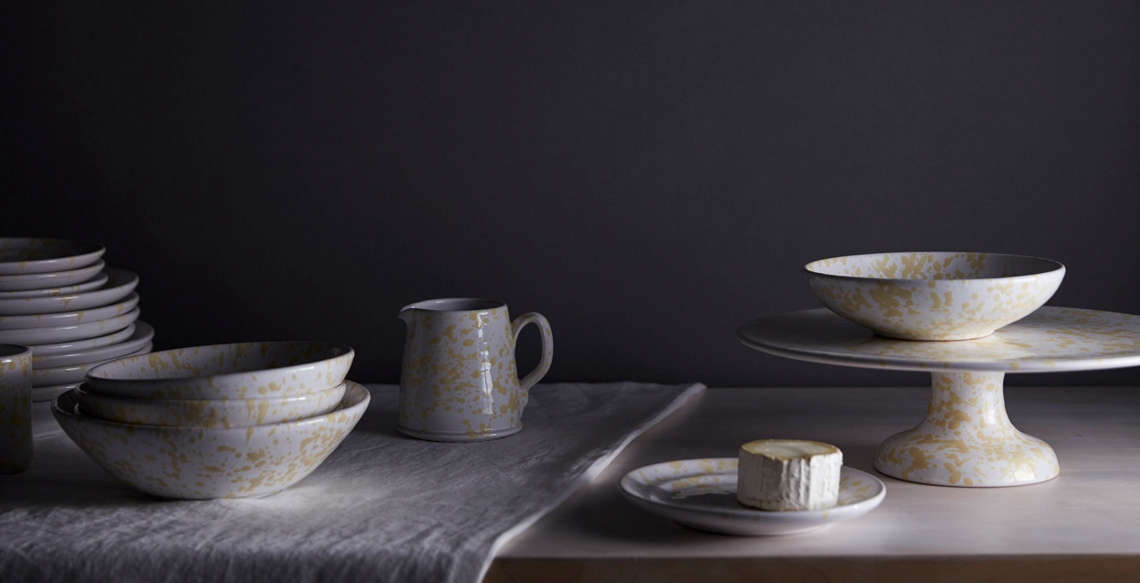

Cream on white splatterware pitchers are proof that neutr first glance, the palette is quiet: warm cream marks scattered across a clean white ground. Look closer, however, and the surface is lively, irregular, and unmistakably handmade. No two bursts land in exactly the same place, and that controlled unpredictability gives the pitcher its personality.
These vessels sit comfortably between rustic pottery and modern tableware. They can serve water at Sunday lunch, hold hydrangeas on a console, organize wooden spoons beside the stove, or simply occupy a shelf looking far more artistic than an object with a handle has any right to look. Their appeal comes from that rare combination of usefulness, visual texture, and relaxed charm.
What Is a Cream on White Splatterware Pitcher?
A cream on white splatterware pitcher is a ceramic or enamel-coated vessel decorated with scattered droplets, flecks, or streaks in a soft cream color over a white background. Depending on the maker, the pattern may be applied by flicking glaze, brushing liquid color from stiff bristles, spraying slip, or using another hand-controlled technique. The finished marks can range from tiny freckles to energetic arcs.
The term splatterware is often used broadly. In vintage listings, it may describe glazed pottery, sponge-decorated stoneware, or metal enamelware with a mottled surface. Those materials are related visually but not identical. A ceramic pitcher is made from fired clay, while enamelware usually has a metal core coated with fused glass. Before buying, check the material description rather than relying on the pattern name alone.
Why the Cream-and-White Palette Works
Bold blue, red, and green splatterware can turn a table into a party before anyone has located the bottle opener. Cream on white takes a softer approach. The low-contrast palette keeps the random pattern sophisticated, allowing the pitcher to blend with farmhouse, coastal, Scandinavian, cottage, traditional, and contemporary interiors.
Cream also warms up bright white. In a room filled with pale oak, linen, plaster, marble, or woven fibers, a cream splatter pattern connects those tones without creating a flat sea of beige. The result is neutral, but not anonymous.
A Brief History of Splatterware
Spatter- and sponge-decorated pottery has roots in European ceramic production, where potters developed efficient ways to animate affordable household wares with color. Early spattered effects could be made by blowing pigment or glaze through a tube, while later workshops used sponges, brushes, and other tools. The decoration spread because it was expressive, adaptable, and easier to produce than painstakingly painted scenes.
In the United States, similarly spirited patterns appeared across stoneware, kitchen pottery, and enamelware. Enamel-coated metal utensils became especially common in American homes from the nineteenth century onward. Speckled and marbled finishes helped practical objects feel decorative, a tradition that modern splatterware continues with considerably more shelf styling and considerably fewer frontier chores.
Today, designers and ceramic artists revisit the pattern because it feels both historic and spontaneous. The irregular surface pushes back against overly perfect mass production. Even when several pitchers share the same shape and color formula, the distribution of marks makes each one look slightly different.
How These Pitchers Are Made
The Ceramic Body
Many cream on white splatterware pitchers are made from stoneware or earthenware. Stoneware is generally fired at a higher temperature, producing a denser, stronger body suited to regular use. Earthenware may feel lighter and can deliver beautiful color, but it usually depends more heavily on a sound glaze to resist moisture. Porcelain versions are possible as well, though their surfaces often look smoother and more refined than rustic.
The body may be wheel-thrown, hand-built, slip-cast in a mold, or produced through a combination of methods. Wheel-thrown pieces often show subtle rings or variations in wall thickness. Molded pitchers tend to be more uniform. Neither approach is automatically better; the real question is whether the pitcher pours well, sits steadily, and suits the visual character you want.
The Splatter Decoration
Once the body is ready, the maker applies a white glaze, slip, or underglaze and adds the cream pattern. Hand-splattering creates differences in droplet size, direction, and density. One side may be busy while another has more open white space. Those variations are not flaws unless the finish is incomplete, sharp, or structurally damaged.
A clear or compatible finishing glaze may then seal the decoration. For a functional pitcher, the interior glaze matters as much as the exterior pattern. The inner surface should be smooth, intact, and designated by the manufacturer as suitable for food and drink.
Why Pitcher Shape Matters
A good pitcher is more than a vase with plumbing ambitions. Its handle must support the weight of both the vessel and its contents. The spout should guide a controlled stream without dribbling down the front, and the base should remain stable when the pitcher is full. A slightly pinched lip, balanced handle placement, and comfortable grip often separate a truly functional piece from one best reserved for flowers.
How to Choose the Right Splatterware Pitcher
1. Decide How You Will Use It
For water, lemonade, iced tea, or milk, choose a food-safe pitcher with a glazed interior and a capacity that matches your household. A 48- to 68-ounce vessel works well for many family tables, while smaller pitchers are useful for cream, syrup, sauces, or bedside water. Decorative buyers can focus more freely on silhouette and surface.
2. Inspect the Spout and Handle
Look for a defined pouring edge rather than a thick, rounded lip. The handle should provide enough clearance for your fingers and feel proportionate to the body. On handmade pottery, inspect the attachment points for cracks. A beautiful pitcher that requires two hands, a towel, and a brief prayer every time you pour is not an everyday pitcher.
3. Study the Glaze
Minor pinpricks, color shifts, and irregular splashes can be part of the handmade appeal. Structural cracks, flaking glaze, sharp chips, and widespread glaze loss are different matters. Vintage crazingthe fine network of lines that can develop in glazemay be attractive, but it should prompt extra caution when the piece is intended for beverages or food storage.
4. Confirm Care and Safety Information
Do not assume that every ceramic pitcher is dishwasher-, microwave-, or food-safe. Check the maker’s instructions. With antique, heavily worn, imported folk pottery, or pieces from an unknown source, consider decorative use unless reliable testing or documentation confirms suitability. Acidic drinks such as lemonade can be especially demanding on unstable glazes.
5. Check Scale Before Buying Online
Product photographs can make a creamer look like a heroic water jug. Read the height, width, depth, and capacity. Also note whether the listed width includes the handle and spout. For floral arranging, measure the opening; a narrow mouth supports a few stems, while a broad opening accommodates fuller bouquets.
Styling Cream on White Splatterware Pitchers
On a Dining Table
Pair the pitcher with plain white plates, oatmeal-colored linen napkins, and clear glassware. The pattern provides movement while the rest of the table remains calm. For contrast, add dark flatware, a black candlestick, or a deep green centerpiece. The pitcher does not need matching splatterware plates; in fact, one patterned object often looks more intentional than an entire table caught in a paint storm.
In a Farmhouse or Cottage Kitchen
Use the pitcher for wooden spoons, whisks, or a bundle of dried lavender. Place it near a breadboard, crock, or stack of ironstone dishes. Cream and white work naturally with worn wood and aged brass, but the splatter pattern prevents the arrangement from becoming overly nostalgic.
In a Modern Space
Set the pitcher alone on a stone countertop or open shelf. Its irregular marks create a useful contrast with straight cabinetry and polished surfaces. A sculptural branch, a few olive stems, or no contents at all will emphasize the shape. Negative space is part of the styling; give the pitcher room to be seen.
As a Vase
Cream on white splatterware is an easy partner for flowers because the palette rarely competes with them. Try blue hydrangeas for soft contrast, burgundy dahlias for drama, white tulips for tonal simplicity, or loose garden greenery for an unfussy look. Protect valuable furniture from condensation, particularly if the pitcher has an unglazed foot ring.
Care and Cleaning
Follow the manufacturer’s care label first. For handmade or vintage pieces, hand-washing is the conservative choice. Use warm water, mild dish soap, and a soft sponge. Avoid abrasive powders, steel wool, and sudden temperature changes, which can stress ceramic bodies and glazes.
Rinse the pitcher soon after serving dairy, juice, tea, or sweet drinks. A bottle brush with soft bristles can reach the lower interior without scratching. Let the pitcher dry completely before storing it, and avoid nesting hard utensils inside unless a cloth barrier protects the glaze.
For display, dust with a microfiber cloth. If mineral deposits appear after repeated flower use, start with gentle cleaning and consult the maker before applying acidic solutions. Never use a chipped or questionable vintage vessel for food simply because it survived someone else’s kitchen for fifty years. Longevity is impressive, but it is not a laboratory report.
Collecting Vintage and Handmade Pitchers
Collectors often look for visible handwork, unusual color distribution, maker’s marks, regionally significant pottery, and forms that remain functional. Vintage splatterware may show honest wear around the rim, foot, and handle. That patina can add character, but condition should influence both price and intended use.
Ask sellers for photographs of the base, interior, spout, and handle joints. Confirm whether repairs are present. A repaired handle may be acceptable for shelf display but risky for serving. For contemporary handmade work, expect small variations in dimensions and pattern. Those differences are part of buying studio pottery rather than ordering identical plastic storage bins from an army of robots.
Why Cream on White Splatterware Pitchers Remain Appealing
The enduring strength of these pitchers is balance. They are decorative without being precious, neutral without being dull, and practical without looking purely utilitarian. The pattern brings movement to a simple form, while the restricted palette makes it easy to live with for years.
A well-chosen pitcher can move through several jobs over its lifetime. It may begin as a lemonade server, become a flower vase, spend a season holding utensils, and eventually retire to an open shelf. Few decorative objects work that hard while still looking relaxed.
A 500-Word Experience: Living With a Cream on White Splatterware Pitcher
Picture a typical week with a medium-size cream on white splatterware pitcher. On Monday, it sits beside the coffee maker holding a handful of wooden spoons. The cream flecks echo the color of the oak handles, while the white background keeps the counter from feeling crowded. It is useful, but it also makes the morning setup look deliberateeven when breakfast is toast eaten while searching for car keys.
By Wednesday, the pitcher has been reassigned. A grocery-store bouquet is trimmed down and divided, with the best stems arranged loosely inside. The narrow neck gathers the flowers without requiring floral foam or professional technique. Because the pattern is irregular, a slightly crooked arrangement looks charming rather than incompetent. The pitcher turns inexpensive flowers into a centerpiece with enough presence for dinner but not so much height that everyone has to lean sideways to discuss the potatoes.
On Friday evening, the flowers move to a jar and the pitcher returns to actual pouring duty. Filled with ice water, lemon slices, and mint, it feels substantial in the hand. This is where design quality becomes obvious. A generous handle allows a secure grip, the base stays planted between refills, and a crisp spout sends water into the glass rather than onto the tablecloth. The pale pattern looks especially fresh beside green herbs and transparent glass.
The practical lesson is that capacity matters. A very large ceramic pitcher can become heavy quickly, especially when packed with ice. For frequent serving, a medium vessel may be easier to control than an oversized statement piece. The surface also affects the experience. A glossy glaze wipes clean quickly, while a matte or textured exterior may require more care around stains. An unglazed foot can feel beautifully handmade, but it deserves a coaster on delicate wood.
Over time, the most enjoyable feature is not perfect matching but easy coordination. The pitcher works with holiday greenery in winter, tulips in spring, lemonade in summer, and dried grasses in fall. It sits comfortably beside inherited dishes, modern dinnerware, flea-market linens, and plain everyday glasses. Instead of demanding a complete décor makeover, it quietly joins what is already there.
There is also pleasure in the pattern itself. Rotating the pitcher reveals denser bursts on one side and open white space on another. That variation keeps it visually interesting and makes the object feel less mechanical. Guests may ask whether it is vintage or handmade, and the answer can be either; the design language bridges both worlds.
The experience ultimately explains the appeal better than any trend forecast. A cream on white splatterware pitcher earns its place because it can be handled, filled, washed, moved, and reused. It adds a small flash of artistry to ordinary routines without becoming too delicate to touch. That is the sweet spot for good household design: attractive enough to notice, practical enough to keep within reach, and cheerful enough to make plain water look like it received a styling budget.