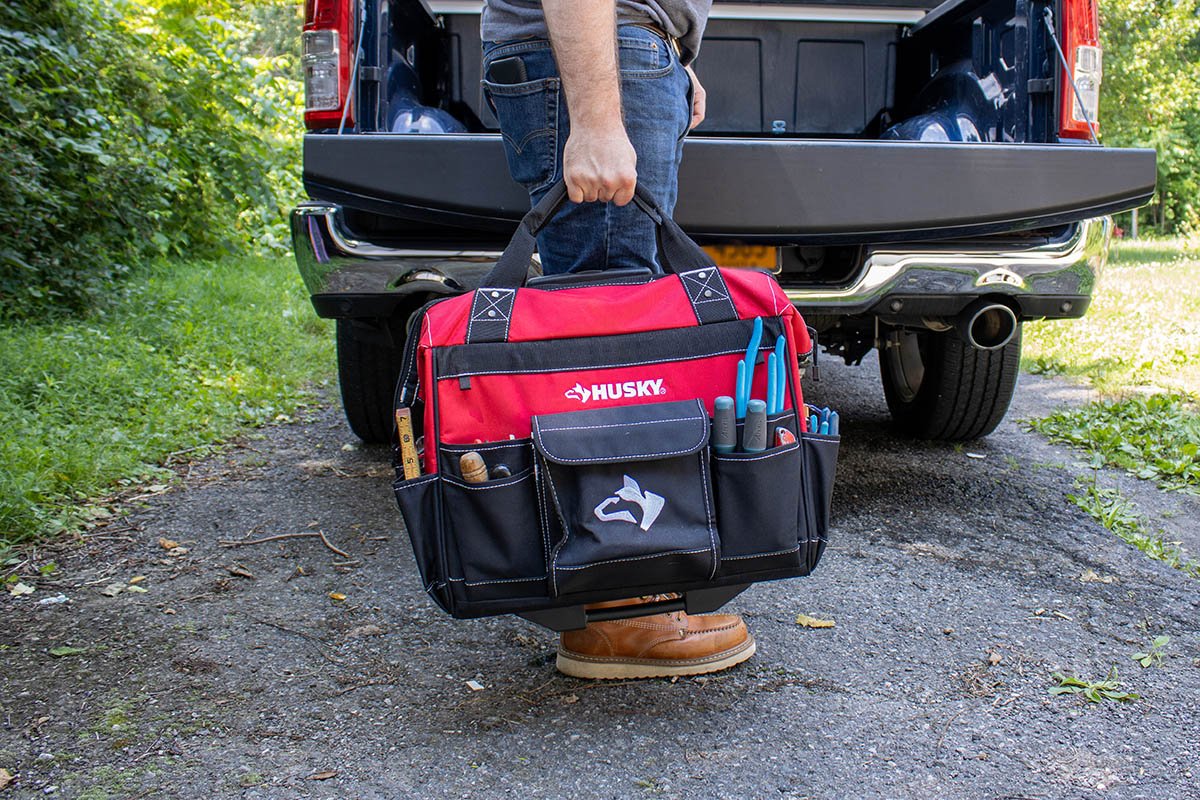

Dragging tools from the garage to the driveway should not feel like auditioning for a strongman competition. Yet anyone who has ever carried a loaded toolbox knows the familiar routine: one hand goes numb, the shoulder starts negotiating a union contract, and halfway across the room you suddenly remember three more tools you forgot. That is exactly where a rolling tool bag earns its moment in the spotlight.
The Husky rolling tool bag is one of those products that looks simple at first: fabric body, pockets, wheels, handle, done. But the real question is not whether it can hold tools. The real question is whether it is worth paying extra for a wheeled tool bag when cheaper standard tool bags, plastic boxes, and bargain totes are sitting on the same shelf looking innocent.
After comparing real product specs, common user feedback, and competing rolling tool bags from brands such as DeWalt, Klein Tools, Milwaukee, and Veto Pro Pac, the answer is clear: yes, Husky’s rolling tool bag can be worth the extra money for DIYers, maintenance workers, contractors, and homeowners who regularly move a heavy tool kit. But it is not the perfect choice for everyone. Let’s roll into the detailspun absolutely intended.
What Is the Husky Rolling Tool Bag?
The Husky rolling tool bag is a wheeled soft-sided tool carrier sold through Home Depot’s Husky tool storage lineup. The popular 18-inch version is designed with a large center compartment, multiple interior and exterior pockets, a telescoping handle, and two heavy-duty wheels. It is made from water-resistant 600-denier poly fabric and is commonly rated to hold up to 100 pounds of tools.
In everyday terms, this means it is built for the person who owns more than a hammer and one mysterious screwdriver from a junk drawer. The bag can carry hand tools, a drill, batteries, pliers, tape measures, fasteners, small accessories, and even some compact power tools. It is not a full rolling jobsite box, but it is far more portable than a traditional metal toolbox and more organized than tossing everything into a bucket and hoping for the best.
Why Does It Cost More Than a Regular Tool Bag?
A basic tool bag can be surprisingly affordable. You can find simple zippered bags for small hand tools at a fraction of the price of a rolling model. So why does the Husky rolling tool bag cost more? The price mostly comes from four upgrades: mobility, capacity, structure, and convenience.
1. Wheels Change Everything
The biggest reason to buy a rolling tool bag is obvious: wheels. When your tool load gets heavy, rolling beats carrying every time. A loaded hand tool bag can quickly reach 40, 60, or even 80 pounds, especially if it includes hammers, wrenches, drivers, pliers, and power tools. At that weight, “portable” becomes a very generous word.
Husky’s wheels help move the bag across garage floors, concrete, driveways, and reasonably rough jobsite surfaces. They are not monster truck tires, but they do a respectable job for everyday use. If you frequently move tools from a vehicle to a work area, the wheels alone can justify the upgrade.
2. The Telescoping Handle Adds Real Convenience
The telescoping handle lets you pull the bag like luggage. That may sound ordinary until you have tried to carry a loaded tool bag in one hand while balancing a ladder, extension cord, coffee, and your remaining dignity. A smooth handle makes the bag easier to move through hallways, garages, workshops, apartment buildings, and driveways.
For mobile repair work, rental property maintenance, weekend projects, and home improvement tasks, this feature is more than a luxury. It saves time and reduces fatigue, especially when you make repeated trips.
3. The Storage Capacity Is Generous
The Husky 18-inch rolling tool bag offers a large main compartment and 18 storage pockets. The main compartment is useful for bulkier items such as a drill/driver, impact driver, battery packs, hammer, small saw, level, tape measure, and fastener cases. The pockets help organize pliers, screwdrivers, utility knives, bits, markers, and smaller hand tools.
This is where the bag beats many cheaper options. A low-cost open tote may hold tools, but it often turns into a noisy metal salad after one trip across the driveway. Husky’s pocket layout keeps everyday tools easier to see and grab.
4. It Can Replace Multiple Smaller Bags
One reason the Husky rolling tool bag can make financial sense is that it may replace two or three smaller tool bags. Instead of keeping one bag for electrical tools, one for general repairs, and one for random “I might need this” items, a rolling bag can centralize a practical kit.
That does not mean every tool you own should live inside it. Please do not turn it into a rolling black hole. But for a core repair kit, the Husky rolling bag gives you enough space to carry what you actually use.
Husky Rolling Tool Bag: Key Pros
Excellent Capacity for Homeowners and DIYers
The biggest strength of the Husky rolling tool bag is its capacity. It has enough room for a serious home repair kit without forcing you to choose between your drill and your favorite pair of pliers. For homeowners who handle plumbing fixes, furniture assembly, small electrical projects, garage repairs, and weekend upgrades, this bag can hold a well-rounded set of tools in one place.
Good Balance Between Soft Bag and Hard Box
A hard rolling toolbox offers excellent protection, but it can be heavy and bulky. A soft bag is lighter and easier to fit into tight spaces, but it may lack structure. Husky’s rolling bag lands in the middle. It has the flexibility of fabric storage with enough structure to keep tools accessible.
That hybrid personality is useful if you work in homes where you do not want to bang a hard plastic box into door frames, walls, cabinets, or freshly painted trim. A soft-sided rolling bag is simply friendlier indoors.
Comfortable Handles for Short Lifts
Although the wheels do the heavy lifting most of the time, you will still need to pick up the bag occasionally. Think stairs, truck beds, curbs, thresholds, and the one weird step every house seems legally required to have. Husky’s padded top handles make short lifts more comfortable than thin webbing handles on cheaper bags.
Water-Resistant Fabric Helps Protect Tools
The 600-denier water-resistant fabric is not the same as a waterproof hard case, but it does help protect tools from light moisture, damp floors, and minor splashes. That matters if you work in garages, basements, unfinished spaces, or job areas where the floor is not exactly spa-level clean.
Still, do not leave it sitting in rain and expect miracles. Water-resistant means “helpful protection,” not “tiny submarine.”
Great for Reducing Tool Trips
If you often walk back and forth because you forgot a tool, the Husky rolling bag can save time. Load it with your common tools once, roll it to the project area, and you are less likely to abandon your work every five minutes to hunt for a socket, bit, pencil, or flashlight.
Husky Rolling Tool Bag: Key Cons
It Gets Heavy Fast
The same feature that makes this bag usefullarge capacitycan also become a problem. Because it holds a lot, it tempts you to pack a lot. Before long, you have added every screwdriver, three hammers, spare fasteners, four batteries, a charger, a pry bar, a multimeter, and that one specialty wrench you have not used since 2019 but emotionally cannot remove.
Yes, the wheels help. But you still have to lift the bag sometimes. If you pack it near capacity, stairs and truck beds become less fun than reading a tax form aloud.
Pocket Sizes Could Be More Specialized
The Husky bag offers plenty of pockets, but some users may wish for more specialized slots. Electricians, technicians, and mechanics often like narrow, dedicated sleeves for screwdrivers, nut drivers, pens, testers, and small precision tools. Husky’s pocket layout is practical, but it may feel a little too general if you want every tool to have a perfectly tailored parking spot.
No Side Handles on Some Versions
Depending on the specific model, side lifting handles may be limited or absent. That matters when lifting a loaded bag into a truck, onto a bench, or up a staircase. Top handles are fine for quick movement, but side handles can make two-handed lifting easier and safer.
It Is Not the Cheapest Option
Compared with standard tool bags, the Husky rolling bag is clearly more expensive. Compared with premium rolling bags from Klein Tools or high-end modular storage systems, it can still look reasonably priced. So the value depends on what you compare it with.
If you only need a bag for a hammer, tape measure, pliers, and a few screwdrivers, Husky’s rolling bag is overkill. If you move a serious tool kit regularly, the price becomes much easier to defend.
How Does Husky Compare With Other Rolling Tool Bags?
To understand whether Husky is worth the money, it helps to compare it with other common tool storage options.
Husky vs. DeWalt Rolling Tool Bags
DeWalt rolling bags are strong competitors, especially for users who want more individual compartments and a jobsite-ready design. Some DeWalt models emphasize organization, molded bases, and durable rolling performance. DeWalt may be the better choice for users already invested in the brand or those who prefer a more structured layout.
Husky, however, often wins on straightforward value and availability. It provides strong capacity, good mobility, and practical storage without reaching the price of some premium bags.
Husky vs. Klein Tools Rolling Bags
Klein Tools rolling bags are popular with electricians and trade professionals for good reason. Some Klein rolling bags offer higher load ratings, rugged wheels, reinforced frames, bright interiors, and heavy-duty materials. They are excellent for people who use a tool bag every day and need trade-specific durability.
The trade-off is price and weight. Klein bags can cost significantly more and may be heavier when empty. For a serious professional, that may be acceptable. For a homeowner or part-time DIYer, Husky may deliver enough performance for less money.
Husky vs. Milwaukee PACKOUT
Milwaukee’s PACKOUT system is less of a single bag and more of a modular storage universe. It is ideal for users who want to stack boxes, organizers, totes, and accessories into a customized system. If you already use PACKOUT, staying inside that ecosystem makes sense.
But if you simply want one rolling tool bag for general repairs, Husky is easier and less complicated. You do not need to build a storage empire. You just load the bag and roll.
Husky vs. Veto Pro Pac
Veto Pro Pac is known for premium tool bags aimed at professionals who demand long-term durability, precise organization, and heavy daily use. These bags are excellent, but they are also priced like serious equipment.
For many homeowners and DIYers, Husky is the more practical buy. Veto is the luxury truck; Husky is the reliable work van that still gets the job done.
Who Should Buy the Husky Rolling Tool Bag?
Buy It If You Move Tools Often
If your projects happen in different rooms, different properties, or different job areas, the Husky rolling bag makes sense. It is especially useful for maintenance workers, landlords, apartment repair techs, mobile DIYers, and anyone who hates carrying 60 pounds of tools by hand.
Buy It If You Want One Main Tool Kit
The bag is excellent for building one central repair kit. You can stock it with essential tools for common jobs: drilling, fastening, measuring, cutting, tightening, light electrical testing, and minor plumbing work. Instead of scattering tools across drawers, shelves, and mystery bins, you keep your core kit ready to roll.
Buy It If You Have Back, Shoulder, or Grip Fatigue
A rolling bag can reduce strain. It will not eliminate lifting completely, but it can make tool transport much easier. If carrying a heavy tool bag leaves your shoulder feeling like it has filed a complaint with management, wheels are worth considering.
Who Should Skip It?
Skip It If You Only Own a Small Tool Set
If your entire tool collection fits in one kitchen drawer, you do not need an 18-inch rolling tool bag. A small zippered bag, compact toolbox, or drawer organizer will be cheaper and more appropriate.
Skip It If You Work Mostly on Ladders
Rolling bags are great on the ground. They are not ideal if your work requires climbing ladders constantly. In that case, a tool belt, pouch, backpack, or smaller shoulder bag may be more useful.
Skip It If You Need Maximum Weather Protection
The Husky rolling tool bag offers water resistance, but it is not a sealed hard case. If your tools regularly face rain, mud, snow, or outdoor jobsite abuse, a weather-sealed rolling toolbox or modular hard storage system may be a better fit.
Is Husky’s Rolling Tool Bag Worth the Extra Money?
For the right user, yes. Husky’s rolling tool bag is worth the extra money because it solves a real problem: moving a heavy, mixed tool kit without wrecking your hands, shoulders, or patience. Its value comes from the combination of storage capacity, wheeled transport, water-resistant fabric, a telescoping handle, and practical pocket organization.
It is not perfect. It can become heavy, the pockets could be more specialized, and additional lifting handles would improve the design. But as an all-around rolling tool bag for DIYers and general repair work, it offers a strong balance of performance and price.
If you need premium trade-level organization, Klein or Veto Pro Pac may be more appealing. If you want a modular system, Milwaukee PACKOUT is hard to ignore. But if you want a capable rolling tool bag that holds a lot, rolls well, and does not require a second mortgage, Husky deserves a serious look.
Practical Setup Tips for Getting the Most From It
Build a Core Kit Instead of Packing Everything
The smartest way to use the Husky rolling tool bag is to build a core kit. Include the tools you reach for most: tape measure, utility knife, screwdrivers, pliers, adjustable wrench, hammer, drill, driver bits, flashlight, pencil, level, and a small organizer for fasteners. Leave rarely used specialty tools in the shop until you actually need them.
Use Small Cases Inside the Main Compartment
The big center compartment is useful, but small items can disappear into it like socks in a dryer. Use compact organizers for drill bits, screws, anchors, wire nuts, blades, and sockets. This keeps the bag neat and prevents the dreaded “rummage of shame.”
Keep Heavy Tools Low
Place heavier tools near the bottom and toward the wheel side. This improves stability and makes the bag easier to roll. If the load is top-heavy, the bag may feel awkward and tippy.
Clean the Wheels Occasionally
Rolling through garages, sawdust, gravel, and driveways can gum up the wheels over time. A quick wipe-down helps keep the bag rolling smoothly. Tool bags are not glamorous, but neither is dragging one because the wheels are packed with debris.
Real-World Experience: Living With a Rolling Tool Bag
The first thing you notice when using a rolling tool bag is not the storage. It is the relief. A normal tool bag feels fine when it is half empty, but once you add a drill, spare battery, hammer, pliers, level, pry bar, socket set, and a handful of fastener cases, it becomes a portable regret machine. Rolling the same load across a garage floor feels almost suspiciously easy.
For home projects, the Husky rolling tool bag shines during jobs that spread across multiple rooms. Imagine replacing cabinet hardware in the kitchen, tightening a loose towel bar in the bathroom, adjusting a door hinge in the hallway, and fixing a squeaky gate outside. With a regular toolbox, you either make several trips or carry more weight than you should. With the rolling bag, you bring the kit along like a small, obedient tool suitcase.
It is especially useful during “simple” projects that are never simple. You know the kind. You start by hanging one shelf. Ten minutes later, you need a stud finder, level, drill, anchors, pencil, tape measure, screwdriver, vacuum, and emotional support. A rolling tool bag keeps the most likely suspects nearby, which means fewer interruptions and less wandering around the house muttering, “Where did I put the bit set?”
Another underrated benefit is visibility. When tools are organized in pockets and small cases, you can quickly see what is missing. That matters at the end of a project. Instead of leaving a utility knife on a windowsill or a pair of pliers under the sink, you can scan the bag and notice the empty pocket. It is a small thing, but small things prevent big annoyances.
The downside appears when stairs enter the conversation. A loaded rolling bag is still a loaded bag. Wheels help on flat surfaces, but they do not magically float up steps. If you live in a multi-story home or regularly work in apartment buildings without elevators, be realistic about weight. Pack only what you need, or separate heavy tools into a second smaller bag.
Over time, the best habit is to treat the Husky rolling tool bag as a mobile workstation rather than a storage dump. Keep it stocked, but not stuffed. Store sharp tools safely. Put small accessories in containers. Remove tools you do not use. Check the zipper, wheels, and handle occasionally. Used this way, the bag becomes more than a container; it becomes the kit you grab when something breaks and everyone suddenly looks at you like you are the facilities department.
For many DIYers, that convenience is exactly what makes the extra cost worthwhile. You are not just buying fabric and wheels. You are buying fewer trips, less strain, better organization, and a smoother workflow. And if that saves your back from one overloaded toolbox carry across the driveway, the bag has already started earning its keep.
Final Verdict
The Husky rolling tool bag is worth the extra money if you regularly carry a medium-to-heavy tool kit and want a practical balance of capacity, organization, and mobility. It is a strong choice for homeowners, DIYers, property maintenance workers, and light professional use. It may not satisfy every trade specialist, and it is not the cheapest tool storage option available, but it delivers meaningful convenience where it counts.
If your tools rarely leave the garage, a standard bag may be enough. If your tools travel with you, roll with the Husky. Your back may send a thank-you card.
Note: Product prices, availability, ratings, and specifications may vary by retailer, model, and location. Always check the current product listing before purchasing.