
A porch swing is not just outdoor seating. It is a lifestyle choice, a gentle rebellion against overbooked calendars, and quite possibly the best place to sip iced tea while pretending the weeds in the flower bed are “native landscaping.” If you have ever looked at a porch, patio, deck, pergola, or shady backyard corner and thought, “This needs more nap potential,” a DIY porch swing may be exactly the weekend project your home has been hinting at.
The beauty of porch swing plans is that they range from beginner-friendly bench builds to full-on hanging daybeds that practically demand a pillow budget. Some plans use simple 2×4 lumber. Others include freestanding frames, arbor tops, pergolas, or wide mattress-style platforms. The right design depends on your space, your skill level, your tools, and how seriously you take the phrase “outdoor siesta spot.” Spoiler: very seriously.
Below is an in-depth, original guide inspired by the popular Bob Vila-style approach to porch swing ideas: practical, buildable, safety-minded, and friendly to homeowners who want charm without needing a full cabinetmaker’s apprenticeship. Let’s look at 12 porch swing plans worth considering, how to choose materials, what installation details matter, and how to make the finished swing feel like the coziest seat outside the house.
Why Build a Porch Swing Instead of Buying One?
Buying a porch swing is easy. Building one is personal. A DIY porch swing lets you choose the size, wood, finish, cushion thickness, armrest width, back angle, and overall vibe. Want a classic slatted bench for a farmhouse porch? Done. Need a freestanding frame because your porch ceiling is more decorative than structural? Build it. Dreaming of a suspended daybed that turns Sunday afternoon into a competitive napping event? There is a plan for that, too.
DIY also gives you control over durability. Outdoor furniture lives a dramatic life. It faces sun, rain, humidity, pollen, temperature swings, and the occasional squirrel with no respect for craftsmanship. Choosing the right wood, fasteners, finish, and hanging hardware can help your swing last longer and feel safer.
Before You Build: Safety Comes First
A porch swing may feel playful, but structurally it behaves like a moving load. That means the build and installation deserve real attention. If you plan to hang a swing from a porch ceiling, the hardware must fasten into structural framing, not just beadboard, plywood, decorative ceiling panels, or wishful thinking. Ceiling joists, reinforced beams, or properly installed blocking are the heroes here.
For comfort and clearance, many installers start with the seat around 17 to 19 inches above the floor. You also need enough room in front and behind for the swing’s arc. A good rule is to leave generous open space so knees, railings, walls, planters, and sleeping dogs are not unwilling participants in the rocking motion.
Use galvanized or stainless steel chains, exterior-rated quick links, heavy-duty eye bolts, or marine-grade rope rated for the combined load of the swing and occupants. If you are unsure about the porch structure, call a qualified contractor. A porch swing should create memories, not insurance paperwork.
12 Porch Swing Plans for Your Outdoor Siesta Spot
1. The Simple Bench Swing
The simple bench swing is the classic starting point. It usually has a slatted seat, a comfortable back, two arms, and a shape that works on nearly any porch. Many versions can be built from dimensional lumber available at big-box stores, which makes this plan friendly for newer DIYers.
This is the porch swing equivalent of a white T-shirt: basic, timeless, and surprisingly easy to dress up. Paint it crisp white for a traditional front porch, stain it warm brown for a cabin feel, or use a bold color if your house needs a cheerful wink from the curb. Add outdoor cushions, and suddenly your “simple” bench swing looks custom.
2. The Hanging Daybed Swing
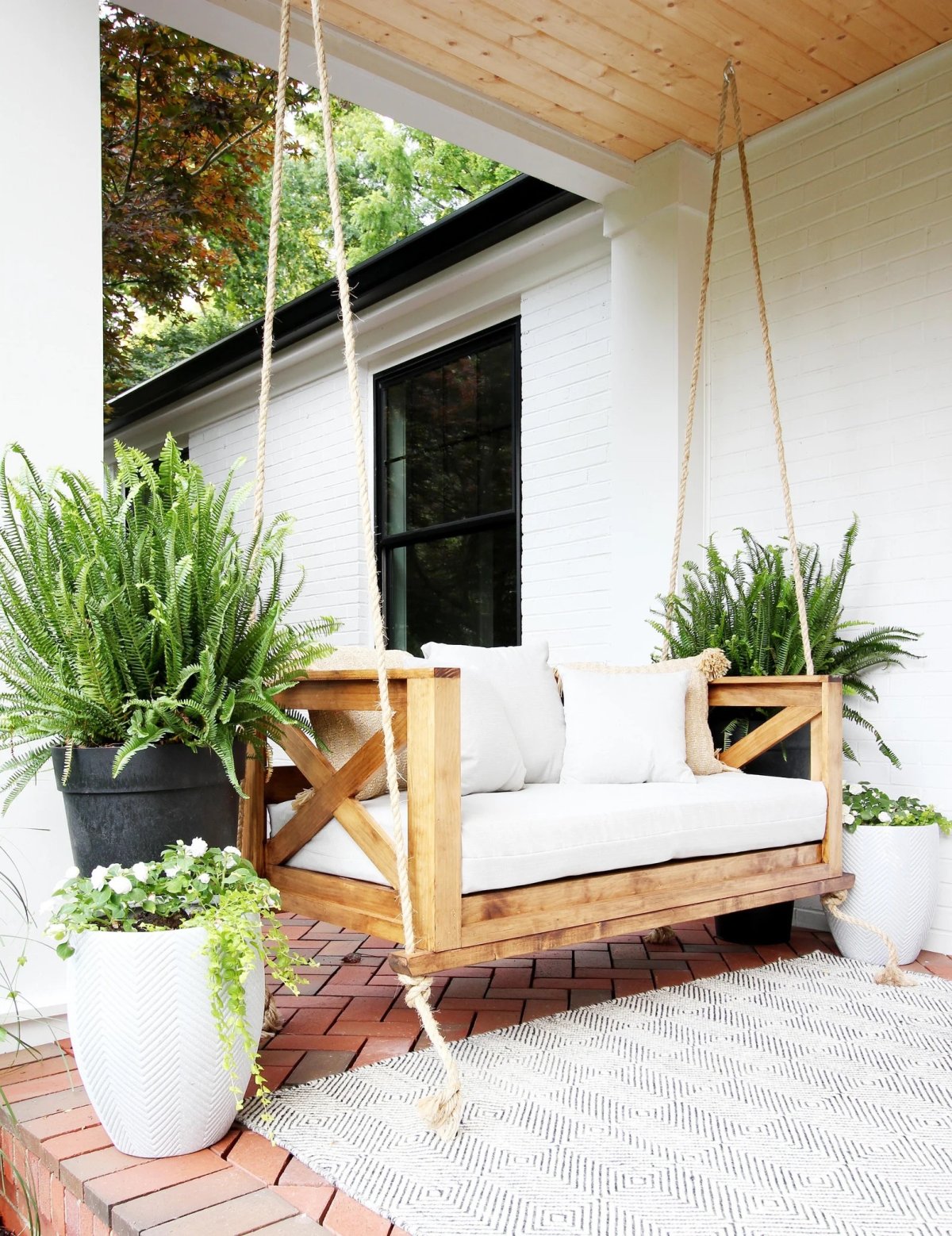
A hanging daybed swing is for people who hear “porch swing” and think, “Nice, but can I lie down on it with a book over my face?” These designs are wider and deeper than standard bench swings and are often sized around a twin mattress, crib mattress, futon, or custom outdoor cushion.
This plan requires more space and stronger support than a small bench swing, but the payoff is enormous. It turns a porch or covered patio into a nap zone, reading nook, or guest magnet. Use outdoor fabric, washable covers, and quick-dry foam if the swing will live in a humid or breezy area. A hanging daybed is not subtle, but neither is happiness.
3. The Adjustable Bench Swing With Frame
An adjustable bench swing adds comfort by letting you set the angle of the backrest. That may sound like a small detail until you sit in a swing with a back that feels like a church pew designed by someone angry about posture. A slightly reclined seat can make a big difference.
Plans that include a freestanding frame are especially useful when you do not have a porch ceiling or do not want to modify your home’s structure. A frame also allows you to place the swing in a garden, under a tree canopy, beside a fire pit, or on a wide deck. Just make sure the base is stable, level, and built from lumber appropriate for outdoor use.
4. The Farmhouse Porch Swing
The farmhouse porch swing is warm, sturdy, and full of “come sit a while” energy. It often uses thicker boards, simple joinery, and a slightly rustic style. Reclaimed wood can look beautiful, but inspect it carefully. Avoid boards with deep cracks, rot, old embedded nails, mystery stains, or anything that looks like it once held up a haunted barn.
Pine, cedar, and pressure-treated lumber can all work depending on the plan and finish. A farmhouse swing looks great with black chain, neutral cushions, and a striped throw pillow. It is also forgiving for DIYers because minor imperfections tend to add character instead of looking like mistakes.
5. The Arbor Swing
An arbor swing combines seating and garden architecture. Instead of hanging from a porch, the swing is suspended from a self-supporting arbor or trellis-style frame. This is perfect for yards, patios, and garden paths where you want the swing to feel like a destination.
Train climbing roses, jasmine, clematis, or other suitable vines around the arbor, and the swing becomes a shaded retreat. Keep plant growth controlled so it does not interfere with the chains or rope. Also remember that vines add moisture and debris, so choose rot-resistant materials and inspect the frame regularly.
6. The 2×4 Bench Swing and Frame
Few DIY materials are as humble and hardworking as the 2×4. A 2×4 porch swing plan is usually budget-friendly, accessible, and strong when properly designed. Because 2x4s are widely available, this is a practical project for homeowners who want a sturdy swing without hunting down specialty lumber.
The look can be rustic or modern depending on how you finish it. Sand exposed edges, round over corners where arms and legs make contact, and use exterior screws or pocket-hole screws rated for outdoor conditions. A 2×4 swing is not fancy by default, but with a smooth finish and good proportions, it can look surprisingly polished.
7. The Pergola Porch Swing
A pergola porch swing is part seating, part outdoor room. The overhead structure creates a sense of enclosure and can provide partial shade. It also gives the swing a strong visual anchor, which is useful in open yards where a plain bench might look lonely.
This type of plan is usually better for intermediate DIYers because it involves more parts, more precise assembly, and careful leveling. The result, though, can be spectacular. Add gravel or pavers beneath it, plant ornamental grasses nearby, and hang a small solar lantern from the pergola. Suddenly, your backyard has a “resort corner,” minus the checkout time.
8. The Porch Daybed With Back Support
Some daybed swings are basically suspended platforms. Others include back support so you can sit upright comfortably. That makes this plan more versatile for families, guests, and anyone who likes the option of reading, chatting, snacking, and then accidentally napping for 46 minutes.
When building a daybed-style swing, think carefully about cushion size before cutting lumber. Standard mattress dimensions can save money, but outdoor cushions perform better in damp conditions. If the swing is not fully protected from weather, choose removable cushions and store them during storms.
9. The Classic Porch Swing With Stand
A classic swing with its own stand gives you the traditional slat-back look without relying on porch framing. Many plans use a simple A-frame or rectangular support structure. Some frames can be anchored for extra stability, especially in windy areas or on soft ground.
This is a smart choice for renters, homeowners with older porch ceilings, or anyone who wants flexibility. You can move the swing seasonally, aim it toward a garden view, or place it where the afternoon shade behaves best. The stand does add lumber and cost, but it also adds freedom.
10. The Modern “Ray” Style Porch Swing
A modern porch swing often uses cleaner lines, fewer decorative details, and a more refined silhouette. Think slim slats, angled arms, a crisp painted finish, or a warm natural stain. This plan works well with contemporary homes, modern farmhouse porches, and minimalist patios.
The trick with modern designs is precision. Gaps between slats should look intentional, cuts should be clean, and hardware should be neat. If rustic swings forgive a little wobble in the personality department, modern swings prefer manners. Measure twice, cut once, sand thoroughly, and let the design stay quiet.
11. The Outdoor Bed Swing for Serious Lounging
An outdoor bed swing is larger than a porch daybed and may be designed for a queen-size or even king-size cushion or mattress. This is not the plan for a tiny stoop. It is best for deep porches, covered decks, poolside structures, or large pergolas.
Because the swing is heavier and may hold multiple people, structural planning is critical. Use a plan that clearly specifies hardware, support spacing, and load considerations. If you want the luxury look, add layered outdoor pillows, a weather-resistant throw, and a small side table for lemonade. Then prepare for everyone in the household to claim it as “their spot.”
12. The Budget Pallet or Reclaimed-Lumber Swing
A pallet swing can be inexpensive and charming, but it requires caution. Use only clean, structurally sound pallets or reclaimed boards. Avoid wood that smells strange, shows chemical staining, is badly split, or has uncertain history. Pallet wood can also be rough, so sanding is not optional unless you enjoy splinters as a lifestyle accessory.
The best budget swings keep the design simple and spend money where it matters: safe hardware, exterior fasteners, and a protective finish. A low-cost porch swing should still be sturdy, smooth, and comfortable. Saving money is great. Sitting on a questionable plank held by bargain rope is not.
Best Woods for a DIY Porch Swing
Outdoor furniture needs wood that can handle moisture and sunlight. Cedar, redwood, cypress, white oak, and pressure-treated pine are common options. Cedar is lightweight and naturally resistant to decay, but it is softer and can dent. Pressure-treated pine is affordable and widely available, though it may require more careful selection, drying time, and finishing. White oak is strong and durable, but heavier and more demanding to work with.
Whatever wood you choose, inspect boards before buying. Look for straight pieces with minimal twisting, large knots, cracks, or checks. For visible parts such as arms and back slats, choose the best boards your budget allows. For structural framing, strength and straightness matter more than perfect beauty.
Hardware, Hanging, and Comfort Details
Hardware is not the place to improvise. Use exterior-rated chain, rope, bolts, screws, washers, and quick links. If using rope, choose marine-grade braided nylon or polyester and check the safe working load. Rope looks beautiful, but it should be inspected often for wear, sun damage, and fraying.
For chain installations, many swings use two ceiling points with chains that split into an inverted Y shape and connect to the front and back of the swing. Other designs use four separate hanging points. Either approach can work when properly installed into adequate structure. The goal is even support, smooth motion, and no rubbing against the swing body.
Comfort comes from three things: seat depth, back angle, and surface smoothness. A swing can look gorgeous and still feel like punishment if the seat is too shallow or the back is too vertical. Before final assembly, dry-fit the parts when possible. Sit carefully on the frame at ground level and test the angle. Your future afternoon self will appreciate the research.
Finishing Your Porch Swing
A good finish protects the swing and completes the look. Paint offers strong color and coverage, especially for pine or mixed lumber. Exterior stain lets the wood grain show while adding protection. Clear sealers can work, but they often require regular maintenance because sun and water are relentless little critics.
Before finishing, sand all touch points: arms, seat edges, back slats, and corners. Remove dust, apply finish according to the product instructions, and allow proper drying time. Recoat when the surface fades, absorbs water quickly, grows mildew, or feels dry and rough. Maintenance is not glamorous, but neither is replacing a swing because it aged like a banana on a dashboard.
How to Style the Perfect Outdoor Siesta Spot
The swing is the star, but the surrounding setup makes it irresistible. Add outdoor cushions in weather-resistant fabric. Use a small table for drinks, books, sunglasses, and snacks. Place a washable outdoor rug beneath a freestanding swing if the area is dry and level. Add shade with curtains, a pergola, an awning, or nearby trees.
Lighting also matters. Solar lanterns, wall sconces, or warm porch lights can turn the swing into an evening retreat. Keep decor simple so the space feels restful, not cluttered. The goal is to create a place where people naturally slow down. If your porch swing makes someone say, “I’ll just sit for five minutes,” and then they vanish into relaxation for an hour, you built it correctly.
Common Mistakes to Avoid
The first mistake is underestimating the structure. A porch ceiling is not automatically strong enough just because it is above your head. The second mistake is buying pretty hardware without checking load ratings. The third is choosing untreated indoor lumber and hoping the weather will be polite. It will not.
Other mistakes include skipping pilot holes, ignoring end-grain sealing, using non-exterior screws, hanging the swing too close to walls, and forgetting cushion storage. Also, do not assume every free plan fits every body, porch, or climate. Adjust thoughtfully, and when structural changes are involved, ask a professional.
Real-Life Experience: What Building a Porch Swing Teaches You
Building a porch swing sounds simple until you are standing in the lumber aisle, comparing boards like a detective at a very woody crime scene. One board is bowed. Another has a knot exactly where a screw needs to go. A third looks perfect until you flip it over and discover it has the personality of a potato chip. The first real lesson is patience. Good outdoor projects start before the saw ever turns on.
The second lesson is that comfort is built in inches. A seat that is just a little too flat can feel stiff. A backrest that leans slightly more can turn “nice bench” into “please forward my mail, I live here now.” When people build their first swing, they often focus on appearance. That matters, of course, but the best porch swings are designed for actual sitting, not just for looking adorable in photos.
The third lesson is that sanding takes longer than expected and is more important than expected. Outdoor furniture touches bare arms, legs, hands, and sometimes sleepy faces. Every edge should feel friendly. A porch swing is not a medieval device. Round the corners, smooth the slats, and pay attention to the armrests. If you can run your hand across the surface without making the face people make when they find a splinter, you are on the right track.
Installation is where confidence meets humility. Even a beautifully built swing needs a safe place to hang. Many homeowners discover that their porch ceiling hides surprises: joists running the wrong way, decorative panels covering unknown framing, or old wood that deserves retirement more than responsibility. This is the point where smart DIYers slow down. Reinforcing blocking, using the correct eye bolts, and checking the swing’s clearance are not boring details. They are the difference between peaceful rocking and a very memorable crash.
The best moment comes after the finish dries, the chains are adjusted, and the swing finally moves smoothly. Someone sits down carefully at first, then leans back, then smiles. The porch changes. It becomes less of a pass-through space and more of a small vacation attached to the house. Coffee tastes better there. Conversations last longer. Even chores feel less rude when you know the swing is waiting afterward.
A DIY porch swing also has a way of collecting rituals. Morning coffee. Summer rain watching. Evening phone calls. Kids reading comics. Grandparents telling stories that may or may not be 100 percent historically accurate. Dogs supervising from below. The swing becomes furniture, yes, but also a stage for slow living. That is the real reward of the project. You are not just building a seat. You are building permission to pause.
And if the first swing is not perfect? That is fine. Maybe one slat needed more sanding. Maybe the stain turned out darker than expected. Maybe the cushion shopping got out of control and now your porch looks like a pillow showroom with a roof. These are not failures. They are proof that the space is being used, adjusted, and loved. A porch swing does not need to be flawless to become everyone’s favorite spot. It just needs to be safe, sturdy, comfortable, and ready for a siesta whenever life gets too loud.
Conclusion
Porch swing plans offer something for nearly every home: a simple bench for a narrow porch, a freestanding frame for the yard, a pergola swing for garden drama, or a hanging daybed for professional-level lounging. The smartest plan is the one that matches your structure, tools, budget, and comfort goals.
Build with outdoor-rated materials, install into real structural support, give the swing enough clearance, and finish it for the weather it will face. Do that, and your DIY porch swing can become more than a project. It can become the most popular seat in the house, even though technically it is outside.
Note: This article is for general DIY information. Always verify load ratings, inspect structural supports, follow local building requirements, and consult a qualified professional when hanging a swing from an existing porch or roof structure.