
Hotels can be magical. You walk in with one bag and walk out with three tiny soaps, a new respect for blackout curtains,
and a mysterious desire to own a luggage rack. But every hotel workerfront desk, housekeeping, maintenance, security,
food servicewill tell you the same thing: great stays are built on a thousand boring details.
The good news? Those “boring details” leave clues. And if you learn to spot them early, you can dodge the grimy rooms,
surprise fees, sketchy security setups, and “Why is the carpet… moist?” moments. Below are 50 real-world red flags
hotel staff routinely noticeplus what to do so you’re not stuck doom-scrolling reviews at 1:00 a.m. in your socks.
Table of Contents
- Before You Book: Pricing & Listing Red Flags
- Arrival & Check-In: The First 10 Minutes
- Room Cleanliness: The “Housekeeping Tells”
- Maintenance & Comfort: When “Normal” Isn’t Normal
- Safety & Security: Don’t Be the Main Character
- Policies & Amenities: The Fine Print That Bites
- The 5-Minute Worker-Approved Room Check
- Extra : Lived-Looking Experiences & Lessons
Before You Book: Pricing & Listing Red Flags
Hotel workers don’t just judge roomsthey judge expectations. A lot of problems start before you ever arrive.
Here’s what sets off staff radar early.
-
“Too good to be true” pricing compared to similar hotels nearby.
Workers know deals existbut rock-bottom rates often mean deferred maintenance, staffing cuts, or hidden mandatory fees.
Do: compare final totals (not just nightly rates) and look for consistent price transparency. -
Mandatory fees that appear late in checkout (or only in tiny text).
If the total cost feels like it’s playing hide-and-seek, it’s a red flag for surprises at the desk.
Do: screenshot the total price breakdown before booking. -
Blurry, minimal, or oddly selective photos.
If the listing shows one glam lobby shot and zero bathroom photos, that’s not “aesthetic”it’s strategic.
Do: look for recent guest photos and consistent lighting across room images. -
Every review is either 5 stars or 1 star, with no middle ground.
Staff see this pattern when management games the system or when quality swings wildly by room/wing.
Do: filter for 2–4 star reviews; those tend to be the most detailed and honest. -
Recent reviews mention “renovation,” “construction,” or “temporary closure,” but the listing doesn’t.
A hotel can be perfectly fine while renovatingunless you expected tranquility and got jackhammer jazz.
Do: call or message to ask what areas are affected and during what hours. -
“Newly renovated” is repeated, but nobody describes what changed.
Workers joke that sometimes “renovated” means “we bought new pillows and hoped for the best.”
Do: look for specifics: flooring, bathrooms, HVAC, elevators, or just décor. -
Sketchy booking flow: pressure tactics, countdown timers, or odd payment requests.
Workers see guests show up with “reservations” that don’t exist after being rushed into off-platform payment.
Do: avoid paying via wire transfer, gift card, or links from random messages. -
The cancellation policy is harsh, confusing, or changes depending on where you click.
Confusing policies are a breeding ground for fights at check-inand staff are the ones stuck refereeing.
Do: confirm cancellation terms in writing before you book. -
No clear info on parking, deposits, incidental holds, or minimum age.
Hotels that “forget” to disclose common charges create bad surprises and stressed-out guests.
Do: check for deposit/hold amounts and whether parking is per night, per entry, or per vehicle. -
Location language that’s technically true but emotionally dishonest.
“Near downtown” can mean “you can see downtown… if you’re a hawk.”
Do: map the address and check walking routes, lighting, and late-night transit options.
Arrival & Check-In: The First 10 Minutes
Hotel workers say the lobby tells you what the rooms will feel likebecause the lobby is the part management tries hardest
to keep pretty.
-
A front desk that looks overwhelmed before a word is spoken.
Long lines happenbut if staff seem abandoned, it may signal chronic understaffing.
Do: set expectations and ask politely about wait times, housekeeping status, and maintenance response. -
Employees who won’t (or can’t) answer basic questions about fees.
A trained desk can explain charges clearly. Vague answers often mean inconsistent policiesor surprise add-ons.
Do: request an itemized breakdown before you swipe your card. -
Strong odor in the lobby or hallways.
Heavy fragrance can be used to mask smoke, mildew, or “we had an incident” energy.
Do: note it early; if it continues on your floor, ask to switch. -
Public restrooms near the lobby are dirty or out of supplies.
Workers call this the “canary in the coal mine.” If the easiest bathroom to maintain is gross, rooms may be worse.
Do: treat it as a serious cleanliness warning. -
Elevators or keycard readers are visibly beat upor consistently glitchy.
That suggests maintenance is reactive, not proactive.
Do: ask for a room near stairs if elevators feel unreliable (especially if you have mobility needs). -
Your room number is said out loud in a crowded lobby.
Workers know better: it’s a safety issue.
Do: ask staff to write it down and keep your key packet discreet. -
You’re assigned a room before it’s truly ready.
“Ready” should mean cleaned, inspected, stocked, and functioningnot “we put sheets on it and prayed.”
Do: if you arrive early, ask if the room has passed inspection. -
Confusing directions to the room or missing signage.
Poor wayfinding can indicate neglected property standards.
Do: note exit routes while you walk (it matters later, too).
Room Cleanliness: The “Housekeeping Tells”
Housekeepers and room inspectors say cleanliness isn’t just about “does it look okay?” It’s about whether the room was
cleaned systematicallyor speed-ran like a video game.
-
The bed is made sloppily: wrinkled sheets, tired pillows, uneven corners.
Workers say a rushed bed often means the rest of the room was rushed, too.
Do: treat this as your prompt to inspect the bathroom and high-touch surfaces more closely. -
Hair in the bathroom (tub, sink, toilet area).
Hair is the universal sign of “this wasn’t reset properly.”
Do: ask for a reclean or a new roomimmediately. -
Sticky remote controls, thermostats, light switches, or phones.
High-touch items should be wiped and disinfected; stickiness suggests corners were cut.
Do: sanitize and request a wipe-down if multiple items feel neglected. -
Dirty glassware, coffee machine parts, or a funky-smelling kettle.
Workers have seen guests misuse kettles and coffee makers in… creative ways.
Do: rinse and inspect, or skip in-room appliances entirely if they look questionable. -
Bathroom fan doesn’t work (or is screaming like a haunted violin).
Poor ventilation invites mildew and lingering odors.
Do: test it during your first minute in the room, not after your first shower. -
Mildew smell, visible mold, or suspicious black spots in grout.
Even small patches suggest ongoing moisture issues.
Do: request a different room, ideally on a different floor or wing. -
Stains on bedding, mattress pad, or decorative pillows.
Decorative pillows are often touched, rarely washed, and basically the hotel version of a public handshake.
Do: toss decorative pillows aside and ask for fresh linens if you see stains. -
Bed skirt dragging, mattress seams with dark specks, or shed “skins.”
Staff know these can be signs of pests.
Do: do a quick bed inspection before unpackingespecially near seams and the head of the bed. -
Carpet feels damp, tacky, or smells like yesterday’s swamp.
This can mean recent flooding, shampooing without drying, or chronic leaks.
Do: ask to move; damp carpets are a comfort and hygiene problem. -
Dust on high surfaces: headboards, vents, lampshades, picture frames.
Workers say dust is a time-stamp: it shows how long since a true deep clean.
Do: if you’re sensitive to allergies, request another room or extra cleaning. -
Air vents packed with lint or grime.
Dirty vents can blow stale odors and trigger allergies.
Do: run the HVAC briefly and notice smell; request maintenance if it’s musty. -
Trash bin liners missing or trash left behind.
This isn’t “oops”it’s a reset failure.
Do: call immediately and ask for a re-service; don’t accept “we’ll note it.” -
Used toiletries, half-empty bottles, or mismatched amenity packaging.
Workers recognize this as a quick flip that skipped proper restocking checks.
Do: request sealed replacements. -
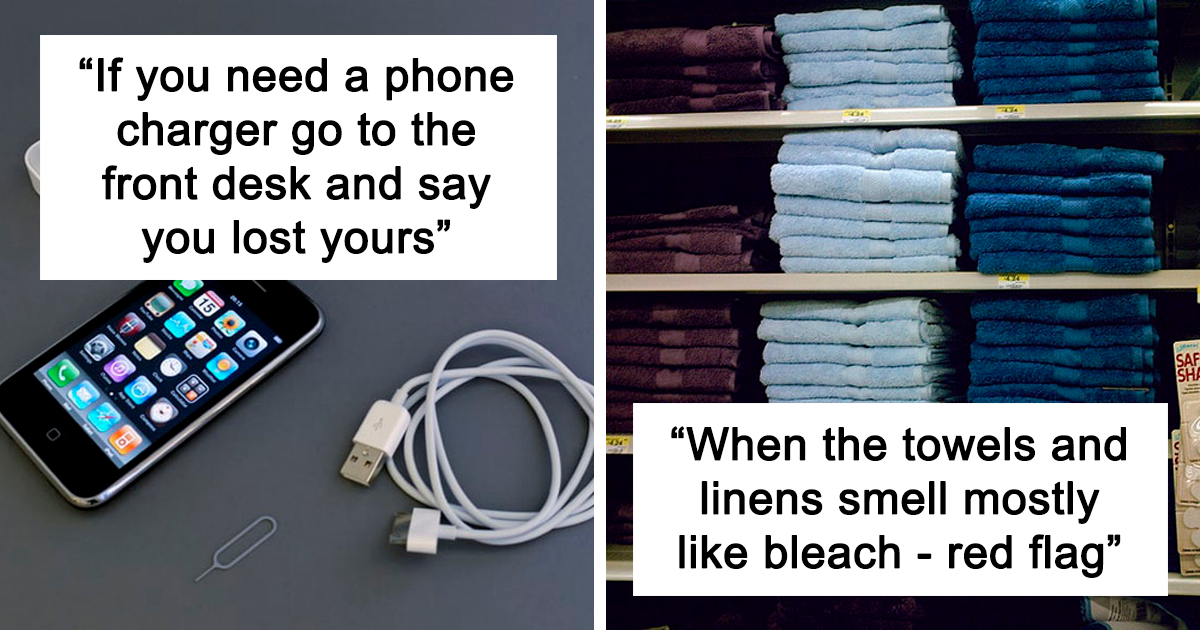
Bathroom towels that smell sour or feel crunchy.
That can indicate improper laundering, long storage, or humidity exposure.
Do: request a fresh set; if the smell persists, move rooms. -
Toilet base grime or “mystery splatter” around hinges.
The toilet area is a classic corner-cut zone when staff are rushed.
Do: call for cleaning; if staff seem dismissive, escalate politely to a room move. -
“Clean” bathroom but the shower curtain liner looks tired, stained, or moldy.
Workers see this when a hotel cleans surfaces but neglects replaceables.
Do: ask for a liner swap or change rooms. -
Bedside tables sticky, drawers gritty, or hair in a drawer.
Drawers are where shortcuts go to hide.
Do: wipe and decide whether you’re unpackingor living out of your suitcase like a seasoned warrior. -
Suspicious stains on upholstered chairs or ottomans.
Soft furniture is harder to sanitize; when it’s visibly stained, it’s often been ignored for a while.
Do: avoid placing clothes on it; request an alternate room if it’s bad. -
Strong “just cleaned” chemical smell that lingers aggressively.
It can be harmless, but workers also see it used to mask odors.
Do: ventilate; if it’s overpowering, ask for a different room. -
“Do not disturb” signs everywhere, all day, across multiple rooms.
Workers note that constant DND can mean long-stay rooms getting skippedhallways can look neglected.
Do: look for overall corridor cleanliness and report issues early. -
Hallway ice machines, vending areas, or shared microwaves look grimy.
These are easy to maintain if staffing is adequatewhen they’re dirty, it’s a staffing or standards issue.
Do: treat it as a hint about the property’s overall cleanliness culture. -
Bathroom counter has water rings, dust lines, or “wiped around” objects.
Workers call this “cleaned with obstacles.”
Do: ask for a quick re-wipe; good hotels won’t argue. -
You find a previous guest’s sock. Or receipt. Or… anything personal.
That’s a room-inspection failure, not a small mistake.
Do: request a new room; don’t just ask for housekeeping to “finish.” -
Bathroom door/handle is grimy, but the mirror is spotless.
Mirrors are obvious. Handles are honest. Workers look at handles.
Do: sanitize and ask for a touch-up cleaning if multiple handles are dirty. -
Luggage rack looks dusty, torn, or unstable.
Workers know guests put suitcases on beds when racks look grossraising pest risk.
Do: ask for a clean replacement rack or use a hard surface away from the bed. -
Bedside outlets are loose or packed with dust.
Staff see this when maintenance is behind and deep-cleaning is skipped.
Do: avoid forcing plugs; request maintenance for safety. -
Room feels “reset,” but not “sanitized”: smudges on glass, fingerprints everywhere.
Workers know the difference between tidying and truly cleaning.
Do: decide whether you want a re-clean now (best time) rather than later. -
Bathroom has no hot water (or hot water that plays hard-to-get).
This can signal systemic plumbing issues.
Do: test hot water immediately; ask to switch rooms before you unpack. -
“Clean” bed, but mattress protector is missing or looks worn out.
Protectors are a key hygiene layer; workers expect them to be present and in good shape.
Do: request a replacement or ask for a different room. -
There’s a visible pest problem: ants, roaches, or gnats.
One bug can happen anywhere; multiple bugs are a pattern.
Do: request a room move far from the original (different floor/wing) or consider switching properties.
Maintenance & Comfort: When “Normal” Isn’t Normal
Maintenance teams aren’t just fixing thingsthey’re translating the hotel’s priorities into working lightbulbs and
non-terrifying plumbing. If maintenance is constantly behind, guests feel it.
-
HVAC that smells musty, won’t cool/heat, or cycles loudly all night.
Workers see older units cause humidity and odor problems.
Do: test it right away; request maintenance or a room change before bedtime. -
Low water pressure, slow drains, or “pooling” in the shower.
These can signal plumbing backups and biofilm issuesnot just inconvenience.
Do: report immediately; if it can’t be fixed fast, move rooms. -
Flickering lights, dead bulbs, or half the lamps don’t work.
Workers call this “inspection didn’t happen.”
Do: ask for a quick maintenance run; the response speed tells you a lot. -
Windows won’t lock, curtains won’t close, or the room never gets dark.
Comfort and safety both take a hit.
Do: request another room if locks are faulty; no compromises on that one. -
Door doesn’t close smoothly or you have to slam it to latch.
Security depends on a door that locks properly.
Do: test the latch and deadbolt; ask for a different room if it feels unreliable. -
Bathroom fixtures wobble: loose toilet seat, shaky faucet, loose towel bars.
Not dangerous on day one, but it signals a backlog of ignored fixes.
Do: report it; a good property will handle it fast. -
Mini-fridge is warm, freezer is iced over, or it smells like old takeout.
Workers know fridges get skipped during turnovers.
Do: request a swap; don’t store meds or food until you verify temp. -
Multiple “temporary out of order” signs (ice machine, elevator, laundry) that look permanent.
When “temporary” becomes décor, it means replacements and repairs aren’t being prioritized.
Do: treat it as a sign of operational neglectespecially if you need those amenities.
Safety & Security: Don’t Be the Main Character
Safety issues are the red flags workers wish guests took more seriously. A clean room is nice. A secure, survivable
building is nicer.
-
No clear evacuation plan posted on the door, or signage is missing/damaged.
Workers expect you to know exits; good hotels make it easy.
Do: locate the two nearest exits and note stairs before you settle in. -
Smoke alarm is missing, dangling, painted over, or looks tampered with.
That’s not quirkyit’s dangerous.
Do: request a new room immediately. -
Hallways feel poorly lit, with propped-open side doors.
Poor access control invites trouble and makes staff uneasy.
Do: ask for a room closer to the elevator and in busier, well-lit sections. -
Deadbolt or secondary latch doesn’t work.
Workers recommend testing locks the moment you enter.
Do: if the latch is broken, move roomsno debate. -
Keycards repeatedly fail, or staff casually re-issues keys without verifying identity.
Security culture matters as much as hardware.
Do: request ID verification policies and report lax behavior to management. -
You can hear your neighbor’s entire life story through the walls.
Poor soundproofing isn’t just annoyingit can feel unsafe and makes sleep miserable.
Do: request a quieter room away from elevators, ice machines, and exterior traffic. -
“Someone else was assigned my room” or any sign of occupancy mix-ups.
Workers acknowledge key mix-ups happenbut it’s a major red flag if it’s handled casually.
Do: insist on a different room and confirm your new key is correctly coded.
Policies & Amenities: The Fine Print That Bites
Some red flags aren’t visible in the roomthey show up in policies, billing practices, and “free” perks that come with
invisible strings.
-
“Free breakfast” that is constantly understocked, lukewarm, or chaotic.
Workers know this often reflects understaffing and poor food-safety execution.
Do: treat it as a service-quality hint, not a dealbreakerunless breakfast is your main reason for booking. -
Amenities that exist “on paper” but are always closed (gym, pool, business center).
Workers see this when hotels market perks they can’t consistently operate.
Do: verify hours and closures before booking if the amenity matters to you. -
Checkout surprises: unexplained charges, vague “service fees,” or parking you never used.
Workers say most billing issues can be fixedif you catch them before you leave.
Do: review your folio at checkout and ask for itemization on the spot.
The 5-Minute Worker-Approved Room Check
Want the fastest way to avoid regret? Do this before you unpack, sit on the bed, or let your suitcase touch the carpet
like it’s auditioning for a horror movie.
Minute 1: The Door & Safety Sweep
- Test the door latch and deadbolt. If either fails, request a new room.
- Locate exit routes: identify the two closest exits and the nearest stairwell.
- Check that the smoke alarm is present and not visibly damaged.
Minutes 2–3: The Bed & Luggage Strategy
- Place luggage on a rack or hard surface away from the bed.
- Quickly inspect mattress seams near the head of the bed for dark specks, shed skins, or suspicious spotting.
- Scan the headboard area and bed frame crevices.
Minutes 4–5: Bathroom & High-Touch Reality Check
- Look for hair, grime around the toilet base, and mildew in grout lines.
- Test hot water and drain speed.
- Wipe or sanitize high-touch items (remote, switches, thermostat) and note whether they were already clean.
If two or more things fail this check, hotel workers recommend skipping the “maybe it’s fine” phase and moving rooms
(or properties). Your future selfwho would like to sleep without a science experiment in the bathroomwill thank you.
Conclusion
The biggest hotel red flags aren’t always dramatic. They’re small signs that standards are inconsistent: unclear pricing,
rushed housekeeping, slow maintenance, and casual attitudes toward safety. The moment you spot those patterns, you have
optionsbefore you’ve unpacked, before you’ve ordered delivery, and definitely before you’ve emotionally moved in.
Use the list above like hotel workers do: not to be picky, but to be efficient. A quick, calm inspection and a
firm request for a fix (or a room change) is normal. Professional. Expected. And way better than trying to “tough it out”
while side-eyeing the carpet for the rest of the night.
Extra: of Real-World Stay Experience (So You Don’t Learn the Hard Way)
To make this extra practical, here are some lived-looking scenarios that mirror what hotel staff see every week. Consider
them “experience lessons” you can borrowwithout paying for them in stress.
Experience #1: The “Perfect Lobby” Trap
A traveler checks into a hotel with a gorgeous lobbyfresh flowers, shiny floors, and a signature scent that could sell
candles. The room, however, tells a different story: dusty vents, sticky remote, and a bathroom fan that sounds like it’s
chewing gravel. Workers see this mismatch when management invests in what guests photograph, not what guests live with.
The fix is simple: don’t let the lobby hypnotize you. Run the 5-minute check, then ask for a different room immediately.
Hotels can often move you quickly early in the stay. Waiting until midnight makes the problem harder to solve and increases
the chance you’ll end up in “the only room left,” which is rarely a love story.
Experience #2: The Fee Surprise That Ruins the Mood
Another guest books a “great rate,” then arrives and learns there’s paid parking, a nightly resort fee, and an incidental
hold that ties up their card for days. The front desk gets blamed, even though the decision came from policies and pricing.
Workers recommend one habit: before booking, look for the total nightly price and the “mandatory fees”
language. If it’s unclear, call and ask, “What will my total be per night including mandatory fees and taxes, and what
deposit or hold should I expect?” If the answer is fuzzy, that’s your answer. Choose a hotel that respects your budget
enough to be honest with it.
Experience #3: The Bed Inspection That Saved a Trip
A frequent traveler walks into a room and keeps their suitcase on the rack, not the bed. They pull back the top sheet and
do a quick seam check near the headboard. They spot tiny dark specks and a couple of suspicious “grain-of-rice” looking
bits along a seam. They don’t panic; they act. They take a clear photo, contact the desk, and request a room move far from
the originalideally a different floor. Housekeeping and maintenance appreciate this approach because it’s specific and fast.
The traveler avoids unpacking, avoids spreading anything to their belongings, and avoids turning the rest of the trip into
a laundry marathon. The lesson: a two-minute check can prevent a two-week headache.
Experience #4: The Security Culture Tell
A guest loses their keycard and asks for a replacement. If the desk hands over a new key without verifying identity, hotel
workers see that as a security culture problem, not a one-off. Strong security isn’t just locksit’s habits. In safer hotels,
staff verify ID, confirm reservation details, and avoid saying room numbers out loud. As a guest, you can encourage good
behavior: don’t announce your room number, keep your key packet discreet, and request a room change if locks or latches don’t
work. You’re not being dramatic. You’re being normal in a world where “it’s probably fine” is not a security plan.
Bottom line: hotel workers aren’t asking you to be paranoidthey’re asking you to be observant. Red flags are just patterns.
Spot them early, and you get to spend your trip doing the fun stuff, like sightseeing, eating, or pretending you totally
understand the hotel gym machine instructions.