
Crocs are one of those rare shoes that can survive a grocery run, a beach day, a garden mission, and an unexpectedly opinionated family barbecue. They are lightweight, practical, weirdly lovable, and popular enough to attract counterfeiters like spilled soda attracts ants. That means fake pairs are everywhere: random marketplaces, suspicious social ads, sketchy discount sites, and listings that look “almost” right until the shoes arrive and feel like plastic bricks with identity issues.
The good news is that fake Crocs usually give themselves away. Not always immediately, and not always with one giant cartoon villain clue, but with a collection of small tells. Maybe the shape is off. Maybe the heel strap feels like it came from a child’s toy bucket. Maybe the price is so low it practically winks at you. Real Crocs have distinct design traits, materials, fit expectations, and finishing details that counterfeit versions often fail to copy well.
This guide breaks down exactly how to spot counterfeit Crocs, especially Classic Clogs and similar everyday styles. The smartest approach is not to rely on one single test. Use several signs together, compare the shoes to the exact official product page, and remember that limited-edition collaborations can look different on purpose. In other words: don’t panic over a funky print, but do panic a little if the shoe smells like a science experiment and the seller’s website looks like it was built during a power outage.
Why Counterfeit Crocs Fool So Many Shoppers
Fake Crocs can look convincing in a thumbnail image. That is the whole scam. Counterfeit sellers often steal official product photos, use real logos, copy the names of genuine styles, and advertise huge discounts to create urgency. The result is a listing that looks familiar enough to pass the quick-scroll test but falls apart the second you inspect the actual pair in your hands.
That is why visual comparison matters. Real Crocs are known for being lightweight, flexible, water-friendly, easy to clean, and breathable, with recognizable details like properly molded ventilation ports and a functional heel strap. Many fake pairs imitate the silhouette but miss the feel, finish, and model-specific details that make authentic Crocs look and wear like the real thing.
How to Spot Counterfeit Crocs: 13 Signs That They’re Fake
1. The price is suspiciously low
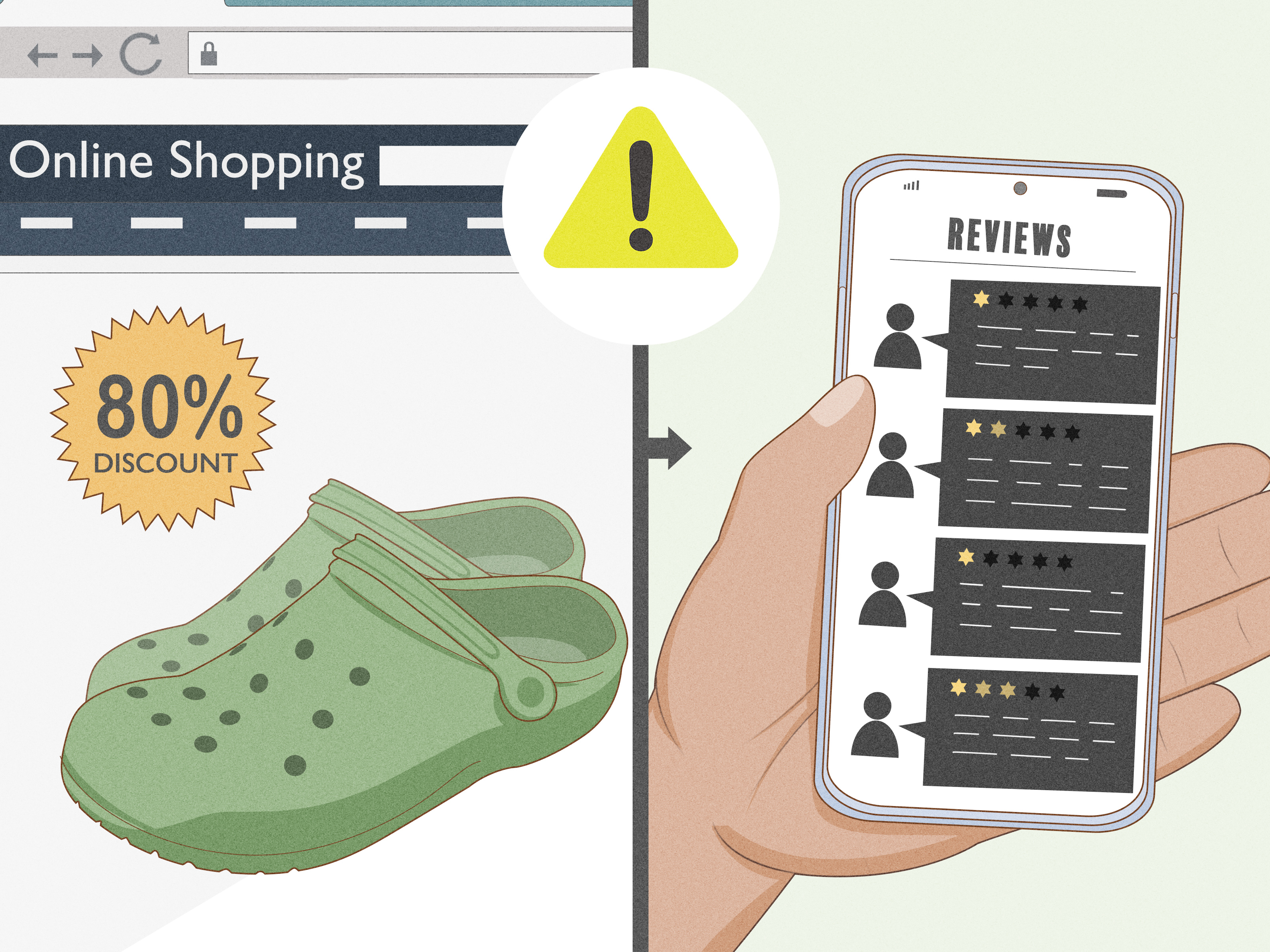
Let’s start with the loudest clue in the room. If a supposedly brand-new pair of Crocs is being sold at a wild discount that makes authorized retailers look like they’ve lost their minds, slow down. Bargains happen. Closeouts happen. Seasonal sales happen. But if a pair is listed for a fraction of the normal price, especially by an unknown seller, that is classic counterfeit territory. A deal should feel lucky, not legally questionable.
2. The seller is hard to verify
Real Crocs are sold through Crocs itself, Crocs stores, the official Crocs shop on Amazon, and established U.S. retailers. A suspicious seller often has no real contact information, no customer service record, no transparent return policy, and a website name that sounds like it was generated by a keyboard falling down stairs. If you cannot confirm who is selling the shoes, do not assume the shoes are authentic.
3. The pair does not match the official product photos for that exact style
This is one of the best tests. Search the exact model name and compare the pair in front of you to the official Crocs product page or a trusted retailer listing. Look at the shape, toe box, hole pattern, heel strap, printed graphics, rivets, and color name. If your pair claims to be a certain Classic Clog but the port layout, sole, or branding details do not match the official version, that is a serious red flag. Limited editions can vary a lot, so compare the exact SKU, not just “a similar Crocs shoe.”
4. The material feels too heavy, stiff, or cheap
Authentic Crocs are known for feeling lightweight and flexible. They should not feel like hard, dense plastic bricks. Counterfeit pairs often get the silhouette mostly right but fail the minute you pick them up. If the shoes are noticeably heavy, awkwardly rigid, or uncomfortable to flex by hand, the materials may not be authentic. Real Crocs are supposed to feel easy, cushioned, and simple to wear, not like you are strapping two mini canoes to your feet.
5. The ventilation ports look messy or uneven
Ventilation ports are not just decoration. On genuine Crocs, they are part of the shoe’s design and function. The holes should look properly molded, evenly placed for the style, and cleanly finished. Counterfeit pairs often have sloppy port shapes, odd spacing, blocked openings, rough edges, or asymmetry between the left and right shoe. If the holes look like they were punched during a stressful lunch break, be skeptical.
6. The heel strap feels wrong
On many popular Crocs styles, the heel strap is a big giveaway. It should pivot smoothly and help create a more secure fit. Fake pairs often have straps that are too stiff, too loose, too thin, or poorly attached. The rivets may look cheap, crooked, or unfinished. If the strap barely moves, squeaks aggressively, or looks like it will surrender after three walks to the mailbox, that is not a great sign.
7. The branding looks off
Misspelled text, messy embossing, odd fonts, crooked logos, inconsistent brand marks, and blurry printed details are all warning signs. Authentic Crocs branding is typically clean and intentional. Counterfeiters may get close, but “close” is not the assignment. Check the footbed text, strap buttons, hang tags, box labels, and any printed wording. If the branding looks fuzzy, uneven, or just a little cursed, trust your eyes.
8. The tags, labels, barcode, or packaging feel generic
Fake sellers often copy the shoe better than they copy the presentation. A suspicious pair may arrive in flimsy packaging, with a tag that lacks model details, with a barcode that does not line up with the style, or with labels that look generic rather than product-specific. Packaging is not the only test, and some authentic pairs may vary depending on the retailer, but badly mismatched tags and box information should make you pause.
9. The size information is strange
Crocs sizing has its own logic, and that matters. Many Crocs styles are sold in whole sizes only. So if a seller offers suspicious half-size labeling that does not match how Crocs normally sizes that model, it is worth investigating. Also compare the size marking on the shoe to the official size chart and to retailer listings. Counterfeit pairs often use inconsistent size stamps, mismatched men’s and women’s conversions, or labeling that simply does not line up with authentic standards.
10. Jibbitz holes do not behave like they should
One of the signature Crocs features is customization with Jibbitz charms. On real pairs, the holes are designed to accommodate that system. If the holes are oddly sized, stretched weirdly, too thick, too brittle, or unable to hold charms properly, the shoe may be fake. This is especially useful if you already own authentic Crocs or authentic Jibbitz and can compare the fit directly.
11. The comfort level is way off
Crocs built their reputation on comfort. Real pairs are generally light, cushioned, and easy for everyday wear. Counterfeit Crocs often feel flat underfoot, rub in strange places, pinch across the top, or feel clumsy while walking. Of course, fit varies by style and foot shape, but a pair that feels weirdly harsh, unstable, or much less comfortable than expected deserves a closer look.
12. The finishing is sloppy
Look closely at the edges, seams, port openings, sole, and strap attachments. Counterfeit shoes frequently show rough trimming, excess flashing from the mold, uneven cut lines, glue residue, surface defects, or inconsistent molding from one shoe to the other. Authentic Crocs are casual shoes, not museum artifacts, but they should still look well made. If your pair seems assembled with optimism instead of quality control, something is off.
13. The sole pattern or traction design does not match the real model
The outsole is one of the most overlooked authenticity checks. Different Crocs styles have different traction patterns, sole shapes, and design details. If the shoe claims to be a specific model but the underside does not match official images, that is a strong indicator of a fake. This matters even more with work styles, all-terrain styles, platforms, and collaborations, where sole construction can be a defining feature.
What Authentic Crocs Usually Have
When shoppers ask how to spot fake Crocs, they often focus only on the flaws. That helps, but it is just as useful to know what authentic pairs usually get right. In many standard styles, real Crocs are lightweight, flexible, easy to clean, quick to dry, breathable, and built with a practical heel strap design. The fit is typically roomy rather than cramped, and the overall feel is functional instead of flimsy.
For Classic Clogs and similar core styles, you should expect clean ventilation ports, a properly molded body, and a comfortable underfoot feel. You should also expect the style name, colorway, size information, and design details to match the official listing. If a shoe fails three or four of those tests at the same time, the odds are not in its favor.
How to Verify a Pair Before You Buy
The smartest time to spot counterfeit Crocs is before your money leaves your account. Start with the seller. Buy from Crocs directly, the official Crocs Amazon store, or established retailers with a real customer service presence. Then compare the exact model name and color to official images. Read the description carefully. Does it mention features that make sense for that style? Does the listing use blurry images, strange grammar, or copied text that does not match the photos? That is the online-shopping version of a suspicious mustache.
Also check whether the return policy is clear and realistic. Scammers love mystery, but not in a fun detective way. If you cannot tell where the shoes ship from, who is responsible for returns, or how to contact the seller, do not gamble. A slightly higher price from a trusted retailer is usually cheaper than buying fake shoes twice.
What to Do If You Think You Bought Fake Crocs
First, document everything. Save the receipt, take photos of the shoes, packaging, size markings, tags, and the original listing. Then contact the seller and request a return or refund. If the seller vanishes into the digital fog, contact your payment provider or marketplace platform. The more records you have, the easier it is to challenge the purchase.
It is also smart to stop wearing the pair if the material feels uncomfortable, unstable, or irritating. Counterfeit footwear is not just annoying; it can be poorly made and may not perform like the real thing. If the purchase came through a scammy ad or fake storefront, report it through the platform and the appropriate consumer channels. At minimum, you may help the next shopper avoid buying foam-shaped disappointment.
Real-World Experiences: What People Notice When a Pair Is Fake
In real life, most shoppers do not identify counterfeit Crocs by conducting a dramatic forensic investigation under a desk lamp. They notice it through use. The first clue is often emotional: excitement turns into confusion almost immediately. The shoes looked right online, the colors seemed close enough, and the price felt like a little victory. Then the box shows up, and the victory starts to smell like mystery plastic.
One of the most common experiences is disappointment the moment the shoes are handled. Authentic Crocs usually feel light and easy in the hand, but fake pairs often feel denser and less balanced. People describe them as bulky, stiff, or oddly hard under pressure. Instead of that familiar easygoing feel, the shoe can seem overbuilt in the wrong places and flimsy in the places that matter. It is a strange combination: too hard here, too weak there, and not particularly pleasant anywhere.
The second common experience is a fit problem that is hard to explain until you compare the shoes to a real pair. Counterfeit Crocs may look like they have the same shape, but the opening can feel tighter, the toe box can press down awkwardly, and the strap can sit at a weird angle. That leads to rubbing, pinching, heel slipping, or a generally unstable feeling while walking. Shoppers often think they simply ordered the wrong size, but the bigger issue is that the mold itself is off. The shoe may imitate the outline of a Crocs clog without matching the actual fit.
Comfort complaints are another huge clue. People expect Crocs to feel cushioned and easy for everyday wear. With fakes, the footbed may feel flat, slick, or strangely unforgiving. After a short walk, the shoes can cause hot spots or make the foot work harder to stay stable. Some buyers also notice that the outsole feels less reliable on smooth surfaces, which turns a casual shoe into a tiny trust exercise no one asked for.
Then there is the details problem. Buyers often report that the holes look slightly uneven, the logo seems odd, the printed graphics are not crisp, or the strap hardware looks cheap up close. None of those flaws may scream “fake” from six feet away. Together, though, they create that unmistakable sense that the pair is pretending. It is like meeting someone who says they are your cousin but cannot remember anyone’s name at Thanksgiving.
Another real-world lesson is that limited editions can confuse people in both directions. Some authentic collabs have special charms, unusual rivets, themed prints, and custom packaging. That can make a real pair look suspicious to buyers who are only familiar with basic Classic Clogs. The fix is simple: compare your pair to the exact official version, not to a random plain clog in a different color. Authenticity is about matching the real product, not matching your memory of one you saw at the pool three summers ago.
Ultimately, the experience most shoppers describe is this: counterfeit Crocs tend to fail not in one giant dramatic way, but in a dozen small annoying ways all at once. They feel wrong, fit wrong, wear wrong, and age badly. That is why the best defense is a calm, boring, practical one: buy from trusted sellers, compare the exact product details, and let common sense do its glorious, unsexy work.
Final Thoughts
If you want to know how to spot counterfeit Crocs, remember one simple rule: compare the whole story, not just the silhouette. The price, seller, material, fit, port layout, strap quality, branding, packaging, and outsole should all make sense together. Real Crocs are not perfect because no product is, but they are consistent. Fake pairs usually are not. They cut corners in ways that show up the moment you touch, wear, or inspect them closely.
So yes, trust your eyes. But also trust your hands, your feet, and that tiny inner voice that says, “Why does this premium comfort clog feel like a prop from a low-budget spaceship movie?” That voice has saved many a shopper from a bad purchase.