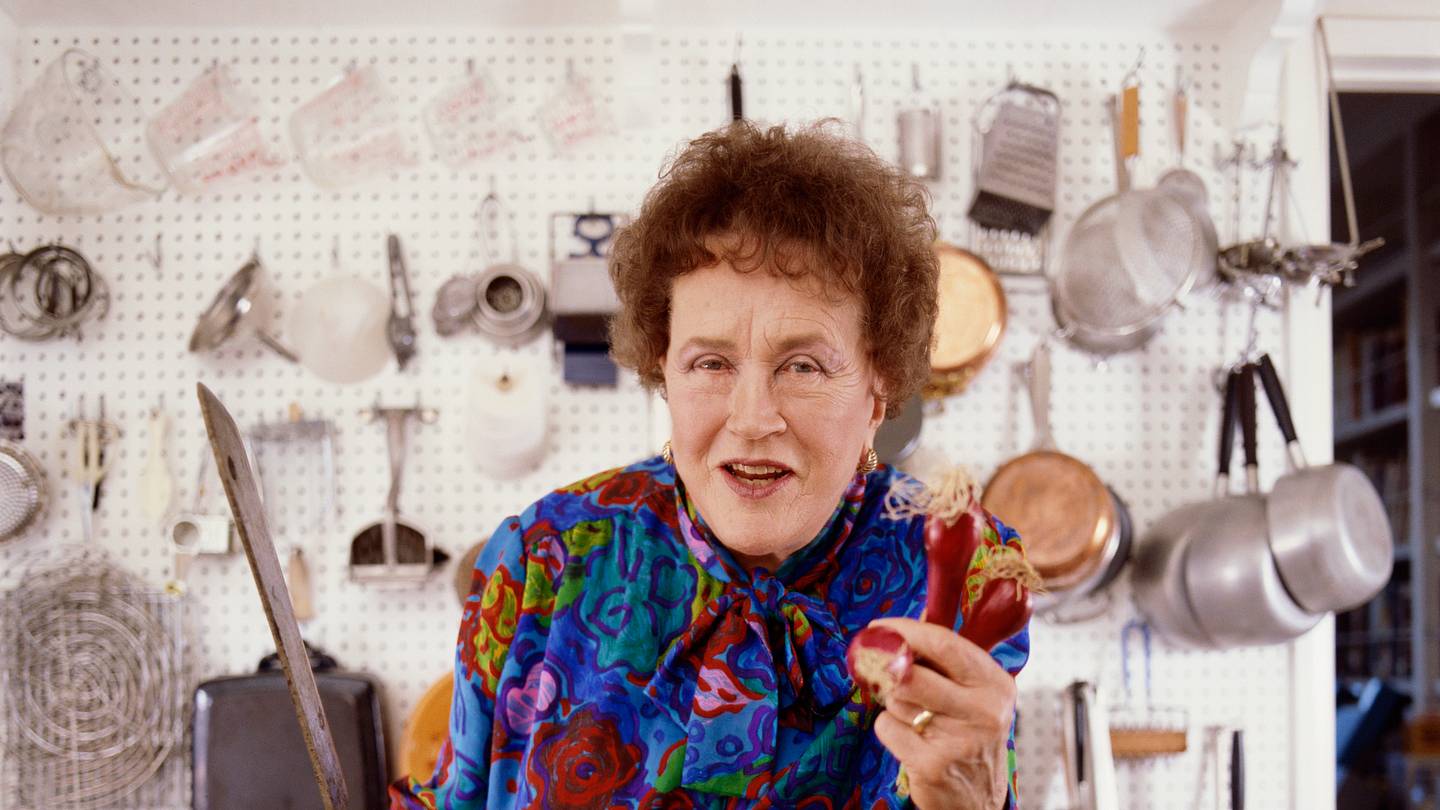

History loves a clean label. Julia Child? The cheerful queen of French cooking. Harriet Tubman? The fearless conductor of the Underground Railroad. Roald Dahl? The man who gave the world chocolate rivers, giant peaches, and children who were smarter than adults. But history also has a habit of hiding trapdoors under its most familiar names. Pull one open, and suddenly the cookbook author is working for wartime intelligence, the dancer is smuggling secrets in sheet music, and the playwright may be tangled in Elizabethan espionage.
Spying is not always tuxedos, laser watches, and dramatic rooftop chases. Sometimes it is listening carefully at a party. Sometimes it is organizing a network of informants. Sometimes it is turning celebrity access into a weapon. The following historical figures were not all “spies” in exactly the same way, but each had a documented or strongly argued connection to intelligence work, covert service, or wartime espionage. And yes, some of them make James Bond look like he needed a better resume.
1. Julia Child: Before the Kitchen, There Was the OSS
The future TV chef worked for America’s wartime intelligence agency
Long before Julia Child taught America how to stop fearing butter, she worked for the Office of Strategic Services, the World War II intelligence agency that later became the CIA. She was not parachuting behind enemy lines with a baguette under one arm, but her role was still part of the larger machinery of wartime intelligence.
Child joined the OSS after being rejected from more conventional military service, reportedly because she was too tall for some women’s branches. Instead of letting that minor detail end her patriotic ambitions, she found a place in intelligence work. She served in Washington, D.C., and later overseas in places such as Ceylon, now Sri Lanka, and China.
One of the most memorable parts of her OSS service involved the development of shark repellent. It sounds like something from a spy comedy, but the problem was serious. Sharks could accidentally trigger underwater explosives meant for German submarines. The OSS worked on a chemical repellent to protect both sailors and equipment, and Child helped with administrative and research support in that effort.
What makes Julia Child’s secret-service chapter so delightful is the contrast. The woman many remember for saying, essentially, “do not apologize for your cooking” once helped an intelligence agency solve practical wartime problems. Before she mastered sauces, she mastered classified paperwork. Before the whisk, there was the war file.
2. Josephine Baker: The Superstar Who Smuggled Secrets
Her celebrity became the perfect cover
Josephine Baker was already a legend before World War II: a St. Louis-born performer who became one of the most famous entertainers in France. Onstage, she was magnetic. Offstage, she was sharper than many people realized. When Nazi Germany threatened France, Baker did not simply lend her name to the Resistance. She became part of it.
Baker worked with French intelligence and used her fame as camouflage. She could attend diplomatic parties, move through elite circles, and travel with far less suspicion than an obvious agent. That access allowed her to gather information from officials and Axis sympathizers who underestimated her. History contains many examples of powerful people talking too much around celebrities. Baker turned that weakness into an intelligence asset.
Her methods were wonderfully theatrical and genuinely dangerous. She reportedly carried secret information written in invisible ink on sheet music. She also transported notes hidden in clothing and personal belongings. Because she was Josephine Baker, guards and officials were often too dazzled to search her with the seriousness they might have applied to a less glamorous traveler.
After the war, France honored Baker for her service, including major military and Resistance distinctions. Her espionage work adds another layer to her already extraordinary life. She was a performer, civil rights advocate, style icon, and wartime intelligence courier. Some people multitask by answering emails during lunch. Josephine Baker multitasked by singing beautifully while outwitting fascists.
3. Roald Dahl: The Children’s Author in a Wartime Spy Ring
Before “Charlie and the Chocolate Factory,” he gathered intelligence in Washington
Roald Dahl is best remembered for books like Matilda, The BFG, and Charlie and the Chocolate Factory. But before he became the patron saint of mischievous children and suspicious candy makers, Dahl was a Royal Air Force pilot and later a British intelligence figure in Washington, D.C.
After injuries limited his flying career, Dahl was posted to the British Embassy in the United States as an assistant air attaché. That title sounds diplomatic, and it was. But his social role also connected him with British Security Coordination, a covert British network operating in North America during World War II. The group gathered intelligence, monitored political attitudes, and worked to support British interests while the war reshaped global alliances.
Dahl had qualities useful to espionage: charm, confidence, good looks, and a talent for storytelling. He moved through parties and private conversations among influential Americans, then reported what he heard. His job was not always the cinematic version of spying. Often, it was the cocktail-party version: listen, flatter, remember, report.
There is something perfectly Dahl-like about this double life. The same imagination that later produced terrifying headmistresses and magical factories once helped him navigate the strange theater of wartime diplomacy. His intelligence work also reminds us that espionage often depends less on gadgets than on social reading. Dahl knew how to observe people. Later, he used that same skill to create some of the most unforgettable characters in children’s literature.
4. Harriet Tubman: The Union Spy Who Led a Military Raid
Her intelligence network helped strike the Confederacy
Harriet Tubman is famous for guiding enslaved people to freedom through the Underground Railroad, but that was not the end of her courage. During the Civil War, she served the Union Army as a nurse, scout, and spy. Her knowledge of terrain, secrecy, escape routes, and human networks made her exceptionally valuable.
Tubman helped gather intelligence behind Confederate lines. She worked with formerly enslaved people and local informants who knew roads, rivers, supply points, troop movements, and plantation layouts. This was not abstract map-room intelligence. It was ground-level, life-or-death knowledge collected under enormous risk.
Her most famous military achievement came in 1863 with the Combahee River Raid in South Carolina. Tubman helped plan and guide the operation, which destroyed Confederate resources and freed hundreds of enslaved people. She is widely recognized as the first woman in U.S. history to lead a major military expedition.
Tubman’s spy work challenges the narrow way people often define intelligence service. She did not need a polished office, a secret handshake, or a fake mustache. She had courage, local knowledge, trusted contacts, and the ability to move through danger with astonishing discipline. Her intelligence work was practical, strategic, and deeply tied to liberation. If history gave out medals for nerve alone, Tubman would need a second coat just to pin them all on.
5. Moe Berg: The Baseball Catcher Who Watched the Atomic Race
The major leaguer became an OSS intelligence officer
Moe Berg had one of the strangest resumes in American history. He was a Major League Baseball catcher, a lawyer, a linguist, and eventually an intelligence officer for the OSS. In other words, he was what happens when a trivia night champion wanders into a spy agency and someone says, “Actually, we could use you.”
Berg played for teams including the Chicago White Sox and Boston Red Sox. He was not the greatest hitter in baseball, but he was famously intelligent and spoke several languages. During World War II, those abilities became more important than his batting average. The OSS recruited him, and he became involved in intelligence missions connected to Europe and the race to understand Nazi scientific progress.
One of Berg’s most famous assignments took him to Switzerland, where he attended a lecture by German physicist Werner Heisenberg. Allied intelligence wanted to know how close Nazi Germany was to building an atomic bomb. Berg’s mission was to listen, assess, and report. Some accounts of the operation portray it as potentially deadly if he concluded the threat was immediate, though the essential point is clear: a former baseball player was sent to help evaluate one of the most frightening scientific questions of the war.
Berg’s life proves that espionage agencies often look for unusual combinations of skills. Athletic fame gave him a public identity. Education gave him analytical range. Language ability helped him move across borders and conversations. He may not have been a Hall of Fame catcher, but in the history of unlikely spies, Moe Berg is absolutely an all-star.
6. Graham Greene: The Novelist Inside MI6
His intelligence career shaped his fiction
Graham Greene wrote some of the 20th century’s most morally complicated novels, including The Quiet American, The Power and the Glory, and Our Man in Havana. His fiction is full of betrayal, divided loyalties, compromised ideals, and people doing questionable things in humid climates. That atmosphere did not come from nowhere.
During World War II, Greene worked for Britain’s Secret Intelligence Service, better known as MI6. He served in Sierra Leone and later worked in London. One of the most remarkable details of his intelligence career is that he served under Kim Philby, who was later exposed as one of the most damaging Soviet double agents in British history.
Greene’s spy service was not a quirky footnote. It influenced the way he understood politics, loyalty, secrecy, and moral ambiguity. Unlike the glamorous spy fantasy, Greene’s version of espionage was full of boredom, suspicion, paperwork, and ethical fog. His novels often feel as if someone opened a file marked “confidential,” found a human soul inside, and quietly closed it again.
What makes Greene fascinating is that he did not simply “use” espionage as subject matter. He understood its emotional architecture. Spying, in his world, was not just about secrets. It was about what secrets do to people. His intelligence career gave him a front-row seat to the uneasy theater of empire, ideology, and betrayal. No wonder his fictional spies rarely look like superheroes. They look like tired people with excellent reasons to distrust everyone.
7. Christopher Marlowe: The Playwright With a Possible Secret Career
The evidence is debated, but the spy theory is serious
Christopher Marlowe, the brilliant Elizabethan playwright behind Doctor Faustus and Tamburlaine, lived fast, wrote boldly, and died violently at age 29. His short life has attracted centuries of speculation, including one persistent theory: Marlowe may have worked as an intelligence agent for the government of Queen Elizabeth I.
The case rests partly on his mysterious absences from Cambridge and the intervention of the Privy Council when university officials hesitated over awarding him his degree. The council defended him by referring to his service to the queen, without spelling out what that service was. In Elizabethan England, where Catholic plots, foreign threats, and religious surveillance were serious state concerns, “service” could mean more than academic excellence.
Many historians argue that Marlowe may have moved in circles connected to Sir Francis Walsingham’s intelligence network. Walsingham’s spy system monitored Catholic exiles, foreign powers, and suspected conspirators. A young, educated, multilingual man with access to universities and literary circles could have been useful as a messenger, observer, or informant.
It is important to be cautious: Marlowe’s spy career is not documented with the same clarity as Josephine Baker’s or Moe Berg’s. But the theory is not random internet confetti. It is rooted in historical context, official intervention, and the dangerous political environment of the 1580s and 1590s. Marlowe’s life already reads like a thriller. Add possible espionage, and suddenly Doctor Faustus feels less like a play and more like a résumé written in code.
Why So Many Famous People Made Good Spies
At first glance, celebrities, writers, chefs, athletes, and abolitionists seem like odd candidates for spy work. But intelligence agencies often value exactly what unusual people bring: access, memory, language skills, courage, social mobility, and the ability to be underestimated.
A famous entertainer can cross borders without raising alarms. A writer can observe personality and motive. An athlete can travel internationally under a harmless public identity. A resistance leader can build networks of trust. A government clerk can notice patterns in paperwork that others miss. Espionage is not one skill; it is a toolbox. These historical figures carried very different tools.
Their stories also show that spying is rarely as clean as pop culture suggests. Some operations were heroic. Some were morally complicated. Some remain partly hidden by missing records or deliberate secrecy. The common thread is that each figure lived with a public identity and a quieter second role shaped by conflict, danger, or national survival.
Experiences and Takeaways From These Secret Lives
One of the most interesting experiences in studying secret lives like these is realizing how often history hides in plain sight. We tend to imagine spies as people who look suspicious, whisper in alleys, and own at least three trench coats. In reality, some of the most effective intelligence workers looked completely ordinaryor even too famous to suspect. Josephine Baker could walk into a room and make everyone look at her, which meant almost nobody noticed what she was carrying out. Roald Dahl could appear to be another charming embassy guest, while quietly absorbing the mood of Washington society. Julia Child could seem like a cheerful administrator, while contributing to the technical problem-solving culture of the OSS.
The lesson for readers is not that everyone around us is secretly a spy, although that would make grocery shopping more exciting. The bigger lesson is that people are rarely limited to one identity. A person can be an artist and a patriot, a cook and an intelligence worker, a writer and a government operative, a freedom fighter and a military strategist. History becomes richer when we stop flattening people into one job title.
These stories also reveal the power of soft skills. Charm, listening, patience, memory, cultural fluency, and trust-building can matter as much as weapons or formal rank. Harriet Tubman’s intelligence network depended on credibility and courage. Moe Berg’s mission depended on education, language, and the ability to understand scientific stakes. Graham Greene’s fiction shows that the spy world is built not only on secrets, but on the emotional cost of keeping them.
For writers, students, and curious readers, these figures offer a practical reminder: the best stories often begin with the phrase “Wait, they did what?” That surprise is valuable. It pushes us to look beyond the famous portrait and ask better questions. What was happening politically? What risks did this person take? Who benefited from their silence? Who later shaped the public memory of their actions?
In everyday life, we may not be decoding invisible ink or attending diplomatic dinners with suspiciously talkative officials. But we do navigate different roles: professional, family member, friend, citizen, observer. The spy stories of famous historical figures encourage alertness in the best sense. They remind us to listen closely, read context, notice what is unsaid, and appreciate the hidden labor behind public achievements. Sometimes the person holding the microphone, the baseball glove, the manuscript, or the cooking spoon is also holding a secret that changes history.
Conclusion
The phrase “historical spies” usually brings to mind shadowy professionals trained for covert work. Yet the past is full of unlikely intelligence figures who entered secret service through talent, circumstance, patriotism, or sheer nerve. Julia Child helped the OSS before she became America’s favorite cooking teacher. Josephine Baker transformed stardom into Resistance work. Roald Dahl gathered intelligence before writing children’s classics. Harriet Tubman used courage and networks to support Union military strategy. Moe Berg brought brains, languages, and baseball fame into the OSS. Graham Greene turned MI6 experience into morally complex fiction. Christopher Marlowe remains a debated but compelling case of literary genius brushing against Elizabethan espionage.
Together, these stories make one thing clear: history is much stranger, smarter, and more entertaining than the simplified version. Sometimes the spy is not the person lurking in the shadows. Sometimes the spy is the one standing under the spotlight.
Note: This article is based on documented historical records, declassified intelligence materials, museum summaries, and established biographical research. Where evidence is debated, especially in the case of Christopher Marlowe, the wording reflects that uncertainty.