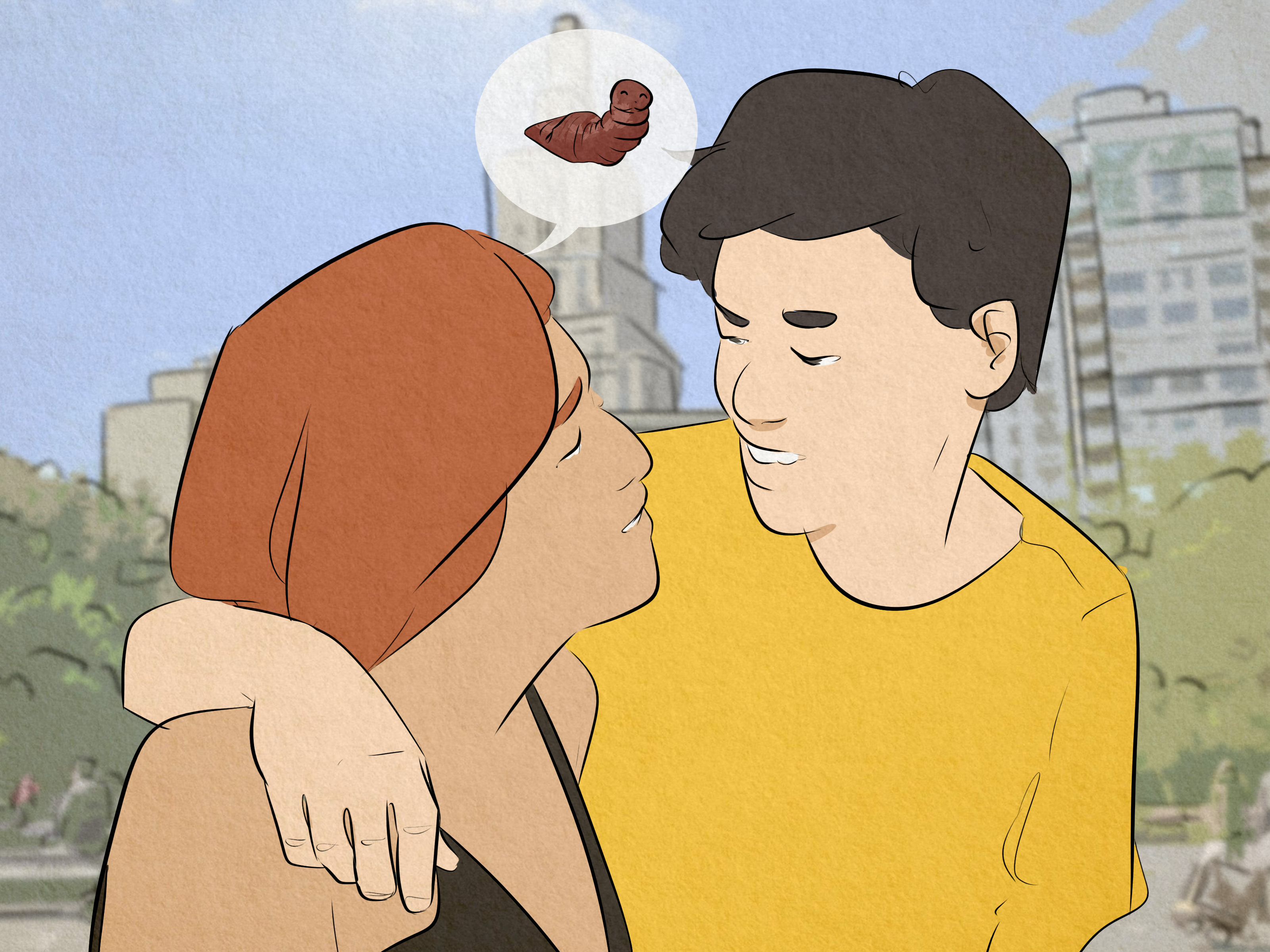

Every relationship eventually faces a serious test. Meeting the parents. Surviving a road trip. Choosing what to watch when both people insist they “don’t care.” And, of course, answering the most important romantic question of the internet age: Would you still love me if I was a worm?
At first glance, the question sounds like something invented during a sleep-deprived conversation at 2 a.m. It is absurd, biologically inconvenient, and wildly unfair to the person expected to answer without hesitation. Yet the “Would you still love me if I was a worm?” meme has remained popular because it turns a genuine emotional concern into a ridiculous hypothetical.
The worm is not really the point. Beneath the dirt, tiny body, and complete lack of conversational skills is a much more human question: Would you love me if I changed, became less attractive, needed care, or could no longer offer the things you currently value?
What Does “Would You Still Love Me if I Was a Worm?” Mean?
The phrase is an intentionally silly relationship question in which one person asks a romantic partner whether their love would survive an impossible transformation into a worm. The expected answer is usually an enthusiastic yes, ideally followed by a detailed plan involving a comfortable terrarium, premium soil, tiny furniture, and protection from suspiciously hungry birds.
Although people often ask it as a joke, the question can work as a playful request for reassurance. The person asking may be wondering whether their partner’s love depends on appearance, usefulness, personality, or other qualities that could theoretically change. Turning that fear into a worm scenario makes the conversation safer and funnier than directly announcing, “Please confirm that your affection is not based entirely on my current market value.”
That emotional subtext explains why a technically accurate answer such as “No, because worms do not have human consciousness” often performs poorly. It addresses the zoology while missing the vulnerability.
Where Did the Worm Meme Come From?
The Original Tweets Appeared in 2019
The earliest widely documented version of the meme is connected to Twitter user @shutyourhell, who posted variations of the worm question in June 2019. One version asked whether people would still love the poster if they were a worm. Another extended the joke with exaggerated insecurity, suggesting that everyone would probably stop liking them and then dramatically withdrawing the question.
That second style helped establish the meme’s personality. It was not merely a bizarre hypothetical; it was a bizarre hypothetical delivered with the emotional energy of someone who had already decided the answer was devastating.
It Became a Relationship Question in 2020
During 2020, social media posts increasingly framed the phrase as something a girlfriend might ask a boyfriend. One frequently documented tweet joked about wanting a boyfriend specifically to ask him foolish questions such as whether he would continue loving her as a worm.
This framing gave the meme a repeatable scene: one partner asks for unconditional devotion, while the other partner becomes trapped in a philosophical debate they did not know was scheduled. The comedy comes from the mismatch. One person wants romance; the other wants clarification about whether the transformation happened before or after they met.
TikTok Turned the Question Into a Performance
By 2021, the worm question had found an ideal home on TikTok. Couples could record the conversation, capture a surprised reaction, and allow millions of strangers to grade the answer. Some videos featured sincere reassurance. Others became elaborate sketches about feeding, housing, marrying, or accidentally losing a worm-shaped partner.
The format was perfect for short-form video because viewers understood the conflict immediately. No character development was required. Someone asked the worm question, someone hesitated for half a second, and the comment section prepared divorce papers.
Heidi Klum Gave the Meme Fresh Soil
The phrase received another burst of attention around Halloween 2022 when Heidi Klum appeared in an astonishingly elaborate worm costume. Online users quickly connected the celebrity transformation to the familiar relationship question. At last, the internet had a visual demonstration of what loving someone as a worm might actually involveand it involved far more prosthetic makeup than anyone had budgeted for.
Why a Worm?
The meme could have used almost any animal, but the worm is unusually effective. A dog is lovable. A cat would probably become more powerful in the relationship. A dolphin is intelligent and charming. Even a raccoon has little hands and an entrepreneurial spirit.
A worm, however, represents an extreme loss of conventional attractiveness, independence, and social usefulness. It has no facial expressions, cannot participate in brunch, and is vulnerable to both footwear and early birds. The transformation therefore creates an exaggerated test of supposedly unconditional love.
The worm also adds practical absurdity. Where would the couple live? Would the worm remember the relationship? Could it communicate? Would taking it fishing count as a date or an attempted murder? Every logical follow-up question makes the original scenario funnier.
Most importantly, “worm” is short, visually memorable, and easy to substitute into images, videos, comics, costumes, merchandise, and captions. It is an unglamorous little creature with enormous comedic productivity.
Why the Meme Became So Popular
It Is a Perfect Fill-in-the-Blank Template
The phrase behaves like a linguistic snowclone: a recognizable sentence structure that people can customize while preserving the original joke. Users have asked whether their partners would still love them if they were a cockroach, tank, chair, houseplant, bowl of soup, or inconvenient household appliance.
Once audiences know the worm version, almost any substitution works. The humor comes from choosing an object so strange that the partner cannot answer without first reconsidering the fundamental laws of reality.
It Creates Instant, Low-Stakes Conflict
Online comedy thrives on disagreements that feel dramatic without requiring actual danger. The worm question offers exactly that. There is a “correct” emotional answer, but the scenario invites logical objections. The asker may interpret hesitation as rejection, while the answerer is still trying to establish whether the worm can speak.
That tension produces reactions, duets, stitches, comments, response memes, and debates. It also gives viewers permission to choose sides based on a conversation lasting approximately nine seconds.
It Mixes Irony With Sincerity
The best internet jokes can be laughed at and meant at the same time. Someone asking the worm question may know it is ridiculous while still enjoying the reassurance. The answer can also be both comedic and affectionate: “Yes, and I would carry you around in a matchbox with air holes.”
This combination keeps the meme from becoming merely random. There is a recognizable emotional need beneath the nonsense, which makes the joke relatable even to people who have never seriously considered dating an invertebrate.
The Relationship Psychology Behind the Worm Question
It Can Be a Bid for Connection
Relationship researchers use the term “bid for connection” to describe an attempt to receive attention, affection, interest, or emotional engagement from another person. A bid can be serious, but it can also appear as a joke, observation, question, or strange invitation to imagine life with a sentient earthworm.
Responding warmly does not require treating the scenario as scientifically possible. It means recognizing what the person may be requesting beneath the words. A playful answer such as “Obviously, and I would grow the finest tomatoes with your permission” turns toward the emotional bid while joining the humor.
It May Reflect a Desire for Reassurance
Wanting occasional reassurance from a partner is normal. People commonly want confirmation that they are valued, desired, and emotionally safe. The worm meme gives that need a protective layer of comedy.
For someone who fears abandonment or rejection, however, hypothetical tests may become more frequent or emotionally loaded. Anxious attachment is often associated with a strong need for validation and reassurance. Research on excessive reassurance seeking also suggests that repeated attempts to eliminate uncertainty can eventually create strain rather than lasting security.
That does not mean everyone who mentions a worm has an attachment problem. Sometimes a meme is simply a meme. The relevant question is whether both partners are laughing or whether one person feels forced to pass an endless series of hidden loyalty exams.
Humor Can Make Vulnerability Easier
Directly asking, “Would you stay if illness, age, disability, or major life changes made our relationship harder?” can feel frightening. The worm question reduces the emotional temperature. It lets someone explore unconditional love without immediately introducing the most painful real-world possibilities.
Humor can support closeness when both people feel included in the joke. The trouble begins when humor becomes a weapon, a public test, or a reason to mock genuine insecurity. Laughing together strengthens the moment; laughing at the vulnerable person usually does not.
What Is the Correct Answer?
The safest answer is yes. Do not hesitate. Do not open a calculator. Do not request a detailed explanation of the magical event. You can investigate worm logistics after emotional security has been restored.
A strong response combines reassurance with imagination:
- “Yes. I would build you a luxury terrarium.”
- “Of course. I would carry you in my pocket, assuming pockets are medically safe for worms.”
- “Yes, but we would need to discuss boundaries around compost.”
- “I would love you, water your soil, and fight every bird in this city.”
The response does not need to be poetic. A simple “Yes, obviously” may be perfect when delivered warmly. What matters is joining the emotional spirit of the question instead of treating your partner like an opponent in a high-school debate tournament.
Literal thinkers can also be honest without sounding dismissive: “My brain wants to analyze the biology, but I understand what you are asking. Yes, I would still love you if you changed completely.” That answer preserves logic, affection, and perhaps the relationship.
Is Asking the Worm Question a Red Flag?
Usually, no. A single absurd hypothetical is not a reliable diagnostic tool for either partner. It may be flirting, joking, trend participation, or a lighthearted request for affection.
Context matters. It becomes less healthy when someone repeatedly creates impossible tests, rejects every reassuring answer, records a partner without consent, or uses social media reactions as a substitute for private communication. A relationship cannot become secure if every answer leads immediately to a harder question.
Similarly, refusing all emotional playfulness can create distance. A partner does not need to believe in magical worm transformations to recognize an invitation to connect. Healthy communication allows room for both reassurance and boundaries: “I enjoy joking with you, but I do not want every hypothetical answer treated as proof of my commitment.”
The meme is funny because the stakes are imaginary. When the stakes become real, clear language works better than entomological interrogation.
“If I Was a Worm” or “If I Were a Worm”?
Traditional formal grammar favors “If I were a worm” because the sentence describes a hypothetical situation contrary to reality. This use of “were” is sometimes called the irrealis or subjunctive form.
However, the established meme is overwhelmingly recognized as “Would you still love me if I was a worm?” Informal American English commonly uses “was” in hypothetical statements, and correcting the grammar while someone is requesting unconditional love is a courageous strategy with limited survival value.
Both versions will be understood. One sounds more traditionally formal; the other sounds like the meme everyone knows.
Experiences With the Worm Question: Five Ways It Plays Out
Note: The following are realistic composite scenarios based on common online reactions and relationship dynamics. They are not presented as quotations from specific couples.
1. The Partner Who Takes Everything Literally
One person asks the question while cuddling on the couch. The other immediately begins an investigation. Were they transformed yesterday or born as a worm? Do they retain human memories? Can they communicate through Morse code? Is the relationship legally recognized?
The asker becomes increasingly annoyed because every follow-up sounds like an attempt to avoid saying yes. Meanwhile, the literal partner believes they are demonstrating commitment by conducting responsible worm-related due diligence. The argument ends when someone finally explains that the desired answer was emotional, not agricultural.
The lesson is not that literal thinking is wrong. It is that answering the feeling before analyzing the scenario usually produces better results.
2. The Partner Who Commits to the Bit
Another couple treats the question as collaborative storytelling. The answer is an immediate yes, followed by plans for a climate-controlled habitat, miniature anniversary celebrations, and a tiny framed photograph from their human years.
The original question lasts ten seconds. The resulting conversation continues for half an hour. By the end, the couple has established a complete worm-care schedule and argued about whether the transformed partner would prefer organic soil.
This response works because it transforms reassurance into shared play. The answerer does not merely pass the test; they help create the joke.
3. The Question That Reveals a Real Fear
Sometimes the laughter fades and the asker admits what prompted the meme. Perhaps they feel insecure about aging, body changes, unemployment, illness, or a period when they cannot contribute as much to the relationship.
The worm question then becomes an opening rather than the entire conversation. A caring partner can say, “I know you are joking, but are you worried that I would leave if something changed?” That gentle follow-up addresses the real concern without shaming the person for introducing it through humor.
The healthiest outcome is not an endless promise about worms. It is a clearer conversation about commitment, fear, and what support would look like in real life.
4. The Answer That Goes Viral for the Wrong Reason
A couple records the exchange. The answerer pauses, laughs, or says no before realizing the expected response. Online viewers treat the clip as a complete psychological evaluation. Some declare the relationship doomed. Others defend the confused partner and demand a full explanation of the transformation rules.
The couple may have a perfectly healthy relationship outside the video, but social media rewards certainty, outrage, and dramatic interpretation. A moment designed as entertainment can quickly become a public trial conducted by strangers with usernames such as WormWife92.
The experience is a useful reminder that viral relationship tests are edited performances, not complete evidence about intimacy.
5. The Long-Term Inside Joke
For many couples, the best version of the meme appears later. Months after the original question, one partner brings home a gummy worm, worm-shaped plush toy, or card featuring an earthworm and says, “Still yes.”
The strange internet phrase becomes part of the couple’s private language. It may reappear during stressful moments as a compact reminder: I know you can change. I know life can become difficult. I am still here.
That is why the meme has survived beyond its original trend cycle. The worm is ridiculous, but the promise underneath it is not. People want to believe they are loved as complete, changing, occasionally insecure human beingseven when the internet temporarily imagines them without arms, legs, or access to indoor plumbing.