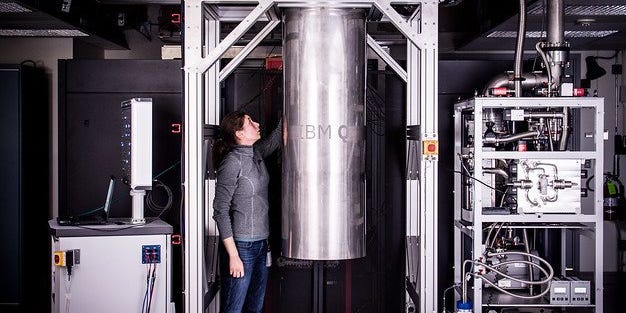

If a regular laptop is the dependable sedan of computing, an IBM quantum computer is more like a race car built for a track that is still under construction. It is fast in unusual ways, expensive in unusual ways, and fussy enough to make a perfectionist sweat. But it is also one of the clearest windows into what the next era of computing may look like.
IBM has spent years turning quantum computing from a lab curiosity into something researchers, developers, universities, and enterprise teams can actually touch through the cloud. That does not mean an IBM quantum computer is ready to replace your classical server, your gaming rig, or the spreadsheet that has somehow survived six managers and three rebrands. It means something more interesting: IBM is building quantum systems that can run increasingly complex experiments, while also giving the public a software stack and access model that make quantum computing less mysterious and more practical.
In this guide, we will unpack what an IBM quantum computer is, how it works, why IBM is one of the biggest names in the field, what these systems can do right now, and where the hype needs a polite reality check. Spoiler alert: the future is promising, but it still needs a lot of cryogenics.
What Is an IBM Quantum Computer?
An IBM quantum computer is a computing system built around qubits rather than classical bits. A classical bit is straightforward and emotionally stable: it is either 0 or 1. A qubit, on the other hand, can exist in a combination of states until it is measured. That quantum behavior makes it possible to represent and process certain problems in ways that classical machines cannot efficiently match.
IBM’s quantum hardware primarily relies on superconducting qubits. These are tiny fabricated circuits that behave according to quantum mechanics when they are cooled to extremely low temperatures. We are talking refrigerator levels so intense they make your freezer look like a tropical resort. The hardware sits inside elaborate cryogenic systems designed to reduce thermal noise, vibration, and electromagnetic interference.
The goal is not to make a computer that is “faster at everything.” That is one of the biggest misconceptions around quantum computing. An IBM quantum computer is designed for specific categories of problems, especially those related to quantum systems, optimization methods, and advanced mathematical structures. In the long run, quantum computers may help with chemistry, materials science, parts of machine learning, and cryptographically relevant problems. In the short run, they are best viewed as research instruments and early-stage computational tools.
How an IBM Quantum Computer Works
Qubits, Superposition, and Entanglement
The power of quantum computing comes from a few ideas that sound like science fiction but are very real physics. First is superposition, which lets qubits encode richer information than classical bits. Second is entanglement, which links qubits so the state of one is correlated with another in ways classical systems do not naturally replicate. These properties allow quantum circuits to explore some computational spaces more efficiently than classical methods.
That said, qubits are delicate. They lose information through decoherence, suffer from control errors, and can be disturbed by the very environment around them. In a classical machine, you can usually bully the hardware into behaving with redundancy and mature error correction. In quantum computing, that job is much harder. That is why error rates, qubit connectivity, calibration quality, and circuit depth matter so much.
Gates, Circuits, and Measurement
Instead of running traditional software instructions, an IBM quantum computer executes quantum circuits. Developers build circuits from gates that manipulate qubits, then measure the output to extract results. Those results are often probabilistic rather than deterministic. In plain English, you typically run the same circuit many times and analyze the distribution of outcomes, because quantum computing loves nuance and hates a tidy one-shot answer.
IBM supports this workflow through Qiskit, its open-source quantum software ecosystem, and through the IBM Quantum Platform, where users can access simulators and real hardware. IBM’s Qiskit Runtime also includes primitives such as Sampler and Estimator, which simplify common tasks and help users take advantage of hardware-aware execution, sessions, and error mitigation.
Why IBM Quantum Computers Matter
IBM Built More Than a Chip
Lots of companies can announce a quantum breakthrough. Far fewer can build an ecosystem around it. One reason IBM quantum computers get so much attention is that IBM has not focused only on hardware. It has also built software tools, cloud access, documentation, educational resources, and enterprise-facing services that help turn quantum computing into something developers can learn and use.
That matters because quantum computing is not just a hardware race. It is a full-stack challenge. You need processors, control systems, compilers, runtime layers, mitigation techniques, developer tools, and workflows that combine quantum and classical computing. IBM has pushed hard on all of those fronts, which is why the phrase IBM Quantum Computer often shows up in discussions about both research progress and practical access.
Heron, System Two, and the Shift to Modularity
IBM’s recent hardware direction reflects an important industry lesson: making one giant chip is not the same thing as building a scalable quantum computer. IBM’s Heron family of processors is central to its current strategy. These chips use tunable couplers and are designed to improve performance and reduce unwanted interactions between qubits. IBM has also made System Two a major part of its story, framing it as a modular architecture for larger-scale quantum computation.
This modular approach matters because quantum computing will likely need interconnected subsystems rather than one absurdly oversized monolithic chip. IBM has also discussed coupler technologies and future systems that connect chips over greater distances within the same quantum infrastructure. In other words, IBM is trying to solve not just the “How many qubits can we print?” question, but also the more painful engineering question: “How do we make them work together without everything falling apart?”
Performance Is About More Than Qubit Count
For years, the public conversation around quantum computing focused almost entirely on qubit counts. More qubits sounded better, and marketing departments everywhere nodded enthusiastically. But IBM and other researchers now emphasize that qubit count alone is not enough. A useful IBM quantum computer also needs strong gate performance, good coherence, fast execution, and the ability to run deeper circuits accurately.
That is why IBM has highlighted metrics such as Error Per Layered Gate (EPLG) and CLOPS, which help describe quality and speed on larger systems. The basic idea is simple: a quantum machine is only impressive if it can do meaningful work before noise wrecks the party.
What Can an IBM Quantum Computer Do Today?
Quantum Simulation and Scientific Research
The most convincing near-term use case for an IBM quantum computer is simulation of quantum systems. Nature does not run on classical bits, so classical computers often struggle when modeling molecules, materials, and strongly interacting physical systems. Quantum computers, in principle, are a more natural fit for these problems.
This is where IBM’s work becomes especially interesting. Public research efforts tied to IBM quantum systems have explored topics such as materials behavior, particle interactions, and biomedical discovery. Cleveland Clinic has used IBM quantum infrastructure as part of its healthcare research push, including efforts related to protein structure methods and broader life-science discovery. Researchers at Berkeley Lab have also used IBM-related quantum approaches in particle physics simulations. MIT reporting has highlighted how superconducting quantum systems can be used as simulators for materials-related questions.
Hybrid Quantum-Classical Workflows
Another realistic use case is the hybrid workflow, where a classical computer handles parts of a task while an IBM quantum computer tackles the quantum-specific portions. This is a more grounded vision than the dramatic movie-trailer version where one quantum machine arrives and instantly solves science.
Hybrid workflows are useful because today’s quantum devices are still noisy and limited. Classical machines remain essential for orchestration, preprocessing, optimization loops, and post-processing. IBM’s software stack is designed around this reality, which is one reason Qiskit Runtime and its primitives matter so much. They help researchers package repeated workloads more efficiently and reduce some of the friction between theory and hardware.
Education, Training, and Developer Access
One of the most underrated achievements of IBM quantum computing is how much it has helped democratize learning. Instead of being locked away as a mystery machine available only to a tiny circle of physicists, IBM quantum computers can be explored through cloud tools, tutorials, documentation, and training resources. That has made IBM a gateway brand for students, researchers, and curious developers who want hands-on exposure to quantum programming.
For many people, the first practical value of an IBM quantum computer is not solving an industrial-scale problem. It is learning how quantum logic, transpilation, hardware constraints, and error mitigation actually work. In a field where hype can get louder than signal, that educational value is a big deal.
What an IBM Quantum Computer Cannot Do Yet
It Is Not a Replacement for Classical Computing
Let us put this gently but clearly: your laptop is safe. An IBM quantum computer is not here to replace conventional computing for web browsing, databases, office apps, gaming, or general enterprise workloads. Classical computers remain dramatically better for most tasks people actually do every day.
Quantum computers excel only when a problem has the right mathematical structure and when the hardware quality is high enough to run the necessary circuits. Even then, proving a real-world advantage is difficult. Some workloads that look promising on paper still end up being handled more efficiently by classical algorithms, especially when those classical methods keep improving.
Noise Is Still the Main Villain
The biggest obstacle to a truly powerful IBM quantum computer is still noise. Qubits are fragile. Gates introduce errors. Measurements are imperfect. Devices drift over time and need recalibration. That is why so much of the field revolves around quantum error correction, error suppression, and error mitigation.
IBM’s current systems use mitigation and suppression techniques to improve result quality, but mitigation is not the same thing as full fault tolerance. It is more like carefully cleaning a blurry camera lens rather than replacing the shaky camera with a perfectly stable one. Helpful? Absolutely. Final answer? Not even close.
Fault-Tolerant Quantum Computing Is the Real Prize
IBM has published a roadmap toward fault-tolerant quantum computing, including plans for future systems built around logical qubits and large-scale error correction. That roadmap is ambitious and technically serious, but it is still a roadmap. The gap between today’s noisy hardware and tomorrow’s fully fault-tolerant machine remains enormous.
So when you see headlines about an IBM quantum computer changing everything, read the fine print. The smarter interpretation is that IBM is building a path toward useful and eventually fault-tolerant systems, not that the finish line has already been crossed.
Real-World Examples That Make the Topic Less Abstract
Here are a few examples that help explain why IBM quantum computers matter beyond flashy headlines:
- Healthcare research: Cleveland Clinic’s partnership with IBM put a quantum system into a healthcare-focused research environment, showing how quantum computing may support biomedical discovery over time.
- Chemistry and materials: Quantum simulation remains one of the most plausible domains for near-term scientific value, because molecules and materials are fundamentally quantum systems.
- Particle and high-energy physics: Research tied to IBM-related quantum methods has explored simulations relevant to particle processes that are difficult for standard computation.
- Developer experimentation: Through Qiskit and cloud access, students and engineers can test circuits on real quantum hardware instead of merely admiring it from a respectful distance.
These examples do not mean every experiment is commercially transformative. They do mean the IBM quantum computer ecosystem is generating real technical work, not just PowerPoint slides with glowing blue cubes.
The Experience of Using an IBM Quantum Computer
If you have never used an IBM quantum computer before, the experience is both thrilling and humbling. Thrilling because you are literally sending code to hardware that lives inside a cryogenic system colder than outer space. Humbling because the machine will immediately remind you that quantum mechanics does not care about your ego, your deadline, or your beautiful variable names.
Most users start with a simulator or a simple cloud-based workflow through Qiskit. At first, the process feels surprisingly familiar. You write code, define qubits, build a circuit, choose a backend, and submit a job. Then the quantum-specific reality kicks in. Suddenly you are thinking about coupling maps, transpilation, shot counts, basis gates, noise models, and whether your elegant circuit has quietly turned into a spaghetti bowl after compilation. Welcome to the club.
One of the most memorable parts of working with an IBM quantum computer is realizing that hardware matters in a very visible way. In classical development, people often pretend hardware is just a distant box in a data center. In quantum development, hardware is the whole drama. The topology of the chip affects your circuit. Calibration data affects your results. Queue times affect your patience. If the backend is busy, you wait. If your circuit is too deep, noise may chew it into statistical confetti.
That sounds frustrating, and sometimes it is, but it is also educational in the best possible way. You quickly learn that quantum computing is not magic. It is engineering plus physics plus software plus a little emotional resilience. The first time you submit a circuit to real hardware and compare it with a simulator, the difference can be eye-opening. The simulator gives you the clean textbook answer. The hardware gives you the real-world answer, which often includes noise, drift, and enough measurement oddities to make you reopen your notebook three times.
There is also a strange charm to the workflow. You are not just running code. You are negotiating with nature. You optimize circuits to reduce two-qubit gates. You use sessions to make iterative jobs more efficient. You enable mitigation settings and study expectation values instead of pretending the raw output is perfect. When the result finally lines up with theory well enough to be useful, it feels less like pressing Run and more like successfully landing a tiny spacecraft on a windy afternoon.
For students, the experience is often transformative because it makes abstract ideas tangible. Superposition stops being a chapter title and starts becoming a programming constraint. Entanglement stops being a buzzword and starts becoming something you deliberately create, preserve, and measure. Error mitigation stops sounding like a footnote and starts feeling like the reason your experiment is publishable instead of decorative.
For researchers and enterprise teams, the IBM quantum computer experience is often about disciplined experimentation. The real value today is not usually “We replaced classical computing.” It is “We explored a workflow, benchmarked a method, learned where the hardware helps, and identified what must improve next.” That may sound less cinematic, but it is how important technologies actually grow up.
And that is the honest beauty of it. Using an IBM quantum computer feels like interacting with a technology that is unfinished, imperfect, and undeniably real. It will not solve every problem in your life. It will not file your taxes. It will not make your coffee. But it will give you a front-row seat to one of the most ambitious engineering efforts in modern computing, and that alone is worth the ride.
Final Thoughts
The phrase IBM Quantum Computer captures more than a single machine. It represents an entire effort to turn quantum computing into a usable platform: hardware, cryogenics, control electronics, developer tools, runtime services, and a roadmap toward fault tolerance. IBM is not alone in the race, but it is one of the clearest examples of what serious, full-stack quantum development looks like.
The most sensible way to think about an IBM quantum computer today is as a powerful research platform moving steadily from theory toward utility. It already matters in education, algorithm development, and scientific experimentation. It may one day matter far more in chemistry, materials discovery, and other computationally brutal fields. But the field is still young, the hardware is still noisy, and the road to fault-tolerant quantum computing is still steep.
That does not make the technology disappointing. It makes it real. And in a topic filled with dramatic promises, real progress is the most exciting thing of all.